
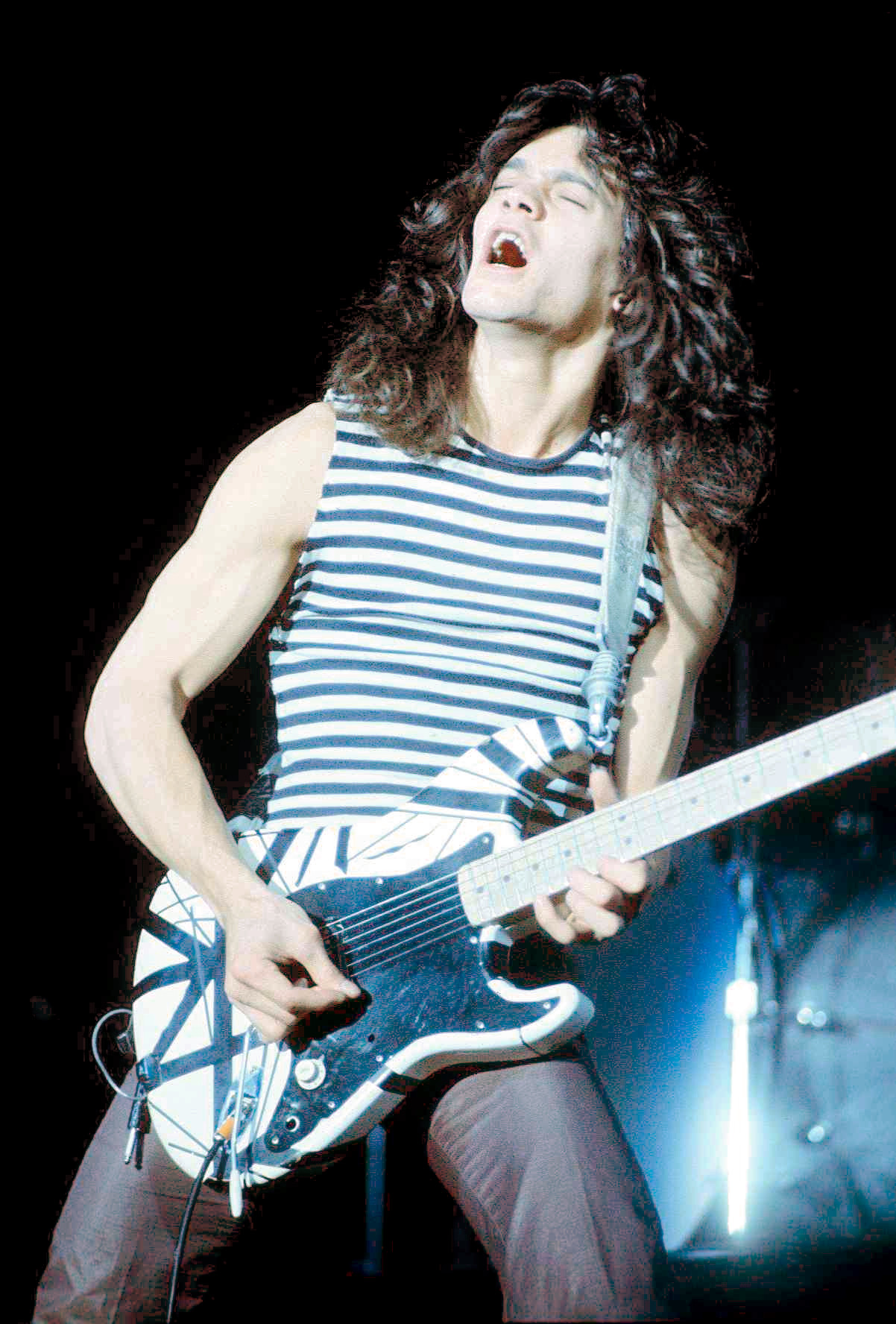
Eddie Van Halen’s “Brown Sound”: What He Actually Used & How to Get Close Today
Few guitar tones in history are as mythologized as Eddie Van Halen’s “brown sound.” It wasn’t one magic piece of gear—it was a chain of simple tools pushed in very specific ways. Here’s the real rig, and how to recreate it with modern gear.
▶ LISTEN WHILE READING
Few guitar tones in history are as mythologized as the “brown sound” of Eddie Van Halen. It’s thick, chewy, harmonically rich, and somehow both aggressive and smooth at the same time.
People argue about it endlessly—but the truth is, his tone wasn’t one magic piece of gear. It was a chain of simple tools pushed in very specific ways. Let’s break it down.
The Core of the Brown Sound (The Real Rig)
Guitar: Frankenstrat. Built from parts, not a factory guitar. Humbucker in the bridge—key to the tone—and a tremolo system used for subtle pitch movement rather than constant dive bombs.
Amp: Marshall Super Lead (Plexi). A 100-watt tube head, the backbone of his distorted tone. Not heavily modified internally—pushed externally instead.
The secret weapon: a Variac. He reportedly ran the amp at reduced voltage, around the 90V range. That changed the headroom and compression of the power section, giving him softer attack, more saturation, and that signature “squish.”
Effects: minimal but crucial. An MXR Phase 90 for subtle movement (almost always on in the early tone), an Echoplex EP-3 for slight preamp coloration and delay, and the occasional flanger for specific songs.
Why His Tone Was So Unique
Most people miss this: it wasn’t “high gain” in the modern sense. Instead, it was a lower-gain amp pushed hard, with the power section doing most of the distortion work, extremely controlled use of the guitar volume knob, and studio EQ shaping after the amp.
Want Eddie Van Halen's Brown Sound?
Tell ToneMD what guitar and gear you own and we’ll show you how to get as close as possible using the equipment you already have — full signal chain, real numbered settings, no guesswork.
Included with The Guitar Plugged Premium
That’s why the brown sound feels alive instead of compressed like modern high-gain rigs. The note bloom, the dynamic response, the way it cleans up when you back off—none of that survives in a maxed-out modern preamp.
The Brown Sound Recipe (Simplified)
Strip it down and the tone is: a Marshall Plexi pushed near breakup, slight voltage sag (Variac-style behavior), a humbucker bridge pickup, light modulation from a Phase 90, studio EQ shaping, and loud volume so the power tubes do the saturating.
How to Recreate the Tone Today
Here’s the fun part—how to actually get close without vintage gear.
X Concepts Strings • Made in USA
Never Run Out of Strings Again.
Join the X Concepts String Club and get fresh USA-made strings delivered every month—plus Premium membership options for the full Guitar Plugged experience.
Option 1: Amp + Pedals (Closest Feel)
“It wasn’t high gain. It was a slightly broken amp pushed by a player who treated the guitar like an extension of his hands.”
Best for real amp players. Setup: a Marshall-style amp or Plexi clone, a light overdrive pedal used purely as a boost, an MXR Phase 90 (or equivalent), and a delay set very subtly if you want it.
Settings tips: gain around 6–7 (not maxed), moderate bass (don’t overdo it), boosted mids, and controlled treble to avoid ice-pick highs. The key idea is to let the amp breathe instead of stacking gain on top of gain.
Option 2: Modelers (Fractal / Helix / Quad Cortex)
The best modern solution for accuracy and flexibility. Recommended platforms: Fractal Axe-Fx, Line 6 Helix, or Neural DSP Quad Cortex.
Signal chain: a Plexi-style amp model (Super Lead / 1959), an input boost (low gain, high level), a Phase 90–style phaser at very low depth, and a 4x12 cab sim with a mix of Greenbacks and Vintage 30s.
Pro settings tips: turn master volume up and gain slightly down, add “power amp sag” if your platform offers it, and use less gain than you think you need. The mistake most people make is too much distortion—EVH’s tone is dynamic, not saturated.
Option 3: Budget / Plugin Setup
If you’re working with plugins or budget gear, use any Plexi-style plugin (Neural DSP, Amplitube, etc.), add a light EQ boost around 800Hz–2kHz, use a Tube Screamer–style boost with gain near zero and level up, and add subtle chorus or phaser.
Trick: roll your guitar volume back slightly for rhythm tone, and bring it full up for lead. That single move covers about 40% of the dynamic range people try to dial in with extra pedals.
The Real Secret Most People Miss
EVH’s tone wasn’t just gear. It was right-hand attack control, pick-angle variation, volume knob manipulation, and meticulous room and mic placement in the studio. Even perfect gear won’t sound right without that touch.
Final Thought
The brown sound isn’t a preset you copy. It’s a system: a slightly broken amp, controlled chaos, and a player who treated the guitar like an extension of his hands. That’s why no two recreations ever sound identical.
If you had to choose, would you rather have EVH’s exact gear, or his technique? Because one without the other is only half the sound.
Experience-driven coverage, not algorithm bait.
- 20+ years of guitar playing experience
- Real-world retail experience at Guitar Center
- Thousands of hours testing guitars, amps, and pedals
- A community of 50,000+ guitar enthusiasts across platforms
- Partnerships with Fender, DistroKid, TrueFire, Card Chords, and Enya
- Editorial standards published openly — see how we test gear
The Modern Guitar Magazine. Delivered to your inbox.
No spam. No gimmicks. Just great guitar content — stories, tones, iconic solos, and honest gear takes. Every week.
Ask GP
3 free questions a dayStill curious? Ask GP about this story.
Your personal classic-rock and guitar guide — ask anything about Eddie Van Halen’s “Brown Sound”.
Discussion (0)
Sign in to join the discussion.
Sign in to commentLoading comments…
Discover another guitar story
Swipe through our latest features, breaking news and iconic solos — one story at a time.
Open Swipe →More in Tone Decoded
Dimebag Darrell Didn't Just Make Metal Heavier—He Made It Swing
Inside the fearless Texas guitar language, brutal-but-musical tone, and melodic instinct that made Dimebag Darrell impossible to imitate — and impossible to replace.
The Infamous Stevie Ray Vaughan Soundcheck
No crowd. No spectacle. Just Stevie Ray Vaughan checking levels at the Syria Mosque in 1986 — and sounding absolutely monstrous. What the footage reveals about tone, touch and the myth of the rig.
The Last 10%: Why You Can Copy a Famous Guitarist’s Entire Rig and Still Miss the Tone
You bought the guitar, the amp, and the pedals — so why doesn’t it sound right? The last 10 percent of guitar tone is the most important part, and it’s almost never about the gear list.