Humbuckers vs. Single-Coils: Which Pickup Is Right for You?
Humbuckers roar, single-coils sparkle. Here’s how pickups actually work, what they sound like, and the easy way to choose the right set for your guitar, genre, and budget.
If you’re staring down a wall of guitars wondering whether you’re a humbucker or a single-coil person, you’re really choosing how your hands will talk to an amp. Single-coils snap, shimmer, and slice through a band; humbuckers thicken, smooth, and shove the front of your rig harder. Both are right, but they’re right for different players, rooms, and songs. Know the trade-offs and you’ll stop second-guessing your tone and start chasing the good kind of goosebumps.
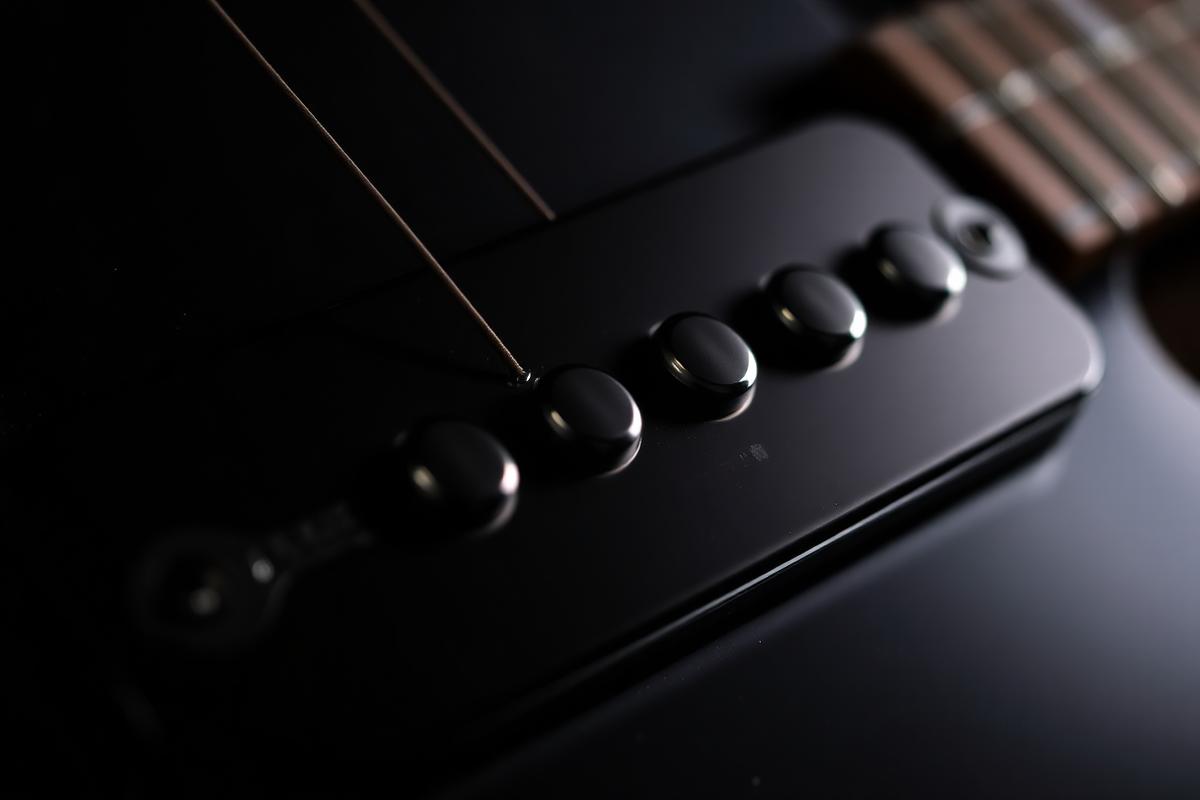
A pickup is a magnet wrapped in thousands of turns of copper that turns string motion into voltage by Faraday’s law. More windings and stronger magnets raise output and shift the resonant peak lower, which sounds darker and thicker; fewer winds and softer magnets sound brighter and more open. Builders talk DC resistance in kilohms, but inductance in henries and the resonant frequency tell you more about feel. Alnico II and V are the classic flavors for passive pickups, with ceramic magnets bringing extra punch and edge in modern designs. Your guitar’s 250k vs 500k pots and even cable capacitance also tilt the EQ, so the same pickup can feel radically different from one harness to another.
Traditional single-coils are the sound of a Fender Stratocaster or Telecaster: glassy top, scooped-ish mids, and fast transient attack that makes clean rhythm pop. Think Jimi Hendrix and John Mayer on strats, or Nile Rodgers and Mark Knopfler when you need percussive, hi-fi funk and clean lead lines. Telecasters put more meat in the mids but keep the wiry cut; Keith Richards and Brad Paisley prove you can go from raunch to twang without changing guitars. The catch is the 50/60-cycle hum and radio hash you’ll hear under neon lights or high-gain pedals, especially with high-impedance rigs and poor shielding.
Humbuckers fix that noise by pairing two coils wound and magnetized opposite each other so the electromagnetic junk cancels while your string signal adds. That architecture also lowers the resonant peak and raises output, giving you growl, sustain, and a more compressed feel that hits an amp’s first gain stage harder. It’s why a Gibson Les Paul, SG, or ES-335 sings through a cranked British stack and why Jimmy Page, Slash, and Angus Young all reach for dual-coils. Modern humbuckers like the Seymour Duncan JB, DiMarzio Super Distortion, or active EMG 81 add even more push and tighter lows for hard rock and metal.
Want This Tone?
Tell ToneMD what guitar and gear you own and we’ll show you how to get as close as possible using the equipment you already have — full signal chain, real numbered settings, no guesswork.
Included with The Guitar Plugged Premium
Output and noise aren’t the whole story—dynamics matter. Single-coils tend to track your pick nuance with almost microphone-like immediacy, staying clean longer at the same amp setting, which is gold for funk, country, and jangly indie. Humbuckers fatten the initial transient and compress a touch, so palm mutes thud and singing leads hang on the note. Old-school germanium fuzz faces behave best with low-output single-coils; slam them with a hot humbucker and they can choke, whereas a Tube Screamer or RAT loves the extra shove.
X Concepts Strings • Made in USA
Never Run Out of Strings Again.
Join the X Concepts String Club and get fresh USA-made strings delivered every month—plus Premium membership options for the full Guitar Plugged experience.
Genres don’t own pickups, but they have strong preferences. If you live on clean headroom, syncopated rhythm, and chorus-drenched arpeggios, the classic SSS Strat or a bright Tele bridge will feel like cheating. Blues and roots players often split the difference with a neck single-coil for glass and a hotter bridge or even HSS for leads. Hard rock and metal players lean humbuckers for tight lows and noise rejection, and jazz traditionalists still favor a warm neck humbucker rolled back on the tone. Surf, shoegaze, and post-punk frequently pick longer single-coils like Jazzmasters and Jaguars for their wide, airy clank that takes reverb and fuzz beautifully.
Then there’s the middle child: the P-90. It’s still a single-coil, but with a wide, squat coil that packs more inductance than a Strat bobbin, so you get punchy mids and snarling grind without losing that lively single-coil edge. A Les Paul Junior or Special with P-90s will bark and bloom in a mix in a way a humbucker sometimes won’t, which is why Leslie West, early Pete Townshend, and Billie Joe Armstrong made them signatures. Expect some hum, manage it with good shielding and sensible gain staging, and enjoy the most fun dirt rhythm tone in guitar history.
If you love the feel of single-coils but hate noise, hum-cancelling options are legit now. Stacked-coil designs like Fender’s Noiseless and Seymour Duncan’s STK series cancel hum in the vertical dimension with minimal footprint changes, while rail-style designs like Duncan Hot Rails or DiMarzio Fast Track go side-by-side under a blade. Boutique options from Kinman, Zexcoil, and Lollar refine the resonant peak so you keep sparkle without the buzz. The trade-off used to be a dull top; the best modern sets keep the snap while muting the junk, and they drop right into standard pickguards.
Wiring choices can also get you both worlds in one guitar. HSS Strats let you keep two single-coils and a bridge humbucker for gain, and coil-splits or series/parallel switches on HH guitars add usable chime in the in-between positions. Use 250k pots to tame single-coil bite, 500k to open humbuckers; if you’re mixing, 500k with a small cap to ground on the singles keeps them from getting ice-picky. Start pickup height around 2.0 mm bass side and 1.6 mm treble side from the pole to the string fretted at the last fret on singles, a hair farther on hot humbuckers, then fine-tune by ear for note bloom versus string pull.
Specs sheets are your friend. A “vintage” single-coil will often sit around 5.5–6.2 kΩ DC resistance with Alnico V and a resonant peak near 3–4 kHz; a classic PAF-style humbucker might live near 7–8.5 kΩ per coil pair with Alnico II or V and a lower peak that reads smoother. Ceramic, overwound humbuckers jump past 13 kΩ and tighten the low end for high gain. None of those numbers guarantee tone, but they predict feel, which is what your hands care about.
If you want crisp cleans and elastic rhythm, start with a Strat or Tele and don’t fear true single-coils; if you crave saturated leads and bigger chords, a Les Paul or PRS SE with dual humbuckers will light up your amp sooner. Budget doesn’t have to decide tone: a Yamaha Pacifica 112V HSS around $329, Squier Classic Vibe ’50s Tele near $429, Fender Player Strat about $799, Epiphone Les Paul Standard roughly $599, or a PRS SE Custom 24 in the $849 range will all get you there. You can also retrofit your current guitar with a loaded pickguard or a favorite bridge bucker and transform the voice in an hour. Pick the flavor that makes you play more, then refine with pots, height, and strings until it stops feeling like gear and starts feeling like you.
- Seymour Duncan JB (SH-4) Humbucker$99·Check on Amazon →
- Seymour Duncan Vintage P90 (SP90-1) Set$198·Check on Amazon →
- Fender Vintage Noiseless Strat Pickups$199·Check on Amazon →
- EMG 81/85 Humbucker Set$199·Check on Amazon →
Some links are affiliate links — we may earn a small commission at no cost to you.
Experience-driven coverage, not algorithm bait.
- 20+ years of guitar playing experience
- Real-world retail experience at Guitar Center
- Thousands of hours testing guitars, amps, and pedals
- A community of 50,000+ guitar enthusiasts across platforms
- Partnerships with Fender, DistroKid, TrueFire, Card Chords, and Enya
- Editorial standards published openly — see how we test gear
The Modern Guitar Magazine. Delivered to your inbox.
No spam. No gimmicks. Just great guitar content — stories, tones, iconic solos, and honest gear takes. Every week.
Ask GP
3 free questions a dayStill curious? Ask GP about this story.
Your personal classic-rock and guitar guide — ask anything about Humbuckers vs. Single-Coils.
Discussion (0)
Sign in to join the discussion.
Sign in to commentLoading comments…
Discover another guitar story
Swipe through our latest features, breaking news and iconic solos — one story at a time.
Open Swipe →More in Tone Decoded

Dimebag Darrell Didn't Just Make Metal Heavier—He Made It Swing
Inside the fearless Texas guitar language, brutal-but-musical tone, and melodic instinct that made Dimebag Darrell impossible to imitate — and impossible to replace.
The Infamous Stevie Ray Vaughan Soundcheck
No crowd. No spectacle. Just Stevie Ray Vaughan checking levels at the Syria Mosque in 1986 — and sounding absolutely monstrous. What the footage reveals about tone, touch and the myth of the rig.
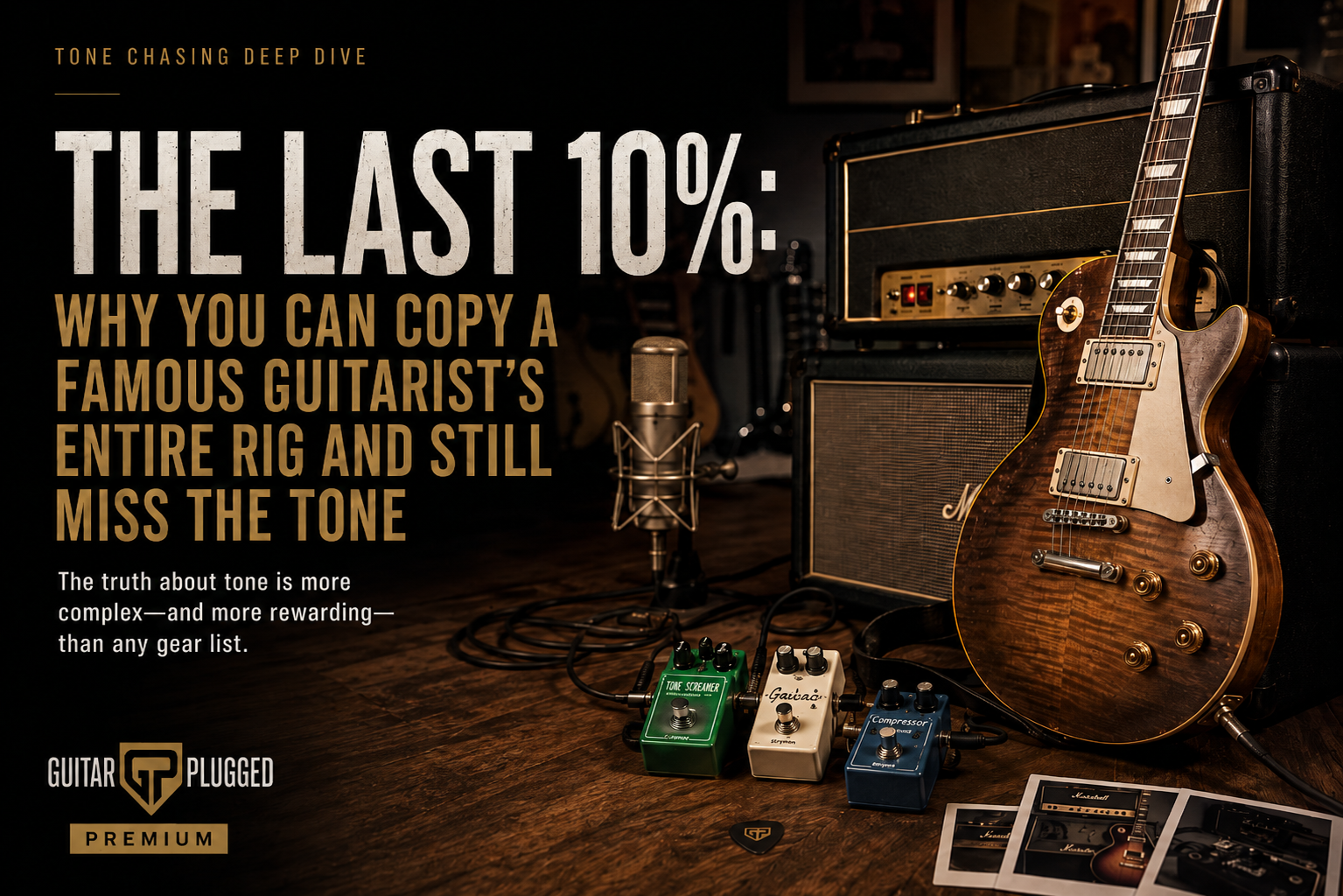
The Last 10%: Why You Can Copy a Famous Guitarist’s Entire Rig and Still Miss the Tone
You bought the guitar, the amp, and the pedals — so why doesn’t it sound right? The last 10 percent of guitar tone is the most important part, and it’s almost never about the gear list.