Your First Guitar: A No-BS Buying Guide for 2026
Skip the hype. Here’s the straight-shot, 2026-ready guide to buying your first guitar that plays great today, won’t fight you tomorrow, and doesn’t torch your budget.
Your first guitar shouldn’t be a mystery box or a wall ornament. It’s a tool you’ll use daily, so it has to feel easy in the hands and stay in tune while you learn. In 2026, the good news is CNC machining and better factory QC mean sub-$400 guitars can be legitimately excellent. The bad news is the marketing noise is louder than ever. We’re cutting that out and focusing on what actually matters: playability, setup, and getting the right style for the music you want to make.
Start by picking your lane: acoustic or electric. If you dream in rock, indie, metal, R&B, or funk, get an electric—it’s physically easier to play, especially with lighter 9–42 strings, and you can practice almost silently with headphones or even unplugged. If you live for singer-songwriter vibes, fingerstyle, or campfire strumming, go acoustic—no amp, no cable, instant sound. Don’t buy an acoustic because you think it’s “simpler”; thick 12–54 strings and higher tension can be tougher on new fingers. Don’t buy an electric because you think it’s “cheating”; it still teaches your hands, but without punishing you for every beginner grip.
What actually makes a beginner guitar good is playability, not the paint job. You want low, buzz-free action, which is the string height over the frets. As a baseline, a comfy electric setup lands around 1.5–1.8 mm on the high E at the 12th fret (about 2.0–2.2 mm on the low E), with neck relief around 0.15–0.25 mm (.006–.010 in) at the 7th–8th fret. On acoustics, expect a bit higher: roughly 2.0–2.5 mm on the high E and 2.5–3.0 mm on the low E, with similar relief. Fretwork quality, a properly cut nut, and stable tuners matter more than exotic woods or an extra pickup you’ll never use.
Neck geometry is the other half of the equation. Scale length dictates string tension: 25.5 in (Fender-style) feels a bit tighter and snappier; 24.75 in (Gibson-style) feels looser with the same gauge; 25 in (Ibanez AZES and some PRS-style) sits right in the middle. Fretboard radius affects comfort: 9.5 in is a modern Fender sweet spot for chords and bends, 12–14 in feels a touch flatter for lead, and both are beginner-friendly. Nut width around 42–43 mm (1.65–1.69 in) is a safe bet if your hands are average; 44.5 mm (1.75 in) on many acoustics gives a little more room for fingerstyle. If you’ve got smaller hands, a shorter scale and slim C neck profile will save you a ton of frustration.
Acoustics have their own priorities. Always favor a solid spruce top at this price—it actually resonates and opens up; laminated backs and sides are fine and durable. Dreadnoughts are loud with big bass; concert/folk bodies trim the boom and are easier to hold for smaller frames; parlor sizes are couch-friendly and great for bluesy snap. Expect a 25.3–25.6 in scale and a 43–44.5 mm nut on most steel-strings; nylon-string classicals are a different beast with a 52 mm nut and flat fingerboard—perfect if you want bossa or classical, not great if you’re chasing punk chords. Check the bridge and saddle height; you want a good break angle over the saddle and enough saddle left for future adjustments.
Hardware and electronics can simplify your life—or complicate it. For electrics, a fixed bridge (hardtail) or a decked, vintage-style tremolo is beginner gold for tuning stability; avoid double-locking, floating trem systems (Floyd Rose-style) until you enjoy hex keys and spring balancing. Pickup-wise, HSS (humbucker + two single-coils) is a swiss-army layout for clean pop to chunky rock; SSS is classic chime; HH is fat and forgiving. Coil-splits and series/parallel options are nice-to-haves, not must-haves. On acoustics, die-cast tuners and a compensated saddle help intonation; factory piezo pickups are fine for plugging in later, but don’t pay extra for a preamp you won’t use.
X Concepts Strings • Made in USA
Never Run Out of Strings Again.
Join the X Concepts String Club and get fresh USA-made strings delivered every month—plus Premium membership options for the full Guitar Plugged experience.
Beware the traps dressed as deals. “Starter packs” with a flimsy 10-watt amp, cable, strap, and a mystery guitar look complete but usually cut corners where it hurts—fretwork, nut slots, tuners. Fancy tops under $250 are often just photo veneers over basic wood; they don’t make it sound better. More pickups, more knobs, more switches doesn’t equal better tone if the basic setup stinks. Spend the savings on a pro setup and a clip-on tuner. If you do need an amp, a solid little practice option like the Boss Katana Mini or a headphone rig like the Fender Mustang Micro wipes the floor with most pack amps.
Here’s a quick test-drive checklist you can run in five minutes. Sight the neck for a gentle forward bow, then fret the first and last notes of a string and tap at the 7th–8th fret—you want a hair of daylight, not a canyon or a back-bow. Strum open chords up and down the neck; listen for sitar buzz, dead spots, or notes that “choke” on bends. Check intonation: compare the 12th-fret harmonic to the fretted 12th; if it’s wildly off, the bridge or saddle needs love. Tune, play for five minutes, and retune—if it drifts constantly, look at nut binding or weak tuners. And ask the shop to throw in a setup and fresh strings; 9–42 on electrics and 11s or 12s on acoustics will treat your fingertips kindly at first.
Under $400, there are real standouts that don’t fight you. The Yamaha Pacifica 112V (~$329) remains the no-brainer electric: an HSS set with Alnico V pickups, a coil-split humbucker, a comfy modern C neck, and a 25.5 in scale with a flatter ~13.75 in radius that plays fast. Deck the vintage trem and it’ll stay in tune all week. If you prefer a hardtail and slightly slinkier feel, the Ibanez AZES31 (~$349) brings a 25 in scale, 10 in-ish radius, modern frets, and smart dyna-MIX8 wiring that sneaks in neck+bridge tones you usually can’t get on a Strat. On the truly tight budget end, the Squier Sonic Stratocaster HT (~$199) is the right kind of simple: 25.5 in scale, 9.5 in radius, hardtail bridge, and ceramic single-coils that love pedals.
For acoustics, two models punch way above their price. Yamaha’s FG800 (~$229) is the default recommendation for a reason: a solid Sitka spruce top with scalloped bracing, consistent factory fretwork, a 25.6 in scale that rings loud, and a 43 mm nut that won’t cramp first-position chords. Want something a touch sleeker with great QC? Alvarez’s AD30 (~$279) delivers a solid top, the brand’s bi-level bridge for stable break angle, a slightly wider 44.5 mm nut that’s fingerstyle-friendly, and dependable out-of-the-box action. If you’re small-framed or want a tighter waist, Yamaha’s FS800 is the same recipe in a concert body, usually at the same price.
A word on buying used: it’s the best value if you know what to check. Ensure the truss rod turns both ways, look for top bellying on acoustics, and run your hand down the fretboard edges for sharp ends. Minor dings are cosmetic; high frets, twisted necks, or a maxed-out saddle are not. The upside is you might snag a Squier Classic Vibe, a higher-tier Yamaha, or even an Epiphone upgrade for the same money. Just budget $60–100 for a setup and you’ll still come out ahead.
Bottom line: buy the guitar that makes you want to pick it up twice a day, not the one with the flashiest catalog photo. Prioritize scale length and neck feel, low action without buzz, and honest construction like a solid top on acoustics. Skip the overcomplicated hardware, skip the vanity features, and spend on a setup. With the picks above, $200–$350 gets you a lifer-level starter that won’t bottleneck your progress. The music won’t wait—grab one, tune up, and start racking hours.
- Yamaha Pacifica 112V$329·Check on Amazon →
- Squier Sonic Stratocaster HT$199·Check on Amazon →
- Yamaha FG800$229·Check on Amazon →
- Alvarez AD30$279·Check on Amazon →
Some links are affiliate links — we may earn a small commission at no cost to you.
Experience-driven coverage, not algorithm bait.
- 20+ years of guitar playing experience
- Real-world retail experience at Guitar Center
- Thousands of hours testing guitars, amps, and pedals
- A community of 50,000+ guitar enthusiasts across platforms
- Partnerships with Fender, DistroKid, TrueFire, Card Chords, and Enya
- Editorial standards published openly — see how we test gear
The Modern Guitar Magazine. Delivered to your inbox.
No spam. No gimmicks. Just great guitar content — stories, tones, iconic solos, and honest gear takes. Every week.
Ask GP
3 free questions a dayStill curious? Ask GP about this story.
Your personal classic-rock and guitar guide — ask anything about Your First Guitar.
Discussion (0)
Sign in to join the discussion.
Sign in to commentLoading comments…
Discover another guitar story
Swipe through our latest features, breaking news and iconic solos — one story at a time.
Open Swipe →More in Tone Decoded

Dimebag Darrell Didn't Just Make Metal Heavier—He Made It Swing
Inside the fearless Texas guitar language, brutal-but-musical tone, and melodic instinct that made Dimebag Darrell impossible to imitate — and impossible to replace.
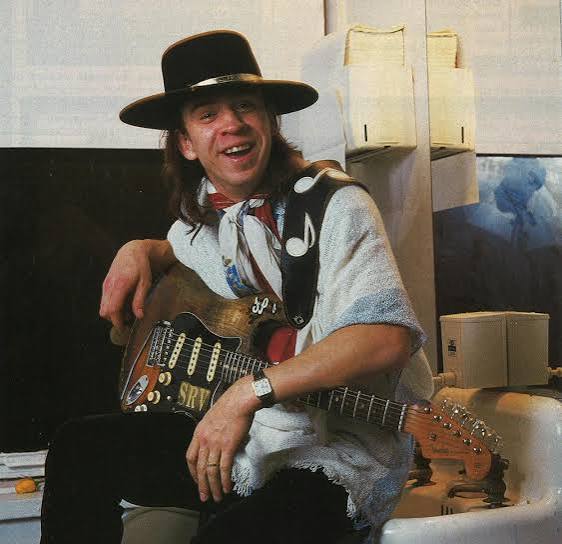
The Infamous Stevie Ray Vaughan Soundcheck
No crowd. No spectacle. Just Stevie Ray Vaughan checking levels at the Syria Mosque in 1986 — and sounding absolutely monstrous. What the footage reveals about tone, touch and the myth of the rig.
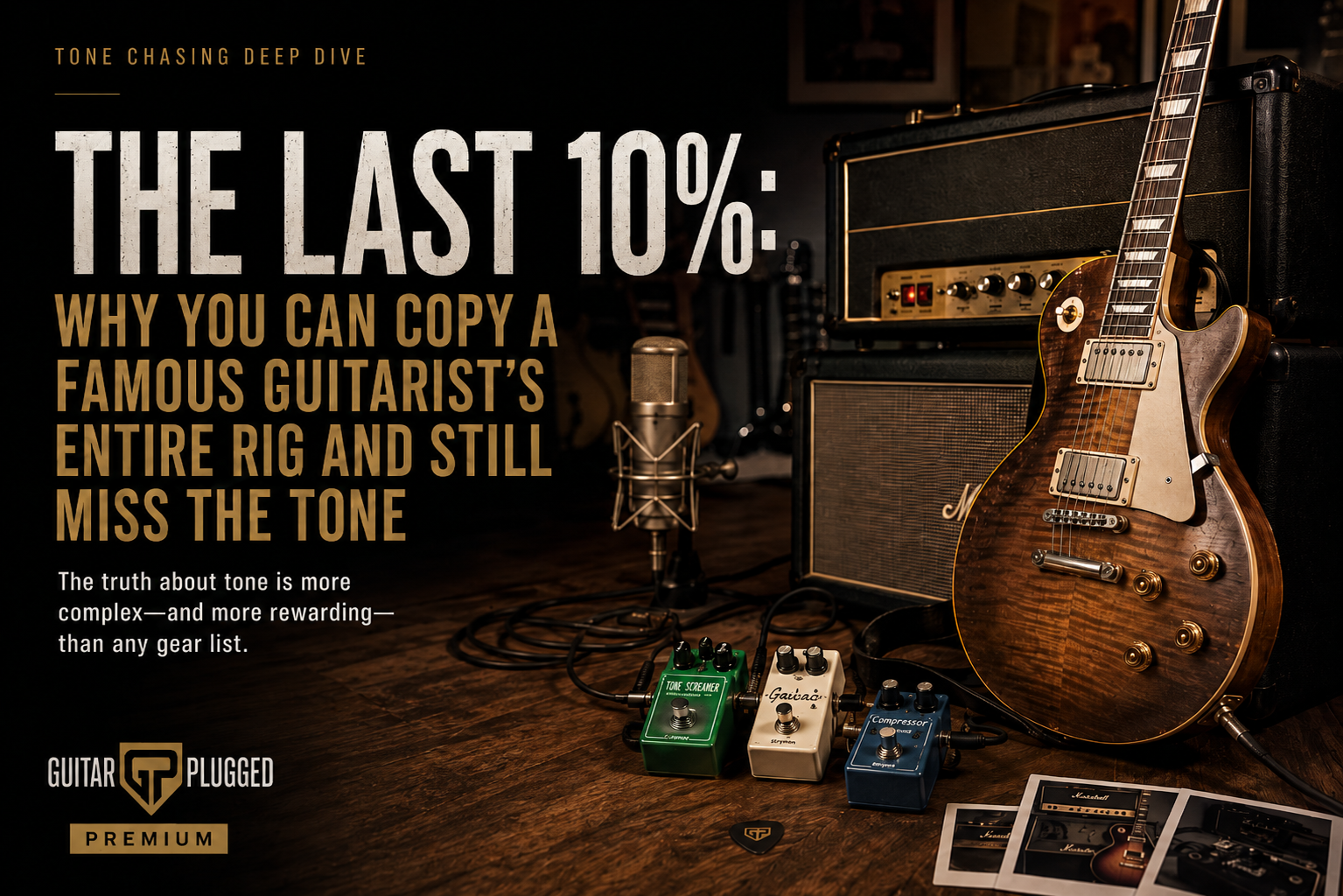
The Last 10%: Why You Can Copy a Famous Guitarist’s Entire Rig and Still Miss the Tone
You bought the guitar, the amp, and the pedals — so why doesn’t it sound right? The last 10 percent of guitar tone is the most important part, and it’s almost never about the gear list.