
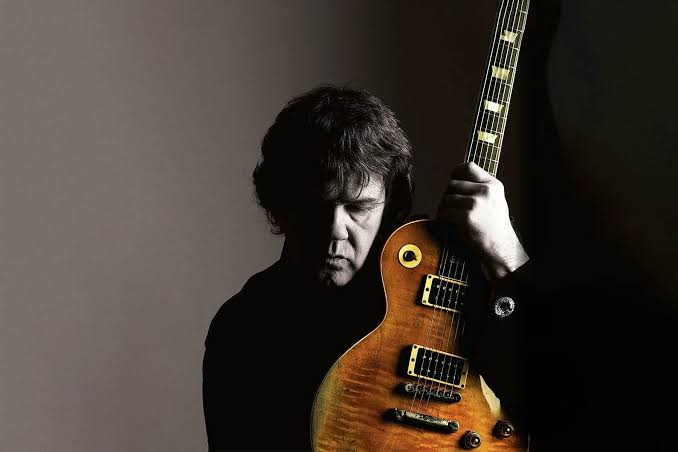
Gary Moore's "Still Got the Blues": The Solo That Proved One Note Can Say More Than a Thousand
More than three decades later, guitarists are still chasing the bends, vibrato and seemingly endless sustain behind one of blues rock's defining performances.
There are guitar solos that impress you the first time you hear them. Then there are guitar solos that stay with you. Gary Moore's "Still Got the Blues" belongs firmly in the second category.
More than three decades after its release, the song remains one of the defining performances of Moore's career and one of the great examples of what happens when technique becomes completely subordinate to expression. Guitarists have spent years studying the bends, vibrato, sustain and phrasing. Players have chased the guitar. They have chased the amplifier. They have chased the gain settings.
But the reason "Still Got the Blues" continues to resonate has relatively little to do with equipment.
It is about touch. It is about timing. It is about knowing when to play and, perhaps more importantly, when not to.
Gary Moore had more than enough technique to overwhelm the song. By the time he recorded "Still Got the Blues," he had already established himself as one of rock guitar's most formidable players. He could play with frightening speed and intensity. He had the chops of a hard-rock virtuoso, the aggression of a heavy metal guitarist and the vocabulary of someone who had spent a lifetime absorbing the blues.
On "Still Got the Blues," however, Moore did something far more difficult than simply playing fast. He slowed down. And in doing so, he delivered perhaps the most enduring guitar performance of his career.
Gary Moore Before "Still Got the Blues"
To understand why "Still Got the Blues" was such an important record, it helps to understand where Gary Moore was coming from. Moore was hardly an unknown guitarist searching for an identity in 1990.
The Belfast-born musician had already lived several musical lives. He had played with Skid Row — not the later American band of the same name — and had multiple associations with Thin Lizzy, including his memorable contributions during different periods of the band's history. As a solo artist, he moved comfortably through hard rock, heavy metal and the highly polished guitar-driven sounds that dominated much of the 1980s.
Albums such as Corridors of Power, Victims of the Future, Run for Cover and Wild Frontier established Moore as a major force in rock guitar. He could shred. He could write an anthem. He could stand in front of a wall of amplification and compete with virtually any of the era's celebrated guitar heroes.
But the blues had always been there. Long before the arena-rock production and high-gain guitar tones, Moore had been deeply influenced by players including Peter Green, Eric Clapton, Jimi Hendrix and the great American blues guitarists who defined the language.
By the end of the 1980s, Moore was ready to return to that foundation. The result was Still Got the Blues, released in 1990. It was not simply a stylistic experiment — it became a career-defining moment. The album placed Moore's blues influences front and center while still retaining the enormous guitar tone, dramatic dynamics and technical command that had made him a rock guitar hero.
At the center of it all was the title track — a slow, minor-key blues ballad with enough harmonic sophistication to separate it from a conventional 12-bar blues and enough melodic clarity to become instantly memorable. And then there was the guitar solo.
A Blues Song Built for a Guitar Player
The brilliance of "Still Got the Blues" begins before Moore plays a single lead note. The song gives the guitar room to matter. That sounds obvious, but it is one of the reasons the performance works so well.
There is space in the arrangement. The tempo is unhurried. The chord progression moves with a sense of inevitability, creating tension without demanding that the guitarist constantly fill every opening.
Moore's vocal establishes the emotional weight of the song first. That is important. The guitar solo does not arrive as an unrelated display of virtuosity inserted into the middle of a blues song. It feels like the continuation of the vocal. Moore sings the story. Then the guitar takes over.
That relationship between voice and instrument is at the heart of great blues guitar playing. B.B. King understood it. Albert King understood it. Peter Green understood it. Gary Moore understood it.
The greatest blues guitarists rarely sound as though they are simply running scales over chord changes. Their instruments become another voice in the arrangement. Moore takes that philosophy and applies it with the enormous sustain and intensity of a rock guitarist. That combination is what makes "Still Got the Blues" unique — blues phrasing delivered with arena-rock power.
The Opening Notes
The first moments of the solo tell you almost everything you need to know about Gary Moore's approach. There is no frantic entrance. No burst of speed. No attempt to immediately establish technical dominance. Instead, Moore allows the guitar to sing.
The notes are given time to develop. A bend is not merely a way of traveling from one pitch to another. It becomes an event. The pitch rises. The note settles. The vibrato begins. The amplifier responds. The sustain carries the phrase forward.
This is where attempts to imitate Moore often fall apart. The notes themselves can be learned. The phrasing can be transcribed. The positions can be memorized. But playing the correct notes is only the beginning.
Moore's control over pitch is extraordinary. When he bends a string, the destination matters. A slightly flat bend can destroy the emotional impact of the phrase. A bend that reaches pitch too quickly can remove the tension. Vibrato applied too early can make the note sound nervous rather than powerful. Moore controls all of those variables. His bends often feel vocal because they contain movement within the note. He does not simply hit a pitch. He shapes it.
The Gary Moore Vibrato
If there is one element of Gary Moore's playing that every guitarist should study, it may be his vibrato. Plenty of guitarists have fast vibrato. Plenty have wide vibrato. Moore had something more difficult to define — authority.
When Gary Moore held a note, it sounded important. His vibrato was wide enough to create drama without losing control of the center pitch. It could be aggressive without becoming chaotic. That distinction matters enormously.
A guitarist can buy a Les Paul. A guitarist can plug into an expensive tube amplifier. A guitarist can add overdrive and delay. None of those things will create Gary Moore's vibrato. That comes from the hands.
Listen closely to the sustained notes throughout "Still Got the Blues." The amplifier is certainly contributing compression, harmonic richness and sustain, but the emotional character is being created by Moore's left hand. The note is alive before the amplifier ever gets involved. This is one of the most important lessons hidden inside the recording. Tone does not begin at the amplifier. It begins with the player.
The Power of Sustain
Get Gary Moore’s “Still Got the Blues” Tone
Tell ToneMD what guitar and gear you own and we’ll show you how to get as close as possible using the equipment you already have — full signal chain, real numbered settings, no guesswork.
Included with The Guitar Plugged Premium
Few guitarists are more closely associated with sustain than Gary Moore. His best notes seem to hang in the air indefinitely. On "Still Got the Blues," that sustain becomes part of the composition.
Moore allows notes to ring long enough for the listener to hear the tone change as they decay. The initial attack gives way to compression. Harmonics begin to emerge. The amplifier starts to bloom. Then Moore adds vibrato, almost as though he is keeping the note alive through sheer force.
This is dramatically different from a guitarist who uses gain simply to make playing easier. Moore uses gain as an expressive tool. The distortion is not there to hide the dynamics — it magnifies them. Pick harder and the guitar becomes aggressive. Back off and the sound softens. Hold a note and the amp sustains it. Push the vibrato harder and the entire sound seems to widen. The guitar and amplifier behave like a single instrument.
For players looking to explore this kind of setup, a Les Paul-style guitar with humbuckers is the natural starting point, particularly through a tube guitar amplifier capable of producing thick, harmonically rich overdrive. But equipment alone will not produce the sound — the real challenge is controlling what happens after the note has been played.
Why the Solo Feels So Emotional
Guitarists often describe solos as "emotional," but the word can become meaningless without explaining why. In the case of "Still Got the Blues," much of the emotion comes from tension and release.
Moore constantly creates expectations. A phrase climbs. A bend reaches upward. A note hangs. The listener waits. Then Moore resolves the tension — or deliberately refuses to.
That sense of anticipation is crucial. Many developing guitarists rush through phrases because silence feels uncomfortable. Moore does the opposite. He trusts the silence. He knows that the space after a phrase can make the next note sound twice as powerful.
Imagine a singer delivering an emotional sentence without ever pausing for breath. Eventually, every word would lose its impact. Guitar solos work the same way. Moore phrases like someone speaking. There are statements. There are pauses. There are questions. There are answers. And occasionally there are moments that feel less like words and more like someone crying out. That is the blues.
A Rock Guitarist Playing the Blues
One reason "Still Got the Blues" became such an important guitar recording is that Moore never attempted to disguise who he was. He did not suddenly become a 1950s Chicago blues guitarist. He did not abandon the power and sustain he had developed during his rock career. Instead, he brought those qualities into the blues.
That decision helped define the sound of the record. Moore's blues playing could be louder, heavier and more technically explosive than traditionalists might expect. His tone was saturated. His sustain could feel almost endless. When the intensity increased, traces of the hard-rock guitarist were always waiting beneath the surface. But the vocabulary remained rooted in the blues.
This created a fascinating tension. Gary Moore could play a phrase that might have been inspired by Albert King and deliver it with the firepower of a 1980s rock guitarist. That combination would become hugely influential. You can hear echoes of the same philosophy throughout modern blues rock: vintage blues vocabulary combined with bigger amplifiers, more gain and a more aggressive attack. Moore did not invent that concept. But few players executed it with such conviction.
The Les Paul Connection
Gary Moore's relationship with the Gibson Les Paul is inseparable from his legacy. The most famous guitar associated with him is, of course, "Greeny," the legendary 1959 Gibson Les Paul Standard previously owned by Peter Green and later acquired by Kirk Hammett.
But Moore's broader association with Les Pauls became an essential part of his visual and sonic identity. For many guitarists, "Still Got the Blues" represents the idealized neck-humbucker Les Paul tone: thick, vocal and capable of moving from warmth to aggression depending on the player's touch.
There is a roundness to the sound that helps the high notes remain powerful without becoming painfully sharp. The neck pickup is particularly effective for this style of lead playing because it emphasizes the body of the note. Combine that with gain and sustain and the guitar begins to take on an almost horn-like quality.
That does not mean you need a vintage Gibson to approach the sound. A modern Gibson Les Paul or an Epiphone Les Paul with good humbuckers can get you into the right territory. The more important factors are how the guitar responds to your hands and how you control the amplifier.
Chasing the "Still Got the Blues" Tone
“Gary Moore had more than enough technique to overwhelm the song. On "Still Got the Blues," he did something far more difficult — he slowed down.”
There is a danger in reducing any legendary guitar sound to a shopping list. Buy this guitar. Buy this pedal. Buy this amplifier. Set these knobs to these numbers. Instant Gary Moore. It does not work that way.
Still, there are characteristics of Moore's tone that players can use as a guide. Start with a humbucker-equipped guitar. Use enough gain to create sustain, but not so much that every note loses definition. The goal is compression without complete saturation. You want the amplifier to help the note continue ringing, but you still want the sound to respond when you change your picking intensity.
The midrange is critical. This is not a scooped modern metal tone. The guitar needs to occupy the center of the mix. Too much treble and the bends become harsh. Too much bass and the sound becomes muddy. The middle frequencies are where much of that vocal character lives.
A touch of delay or ambience can help create depth, but the effect should support the note rather than announce itself. An overdrive pedal can also help push a tube amp into a more compressed, sustaining response, and a guitar delay pedal can add a subtle sense of room around the notes.
But before buying anything, try turning the gain down slightly. Then play harder. You may discover that much of the aggression you were trying to find with another pedal was supposed to come from your hands.
The Importance of Picking Attack
Gary Moore could make the same guitar sound radically different from one phrase to the next. Picking attack was a major reason. A softly picked note could sound round and almost delicate. A heavily attacked note could explode from the amplifier. That dynamic range gives "Still Got the Blues" much of its drama.
Modern guitar rigs can sometimes work against this. Excessive compression, distortion and noise reduction can flatten the dynamic differences between notes. Everything becomes equally loud. Everything becomes equally saturated. And when everything is intense, nothing feels intense.
Moore's playing demonstrates the opposite philosophy. Intensity needs contrast. The loud notes matter because quieter moments came before them. The fast passages matter because slower phrases established the mood. The huge bends matter because Moore did not bend every note. Dynamics are not an accessory to the solo. They are the solo.
Speed Used as Contrast
Gary Moore was an exceptionally fast guitarist. That is precisely why his restraint on "Still Got the Blues" is so impressive. He could unleash rapid pentatonic runs whenever he wanted. And at certain moments, he does increase the velocity. But speed functions as contrast rather than the foundation of the performance.
This is a lesson worth stealing. If a guitarist plays at maximum speed for an entire solo, the listener quickly adjusts. What initially sounded exciting becomes normal. Moore creates a different experience. He establishes the solo with space. He allows long notes to dominate. Then, when a faster phrase appears, it feels explosive. The listener experiences acceleration. That is far more powerful than simply beginning fast and remaining fast.
The same principle applies to volume. It applies to gain. It applies to bending. It applies to vibrato. Contrast creates drama.
Why Guitarists Still Study This Solo
"Still Got the Blues" occupies an interesting place in guitar culture. It is accessible enough that intermediate players can begin learning recognizable sections of the solo. But playing it convincingly can take a lifetime.
That is the hallmark of a great guitar piece. The challenge is not necessarily finding the notes. The challenge is making them mean something. A player can learn the scale positions involved relatively quickly. But can you bend accurately? Can you control wide vibrato? Can you sustain a note without rushing to the next phrase? Can you make two performances of the same note sound different simply by changing your attack? Can you resist filling every available space?
Those questions move beyond guitar technique. They become questions of musical maturity. And that may be why "Still Got the Blues" continues to attract guitarists generation after generation. The solo exposes you. There is nowhere to hide. Play a fast run with enough distortion and minor imperfections can disappear inside the motion. Hold one note for several seconds and everything is exposed. Pitch. Vibrato. Timing. Tone. Confidence.
The Note You Don't Play
One of the most valuable lessons Gary Moore offers on "Still Got the Blues" is the value of restraint. Guitarists spend enormous amounts of time learning how to play more. More scales. More arpeggios. More speed. More techniques. But mature musicians eventually encounter a different challenge — how do you play less?
Moore had already developed a massive technical vocabulary. His achievement on "Still Got the Blues" was choosing exactly how much of it the song needed. This is not minimalism for its own sake. It is musical decision-making. Every phrase must justify its existence. Every bend has to lead somewhere. Every burst of speed must increase the intensity. Every pause must create anticipation. The result feels spontaneous, but the musical logic is incredibly strong. Nothing sounds arbitrary.
The Shadow of Peter Green
It is impossible to discuss Gary Moore's blues playing without acknowledging Peter Green. Green's influence on Moore extended beyond the famous Les Paul that would eventually become associated with both men. It was philosophical.
Peter Green represented a school of blues guitar where emotional weight could come from understatement. Green did not need endless notes to create tension. A slight bend. A haunting vibrato. An unexpected pause. That could be enough.
Moore was a very different guitarist. He was naturally more aggressive, more explosive, more technically flamboyant. But beneath the fire, there was a similar understanding of melody. On "Still Got the Blues," those worlds meet. You hear the restraint of classic British blues alongside the sustain and power of modern rock guitar. That mixture became Gary Moore's own language.
More Than a Guitar Solo
It is easy for guitarists to focus so heavily on Moore's lead playing that they overlook the song itself. That would be a mistake. "Still Got the Blues" works because the guitar is serving a strong piece of music.
The melody is memorable. The harmony creates emotional movement. The vocal is vulnerable. The arrangement builds naturally. The solo is not rescuing a weak song — it is completing a strong one.
That distinction matters. Many legendary guitar solos are remembered because they are inseparable from the songs surrounding them. David Gilmour's solo on "Comfortably Numb." Mark Knopfler's closing statement on "Sultans of Swing". Prince at the end of "Purple Rain." Eddie Van Halen on "Beat It." Gary Moore on "Still Got the Blues." In each case, removing the solo would fundamentally change the identity of the song. The guitar is not decoration — it is part of the narrative.
Learning From Gary Moore Without Copying Gary Moore
There is nothing wrong with learning the solo note for note. In fact, it is one of the best ways to understand Moore's phrasing. But eventually, the goal should be to extract the principles behind the notes.
Try this. Take a familiar minor pentatonic position. Limit yourself to five notes. Now improvise for several minutes without playing fast. Focus entirely on bends, vibrato and timing. Try holding one note longer than feels comfortable. Leave a full beat of silence after a phrase. Then leave two. Play the same note three times using three different picking intensities. Bend slowly. Bend quickly. Apply vibrato immediately. Then try waiting before adding vibrato.
These exercises sound simple. They are not. They force you to confront the expressive possibilities inside individual notes. That is where Gary Moore was operating. If you want to go deeper, working through a good blues guitar method book or Gary Moore songbook is a smart way to internalize the vocabulary.
The Gear Is Only Half the Story
There will always be guitarists chasing Gary Moore's sound. That is understandable. His tone on recordings like "Still Got the Blues" is enormous. A Les Paul. Humbuckers. A powerful tube amplifier. Gain. Sustain. Delay. Those ingredients matter.
But imagine handing Gary Moore's exact guitar and amplifier to another guitarist. Would they sound like Gary Moore? Probably not. Now imagine Gary Moore playing through a modest rig. Would you still recognize him? Almost certainly. That tells you everything.
The equipment shaped the sound. The player created the identity. Gary Moore's fingerprints are in the bends. They are in the vibrato. They are in the attack. They are in the spaces between the notes. That is why his tone remains so difficult to duplicate. The most important component has never been available for purchase.
A Solo That Survived the Era That Created It
"Still Got the Blues" arrived in 1990, at an interesting moment for guitar music. The technical arms race of the 1980s had pushed electric guitar playing to extraordinary levels. Players were faster. Techniques were more advanced. Guitar rigs had become increasingly sophisticated. Within a few years, popular music would shift dramatically. The guitar hero era would lose much of its mainstream dominance.
Yet "Still Got the Blues" endured. Why? Because it was never dependent on fashion. There is nothing about the emotional core of the solo that requires the listener to understand what was happening in guitar culture in 1990. A bend that sounds like heartbreak does not expire. A perfectly placed note does not become obsolete. Great phrasing survives changes in technology.
That is why young guitarists continue discovering Gary Moore. They may arrive through blues rock. They may arrive through YouTube clips. They may arrive after hearing another guitarist mention his name. Eventually, many of them find "Still Got the Blues." And when they do, they encounter the same lesson. The guitar does not have to say everything. It just has to say the right thing.
Gary Moore's Lasting Influence
Gary Moore died in 2011, but his presence in guitar culture remains enormous. His influence can be heard throughout contemporary blues rock and in generations of players who have adopted the combination of blues vocabulary and high-powered rock tone that he helped popularize.
But influence is difficult to measure purely in notes. Moore's deeper contribution may be the example he set. He demonstrated that technical ability and emotional playing are not opposites. A guitarist does not have to choose between virtuosity and feel. The real goal is to develop enough command of the instrument that technique becomes available when the music demands it — and invisible when it does not.
Moore could play fast. He could play loud. He could play aggressively. But on "Still Got the Blues," his greatest weapon was judgment. He knew when one note was enough.
The Blues in One Bend
There is a temptation to overanalyze legendary guitar performances. We examine the guitar. The pickups. The amplifier. The pedals. The scales. The chord progression. The recording techniques. All of those things can deepen our understanding. But eventually, we have to return to the sound.
Put on "Still Got the Blues." Wait for Gary Moore to begin playing. Listen to the first sustained bend. Forget the equipment. Forget the theory. Forget the transcription. Just listen.
That note carries decades of blues tradition, filtered through the hands of a guitarist who had spent years playing everything from hard rock to heavy metal before returning to the music that first inspired him. That is why the solo works. Gary Moore was not trying to prove that he could play the guitar. Everyone already knew that. He was trying to make the guitar speak. And more than three decades later, it still does.
- Epiphone Les Paul Standard '50s Heritage Cherry Sunburst$699·Check on Amazon →
- Marshall Studio Vintage SV20H Plexi Head$1,299·Check on Amazon →
- Ibanez Tube Screamer TS9 Overdrive$109·Check on Amazon →
- MXR Carbon Copy Analog Delay$149·Check on Amazon →
Some links are affiliate links — we may earn a small commission at no cost to you.
Experience-driven coverage, not algorithm bait.
- 20+ years of guitar playing experience
- Real-world retail experience at Guitar Center
- Thousands of hours testing guitars, amps, and pedals
- A community of 50,000+ guitar enthusiasts across platforms
- Partnerships with Fender, DistroKid, TrueFire, Card Chords, and Enya
- Editorial standards published openly — see how we test gear
Join The Guitar Plugged Newsletter
Iconic solo breakdowns, tone deep dives, and honest gear takes — straight to your inbox every week.
Ask GP
3 free questions a dayStill curious? Ask GP about this story.
Your personal classic-rock and guitar guide — ask anything about Gary Moore's "Still Got the.
Discussion (0)
Sign in to join the discussion.
Sign in to commentLoading comments…
Discover another guitar story
Swipe through our latest features, breaking news and iconic solos — one story at a time.
Open Swipe →More in Iconic Solos
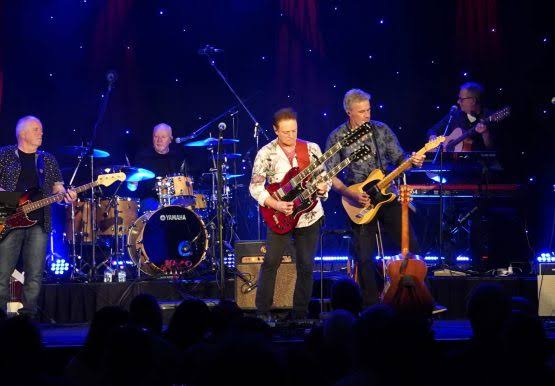
The Story Behind the "Hotel California" Guitar Solo: How Don Felder and Joe Walsh Created Rock's Greatest Guitar Duel
Nearly five decades on, the final minutes of the Eagles' "Hotel California" still stop guitarists in their tracks. Inside the composition, tone, and interplay of Don Felder and Joe Walsh's legendary dual-guitar finale.

10 Underrated Guitar Solos Every Player Should Learn
Ten overlooked guitar solos — from Larry Carlton to Derek Trucks — that will make you a better player through phrasing, feel, and note choice.
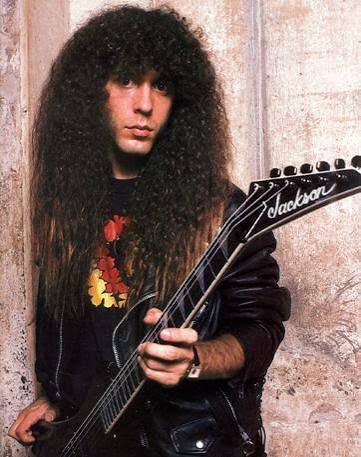
Iconic Solos: Marty Friedman's "Tornado of Souls" — The Crown Jewel of Thrash Guitar
More than 35 years later, Marty Friedman's solo on Megadeth's Tornado of Souls is still the gold standard for melodic shred — exotic phrasing, vocal-like bends, and an ending run that breaks brains.