
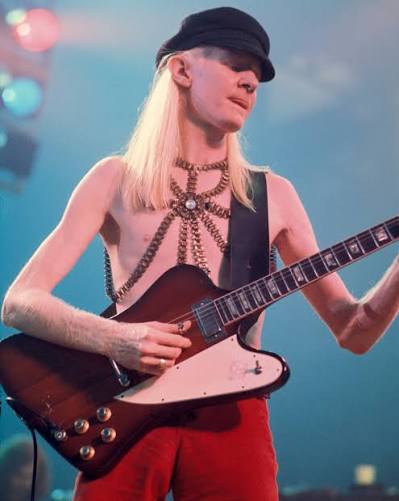
Johnny Winter: The Albino Bluesman Who Played Guitar Like His Life Depended on It
Johnny Winter played the blues with frightening speed, raw aggression and unmistakable Texas fire. We explore his guitar style, legendary Gibson Firebird, slide playing, tone and lasting influence.
There are guitarists who play the blues as a language. There are guitarists who study it, refine it, polish it and spend decades learning how to say more with fewer notes. And then there was Johnny Winter.
Winter didn't so much play the blues as attack it.
At his best, a Johnny Winter guitar solo could sound like a bar fight breaking out at the crossroads. Notes arrived in clusters. Triplets exploded from the fretboard. Bends were pushed hard enough to sound dangerous. His slide playing could scream, bark and howl, sometimes within the same phrase.
There was sophistication underneath all of it, but Johnny Winter rarely sounded interested in showing you how sophisticated he was. He wanted you to feel it.
More than a decade after his death in 2014, Winter remains one of the most fascinating figures in the history of blues-rock guitar: a musician who possessed enough technical firepower to stand alongside the emerging rock virtuosos of his generation, yet remained deeply connected to Muddy Waters and the electric blues traditions that came before him.
He could play fast — frighteningly fast when he wanted to. But speed was never the whole story. Johnny Winter's playing had teeth.
Before the Firebird
For younger guitarists discovering Johnny Winter through old concert footage, it's tempting to reduce his image to a handful of instantly recognizable ingredients. The long white hair. The cowboy hat. The impossibly thin frame. And, of course, that Gibson Firebird.
Few guitarist-and-instrument combinations are more visually inseparable. Jimmy Page had his sunburst Les Paul. Angus Young had the SG. Stevie Ray Vaughan had Number One. Johnny Winter had the Firebird.
But his story began long before the guitar became his visual calling card. Born in Beaumont, Texas, in 1944, Winter grew up alongside his younger brother Edgar in a musical household. Johnny was performing and recording while still young, absorbing the blues music that surrounded him and developing the aggressive vocabulary that would eventually make him one of the most exciting electric guitarists to emerge from Texas.
By the late 1960s, the musical world was changing quickly. The blues had become foundational material for a generation of rock musicians. British players — Clapton, Beck, Page — were pushing blues vocabulary through louder amplifiers. In America, Hendrix had fundamentally altered the possibilities of the electric guitar. Winter arrived at exactly the right moment. But he didn't sound like anyone's imitation of the blues. He sounded like Texas.
The Progressive Blues Experiment helped establish his reputation before his major-label debut Johnny Winter arrived in 1969. Suddenly, one of the most explosive guitarists in America was playing on a much larger stage. And he was only getting started.
Woodstock and the Arrival of a Guitar Hero
Johnny Winter's appearance at Woodstock in 1969 placed him at the center of one of rock music's defining cultural moments. His performance did not appear in the original Woodstock film, meaning his association with the festival never became quite as embedded in popular culture as some of the artists whose performances were immortalized on screen.
But guitar players knew. Winter was part of that generation. He belonged in the conversation.
What separated him from many blues-rock players emerging at the time was the sheer intensity of his attack. Listen closely and you'll hear the familiar blues ingredients: pentatonic vocabulary, bends, vibrato, turnarounds, double-stops and phrases rooted in electric blues. But Winter delivered those ingredients differently. He compressed them. Accelerated them. Repeated them. Then fired them directly at the audience.
It was controlled chaos — and few guitarists have ever made controlled chaos sound so natural.
The Gibson Firebird: A Guitar That Looked Like Johnny Winter Sounded
If there was ever a guitar designed to visually match Johnny Winter's playing, it was the Gibson Firebird. The instrument itself was an outsider. Introduced by Gibson in the early 1960s, the original reverse-body Firebird looked futuristic, angular and almost rebellious compared with the company's more traditional Les Paul and ES designs.
Winter eventually became inseparable from the Firebird, particularly his vintage Firebird V models. The pairing made perfect sense. The Firebird looked fast. Johnny Winter played fast. The Firebird looked dangerous. Johnny Winter sounded dangerous.
The Firebird's mini-humbucking pickups gave Winter something that sat between familiar Gibson thickness and a more cutting, articulate response. His best tones had muscle, but they also had edges. You could hear the pick. You could hear the slide. You could hear the notes fighting their way out of the amplifier.
Get Johnny Winter’s “Highway 61 Revisited” Tone
Tell ToneMD what guitar and gear you own and we’ll show you how to get as close as possible using the equipment you already have — full signal chain, real numbered settings, no guesswork.
Included with The Guitar Plugged Premium
His Secret Weapon Wasn't Speed
Johnny Winter gets described as a fast guitarist. That's accurate. It's also incomplete. His real weapon was commitment. Winter rarely sounded tentative. Even when improvising, there was a sense that every phrase had been launched with complete conviction.
That attitude is difficult to teach. Plenty of technically accomplished guitarists can play the correct notes. Fewer can make a listener believe that the next note absolutely has to happen. Winter could.
His pick attack was aggressive. His vibrato was vocal and forceful. His bends weren't decorative — they were emotional punctuation. And when he accelerated, the effect worked because of the contrast. Speed sounds faster when it is surrounded by space. Aggression sounds more aggressive when the music occasionally relaxes.
Winter understood dynamics instinctively. His playing could move from a traditional blues phrase into a rapid-fire explosion and then snap back into the pocket without losing the thread. That's not simply technique. That's storytelling — at very high volume.
The Slide
Johnny Winter belongs in any serious discussion of great electric slide guitarists. His approach was different from the smoother, more lyrical slide voices associated with some other masters of the instrument. Winter could make a slide sing. But he could also make it sound vicious.
His slide tone often had a sharp edge, with notes cutting through the band rather than floating above it. Slide guitar is unforgiving. There are no frets stopping the note for you. Intonation comes from the player's ear and hand. Unwanted strings can ring. Winter made that difficult technique sound reckless without actually being reckless. He could make the guitar sound like machinery coming apart while maintaining command over pitch, rhythm and phrasing.
High Action, Heavy Hands
One revealing detail about Winter's setup was his preference for relatively high action. For many modern guitarists — especially players focused on speed — ultra-low action is treated almost as a requirement. Winter was different. He played hard.
Higher action gave him room to attack the strings and bend aggressively, while also accommodating his slide technique. Your instrument should be optimized for your hands — not somebody else's specification sheet. Johnny Winter's sound began with Johnny Winter. Everything else came afterward.
The Texas Connection
Texas has produced an absurd number of distinctive guitar players. T-Bone Walker. Freddie King. Albert Collins. Billy Gibbons. Johnny Winter. Stevie Ray Vaughan. Jimmie Vaughan. The list keeps going.
“Johnny Winter didn't so much play the blues as attack it. At his best, a Winter solo sounded like a bar fight breaking out at the crossroads.”
There is no single "Texas guitar style," but there is a recurring sense of physicality and directness. Winter embodied that tradition. His blues wasn't museum music. He respected the tradition deeply, but he played it as living music. He brought authentic blues vocabulary onto a rock stage without sanding down its rough edges. If anything, he made those edges sharper.
Johnny Winter And
By the beginning of the 1970s, Winter was pushing further into rock territory with Johnny Winter And, a group that included Rick Derringer. The collaboration produced some of Winter's most enduring rock-oriented material and demonstrated how comfortably he could operate when the blues collided with the louder energy of early-'70s rock.
This period matters because it shows why calling Winter simply a "blues guitarist" doesn't fully describe him. He was absolutely a blues guitarist. But he was also a rock guitar hero. Blues vocabulary. Rock volume. Virtuoso technique. Stage-level aggression. You can hear echoes of that formula throughout the decades that followed.
Muddy Waters: When the Guitar Hero Served the Music
One of the most important chapters of Winter's career wasn't about proving how fast he could play. It was about Muddy Waters.
Winter produced a celebrated run of Muddy Waters records beginning with Hard Again in 1977, followed by I'm Ready and Muddy "Mississippi" Waters – Live, among other work with Waters. At a time when many original blues pioneers were not receiving attention proportionate to their influence on rock music, Winter used his position to help bring Waters' music to another generation.
And he understood something essential. When you're working with Muddy Waters, the job isn't to turn the record into a Johnny Winter guitar showcase. The job is to make a great Muddy Waters record. Restraint. Respect. Taste. Winter had all three. The wild man with the Firebird knew exactly when the music wasn't about him.
Tone: How Do You Get Close?
There is no single Johnny Winter guitar tone. His equipment changed throughout his career, and reducing decades of music to one rig would miss the point. But there are characteristics worth chasing.
Start with clarity. You want enough gain for sustain and aggression, but not so much saturation that rapid notes disappear into compression. Keep the low end controlled. Let the upper mids speak. Preserve treble and pick attack. If you're using humbuckers, consider pickups with enough brightness to retain articulation. Firebird-style mini humbuckers naturally make sense, but the philosophy matters more than the logo on the headstock.
Then turn your attention to your hands. Pick harder. Work on strong vibrato. Don't apologize for the bend. Make the note move. And if you're playing slide, focus relentlessly on intonation and muting before worrying about speed.
The Lazer Years
Although the Firebird remains the guitar most closely associated with Winter, longtime fans will also recognize the unusual headless Lazer guitars he adopted later. Built by Mark Erlewine, the compact Lazer initially appealed as a practical instrument, but Winter found a sound he liked enough to bring the guitar into regular use.
The Firebird was sweeping and dramatic. The Lazer was compact and unconventional. Yet somehow both looked completely natural in Johnny Winter's hands. The instrument never became the personality. He did.
Why Johnny Winter Still Sounds Dangerous
Go back and watch a great Johnny Winter performance today. Ignore the year. Ignore the clothes. Ignore the analog video quality. Listen to the guitar. It doesn't sound polite.
Technology changes. Production trends change. Guitar tones move in and out of fashion. But urgency doesn't become obsolete. Winter played with urgency. Even when performing songs rooted in a tradition that was already decades old, he made the music feel as though something was happening right now.
Five Things Guitarists Can Learn From Johnny Winter
1. Play like you mean it. Technique without conviction sounds like an exercise. Whether playing one note or twenty, Winter committed to the phrase.
2. Your attack is part of your tone. Tone doesn't begin at the amplifier. It begins when your hand touches the string.
3. Speed needs rhythm. Fast notes only become exciting when they have shape. Winter's rapid runs relied on strong rhythmic groupings that kept the listener oriented.
4. Respect tradition without becoming trapped by it. Winter loved the blues. He also played it his way. That's how musical traditions survive.
5. The best gear is the gear that fits you. A Firebird. High action. A slide. Later, a headless Lazer. None of it mattered because a forum said it was correct. It worked because it worked for Johnny Winter.
Where to Start: Essential Johnny Winter Listening
If you're discovering Johnny Winter through a viral concert clip, don't stop there. Start with The Progressive Blues Experiment. Move into Johnny Winter. Spend time with Second Winter. Explore Johnny Winter And. Listen to the live material. Then follow the trail into his work with Muddy Waters.
You'll hear different versions of Winter across those recordings — the young gun, the blues obsessive, the rock star, the producer, the veteran, the survivor. But the thread connecting everything is unmistakable. That guitar. That attack. That fire.
The Legacy
Johnny Winter died in 2014 at the age of 70. But guitarists like Winter don't disappear when they're gone. They live inside the vocabulary. Inside the records. Inside the gear choices. Inside the kid who sees an old concert clip, hears something completely unhinged coming from a guitar and suddenly decides to find out who the hell that guy was.
Johnny Winter connected generations. He took the electric blues that shaped him and carried it onto some of rock's biggest stages. He became a guitar hero without abandoning the musicians who inspired him. He played fast without making speed the entire point. He became visually synonymous with one of the coolest guitars Gibson ever built. And perhaps most importantly, he never made the blues sound safe.
There are cleaner players. There are more famous players. There are guitarists whose names appear higher on every greatest-of-all-time list. But there was only one Johnny Winter.
Put on the right recording. Find the right performance. Turn it up. And decades later, that guitar still sounds like it might burn the whole damn place down.
- Dunlop Tortex Heavy Guitar Picks (1.14mm) — 12 PackCheck price·Check on Amazon →
- Johnny Winter — Second Winter (Vinyl LP)Check price·Check on Amazon →
- Raisin' Cain: The Wild and Raucous Story of Johnny WinterCheck price·Check on Amazon →
Some links are affiliate links — we may earn a small commission at no cost to you.
Experience-driven coverage, not algorithm bait.
- 20+ years of guitar playing experience
- Real-world retail experience at Guitar Center
- Thousands of hours testing guitars, amps, and pedals
- A community of 50,000+ guitar enthusiasts across platforms
- Partnerships with Fender, DistroKid, TrueFire, Card Chords, and Enya
- Editorial standards published openly — see how we test gear
Keep The Guitar Turned Up
Get The Guitar Plugged's latest guitar stories, Tone Decoded features, gear discoveries and classic-rock deep dives delivered directly to your inbox.
Ask GP
3 free questions a dayStill curious? Ask GP about this story.
Your personal classic-rock and guitar guide — ask anything about Johnny Winter.
Discussion (0)
Sign in to join the discussion.
Sign in to commentLoading comments…
Discover another guitar story
Swipe through our latest features, breaking news and iconic solos — one story at a time.
Open Swipe →More in Guitar Talk
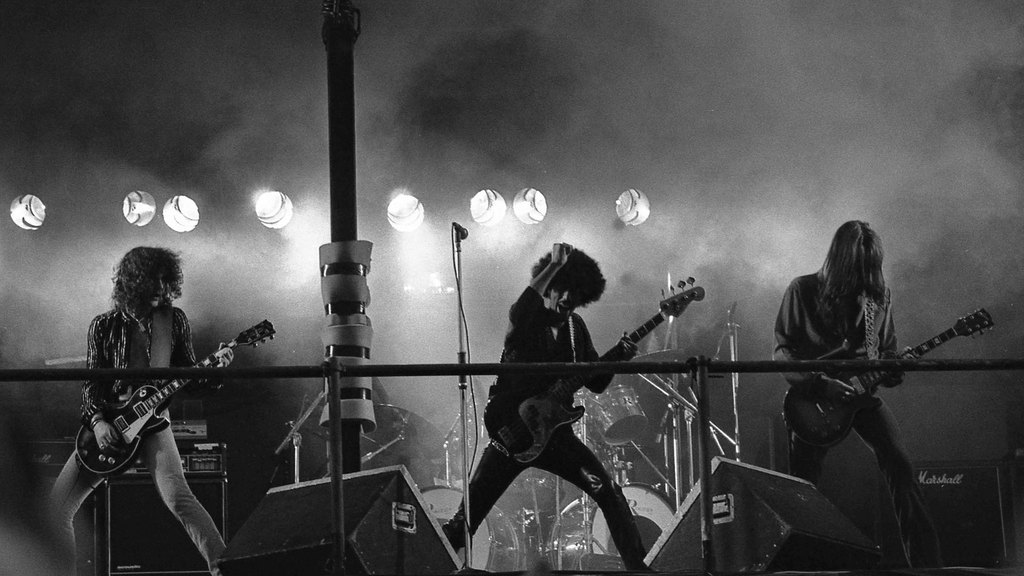
The History of the Riff: How Thin Lizzy Made "The Boys Are Back in Town" Sound Like a Victory Lap
Two guitarists, one deceptively simple progression, and a chorus built to make every barroom in the world feel like home.
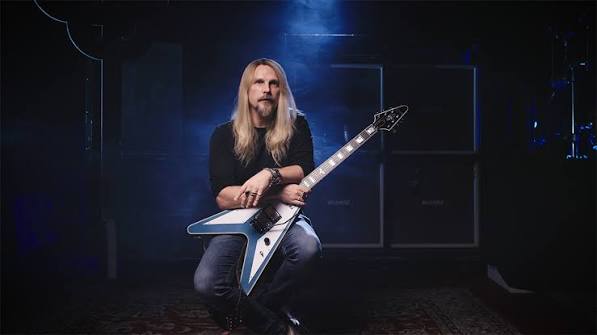
From Playing Hendrix for Coins to Judas Priest: Richie Faulkner Built His Entire Life Around Guitar
He learned Hendrix's "Wild Thing" as a kid, made his first money when a passer-by left 10 pence on the wall, and ended up standing in one of heavy metal's most scrutinised guitar positions. The interesting question isn't how Richie Faulkner joined Judas Priest — it's how he did it without becoming an impersonation.
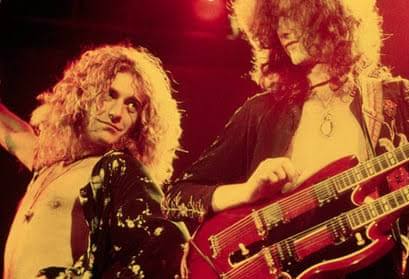
Robert Plant at 78: Why His Chemistry With Jimmy Page Was Led Zeppelin's Real Secret Weapon
Robert Plant turns 78 today. The conventional story says Page played guitar and Plant sang. The truth is stranger and more useful: they behaved like two lead instruments arguing, answering and leaving each other room.