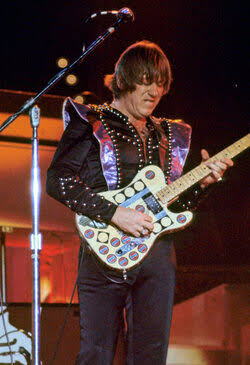
Terry Kath: The Guitar Genius History Almost Forgot
Chicago sold tens of millions of records, and yet the guitarist behind it all rarely shows up in greatest-of-all-time conversations. A closer look at Terry Kath — the player Jimi Hendrix reportedly called one of his favorites.
There are guitar legends, and then there are musicians who become legends among other guitar legends. Terry Kath belongs firmly in the second category.
Mention the greatest electric guitarists of all time and the same names usually dominate the conversation. Jimi Hendrix. Eric Clapton. Eddie Van Halen. Jimmy Page. Jeff Beck. Stevie Ray Vaughan.
Yet tucked just beneath those household names is a player whose influence far outweighs his public recognition. Terry Kath, the original guitarist and founding member of Chicago, remains one of rock music's most astonishing talents — an explosive combination of soulful phrasing, blistering blues vocabulary, jazz sophistication, and fearless experimentation.
Those who knew guitar knew Terry Kath. Those who didn't often missed one of the greatest players to ever plug into an amplifier.
The Guitarist Before Chicago
Born in Chicago in 1946, Terry Kath developed his musicianship long before Chicago Transit Authority became one of the biggest bands in America.
Unlike many of his contemporaries, Kath wasn't interested in fitting neatly into one genre. Blues was the foundation, but jazz harmony, R&B grooves, early rock, and soul all found their way into his playing.
That broad musical vocabulary would eventually define Chicago's sound.
While most rock bands relied on one or two guitars, Chicago built its identity around a powerful horn section. Instead of competing with brass players, Kath learned to weave between them — leaving space when needed before exploding into unforgettable lead passages.
It required restraint. It required confidence. Most importantly, it required exceptional musicianship.
The Sound That Cut Through Anything
Terry Kath possessed one of the most recognizable guitar tones of the late 1960s and early '70s.
His sound wasn't polished. It wasn't overly compressed. It wasn't drenched in effects. It was raw.
His guitar almost sounded like it was fighting the amplifier. Every note carried authority, and even clean passages contained a slight edge that made the instrument feel alive.
When he pushed into overdrive, the result was massive yet articulate. Whether playing rhythm or launching into extended improvisation, Kath never lost clarity. His phrasing sounded conversational rather than rehearsed. He played with conviction instead of calculation.
The "25 or 6 to 4" Solo
Ask guitar players where to begin with Terry Kath and most will immediately point toward 25 or 6 to 4.
Get Terry Kath’s “25 or 6 to 4” Tone
Tell ToneMD what guitar and gear you own and we’ll show you how to get as close as possible using the equipment you already have — full signal chain, real numbered settings, no guesswork.
Included with The Guitar Plugged Premium
The opening riff is instantly recognizable. Then comes the solo. It remains one of rock's greatest examples of controlled chaos.
Kath seamlessly combines blues bends, jazz phrasing, lightning-fast pentatonic runs, double-stops, chromatic ideas, and aggressive vibrato into a performance that still sounds fresh decades later.
Nothing feels forced. Nothing feels like showing off. Every phrase serves the song while simultaneously pushing the boundaries of rock guitar.
It's no surprise the solo regularly appears on lists celebrating the greatest guitar moments in classic rock.
Even Hendrix Took Notice
One of the stories that refuses to disappear involves Jimi Hendrix praising Terry Kath after seeing Chicago perform.
While different versions of the quote exist, the core message has remained remarkably consistent through the years. Hendrix reportedly referred to Kath as one of the best guitarists he had ever heard.
Whether every word has been perfectly preserved is almost beside the point. The fact that the story has endured for decades speaks volumes about the respect Terry Kath commanded among musicians. His peers understood exactly what they were witnessing.
Hendrix didn't hand out that kind of praise lightly. The mere fact that the story has survived fifty years tells you what other players heard.
More Than a Lead Guitarist
Perhaps Terry Kath's greatest strength was knowing when not to play.
Modern guitar culture often rewards speed. Kath rewarded the song.
“Those who knew guitar knew Terry Kath. Those who didn't often missed one of the greatest players to ever plug into an amplifier.”
Listen closely to Chicago's classic recordings and you'll hear carefully crafted rhythm parts supporting horns, keyboards, vocals, and percussion. He wasn't competing for attention — he was building arrangements.
When the spotlight finally landed on him, every note carried greater impact because he'd earned the moment. That's a lesson many modern players could still learn.
The Gear Behind the Magic
Kath never became synonymous with a single signature instrument the way Slash is linked with a Les Paul or Stevie Ray Vaughan with a Stratocaster. Instead, he constantly explored different sounds.
Throughout his career he played Fender Telecasters, Fender Stratocasters, Gibson guitars, and several modified instruments — pairing them with loud tube amplifiers capable of incredible dynamics.
Rather than chasing endless effects, Kath relied on his hands. Pick attack. Finger vibrato. Touch. Dynamics. Those elements shaped his tone more than any pedal ever could.
Why Terry Kath Never Became a Household Name
It's a fascinating question. Chicago became one of the biggest-selling bands in history. So why isn't Terry Kath mentioned alongside Page or Clapton?
Several factors contributed. First, Chicago's horn-driven identity often overshadowed the guitar work. Second, the band's later commercial success shifted toward polished pop ballads, causing many younger listeners to overlook the heavier early records. Finally, Terry Kath's life ended tragically in 1978 at just 31 years old following an accidental self-inflicted gunshot wound.
Rock lost one of its brightest creative voices before his career reached its full potential. It's impossible not to wonder what another twenty or thirty years of Terry Kath's playing might have sounded like.
A Legacy That Keeps Growing
Interestingly, Terry Kath's reputation has grown stronger over time.
YouTube has introduced his performances to new generations. Reaction videos regularly feature musicians stunned by his intensity. Vintage concert footage circulates across social media, often prompting comments like: "How have I never heard this guy before?"
That's perhaps the greatest testament to his artistry. Decades later, people continue discovering Terry Kath for the first time — and immediately understand why guitarists speak about him with such reverence.
Lessons Every Guitarist Can Learn
Kath's greatest lesson isn't a specific lick or scale. It's authenticity.
He never sounded like he was trying to impress anyone. He wasn't chasing trends. He wasn't building a personal brand. He simply played the music as honestly as possible.
His solos breathed. His rhythm work served the arrangement. His tone reflected personality rather than perfection.
In an era where social media often rewards speed, flash, and technical spectacle, Terry Kath reminds us that the most memorable guitarists are often the ones who sound unmistakably like themselves. That's a far more difficult achievement than playing fast.
The Final Chord
History has a funny way of correcting itself. Artists overlooked in their own time often receive the appreciation they deserved years later. Terry Kath fits that description perfectly.
His influence can be heard in blues-rock, fusion, classic rock, jam bands, and modern improvisational players who value feel as much as technique. He wasn't merely Chicago's guitarist. He was one of the defining electric guitar voices of the 1970s.
For those willing to dig beyond the obvious names, Terry Kath offers something increasingly rare: originality. No gimmicks. No shortcuts. Just extraordinary musicianship, fearless creativity, and a guitar tone that still leaps out of the speakers more than fifty years later.
If greatness is measured by originality, emotion, and lasting influence, Terry Kath belongs in every serious conversation about the finest guitarists who ever lived.
Experience-driven coverage, not algorithm bait.
- 20+ years of guitar playing experience
- Real-world retail experience at Guitar Center
- Thousands of hours testing guitars, amps, and pedals
- A community of 50,000+ guitar enthusiasts across platforms
- Partnerships with Fender, DistroKid, TrueFire, Card Chords, and Enya
- Editorial standards published openly — see how we test gear
Join The Guitar Plugged Newsletter
Deep dives on the guitarists other guitarists talk about — delivered weekly to your inbox.
Ask GP
3 free questionsQuestions about Terry Kath?
Get a straight answer from The Guitar Plugged's knowledge engine.
Discussion (0)
Sign in to join the discussion.
Sign in to commentLoading comments…
Discover another guitar story
Swipe through our latest features, breaking news and iconic solos — one story at a time.
Open Swipe →More in Guitar Talk
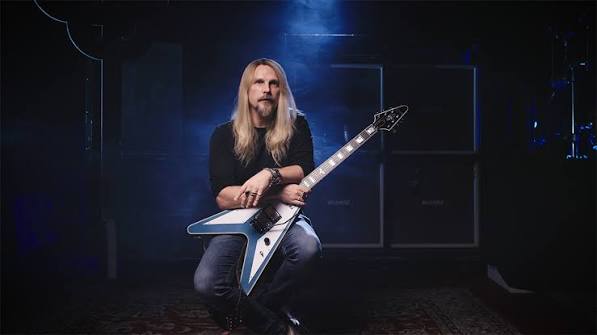
From Playing Hendrix for Coins to Judas Priest: Richie Faulkner Built His Entire Life Around Guitar
He learned Hendrix's "Wild Thing" as a kid, made his first money when a passer-by left 10 pence on the wall, and ended up standing in one of heavy metal's most scrutinised guitar positions. The interesting question isn't how Richie Faulkner joined Judas Priest — it's how he did it without becoming an impersonation.
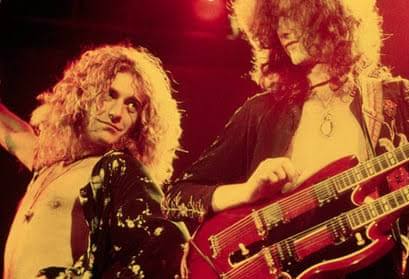
Robert Plant at 78: Why His Chemistry With Jimmy Page Was Led Zeppelin's Real Secret Weapon
Robert Plant turns 78 today. The conventional story says Page played guitar and Plant sang. The truth is stranger and more useful: they behaved like two lead instruments arguing, answering and leaving each other room.
History of the Riff: Jimi Hendrix's "Foxey Lady" — The Sound That Made the Electric Guitar Dangerous
Feedback before the riff, four Marshall cabinets, a microphone eight feet away and a Stratocaster flipped upside down — the full story of the riff that made the electric guitar sound dangerous.