
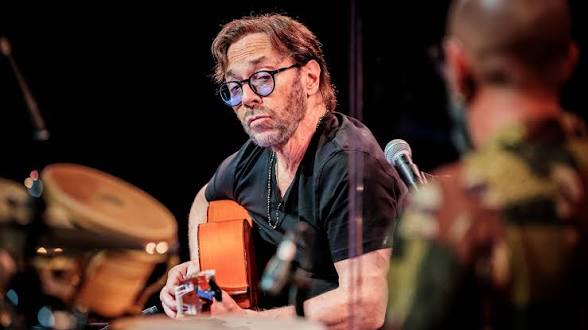
Al Di Meola at 72: How One Guitarist Redefined Speed Without Sacrificing Musicality
Al Di Meola turns 72 on July 22, 2026. Reducing his career to 'plays fast' misses everything that actually matters — the phrasing, the Latin and Mediterranean feel, and a half-century of pushing what a guitar can be.
Al Di Meola turns 72 today, July 22, 2026, and it is genuinely strange how often his legacy still gets flattened into a single word: fast. Fast is the easy story. Fast is the clip that goes viral. Fast is what a lot of guitarists heard on Elegant Gypsy in 1977 and mistook for the whole point.
The real story is more interesting. For nearly fifty years, Di Meola has been one of the players most responsible for expanding what electric and acoustic guitar could actually do inside jazz fusion — and he did it by treating speed as a consequence of phrasing, not a substitute for it.
Return to Forever and a Teenager Thrown Into the Deep End
Di Meola was born on July 22, 1954, in Jersey City, New Jersey, and grew up in Bergenfield. He was still a student at Berklee when Chick Corea called. In 1974, at 19, he replaced Bill Connors in Return to Forever alongside Corea, Stanley Clarke, and Lenny White — a lineup that would define electric jazz fusion for a generation.
The records he made with that band — Where Have I Known You Before (1974), No Mystery (1975), and Romantic Warrior (1976) — are still the reference point for what a fusion guitarist can bring to an ensemble of that caliber. He wasn't just keeping up; he was writing, arranging, and holding an equal chair with three of the most demanding musicians alive.
It's worth remembering how young he was. Most guitarists his age at the time were still finding a rhythm feel. Di Meola was trading heads with Corea on odd-meter compositions and delivering the kind of picked lines that most players still can't execute cleanly at any tempo.
Elegant Gypsy and a Solo Career Built on Composition
His 1976 solo debut Land of the Midnight Sun set the template, but 1977's Elegant Gypsy is the record that pushed him into the wider guitar conversation. 'Race with Devil on Spanish Highway,' 'Mediterranean Sundance,' and 'Flight Over Rio' were guitar showcases, but they were also compositions — melodies, arrangements, structural detail — not just excuses to solo.
That distinction matters. Plenty of players in the late 1970s had chops. Fewer built entire records around Latin rhythms, flamenco-informed melodic language, and cinematic form. Di Meola did, and it changed the vocabulary of instrumental guitar records for the next decade.
Casino (1978), Splendido Hotel (1980), and Electric Rendezvous (1982) kept the run going. The playing was extraordinary; the writing was better than the playing gets credit for.
Friday Night in San Francisco and the Acoustic Turn
In 1981, Di Meola released Friday Night in San Francisco with John McLaughlin and Paco de Lucía — a live acoustic trio record captured in December 1980. It became one of the best-selling acoustic guitar albums ever, and 'Mediterranean Sundance / Río Ancho' became the piece a whole generation of players tried to transcribe.
What often gets missed is that the record didn't just showcase three virtuosos in the same room. It legitimized acoustic guitar as a serious instrumental fusion voice at a moment when most of the culture was pointed the other way. The follow-up, Passion, Grace & Fire (1983), extended the conversation.
From that point on, acoustic — nylon-string in particular — was as central to Di Meola's identity as the semi-hollow and solidbody electrics he had used in Return to Forever.
Get Al Di Meola’s “Race with Devil on Spanish Highway” Tone
Tell ToneMD what guitar and gear you own and we’ll show you how to get as close as possible using the equipment you already have — full signal chain, real numbered settings, no guesswork.
Included with The Guitar Plugged Premium
Alternate Picking, Actually Explained
Ask most guitarists what makes Di Meola technically distinctive and the phrase 'alternate picking' comes up before anything else. That's accurate as far as it goes, but it undersells the mechanics.
His right hand is built around a strict down-up motion with a very small pick angle and extremely tight economy of movement. That's how he sustains long, connected lines across strings at tempos where most players give up and start sweeping or legato-ing their way through.
The left hand matters just as much. Di Meola's fingerings tend to prioritize position shifts that keep the picking pattern intact rather than convenience for the fretting hand. It's why his lines sound articulated the whole way through — every note is picked, and every note is deliberate.
For working guitarists, the practical takeaway is that his technique isn't a trick. It's the result of decades of slow, metronome-anchored practice at tempos most players skip. If you want to build any piece of that vocabulary into your own playing, there is no shortcut, and Di Meola himself has never pretended there was.
Latin, Mediterranean, and Tango Vocabulary
X Concepts Strings • Made in USA
Never Run Out of Strings Again.
Join the X Concepts String Club and get fresh USA-made strings delivered every month—plus Premium membership options for the full Guitar Plugged experience.
The other thing that separates Di Meola from the generic 'fusion shredder' box is where his melodic language actually comes from. Flamenco phrasing, Argentine tango — especially his long musical relationship with the compositions of Astor Piazzolla — Brazilian rhythms, and broader Mediterranean folk melodies are all baked into how he improvises.
His World Sinfonia project, launched in the early 1990s, made that side of him the main event. Records like World Sinfonia (1991) and Heart of the Immigrants (1993) put the tango and Mediterranean vocabulary front and center, with electric fusion pulled back into a supporting role.
It is one of the reasons his solos rarely sound like blues-scale variations. When Di Meola plays a fast line, it usually resolves in a way that a flamenco or tango phrase would resolve, not the way a rock solo would. That harmonic gravity is a lot of what makes him instantly identifiable.
“Speed was never the point for Al Di Meola. It was the byproduct of wanting to play melodies most guitarists wouldn't even try to hear.”
Electric and Acoustic, Treated as Two Voices
Di Meola never picked a side. Through the 1980s and into the modern era he moved fluidly between a Les Paul, PRS models, and semi-hollow electrics on the fusion side, and nylon-string classical and steel-string acoustics on the world-music side.
He is one of relatively few players who genuinely writes differently for each voice. His electric compositions tend to be more rhythmically aggressive and harmonically dense; his acoustic writing leans toward long-form melodic development and rubato phrasing. He isn't just switching instruments — he's switching musical grammar.
Why 'He Plays Fast' Is the Wrong Story
There is a certain kind of YouTube-era guitar culture that measures players in beats per minute. Al Di Meola is a useful antidote to that mindset because he was one of the first electric guitarists to demonstrate what real speed sounds like — and then spent the rest of his career showing that speed only matters when it's in service of a melody worth playing.
Listen to almost any full track from Elegant Gypsy or Casino end-to-end. The fast passages are surrounded by long, singing melodic sections, dynamic shifts, and compositional detail. The blur only exists because there's a shape holding it together.
That is the actual lesson for guitarists studying his catalog. Work on the picking, absolutely. But study the arrangements. Notice where he leaves space, where he restates a theme, where a whole passage is built on a single sustained note or a slow rubato line. The technique is the delivery system; the music is the point.
Longevity, and Still Working
Di Meola has continued to tour and record into his seventies. His recent work has leaned into acoustic ensembles, revisitations of Piazzolla and the Beatles catalog, and collaborations with musicians from Europe and South America. He has been vocal in recent years about health scares and recovery, and about the discipline it takes to keep playing at this level after five decades.
That's not a small footnote. Very few instrumentalists get half a century of relevance in a genre as unforgiving as jazz fusion. Fewer still keep evolving the music through it.
Where He Sits in the Guitar Canon
For anyone building a serious understanding of electric guitar history, Di Meola belongs in the same conversation as the players our readers already know from our list of the 25 greatest guitarists of all time and our deeper Guitar Talk features. He is one of the players who genuinely expanded what the instrument could do — not by adopting a new effect or a new tuning, but by insisting that jazz, rock, flamenco, and tango could live inside the same phrase without any of them losing their identity.
You can hear his influence in modern instrumental players from Guthrie Govan to Matteo Mancuso, and in every fusion-adjacent guitarist who thinks about phrasing before they think about tempo.
Happy 72nd, Al
Seventy-two is a real number of years to have spent redefining an instrument. Di Meola has done it quietly in some ways — no stadium mythology, no rock-star crash — and loudly in others, in the form of a discography that still holds up next to anything anyone else has released in the genre.
The best way to celebrate the birthday is the obvious one. Put on Elegant Gypsy. Put on Friday Night in San Francisco. Put on Romantic Warrior. Listen for the melodies first, and the speed will take care of itself.
Explore the Gear
As an Amazon Associate, The Guitar Plugged earns from qualifying purchases. Product mentions here reflect the article subject and are not implied endorsements by the artist unless otherwise stated.
What to Remember
- ▸Al Di Meola was born July 22, 1954, and joined Return to Forever at 19, playing on Where Have I Known You Before, No Mystery, and Romantic Warrior.
- ▸Elegant Gypsy (1977) established him as a solo artist who wrote compositions, not just guitar showcases.
- ▸Friday Night in San Francisco (1981) with John McLaughlin and Paco de Lucía made acoustic fusion guitar commercially viable.
- ▸His technique is built on strict alternate picking with tight economy of motion — decades of slow, deliberate practice, not shortcuts.
- ▸His melodic vocabulary draws from flamenco, Argentine tango (especially Piazzolla), Brazilian rhythms, and Mediterranean folk — which is why his lines don't sound like blues-scale runs.
- ▸Reducing him to 'plays fast' misses the arrangements, dynamics, and compositional structure that make the speed meaningful.
Keep Exploring Guitar Talk
For more on the players who shaped modern instrumental guitar — from Pat Metheny's endless horizon to Matteo Mancuso and Guthrie Govan — dig into our Guitar Talk section on The Guitar Plugged.
- Di Meola / McLaughlin / de Lucía — Friday Night in San FranciscoCheck price·Check on Amazon →
- Return to Forever — Romantic WarriorCheck price·Check on Amazon →
- Nylon-String Classical Guitar (Entry-Level)Check price·Check on Amazon →
Some links are affiliate links — we may earn a small commission at no cost to you.
Experience-driven coverage, not algorithm bait.
- 20+ years of guitar playing experience
- Real-world retail experience at Guitar Center
- Thousands of hours testing guitars, amps, and pedals
- A community of 50,000+ guitar enthusiasts across platforms
- Partnerships with Fender, DistroKid, TrueFire, Card Chords, and Enya
- Editorial standards published openly — see how we test gear
The Modern Guitar Magazine. Delivered to your inbox.
No spam. No gimmicks. Just great guitar content — stories, tones, iconic solos, and honest gear takes. Every week.
Ask GP
3 free questions a dayStill curious? Ask GP about this story.
Your personal classic-rock and guitar guide — ask anything about Al Di Meola at 72.
Discussion (0)
Sign in to join the discussion.
Sign in to commentLoading comments…
Discover another guitar story
Swipe through our latest features, breaking news and iconic solos — one story at a time.
Open Swipe →More in Guitar Talk
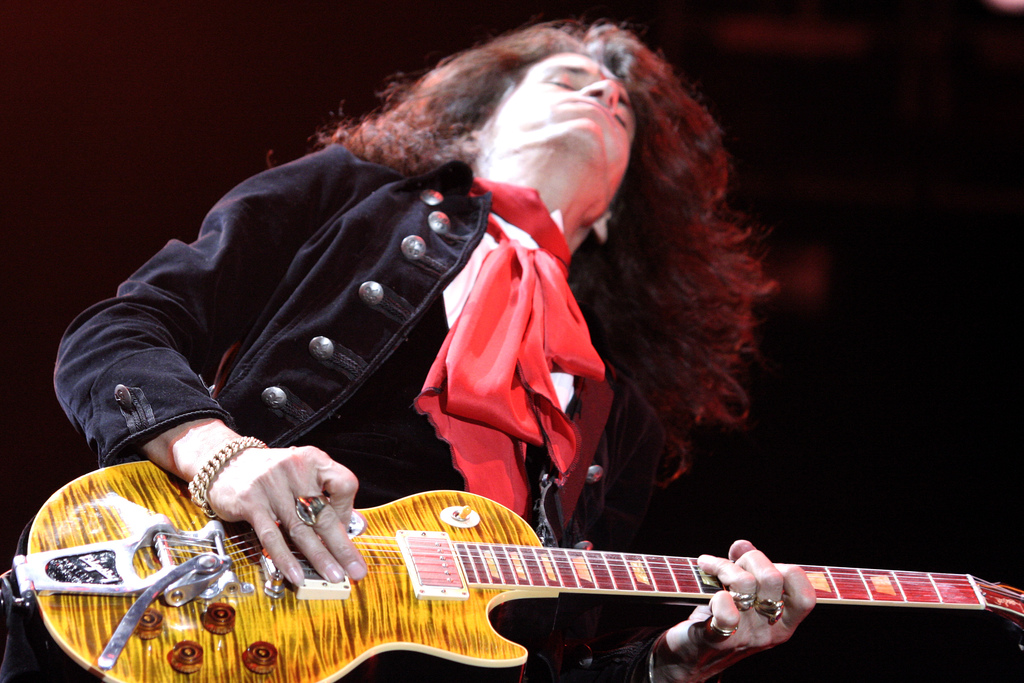
Happy Birthday, Joe Perry: The Riff Machine Who Gave Aerosmith Its Swagger
Joe Perry turns 76 today. From the swampy grind of “Sweet Emotion” to the reunion that saved a band, this is the career of the guitarist who taught American hard rock how to strut.
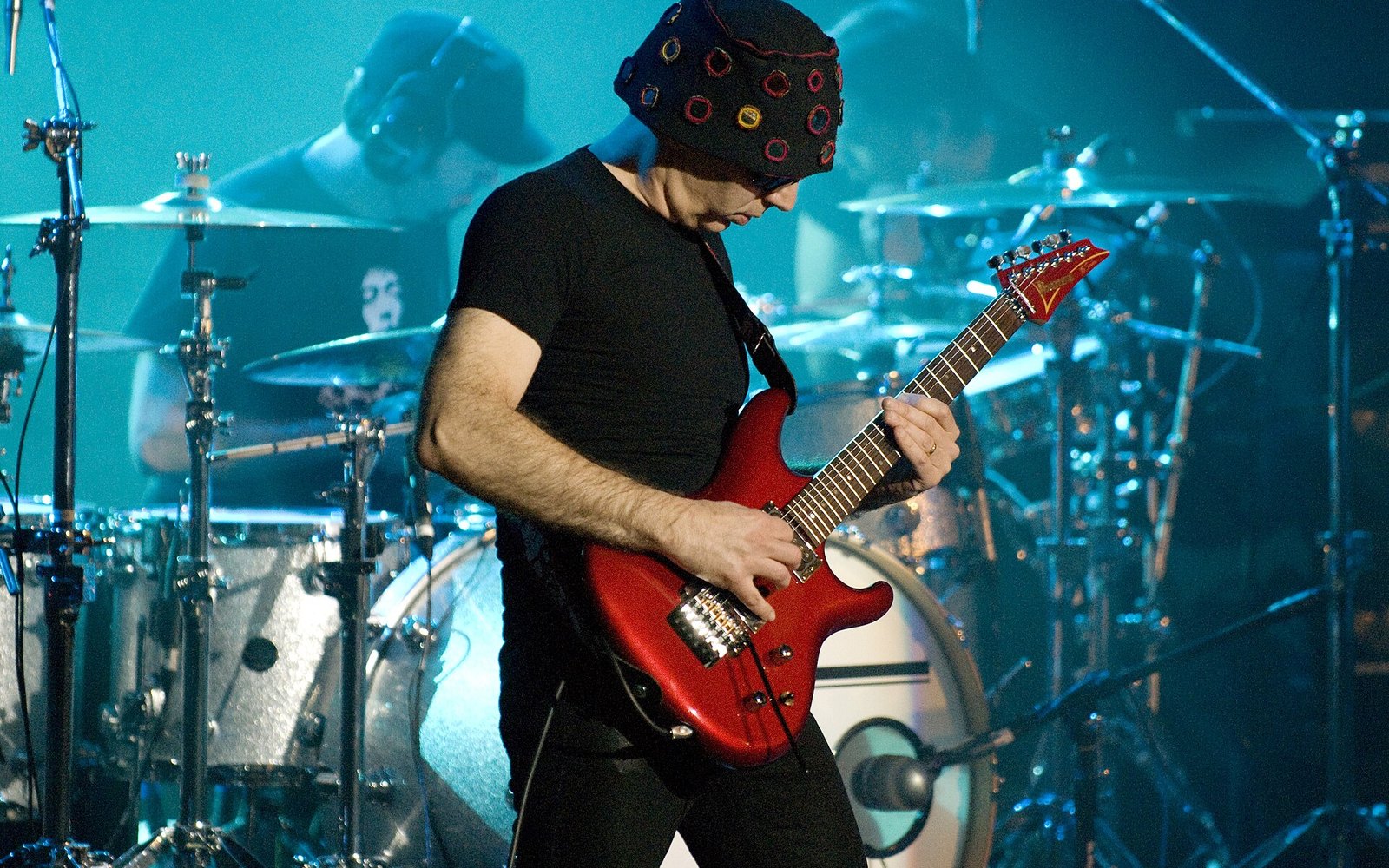
History of the Riff: How Joe Satriani Made “Flying in a Blue Dream” Feel Weightless
An acoustic guitar in an unusual tuning, a stray broadcast and a melody that seems to hang in the air: inside the construction of Satriani’s 1989 masterpiece.
Tony Iommi Opens Up About His Final Conversation With Ozzy Osbourne: “I Still Can't Get It in My Head”
The Black Sabbath guitarist says Ozzy was exhausted after the band's emotional farewell — but determined to give fans one final show.