
Billie Joe Armstrong's New Epiphone Les Paul Junior Proves Simplicity Still Rules Punk Rock
One pickup, one volume, one tone — and one of the most recognizable rhythm guitars in modern rock. Epiphone's new $649 Billie Joe Armstrong signature Les Paul Junior is a reminder that punk was never about gear.
For a guitarist whose band has sold more than seventy-five million records, headlined stadiums on four continents and helped rewrite what mainstream punk rock is allowed to sound like, Billie Joe Armstrong has always played a strikingly plain instrument. No locking trem. No coil splits. No pickup selector. Just a slab of mahogany, a single P-90 and two knobs. Epiphone is now betting that a new generation of players wants exactly that.
The company has just announced the limited-edition Epiphone Billie Joe Armstrong Les Paul Junior in Radiant Red, a $649 signature model designed in direct collaboration with the Green Day frontman. On paper it's a modest update to a design Gibson first sold in 1954. In practice it's one of the more meaningful signature releases in recent memory, because it doubles down on an idea most of the guitar industry keeps quietly walking away from — that a great electric guitar doesn't need many parts.
[TOC]
• Limited-edition Epiphone Billie Joe Armstrong Les Paul Junior in Radiant Red, priced at $649.
• Designed in collaboration with the Green Day frontman and modeled on his long-standing love of vintage Juniors.
• One P-90 PRO pickup, one volume, one tone — no toggle, no coil split, no compromise.
• Solid mahogany body, mahogany neck with a 50s Vintage profile, rosewood fingerboard, 22 medium jumbo frets.
• Ships in a custom hardshell case with a leopard-print interior — the same nod-to-the-fifties detail found on Armstrong's own guitars.
An Announcement That Feels Deliberately Small
There is nothing cynical about this release. Epiphone hasn't tried to smuggle in five hidden switches or a compressor circuit. There is no boutique preamp, no piezo, no USB output. The company built the guitar Armstrong actually plays: a single-cutaway Les Paul Junior with a dogear P-90 pickup, a wraparound-style bridge, and a control layout so plain it looks like a diagram in an old catalog.
That restraint is the story. Most signature guitars in 2026 read like a spec sheet auction — every additional switch, chambering trick and pickup option meant to justify a higher price. This one goes in the opposite direction. It costs $649. It has one pickup. It has two knobs. And the guitarist whose name is on the headstock has been playing something almost identical for thirty years.
The Specs, Plainly
Underneath the finish and the signature graphics, the guitar is a faithful modern take on the original 1950s Junior formula. Epiphone lists it with:
Body: Solid mahogany, slab-cut single cutaway. Neck: Mahogany with a 50s Vintage profile — the fatter D-shape that Junior players tend to prefer. Fingerboard: Indian rosewood, 22 medium jumbo frets. Pickup: One Epiphone P-90 PRO in the bridge position. Controls: One volume, one tone. That's it. Hardware: LockTone wrap-around bridge, Wilkinson-style vintage tuners. Finish: Radiant Red — a saturated, gloss-finished nod to the mid-century Cherry Juniors. Case: Custom hardshell with a leopard-print interior — the specific detail that separates a signature model from a shelf model.
It is, on purpose, a boring spec list. Boring specs are how Fender Telecasters, Stratocasters, ES-335s and Les Paul Juniors have quietly outlasted every trend of the last seventy years.
Why Billie Joe Armstrong Still Chooses a Les Paul Junior
The Junior is not a fashion accessory for Armstrong. It is the sound of his band. Pull up Dookie, released in February 1994 and one of the best-selling rock albums of the entire decade, and every one of those swaggering, over-the-top power chords is coming from a P-90 hitting the front end of a driven Marshall. There is no thick humbucker chug behind "Basket Case" and "Longview." There is one pickup, wide open, being asked to do everything.
Warning, the 2000 record that many fans still consider Green Day's most underrated, is even more of a Junior showcase. It's a jangly, melodic, borderline folk-punk album where the guitar tone has to sit inside vocal-forward arrangements without disappearing. A P-90 is exactly the pickup for that job — enough single-coil clarity to breathe, enough output and midrange to push an amp.
Then there is American Idiot in 2004, the album that turned Green Day into a rock-opera institution and put them back on top of the charts. Even in a production as ambitious as "Jesus of Suburbia," with its multiple movements and layered arrangements, the core rhythm guitar sound is the same: one Les Paul Junior, one P-90, one amp on the edge.
Get Billie Joe Armstrong’s “Basket Case” Tone
Tell ToneMD what guitar and gear you own and we’ll show you how to get as close as possible using the equipment you already have — full signal chain, real numbered settings, no guesswork.
Included with The Guitar Plugged Premium
The Junior has become part of Armstrong's identity for the same reason Stevie Ray Vaughan's Number One or Neil Young's Old Black became inseparable from those players. The guitar shapes the playing. On a Les Paul Junior there is no toggle switch to hide behind. You cannot cheat your way to a cleaner rhythm sound by rolling to the neck pickup. You cannot fake a bigger tone by hitting a split. Everything you play is exposed at the source.
His most beloved instrument is a 1956 Les Paul Junior nicknamed "Floyd," a battered vintage single-cut he has been photographed with more than any other guitar in his collection. Floyd, and a handful of similarly worn vintage Juniors, is the DNA the new Epiphone signature was designed against. The Radiant Red version isn't a nostalgia relic pretending to be Floyd. It's the shape and voice of Floyd made available to the rest of us for $649.
Less Guitar, More Attitude
Armstrong is far from the first great rock player to build an entire career on the smallest guitar in the room. The Junior — and instruments like it — has a long history of being chosen precisely because it refuses to help.
Leslie West, whose enormous cream-and-brown tone on Mississippi Queen is one of the most quoted rock guitar sounds of the 1970s, was a Les Paul Junior loyalist for years. His solo tone, that huge saturated midrange bark, wasn't the result of an exotic pickup array. It was one P-90 fed into a cranked amp by a player whose hands did the rest.
Johnny Thunders, the guitarist most responsible for the vocabulary that would become punk rock, gigged with a Les Paul Junior for most of his career. His playing with the New York Dolls and later Johnny Thunders and the Heartbreakers is, arguably, the direct ancestor of every four-chord snarl on Dookie. He didn't need pickup options. He needed one loud, midrange-heavy pickup that fought back.
Martin Barre, Jethro Tull's long-serving lead guitarist, is another Junior devotee — a player whose main instrument for the Aqualung era was a Les Paul Junior, and whose lead tone on that record has been imitated by generations of players trying to figure out how a one-pickup guitar can sound so orchestral.
The through-line in all of these players is the same. A stripped-down guitar makes you commit. There is no menu to scroll through. You pick up the instrument, you turn on the amp and you deal with what comes out. In an era where the average pedalboard now weighs more than the guitar plugged into it, that directness is starting to feel radical.
X Concepts Strings • Made in USA
Never Run Out of Strings Again.
Join the X Concepts String Club and get fresh USA-made strings delivered every month—plus Premium membership options for the full Guitar Plugged experience.
Why Fewer Controls Often Inspire Better Playing
There is a reason so many teachers hand beginners a Junior-style guitar and tell them to write a song by dinnertime. Fewer options force better choices. When your only tone shape lives between the volume knob and the pick, the pick suddenly matters more. When there's no neck pickup to bail you out on a rhythm part, the rhythm part has to be well written.
“A Les Paul Junior refuses to hide behind you. One pickup, one volume, one tone — the guitar throws every decision back into your hands, and Billie Joe Armstrong has spent thirty years proving that's exactly the point.”
A P-90 is the perfect pickup for that discipline. It's louder and rowdier than a Stratocaster single-coil, but far more articulate than a full-blown humbucker. Roll the volume back and it cleans up like a good single-coil. Push it hard and it hits an amp the way a humbucker does. On a well-set-up Junior, the volume knob is effectively a channel selector — and any player who's spent a night riding that knob understands why so many rock guitarists eventually end up owning one.
This is also, incidentally, why P-90 guitars have quietly staged a comeback in the boutique world over the last decade. Players who spent their thirties chasing endless pickup options have started chasing the opposite: fewer choices, more commitment.
Setup and Accessories That Actually Matter
A Junior is a guitar that rewards a good setup and punishes a lazy one. There is nowhere to hide a mismatched string gauge or a dead cable. If you're buying the new Epiphone — or picking up any P-90-equipped instrument — a small pile of the right accessories will do more for your tone than most $200 pedals.
A properly comfortable strap is not optional on a Les Paul Junior. Armstrong wears his low, and mahogany-body Les Pauls are dense; a good padded leather guitar strap is a real quality-of-life upgrade for a two-hour rehearsal.
String choice is a bigger deal on a P-90 guitar than it is on a humbucker guitar, because a single-coil-style pickup exposes more of the string's actual character. A fresh set of Ernie Ball Regular Slinky electric guitar strings is the classic 10-46 gauge that suits Junior-style guitars and matches what most punk-leaning players actually use.
Tuning stability on a wrap-around bridge is genuinely good, but only if the guitar is actually in tune. A reliable Snark clip-on chromatic tuner lives on the headstock and pays for itself the first time you play through a set with a drummer who runs hot.
P-90s pick up more environmental noise than humbuckers. A basic pack of guitar pickup foam and mounting screws is worth keeping in a case pocket for quick height adjustments — the difference between a P-90 set 3 mm from the strings and one set 5 mm from the strings is significant.
A heavy-duty A-frame guitar stand belongs next to the amp, not under a bed. Instruments that are visible get played.
Cable quality is boring and it matters. A good 20-foot instrument cable with reliable jacks will outlast every trend in guitar cable marketing.
For long-term care, a simple guitar maintenance kit with truss rod wrenches, cleaning cloths and fingerboard oil, plus a bottle of guitar polish and fretboard conditioner, will keep a mahogany-body Junior looking and playing right for decades.
And if the leopard-print hardshell case ever gets separated from the guitar, a solid replacement hardshell electric guitar case is a smart hedge — Juniors are getting harder to find used, and it's worth protecting one properly.
[MEMBERS_CTA]
Should You Buy One?
The Epiphone Billie Joe Armstrong Les Paul Junior isn't the guitar for everyone, and Epiphone knows that. It's the guitar for a specific kind of player, and it should be sold that way.
Who it's perfect for: Punk, indie, garage, alt-rock and roots-rock rhythm players who want one loud, articulate, character-forward guitar for the whole night. Anyone who has bought a Strat, a Tele and an SG in the last five years trying to find "their" sound and hasn't landed. Guitarists who record and want a rhythm guitar that sits in a mix without three EQ moves. Green Day fans who want to hear where the Dookie tone actually comes from.
Who might want something more versatile: Working cover-band players who need to nail everything from a country cleans to a metal chug in the same set. Session players who need pickup options for whatever a producer throws at them. Anyone who plays predominantly clean, jazz-adjacent or fusion material — a Junior is not a hollowbody, and it isn't trying to be.
Value for money: At $649 for a solid-mahogany, USA-designed signature model with a case that thoughtful, the Epiphone Junior sits in a competitive spot. It's more expensive than the entry-level Epiphone Les Paul Special range, and considerably cheaper than the Gibson USA Les Paul Junior it emulates. The comparison to look at isn't a $400 starter guitar. It's the used market, where a solid modern Gibson Les Paul Junior still lives north of $1,300 and vintage Juniors — Floyd's cousins — routinely trade for five figures.
Collector potential: Limited-edition signature runs in unique finishes have a decent track record on the used market when the artist has real cultural weight and hasn't oversaturated the signature category. Armstrong meets both criteria. He doesn't have a dozen previous Epiphone signature models diluting the pool, and Green Day's audience is generationally deep. This is not a guaranteed appreciating asset — no signature model ever is — but a Radiant Red example kept in its custom case will almost certainly hold its price better than the average 2026 Epiphone.
The Bigger Picture
The most interesting thing about this release isn't the specs. It's the message. In a year when the guitar industry is quietly folding more and more electronics into more and more guitars, one of the most successful rock guitarists of the last thirty years has signed his name to an instrument with a single pickup and two knobs, and asked Epiphone to build it in a way that respects the tradition.
That is a small, quiet argument for something a lot of players are starting to remember. A great electric guitar doesn't need many parts. It needs to make you commit.
The Radiant Red Junior does exactly that. It refuses to help you. It hands the responsibility back. And thirty years of Dookie, Warning, American Idiot and every song in between are the proof that this is not a limitation. It's the point.
Would you buy the new Billie Joe Armstrong Les Paul Junior, or would you rather hunt down a vintage Gibson? Let us know in the comments.
Experience-driven coverage, not algorithm bait.
- 20+ years of guitar playing experience
- Real-world retail experience at Guitar Center
- Thousands of hours testing guitars, amps, and pedals
- A community of 50,000+ guitar enthusiasts across platforms
- Partnerships with Fender, DistroKid, TrueFire, Card Chords, and Enya
- Editorial standards published openly — see how we test gear
The Modern Guitar Magazine. Delivered to your inbox.
No spam. No gimmicks. Just great guitar content — stories, tones, iconic solos, and honest gear takes. Every week.
Ask GP
3 free questions a dayStill curious? Ask GP about this story.
Your personal classic-rock and guitar guide — ask anything about Billie Joe Armstrong's New Epiphone.
Discussion (0)
Sign in to join the discussion.
Sign in to commentLoading comments…
Discover another guitar story
Swipe through our latest features, breaking news and iconic solos — one story at a time.
Open Swipe →More in Guitar Talk
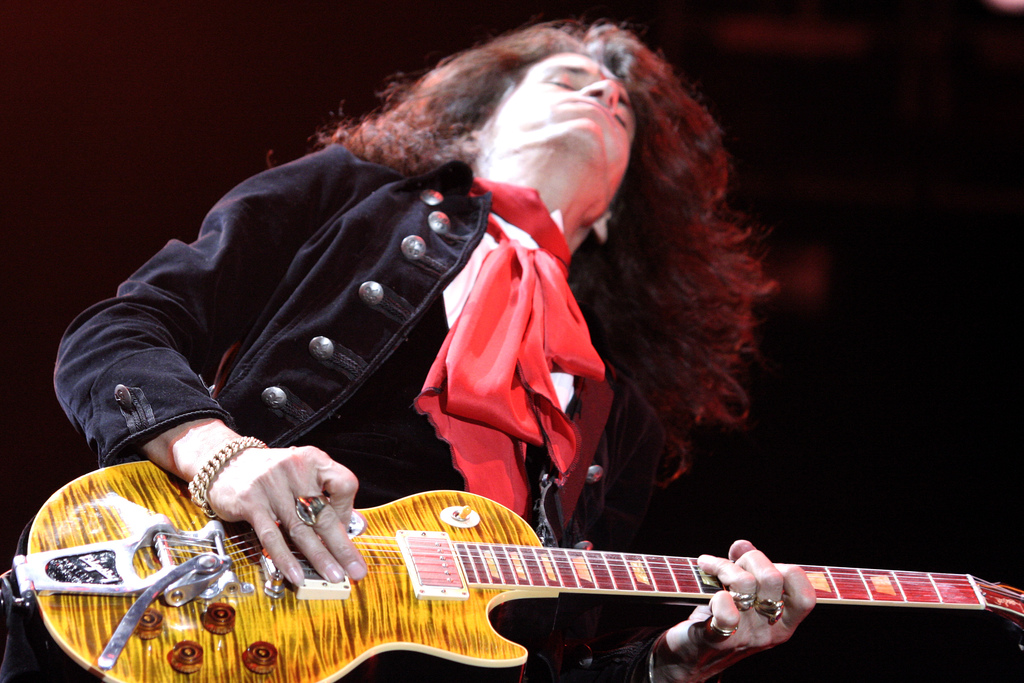
Happy Birthday, Joe Perry: The Riff Machine Who Gave Aerosmith Its Swagger
Joe Perry turns 76 today. From the swampy grind of “Sweet Emotion” to the reunion that saved a band, this is the career of the guitarist who taught American hard rock how to strut.
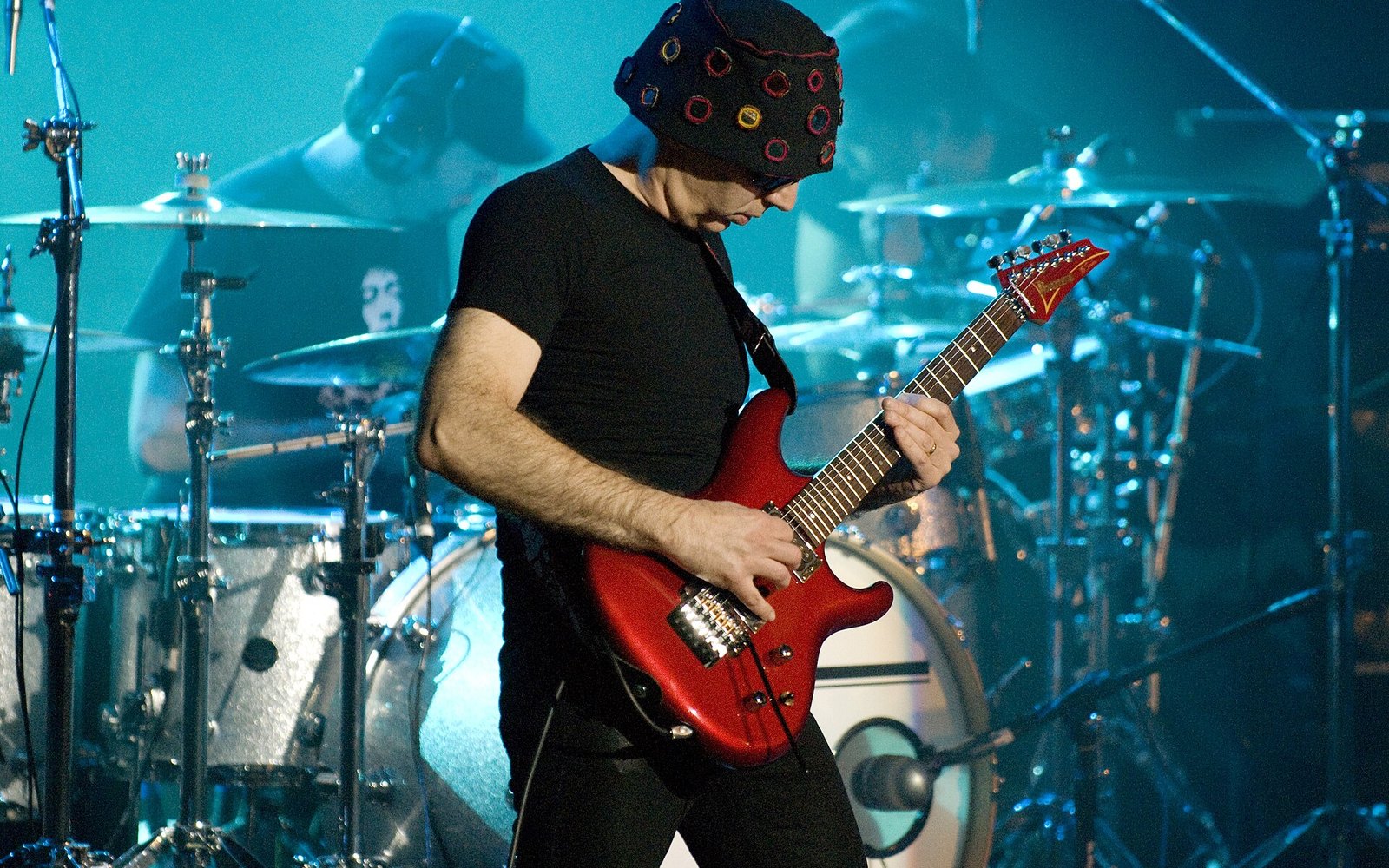
History of the Riff: How Joe Satriani Made “Flying in a Blue Dream” Feel Weightless
An acoustic guitar in an unusual tuning, a stray broadcast and a melody that seems to hang in the air: inside the construction of Satriani’s 1989 masterpiece.
Tony Iommi Opens Up About His Final Conversation With Ozzy Osbourne: “I Still Can't Get It in My Head”
The Black Sabbath guitarist says Ozzy was exhausted after the band's emotional farewell — but determined to give fans one final show.