
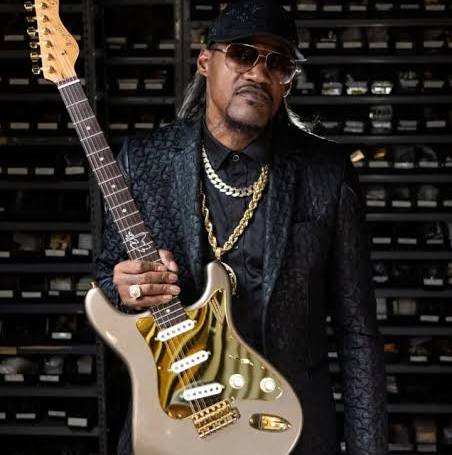
Eric Gales: The Left-Handed Guitar Powerhouse Who Turned the Blues Inside Out
From a Memphis prodigy signed at 16 to one of the most electrifying blues guitarists alive, Eric Gales plays a right-handed guitar flipped upside down — and turns the entire blues vocabulary inside out in the process.
The first time you really hear Eric Gales play, it doesn't feel like listening to a guitarist so much as watching someone shake a house down while smiling through the whole thing. There's the raw voltage of the notes, the way phrases lurch forward and then hang in the air just long enough to make you nervous, and the sense that at any moment he might either drop into a whisper or push the amp straight through the back wall. It is unmistakably the blues — but the blues rebuilt from the wiring up.
Gales is one of those rare players who somehow sounds like a tradition and a total anomaly at the same time. He carries the DNA of Albert King, Jimi Hendrix, and Stevie Ray Vaughan in every bend, but the delivery is his own: hyper-dynamic, rhythmically slippery, and constantly threatening to spill outside the twelve-bar box he seems to love and torment in equal measure.
From Memphis Prodigy to Major Label Deal
Eric Gales was born in Memphis in 1974, into a family where the guitar wasn't decoration — it was a language everyone spoke. His older brothers Eugene and Manuel were both serious players, and by the time Eric was old enough to reach the neck, he was already tagging along in a household where blues, gospel, funk, and hard rock lived on the same shelf.
The story becomes almost implausible from there. He entered and won a Memphis blues competition as a preteen, started opening for national acts before he could drive, and by 16 had signed a major deal with Elektra Records. His self-titled 1991 debut, released while he was still a teenager, showcased a player with monster chops, real songwriting instincts, and the kind of vocabulary usually reserved for lifers twice his age.
It's tempting to file that as a curiosity — young phenom, cover of the guitar magazines, moves on. But listen to those early records now and the seeds of everything he'd become are already there: the aggressive picking attack, the melodic vocal-like bends, the willingness to leave holes in a phrase because the silence hits harder than another note would.
Growing Up Inside a Musical Family
The family piece matters more than a lot of biographies let on. Eric didn't get sat down and taught the blues out of a book. He absorbed it around a room, at volume, from siblings who could actually play, and from a mother whose taste in records set the temperature of the house. That kind of osmosis tends to produce players who sound conversational rather than academic — musicians who understand that call-and-response isn't a chapter in a theory book, it's how you talk over dinner.
You can hear that lineage in how Gales plays rhythm. His comping is rarely just chords held down for the vocalist. It's a constant back-and-forth between grooves, gospel-tinged voicings, and stabbing single-note commentary, like he's arguing with himself in real time.
The Upside-Down Left-Handed Approach
Here's where Eric Gales becomes physically unusual on top of being musically unusual. He is left-handed, but he plays a right-handed guitar flipped over — with the strings still in standard right-handed order. That means the low E ends up on the bottom of the neck from his perspective, and the high E on top.
It sounds like a stunt on paper. In practice, it's arguably one of the biggest reasons he doesn't sound like anyone else. Because his string order is inverted relative to the way most left-handed and right-handed players think, his bends, rakes, and chord voicings pull against gravity in unusual ways. Downward bends on the low strings become natural motion for him. String skipping and voice-leading find shapes that most players don't stumble into.
Hendrix famously flipped a right-handed Strat and restrung it left-handed. Gales goes a step further and doesn't restring at all. That subtle difference is a huge part of why his phrases so often land somewhere between blues and lead violin — pulled, cried, and shaped in a way that feels physically distinct.
The Comeback, Handled Honestly
Any honest write-up of Eric Gales has to acknowledge the middle chapter. He has spoken openly and often about the years he lost to addiction, about serving time, and about the very real damage that period did to his career momentum. He hasn't hidden it, and he hasn't romanticized it either.
Want Eric Gales’ Tone?
Tell ToneMD what guitar and gear you own and we’ll show you how to get as close as possible using the equipment you already have — full signal chain, real numbered settings, no guesswork.
Included with The Guitar Plugged Premium
What matters for the guitar story is that when he came back — really came back — he did it with a level of clarity and intensity that most players never reach in a lifetime. Middle of the Road (2017) marked a genuine turning point, both personally and artistically. From that point on, Gales has been one of the busiest and most respected working guitarists on the modern blues-rock circuit.
His 2022 album Crown, produced by Joe Bonamassa and Josh Smith, took things another step. It earned a Grammy nomination, put him in front of a much bigger audience, and made it impossible to keep pretending he was still an insider secret.
What Makes Eric Gales Sound Like Eric Gales?
Ask ten guitarists what makes Gales instantly recognizable and you'll get ten different answers, but a few things always show up on the list.
Attack and dynamics. Gales has a genuinely violent pick attack when he wants one, then in the same phrase he'll drop to a feathered volume that most players can't control. That range — from a whisper to a scream inside a single lick — is one of the biggest reasons his solos never feel flat.
Note choice. His melodic vocabulary starts in blues pentatonic territory but constantly reaches into chromaticism, altered dominants, and gospel-informed passing tones. He doesn't just run scales; he sings phrases, then decorates them with weird intervals that shouldn't work and always do.
Rhythmic feel. This is the sneaky one. Gales sits behind the beat in a way that gives every phrase a lazy Memphis swagger, but he can turn on a dime into 32nd-note bursts that snap you back to attention. It's the same thing that made B.B. King so hard to imitate: the time.
Improvisation as conversation. Watch him live and it's clear he's listening more than he's soloing. He responds to the drummer, echoes lines back to himself, and treats a bandstand like a room full of people talking.

X Concepts Strings • Made in USA
Never Run Out of Strings Again.
Join the X Concepts String Club and get fresh USA-made strings delivered every month—plus Premium membership options for the full Guitar Plugged experience.
Tone, Guitars, and Gear
Gales' sound has evolved, but the ingredients tend to sit in a familiar zone: a hot, articulate single-coil or hum-canceling voice, driven amps with plenty of headroom, and a signal chain built around a strong overdrive rather than heaps of modeling.
“Eric Gales doesn't play the blues from the outside in. He plays it from the inside out — and the guitar is barely holding on for the ride.”
For years he has been closely associated with Magneto Guitars, and his signature RD3 model — designed around his upside-down left-handed setup — has become the guitar most fans picture in his hands. Prior to that, he played everything from Fender Strat-style instruments to hollowbodies, and he's never been especially precious about brand loyalty when a guitar simply feels right.
On the amp side, he's leaned on tube combos with real clean headroom, letting an overdrive pedal do the heavy lifting for lead breaks. On the pedalboard, expect variations on Tube Screamer-style drives, a wah, and just enough time-based effect to add space without clouding the attack.
The takeaway for guitarists trying to chase a piece of that tone: it's mostly hands, then a good drive pedal, then a clean amp with headroom, in roughly that order.
Building a Voice Over Decades
The thing that sneaks up on you when you dig into Gales' discography in order is how much of his identity came from staying at it. The chops were there at 16, but the voice — the specific way an Eric Gales solo unfolds now — took years of playing every night, rebuilding a life, and refusing to settle into a formula.
That's the part that's genuinely useful for other guitar players. Nobody comes out fully formed. The players we recognize instantly are the ones who kept showing up long enough for their instincts to sharpen.
If you're a guitarist trying to build your own voice, the practical work is less glamorous than the videos suggest: consistent practice, clear goals, honest self-assessment, and a way to actually track progress instead of guessing. That's the whole idea behind The Guitar Plugged's Guitar Goal Planner — a simple system for setting weekly and monthly goals, logging practice, and watching your own playing evolve the same way Gales' did, one session at a time.
Where to Start: Essential Eric Gales Listening
Middle of the Road (2017). The album that reintroduced Gales to a lot of listeners. Start with 'Boogie Man' and 'Change In Me' for a compact look at his rhythm feel, dynamics, and how a modern blues record can still swing.
Crown (2022). The Grammy-nominated Joe Bonamassa and Josh Smith production. Broader in scope, more personal in the lyrics, and packed with playing that shows how far his phrasing has traveled. 'I Want My Crown' with Bonamassa is the obvious hook, but the deeper cuts reveal even more.
Live performances. Gales is one of those artists who somehow gets even better in real time. His live footage — solo, with his band, and in collaborations with Bonamassa, Santana, and others — is the fastest way to understand what everyone in the guitar world has been shouting about.
Guest appearances and collaborations. Because he is so widely respected among other guitarists, some of his most striking playing shows up on other artists' records and jams. Following that trail turns up some of his most inspired moments.
Why Guitarists Hold Him in Such High Regard
Ask working guitarists whose playing scares them the most and Eric Gales comes up again and again. Part of it is the sheer command — the fact that he can seemingly do anything the guitar physically allows. Part of it is the emotional range. And part of it is that he plays with an honesty that's hard to fake.
In an era where technique is everywhere and identity is rare, Gales sounds like exactly one person. That's the highest compliment you can give a guitarist.
Where He Fits in the Modern Guitar Landscape
Between Joe Bonamassa's stadium-blues polish, Gary Clark Jr.'s genre-fluid rock, and the growing bench of young blues-rock players finding their footing, Eric Gales occupies a specific and important spot: he's the one who most obviously carries the fire. He's the reminder that the blues doesn't have to be reverent, or clean, or academic. It can still be dangerous.
For younger guitarists thinking about the future of the genre, that matters. The blues survives when it's played with real stakes. Gales plays with real stakes every night.
Why Eric Gales Matters
The story of Eric Gales isn't just a guitar story — it's a story about starting early, losing your footing, doing the work to get it back, and coming out the other side with more to say than you had the first time around. That arc is rare enough in music. It's even rarer when the player at the center of it happens to be one of the most physically gifted guitarists of his generation.
If the blues is going to keep evolving, it will be because players like Eric Gales insist on evolving with it. And if you're a guitarist who cares about phrasing, dynamics, and the endless conversation between the instrument and the person holding it — his catalog is one of the most rewarding places you can spend your listening time right now.
What to Remember
- ▸Eric Gales plays a right-handed guitar flipped upside down without restringing — the reason his bends, rakes, and phrasing don't sound like anyone else's.
- ▸He signed with Elektra at 16 out of Memphis, then came back stronger after a well-documented period of addiction and jail time.
- ▸Middle of the Road (2017) and the Grammy-nominated Crown (2022, produced by Joe Bonamassa and Josh Smith) are the two obvious starting points.
- ▸His voice is built on hyper-dynamic attack, gospel-inflected note choice, laid-back time feel, and improvisation that behaves like a conversation.
- ▸The Gales tone recipe: strong hands, a solid overdrive, a loud clean amp — mostly in that order.
Keep Exploring Guitar Talk
Dig deeper into the players, riffs, and moments shaping electric guitar — from Stevie Ray Vaughan's Texas Strat tone to Gary Moore's tearful blues masterpiece — in our Guitar Talk section on The Guitar Plugged.
- Eric Gales — Crown (Vinyl / CD)Check price·Check on Amazon →
- Eric Gales — Middle of the RoadCheck price·Check on Amazon →
- D'Addario NYXL Electric Guitar Strings$14·Check on Amazon →
Some links are affiliate links — we may earn a small commission at no cost to you.
Experience-driven coverage, not algorithm bait.
- 20+ years of guitar playing experience
- Real-world retail experience at Guitar Center
- Thousands of hours testing guitars, amps, and pedals
- A community of 50,000+ guitar enthusiasts across platforms
- Partnerships with Fender, DistroKid, TrueFire, Card Chords, and Enya
- Editorial standards published openly — see how we test gear
The Modern Guitar Magazine. Delivered to your inbox.
No spam. No gimmicks. Just great guitar content — stories, tones, iconic solos, and honest gear takes. Every week.
Ask GP
3 free questions a dayStill curious? Ask GP about this story.
Your personal classic-rock and guitar guide — ask anything about Eric Gales.
Discussion (0)
Sign in to join the discussion.
Sign in to commentLoading comments…
Discover another guitar story
Swipe through our latest features, breaking news and iconic solos — one story at a time.
Open Swipe →More in Guitar Talk
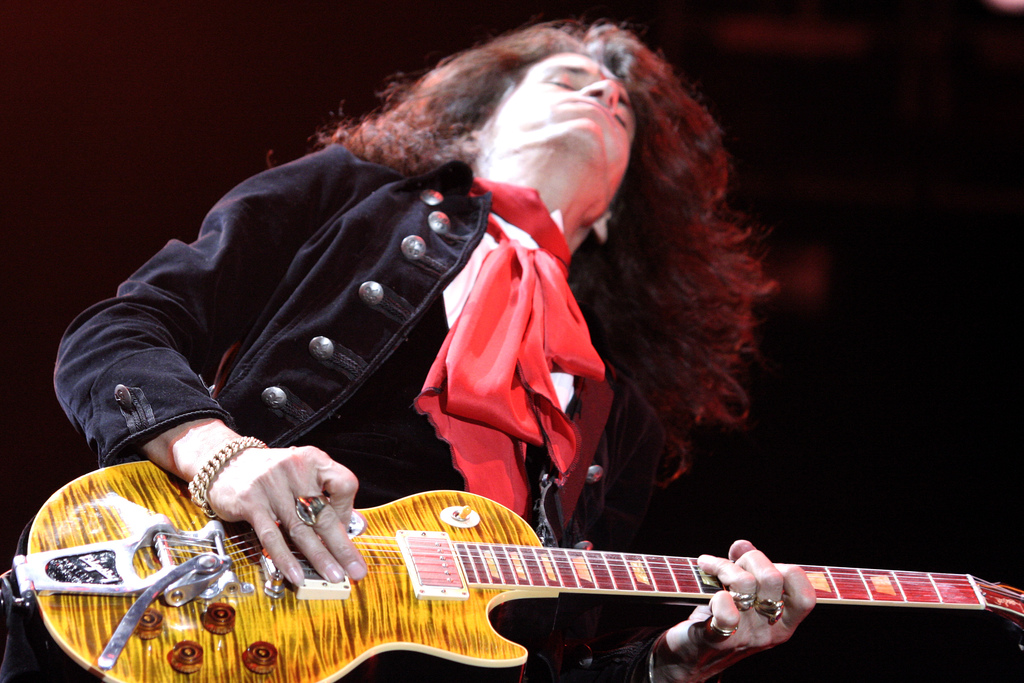
Happy Birthday, Joe Perry: The Riff Machine Who Gave Aerosmith Its Swagger
Joe Perry turns 76 today. From the swampy grind of “Sweet Emotion” to the reunion that saved a band, this is the career of the guitarist who taught American hard rock how to strut.
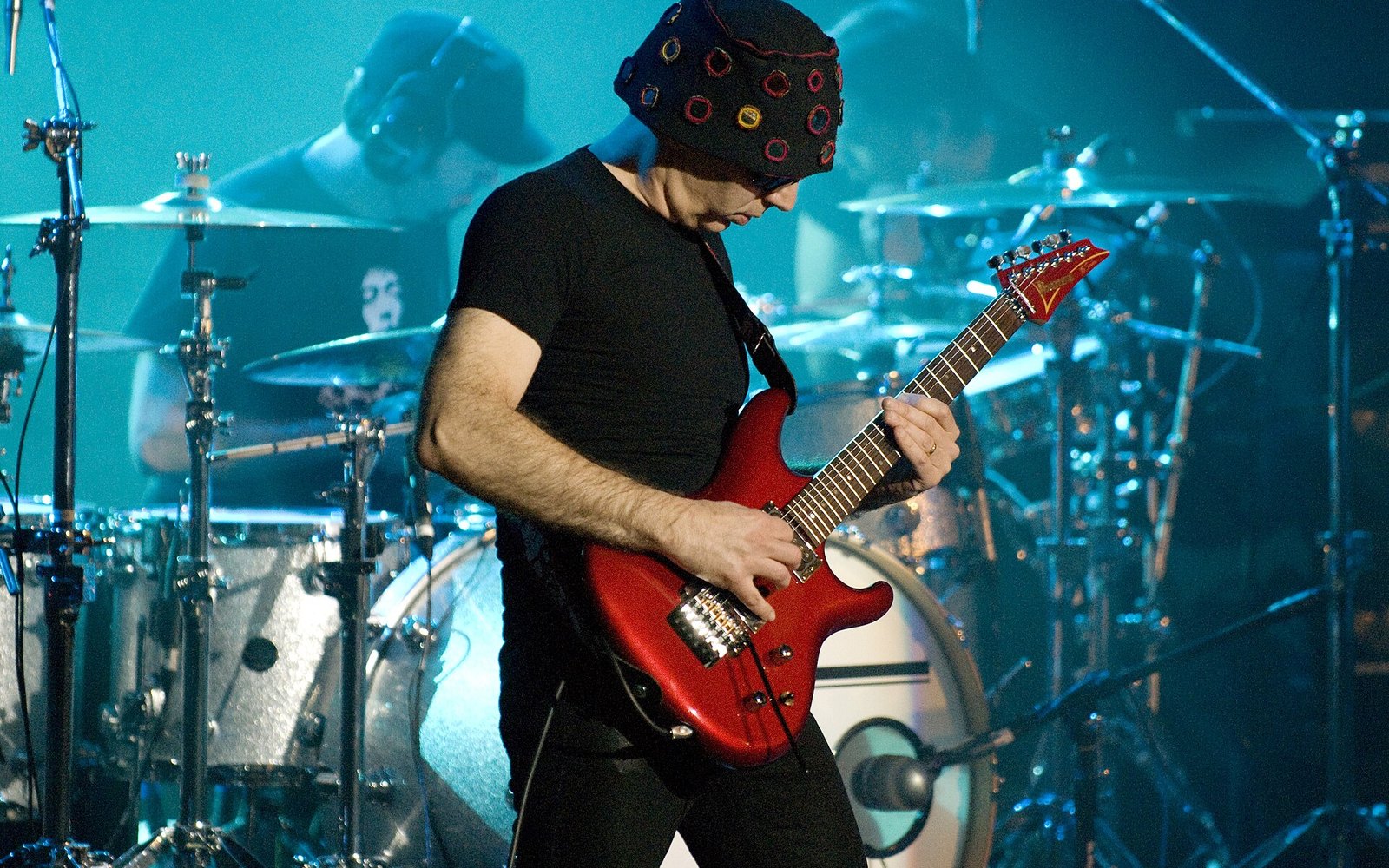
History of the Riff: How Joe Satriani Made “Flying in a Blue Dream” Feel Weightless
An acoustic guitar in an unusual tuning, a stray broadcast and a melody that seems to hang in the air: inside the construction of Satriani’s 1989 masterpiece.
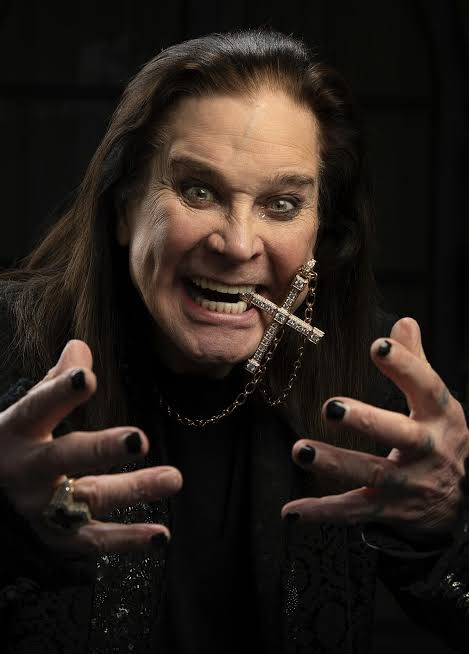
Tony Iommi Opens Up About His Final Conversation With Ozzy Osbourne: “I Still Can't Get It in My Head”
The Black Sabbath guitarist says Ozzy was exhausted after the band's emotional farewell — but determined to give fans one final show.