
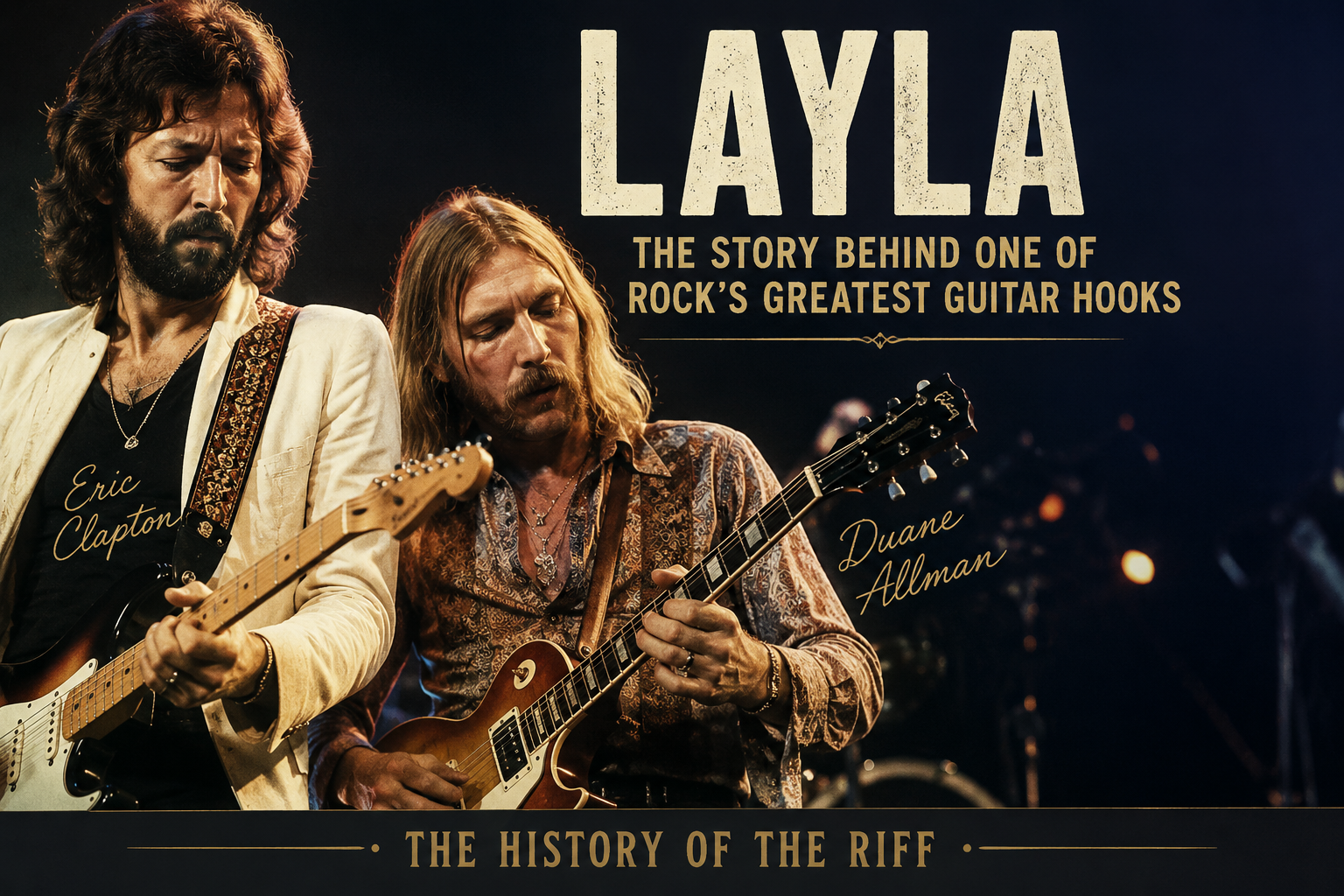
History of the Riff: Layla – The Story Behind One of Rock's Greatest Guitar Hooks
The story behind Layla — Eric Clapton's heartbreak, Duane Allman's slide, and the riff that became one of rock's greatest guitar hooks.
When guitar players talk about iconic riffs, names like "Smoke on the Water," "Whole Lotta Love," and "Back in Black" always enter the conversation.
But there's one riff that somehow feels bigger than all of them.
The opening notes of "Layla" by Derek and the Dominos don't just introduce a song—they announce an emotional explosion.
Few riffs in rock history capture desperation, passion, heartbreak, and brilliance in under ten seconds.
This is the history of the riff behind "Layla."
The Backstory: Love, Obsession, and a Guitar
In 1970, Eric Clapton was in a difficult place.
Despite already being one of the biggest guitarists in the world thanks to Cream and Blind Faith, he was burned out by fame and struggling emotionally.
At the center of it all was Pattie Boyd, the wife of his close friend, George Harrison of The Beatles.
Clapton was hopelessly in love with her.
The emotional turmoil inspired much of the material that would become Layla and Other Assorted Love Songs, the only studio album released by Derek and the Dominos. The song's title was inspired by the ancient Persian story Layla and Majnun, a tale of unattainable love that mirrored Clapton's own situation.
The Birth of the Riff
The main riff was developed by Clapton during the writing sessions for the album.
What makes it so powerful is its combination of aggressive chord movement, vocal-like phrasing, and a sense of urgency and tension.
The riff doesn't sit comfortably.
It sounds restless.
Almost like it's searching for something.
Which perfectly reflects the song's lyrical theme.
The opening figure moves with a dramatic rise and fall that immediately creates emotional weight before a single lyric is sung.
Enter Duane Allman
Get Eric Clapton & Duane Allman’s “Layla” Tone
Tell ToneMD what guitar and gear you own and we’ll show you how to get as close as possible using the equipment you already have — full signal chain, real numbered settings, no guesswork.
Included with The Guitar Plugged Premium
While Clapton wrote the foundation of "Layla," the song reached legendary status thanks to the arrival of one man: Duane Allman.
Producer Tom Dowd introduced Clapton to Duane during the Miami recording sessions.
The two guitarists immediately connected.
Clapton later described Allman as the musical brother he never had. Duane's slide guitar became one of the defining sounds of the album.
Those soaring slide lines that answer the riff? That's Duane.
Those emotional cries that seem to sing back to Clapton's vocals? That's Duane.
Many listeners mistakenly assume those famous melodic phrases are Clapton, but much of the guitar magic people associate with "Layla" comes from Allman's slide work.
The result was one of the greatest guitar partnerships ever captured on tape.
Why the Riff Works
Technically speaking, the riff isn't incredibly difficult.
Its brilliance comes from composition rather than complexity.
Call and Response
The riff leaves space. Instead of cramming notes together, it creates a conversation between phrases.
“The opening notes of Layla don't introduce a song—they introduce a feeling.”
Emotional Tension
Every movement feels unresolved. The listener constantly expects a release that never fully arrives.
Vocal Energy
The riff almost sounds sung rather than played. It's one reason guitarists remember it immediately after hearing it.
Perfect Timing
The attack of the riff feels urgent and aggressive without becoming chaotic. The rhythm drives the entire song forward.
The Famous Piano Ending
One of the most fascinating facts about "Layla" is that the song's legendary ending wasn't originally part of the riff section at all.
After recording the main guitar-driven portion, Clapton felt the song needed a better conclusion.
The answer came from drummer Jim Gordon, who brought in a piano composition that would become the song's unforgettable coda. The two sections were recorded separately and later combined into one masterpiece.
The transition is dramatic. The intensity of the riff gives way to a dreamy, almost cinematic ending.
It's one of the most recognizable endings in rock history.
Recording the Masterpiece
The main guitar section was recorded during the famous Criteria Studios sessions in Miami.
The chemistry between Clapton and Allman pushed both players to new heights.
Instead of competing, they elevated each other.
Their guitar lines weave together throughout the song, creating a sound that feels larger than either guitarist alone.
Many historians consider these sessions some of the greatest collaborative guitar recordings ever captured.
The Gear Behind the Riff
• Fender Stratocaster ("Brownie")
• Fender Champ tube amp
• Standard tuning
• Light-gauge strings for expressive bends
• 1957 Gibson Les Paul Goldtop
• Marshall 50-watt head
• Coricidin medicine bottle slide
• Open E tuning for slide passages
The magic wasn't just the equipment.
It was the combination of two elite guitarists pushing each other creatively.
The Legacy of the Riff
More than 50 years after its release, "Layla" remains one of the most recognizable guitar intros ever recorded.
It has appeared in films, documentaries, commercials, and countless "greatest guitar songs" lists.
The riff represents everything great about classic rock guitar: emotion over speed, melody over flash, feel over perfection.
And perhaps most importantly: it proves that the best riffs aren't always the most technical.
They're the ones that make you feel something.
The opening notes of "Layla" still accomplish that every single time.
The riff from "Layla" belongs on the Mount Rushmore of guitar history. It's emotional, unforgettable, and instantly recognizable.
Plenty of guitarists have played faster. Plenty have played more notes.
Very few have ever made six notes say as much as Eric Clapton and Duane Allman did on "Layla."
That's what makes it timeless.
Shop Layla-Inspired Gear
Some links may be affiliate links. We may earn a small commission at no cost to you.
Experience-driven coverage, not algorithm bait.
- 20+ years of guitar playing experience
- Real-world retail experience at Guitar Center
- Thousands of hours testing guitars, amps, and pedals
- A community of 50,000+ guitar enthusiasts across platforms
- Partnerships with Fender, DistroKid, TrueFire, Card Chords, and Enya
- Editorial standards published openly — see how we test gear
The Modern Guitar Magazine. Delivered to your inbox.
No spam. No gimmicks. Just great guitar content — stories, tones, iconic solos, and honest gear takes. Every week.
Discussion (0)
Sign in to join the discussion.
Sign in to commentLoading comments…
Discover another guitar story
Swipe through our latest features, breaking news and iconic solos — one story at a time.
Open Swipe →More in Guitar Talk
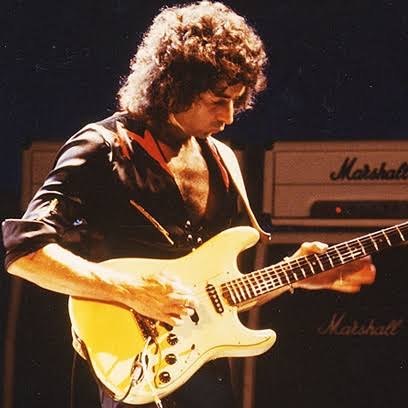
Ritchie Blackmore Plans to Rejoin Deep Purple Onstage Tonight — 33 Years After Walking Away
Thirty-three years after his final departure, Ritchie Blackmore says he plans to step onto a Deep Purple stage again — for one song, one night, and perhaps one final glimpse of a guitar chemistry that helped invent hard rock.
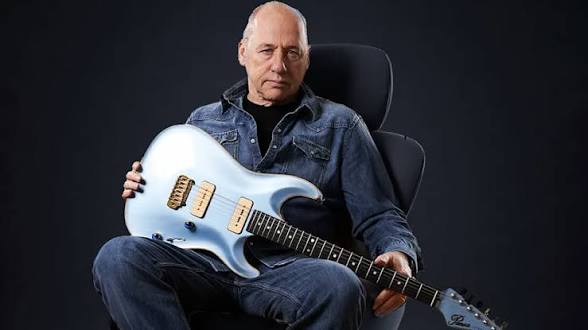
Mark Knopfler at 77: Why Playing the Right Notes Still Won't Make You Sound Like Him
Mark Knopfler turns 77 today, and his playing remains one of the hardest things in rock to imitate. Not because the notes are difficult — because almost none of what makes it sound like him is written down.
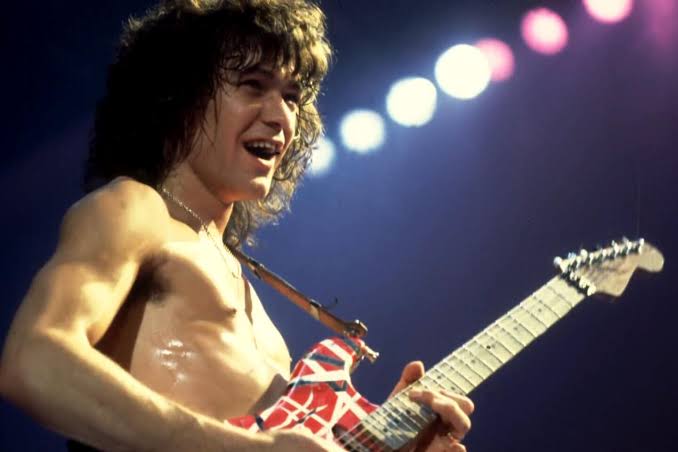
Eddie Van Halen: The Man Who Took the Electric Guitar Apart — and Rebuilt What It Could Be
From an immigrant kid learning piano by ear in Pasadena to the homemade guitar that changed an industry, the impossible sound of "Eruption," 5150, the Brown Sound and a legacy that still defines electric guitar: this is the complete story of Edward Van Halen.