Jimi Hendrix at Woodstock: The Performance That Redefined Electric Guitar Forever
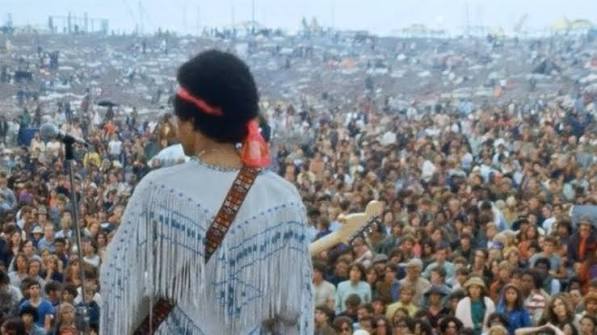
On the morning of August 18, 1969, Jimi Hendrix walked onto the Woodstock stage and delivered one of the most influential guitar performances ever witnessed — a set that turned the Stratocaster into a new instrument and the American anthem into a statement heard around the world.
Some performances entertain. Others become part of history.
When Jimi Hendrix walked onto the Woodstock stage on the morning of August 18, 1969, he wasn't just closing out the festival — he was about to deliver one of the most influential guitar performances ever witnessed.
More than fifty years later, his set remains the defining image of Woodstock and one of the greatest demonstrations of what the electric guitar can express.
[TOC]
A Festival Running Behind Schedule
Woodstock was originally scheduled to end Sunday night. Instead, heavy rain, technical delays, and an overwhelming crowd pushed the festival well into Monday morning.
By the time Hendrix took the stage around 9:00 a.m., much of the estimated 400,000-person audience had already begun heading home. Even so, tens of thousands remained to witness history.
Ironically, the festival's most famous performance happened after most people had already left.
Hendrix Was at the Height of His Powers
By 1969, Hendrix had already transformed rock guitar. Albums like Are You Experienced, Axis: Bold as Love, and Electric Ladyland had introduced sounds nobody thought possible.
Using feedback, fuzz, wah, controlled distortion, and astonishing improvisation, Hendrix turned the Stratocaster into an entirely new instrument.
At Woodstock, he arrived with a newly assembled group called Gypsy Sun and Rainbows, featuring rhythm guitarist Larry Lee along with an expanded rhythm section. The larger lineup gave Hendrix room to stretch his improvisational ideas even further.
Get Jimi Hendrix’s “Star Spangled Banner (Woodstock)” Tone
Tell ToneMD what guitar and gear you own and we’ll show you how to get as close as possible using the equipment you already have — full signal chain, real numbered settings, no guesswork.
Included with The Guitar Plugged Premium
The Star-Spangled Banner
Everything changed midway through the set. Hendrix launched into 'The Star-Spangled Banner.'
What followed wasn't a traditional performance. Using dive bombs, feedback, bends, controlled noise, and harmonic manipulation, Hendrix recreated the sounds of fighter jets, explosions, air raid sirens, bombs falling, and human screams.
It was both patriotic and deeply unsettling. Listeners interpreted it in many different ways. Some viewed it as a protest against the Vietnam War. Others saw it as a celebration of freedom and artistic expression.
Hendrix himself rarely offered a definitive explanation, allowing the performance to speak for itself. That ambiguity is part of what made it so powerful.
[MEMBERS_CTA]
X Concepts Strings • Made in USA
Never Run Out of Strings Again.
Join the X Concepts String Club and get fresh USA-made strings delivered every month—plus Premium membership options for the full Guitar Plugged experience.
More Than Noise
To anyone unfamiliar with Hendrix, the performance can initially sound chaotic. To guitarists, however, it is a masterclass in control.
“Hendrix demonstrated that distortion wasn't something to avoid — it could become an instrument in itself. Every squeal of feedback, every dive bomb, every sustained harmonic. Nothing was accidental.”
Every squeal of feedback. Every volume swell. Every dive bomb. Every sustained harmonic. Nothing was accidental.
Hendrix demonstrated that distortion wasn't something to avoid — it could become an instrument in itself. Modern players who use feedback creatively owe an enormous debt to that moment.
The White Stratocaster
One of the lasting images from Woodstock is Hendrix holding his white Fender Stratocaster. That guitar has become one of the most recognizable instruments in music history.
Combined with his upside-down playing style, expressive vibrato, and fearless experimentation, Hendrix forever cemented the Stratocaster as one of rock's most iconic guitars. Even today, countless signature models and tribute instruments trace their inspiration back to that performance.
Beyond 'The Star-Spangled Banner'
While the anthem receives most of the attention, the remainder of Hendrix's Woodstock set was equally remarkable. Highlights included 'Message to Love,' 'Hear My Train A Comin',' 'Purple Haze,' 'Voodoo Child (Slight Return),' and 'Villanova Junction.'
The performance showcased Hendrix's incredible range — from blues to psychedelic rock to improvisational jazz-inspired passages. It remains one of the finest live guitar performances ever recorded.
A Legacy That Still Shapes Guitarists
Nearly every modern rock guitarist has, directly or indirectly, been influenced by Hendrix. Artists including Eddie Van Halen, Joe Satriani, Steve Vai, John Mayer, Eric Johnson, and Gary Clark Jr. have all acknowledged his impact on electric guitar.
His Woodstock performance represents the moment where technique, emotion, experimentation, and cultural history collided on one stage.
Final Thoughts
Woodstock produced countless unforgettable moments, but none have endured like Jimi Hendrix standing alone with a Stratocaster as he transformed the American national anthem into one of the most emotionally charged guitar performances ever played.
It wasn't simply a concert. It became a statement about creativity, freedom, and the limitless possibilities of the electric guitar.
More than half a century later, guitarists are still studying every note. Some performances fade with time. Jimi Hendrix's Woodstock performance only grows more legendary.
Full affiliate disclosure available on-site. As an Amazon Associate we may earn from qualifying purchases.
Related Reading
- Dunlop Jimi Hendrix Fuzz Face$149·Check on Amazon →
- Dunlop Cry Baby Hendrix Wah$179·Check on Amazon →
Some links are affiliate links — we may earn a small commission at no cost to you.
Experience-driven coverage, not algorithm bait.
- 20+ years of guitar playing experience
- Real-world retail experience at Guitar Center
- Thousands of hours testing guitars, amps, and pedals
- A community of 50,000+ guitar enthusiasts across platforms
- Partnerships with Fender, DistroKid, TrueFire, Card Chords, and Enya
- Editorial standards published openly — see how we test gear
The Modern Guitar Magazine. Delivered to your inbox.
No spam. No gimmicks. Just great guitar content — stories, tones, iconic solos, and honest gear takes. Every week.
Ask GP
3 free questions a dayStill curious? Ask GP about this story.
Your personal classic-rock and guitar guide — ask anything about Jimi Hendrix at Woodstock.
Discussion (0)
Sign in to join the discussion.
Sign in to commentLoading comments…
Discover another guitar story
Swipe through our latest features, breaking news and iconic solos — one story at a time.
Open Swipe →More in Guitar Talk
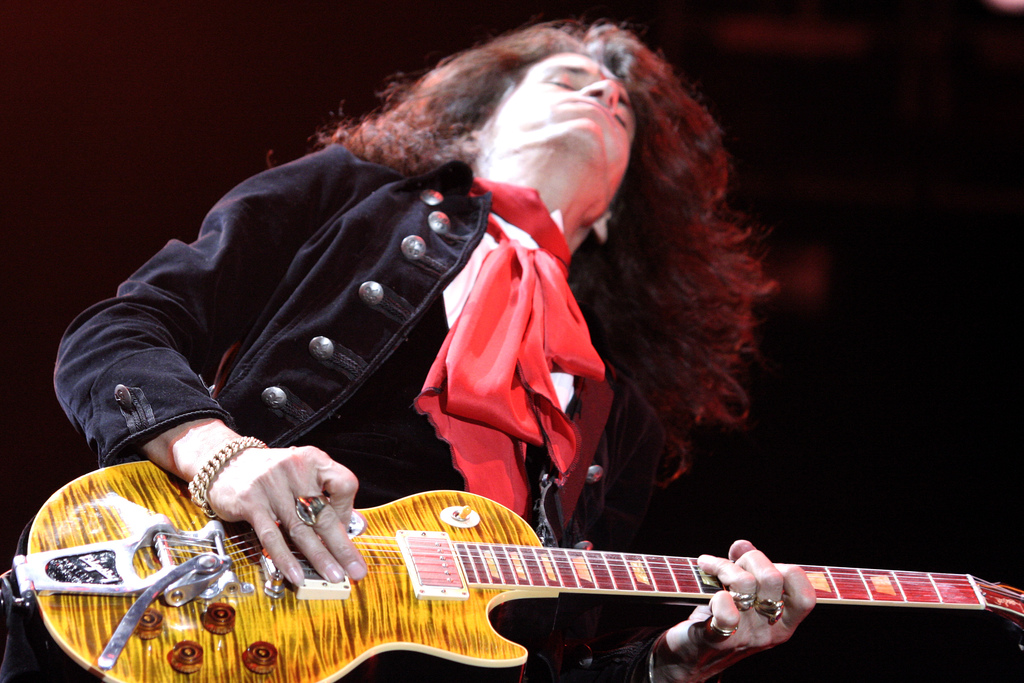
Happy Birthday, Joe Perry: The Riff Machine Who Gave Aerosmith Its Swagger
Joe Perry turns 76 today. From the swampy grind of “Sweet Emotion” to the reunion that saved a band, this is the career of the guitarist who taught American hard rock how to strut.
History of the Riff: How Joe Satriani Made “Flying in a Blue Dream” Feel Weightless
An acoustic guitar in an unusual tuning, a stray broadcast and a melody that seems to hang in the air: inside the construction of Satriani’s 1989 masterpiece.
Tony Iommi Opens Up About His Final Conversation With Ozzy Osbourne: “I Still Can't Get It in My Head”
The Black Sabbath guitarist says Ozzy was exhausted after the band's emotional farewell — but determined to give fans one final show.