Tone Decoded: Inside Kurt Cobain's Raw, Basement Grunge Sound
Kurt Cobain's tone wasn't pristine — it was angry, broken, loud, and human. Here's exactly how he built the Nevermind and In Utero sound from cheap Fenders, a Boss DS-1, and pure attitude.
▶ LISTEN WHILE READING
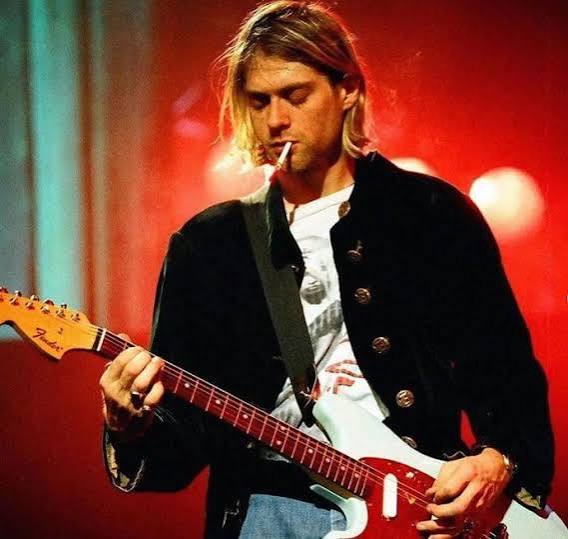
Kurt Cobain's guitar tone wasn't polished. It wasn't pristine. It wasn't designed to impress guitar nerds with technical perfection. It was angry, broken, loud, and human.
The sound of Nevermind and In Utero wasn't about expensive boutique gear — it was about attitude, volume, simple riffs, and intentionally imperfect textures that felt like they were coming from a moldy basement rehearsal room. Ironically, recreating Kurt's tone today often requires understanding exactly what made it so 'wrong.'
The Core Formula
The secret is counterintuitive: the amp wasn't doing most of the distortion. The pedal was. Kurt ran a modified Fender into a stompbox cranked hard, then let a loud, mostly-clean Fender amp amplify the chaos.
 Fender Guitar
        │
        ▼
 Distortion Pedal
 (DS-1 / DS-2)
        │
        ▼
 Chorus (occasionally)
        │
        ▼
 Loud Fender Amplifier
        │
        ▼
 Massive Speaker Volume
        +
 Aggressive Right Hand
Kurt's Main Guitars
The most iconic Cobain guitar. Modifications typically included a DiMarzio Super Distortion in the bridge, a Seymour Duncan JB, simplified electronics, heavy strings, and a generally ugly-but-functional finish. Those high-output humbuckers gave him significantly more punch than traditional Fender single coils.
Another Nirvana staple — compact, comfortable, and easy to beat up. The stock humbucker / single-coil layout was perfect for Kurt's style: short scale, punchy, and disposable enough that smashing one wasn't a tragedy.
Frequently modified, often fitted with humbuckers in place of stock single-coils to produce a thicker, more aggressive sound. The Strats handled the louder, dirtier moments where a Jaguar would feedback uncontrollably.
The Distortion Secret
Get Kurt Cobain’s “Smells Like Teen Spirit” Tone
Tell ToneMD what guitar and gear you own and we’ll show you how to get as close as possible using the equipment you already have — full signal chain, real numbered settings, no guesswork.
Included with The Guitar Plugged Premium
The orange pedal became one of rock history's defining sounds. Typical Cobain settings landed around Level 2:00, Tone 11:00, Distortion 3:00 — compressed sustain, gritty clipping, fizzy top end, aggressive mids. It didn't sound 'beautiful.' It sounded explosive.
Later years — especially the In Utero era — often featured the DS-2 in Turbo Mode II. More gain, more bite, stronger upper mids, and extra cut through Dave Grohl's drums.
Chorus: The Clean Sound Secret
Many people assume Kurt's clean tone came from expensive studio processing. The reality was usually much simpler: guitar straight into a Boss CE-2 Chorus and then into a Fender amp. That subtle modulation is the shimmering intro you hear across Nirvana's catalog — 'Come As You Are,' the quiet verses of 'Smells Like Teen Spirit,' and 'In Bloom.' Without it, the cleans sound surprisingly plain.
 Guitar
     │
 Boss CE-2 Chorus
     │
 Fender Amp
X Concepts Strings • Made in USA
Never Run Out of Strings Again.
Join the X Concepts String Club and get fresh USA-made strings delivered every month—plus Premium membership options for the full Guitar Plugged experience.
The Fender Amp Formula
Cobain used various Fender amplifiers throughout his career — Twin Reverb, Bassman, Showman, and Quad Reverb among the most documented. Unlike many rock players, he wasn't relying on tube breakup. The amps were generally set fairly clean and loud, and the distortion pedal handled the dirt.
“The magic was never about perfection. It was about emotion.”
AMP GAIN → Low
MASTER → Loud
PEDAL GAIN → High
The amp is essentially a clean, powerful loudspeaker for the pedal's distortion.
EQ Philosophy
Forget scooped metal tones. Kurt's sound retained enough mids to stay aggressive in a band mix — balanced, punchy, messy, and never surgical.
 Bass     ███████░░
 Mid      ██████░░░
 Treble   ███████░░
The Right Hand Matters More Than the Gear
One overlooked element: Kurt hit the strings incredibly hard. That aggressive attack created extra transient bite, natural compression, chaotic harmonics, and percussive energy. Even expensive replicas often fail because players attack the strings too softly. If you want the sound, dig in like you mean it.
The Rig — Decoded
Hot humbuckers swapped in (DiMarzio Super Distortion or Seymour Duncan JB) for thick output and feedback control.
The real source of the dirt — Level 2:00, Tone 11:00, Distortion 3:00. Fizzy, compressed, aggressive.
Engaged for clean intros and verses. Subtle width that makes the cleans shimmer instead of sit flat.
Set fairly clean and very loud. The amp is a loudspeaker for the pedal, not the source of distortion.
Aggressive right-hand attack supplies the transient bite and chaotic harmonics no plugin can fake.
Why It Sounds Like a Basement
The famous 'grunge' character comes from several imperfections working together: distortion pedal clipping, loud clean Fender amps, inexpensive guitars with modifications, aggressive picking, loose performance, feedback, sympathetic string noise, buzzing, and raw production choices. It wasn't polished. It wasn't supposed to be. That roughness became the identity.
A Modern Budget Kurt Rig
Squier Mustang → Boss DS-1 → Boss CE-2 Style Chorus → Clean Fender-Style Combo
For surprisingly little money, you can capture the spirit of Cobain's sound far more accurately than by buying ultra-high-end boutique equipment.
Because the magic was never about perfection. It was about emotion. And few guitar tones in history have ever sounded more honest.
What to Remember
- ▸Gain comes from the pedal, not the amp — set the amp clean and loud.
- ▸Hot humbuckers in a Fender body are the Cobain sound shortcut.
- ▸Keep mids in. Scooped EQ disappears in a band mix; Kurt's never did.
- ▸A Boss CE-2 is the secret behind the famously 'wet' clean intros.
- ▸Attack the strings hard — touch is half the tone.
- ▸Imperfection is the identity. Don't sand the edges off.
Keep Exploring Tone Decoded
Dive into more rig breakdowns — from EVH's Brown Sound to Gilmour's clean leads — in our Tone Decoded section on TheGuitarPlugged.
- Boss DS-1 Distortion Pedal$59·Check on Amazon →
- Boss DS-2 Turbo Distortion$109·Check on Amazon →
- Squier Classic Vibe '60s Mustang$449·Check on Amazon →
- Boss CE-2W Chorus$229·Check on Amazon →
Some links are affiliate links — we may earn a small commission at no cost to you.
Experience-driven coverage, not algorithm bait.
- 20+ years of guitar playing experience
- Real-world retail experience at Guitar Center
- Thousands of hours testing guitars, amps, and pedals
- A community of 50,000+ guitar enthusiasts across platforms
- Partnerships with Fender, DistroKid, TrueFire, Card Chords, and Enya
- Editorial standards published openly — see how we test gear
The Modern Guitar Magazine. Delivered to your inbox.
No spam. No gimmicks. Just great guitar content — stories, tones, iconic solos, and honest gear takes. Every week.
Ask GP
3 free questions a dayStill curious? Ask GP about this story.
Your personal classic-rock and guitar guide — ask anything about Inside Kurt Cobain's Raw, Basement.
Discussion (0)
Sign in to join the discussion.
Sign in to commentLoading comments…
Discover another guitar story
Swipe through our latest features, breaking news and iconic solos — one story at a time.
Open Swipe →More in Tone Decoded
Dimebag Darrell Didn't Just Make Metal Heavier—He Made It Swing
Inside the fearless Texas guitar language, brutal-but-musical tone, and melodic instinct that made Dimebag Darrell impossible to imitate — and impossible to replace.
The Infamous Stevie Ray Vaughan Soundcheck
No crowd. No spectacle. Just Stevie Ray Vaughan checking levels at the Syria Mosque in 1986 — and sounding absolutely monstrous. What the footage reveals about tone, touch and the myth of the rig.
The Last 10%: Why You Can Copy a Famous Guitarist’s Entire Rig and Still Miss the Tone
You bought the guitar, the amp, and the pedals — so why doesn’t it sound right? The last 10 percent of guitar tone is the most important part, and it’s almost never about the gear list.