
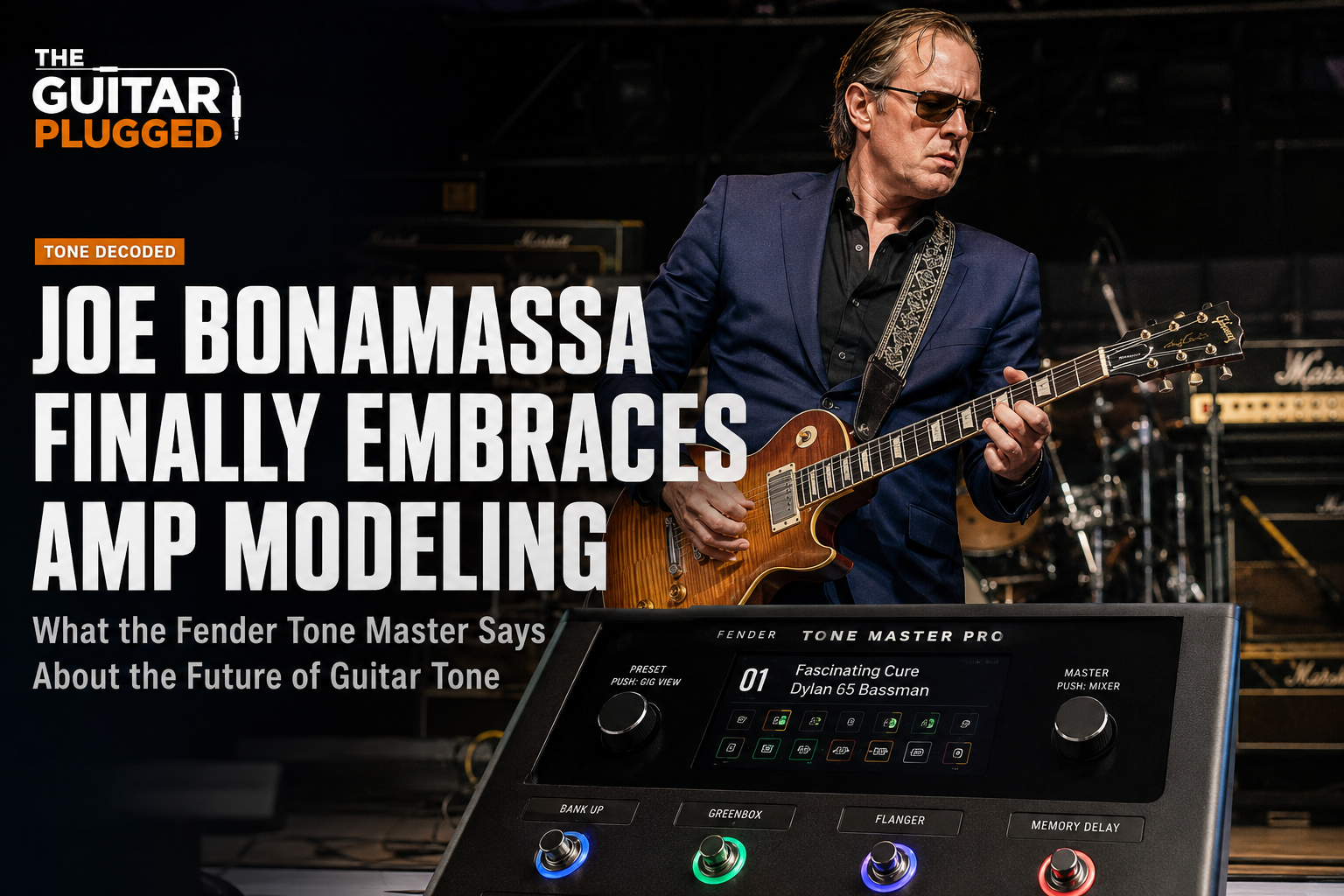
Tone Decoded: Joe Bonamassa Finally Embraces Amp Modeling — What the Fender Tone Master Says About the Future of Guitar Tone
One of guitar's biggest tube amp advocates is using Fender's Tone Master Pro. Here's what it means for the future of guitar tone.
For years, Joe Bonamassa represented the old-school approach to guitar tone. Vintage amps. Rare guitars. Massive stage rigs. Real tubes pushing real air.
If there was ever a player who seemed unlikely to embrace digital technology, it was Bonamassa.
That's why many guitarists were surprised when photos and videos began appearing showing Joe using Fender's Tone Master Pro modeler in his live rig.
So what happened? Has one of the biggest tube amp advocates in the world finally gone digital? The answer is more interesting than you might think.
The Last Great Tube Purist?
Bonamassa built his career around legendary amplifiers. His collection includes vintage Fender Tweeds, blackface classics, old Marshalls, Dumbles, Trainwrecks, and countless rare pieces that most players only dream about.
For years, his message was simple: nothing feels quite like a great tube amp. And to be fair, most guitar players agreed. Digital modelers often sounded good in recordings but lacked the feel, response, and dynamic interaction that made tube amps special.
But technology has changed dramatically over the last decade.
The Modeling Revolution
Get Joe Bonamassa’s “Sloe Gin” Tone
Tell ToneMD what guitar and gear you own and we’ll show you how to get as close as possible using the equipment you already have — full signal chain, real numbered settings, no guesswork.
Included with The Guitar Plugged Premium
The rise of units like the Fractal Axe-Fx, Neural DSP Quad Cortex, Kemper Profiler, and Fender Tone Master Pro has narrowed the gap significantly. Modern modelers don't simply imitate EQ curves — they recreate amplifier behavior, power amp compression, speaker interaction, and touch sensitivity with astonishing accuracy.
For touring musicians, the benefits are obvious: consistent tone every night, easier transportation, lower maintenance, faster setup times, and direct integration with modern live sound systems.
Even players who own rooms full of vintage gear have started taking notice.
Why the Fender Tone Master Pro Makes Sense
Bonamassa's use of the Tone Master Pro doesn't mean he's selling off his collection of vintage amps. Far from it. Instead, it shows a practical reality that many professional musicians face.
“Today's best players aren't choosing sides. They're choosing tools.”
When you're playing arenas, theaters, festivals, television appearances, and fly dates around the world, convenience matters. The Tone Master Pro allows a player to carry multiple amp sounds in a single unit while maintaining remarkable consistency from venue to venue.
For a touring professional, that's a huge advantage. It's not about replacing vintage gear — it's about making that sound easier to access.
The Real Lesson
The biggest takeaway isn't that Joe Bonamassa abandoned tube amps. It's that the tube-vs-modeler war may finally be ending. Today's best players aren't choosing sides — they're choosing tools. A vintage Tweed Deluxe might be perfect for one gig. A Tone Master Pro might be perfect for another. The goal isn't authenticity for authenticity's sake. The goal is great tone.
And if one of the most respected blues-rock guitarists on the planet is willing to put a modeler in his rig, perhaps the conversation has shifted from "Is digital good enough?" to "Which tool gets the job done best?"
What This Means for Everyday Guitarists
Most players don't own a warehouse full of vintage amplifiers. They need gear that's practical, affordable, reliable, and inspiring. That's exactly why modelers continue gaining popularity.
The irony is that many of the same players who once dismissed digital gear are now finding themselves impressed by how close modern technology has come.
Joe Bonamassa's adoption of the Fender Tone Master Pro isn't the death of tube amps. It's evidence that great tone can come from more than one place. And perhaps that's the most important lesson of all.
In 2026, the best guitarists aren't arguing about tube amps versus modelers. They're making music.
What to Remember
- ▸Joe Bonamassa, long a tube-amp purist, is now using the Fender Tone Master Pro live.
- ▸Modern modelers replicate amp feel, compression, and speaker interaction — not just EQ.
- ▸For touring pros, modelers mean consistent tone, easier travel, and faster setup.
- ▸The tube-vs-modeler debate is fading — top players pick the right tool per gig.
- ▸Great tone in 2026 isn't about purity. It's about results.
Keep Exploring Tone Decoded
Dive into more rig breakdowns and gear deep dives in our Tone Decoded section on TheGuitarPlugged.
- Fender Tone Master Pro Multi-Effects Modeler$1,699·Check on Amazon →
- Fractal Audio FM3 Mark II Turbo$1,199·Check on Amazon →
Some links are affiliate links — we may earn a small commission at no cost to you.
Shop Modern Modelers
Some links may be affiliate links. We may earn a small commission at no cost to you.
Experience-driven coverage, not algorithm bait.
- 20+ years of guitar playing experience
- Real-world retail experience at Guitar Center
- Thousands of hours testing guitars, amps, and pedals
- A community of 50,000+ guitar enthusiasts across platforms
- Partnerships with Fender, DistroKid, TrueFire, Card Chords, and Enya
- Editorial standards published openly — see how we test gear
Get Tone Decoded in Your Inbox
Weekly rig breakdowns, tone guides, and gear news from The Guitar Plugged.
Discussion (0)
Sign in to join the discussion.
Sign in to commentLoading comments…
Discover another guitar story
Swipe through our latest features, breaking news and iconic solos — one story at a time.
Open Swipe →More in Tone Decoded
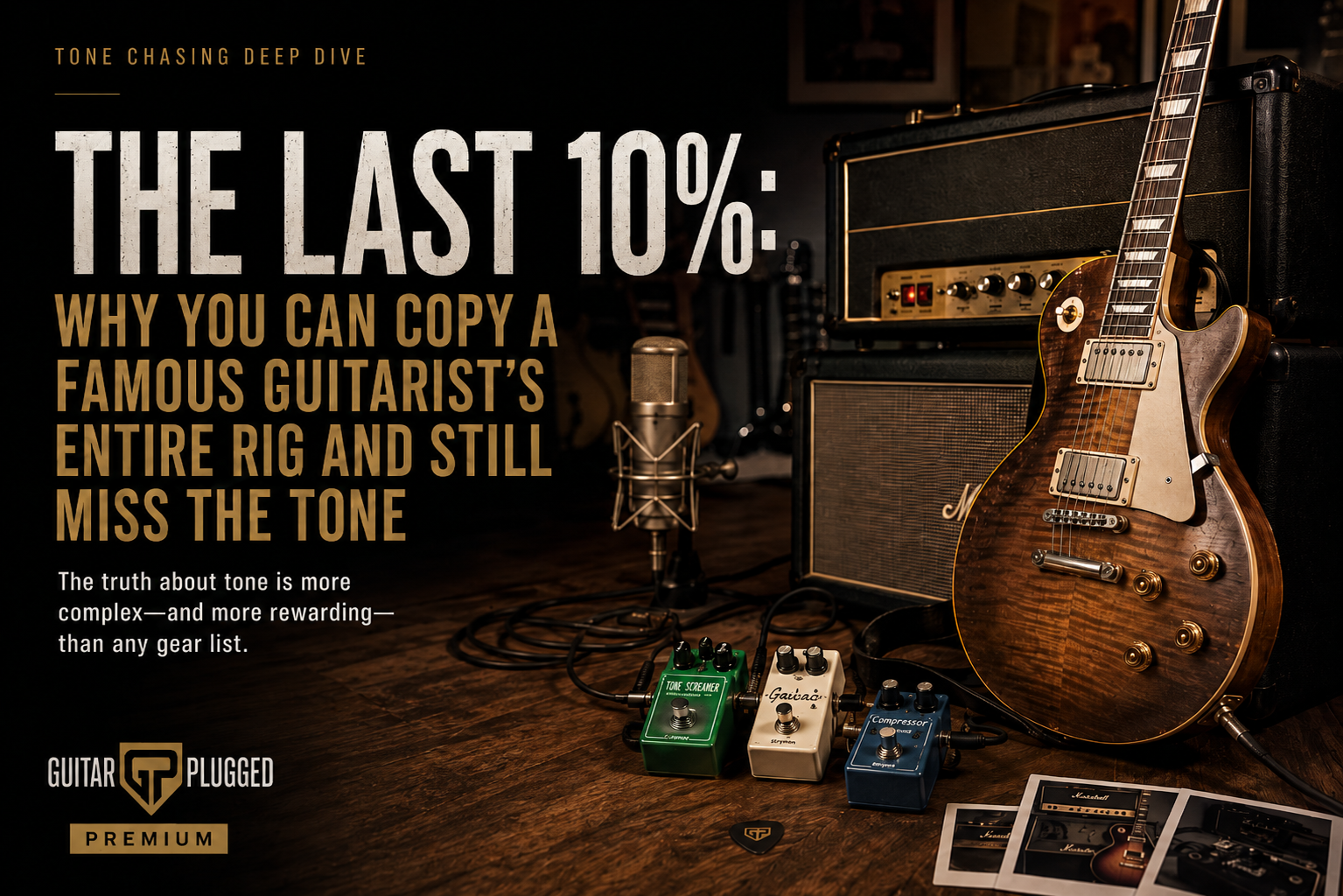
The Last 10%: Why You Can Copy a Famous Guitarist’s Entire Rig and Still Miss the Tone
You bought the guitar, the amp, and the pedals — so why doesn’t it sound right? The last 10 percent of guitar tone is the most important part, and it’s almost never about the gear list.
Why John Frusciante's Tone Is Harder to Copy Than You Think
Everyone chases the Strat, the Tube Screamer, the CE-1 chorus. But the real Frusciante sound lives in his hands, his dynamics, and the way he treats pedals like colors — not crutches.
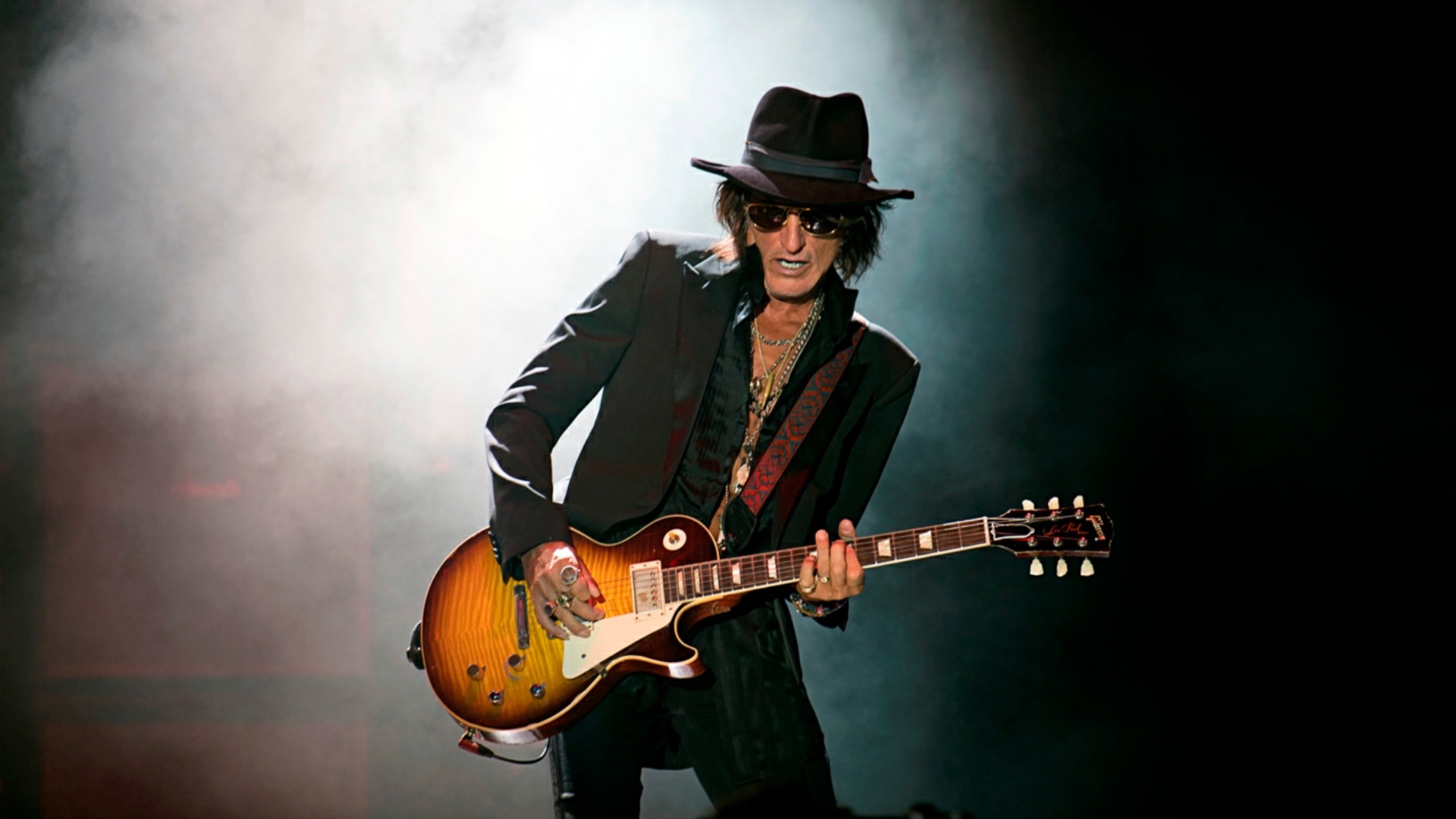
Joe Perry's Guitar Tone Decoded: The Secret Sauce Behind Aerosmith's Legendary Sound
Inside Joe Perry's iconic tone — the vintage Les Pauls, cranked Marshalls, key pedals, and playing techniques that define Aerosmith's sound.