
The Mr. Crowley Solo: Randy Rhoads' Six Minutes of Guitar Immortality
Randy Rhoads' solo on Ozzy Osbourne's 'Mr. Crowley' from Blizzard of Ozz remains one of the most iconic guitar solos ever recorded — a perfect fusion of classical phrasing, neoclassical fire, and unforgettable melody that still defines classic rock guitar more than 40 years later.
Some guitar solos are great. Others become legends. The solo in 'Mr. Crowley' by Ozzy Osbourne and the late Randy Rhoads belongs firmly in the second category.
Released in 1980 on Blizzard of Ozz, 'Mr. Crowley' showcased a young Randy Rhoads combining classical influences, blazing technique, and unforgettable melody in a way that completely changed the future of hard rock guitar. More than four decades later, guitarists still study this solo note-for-note — and for good reason.
The Story Behind the Solo
When Randy Rhoads joined Ozzy Osbourne after Ozzy's departure from Black Sabbath, few people knew what was coming. Rhoads wasn't interested in simply playing pentatonic licks over heavy riffs. His background included classical guitar studies, and he brought a level of sophistication that was rare in rock music at the time.
'Mr. Crowley' became the perfect showcase for that approach. Inspired by the controversial occultist Aleister Crowley, the song moves through dramatic chord changes and theatrical arrangements, creating the ideal backdrop for one of the most celebrated solos in rock history.
The First Solo: Pure Melody
The first solo arrives around the middle of the song and demonstrates one of Randy's greatest strengths: phrasing. Instead of immediately unleashing speed, he builds a memorable melodic statement that feels almost vocal in nature. Every bend has purpose. Every phrase feels like part of a larger conversation.
This is one of the reasons the solo remains timeless. Randy wasn't simply showing off technique — he was telling a story.
The Second Solo: Controlled Chaos
Then comes the famous outro solo. This is where Randy unleashes everything: rapid alternate picking, neoclassical-inspired runs, wide interval leaps, and perfectly articulated bends. The solo feels spontaneous and explosive while remaining incredibly musical.
Get Randy Rhoads’ “Mr. Crowley” Tone
Tell ToneMD what guitar and gear you own and we’ll show you how to get as close as possible using the equipment you already have — full signal chain, real numbered settings, no guesswork.
Included with The Guitar Plugged Premium
Even today, many guitarists consider it one of the finest examples of balancing speed and melody. It never sounds like an exercise. Every note serves the song.
The Rig — Decoded
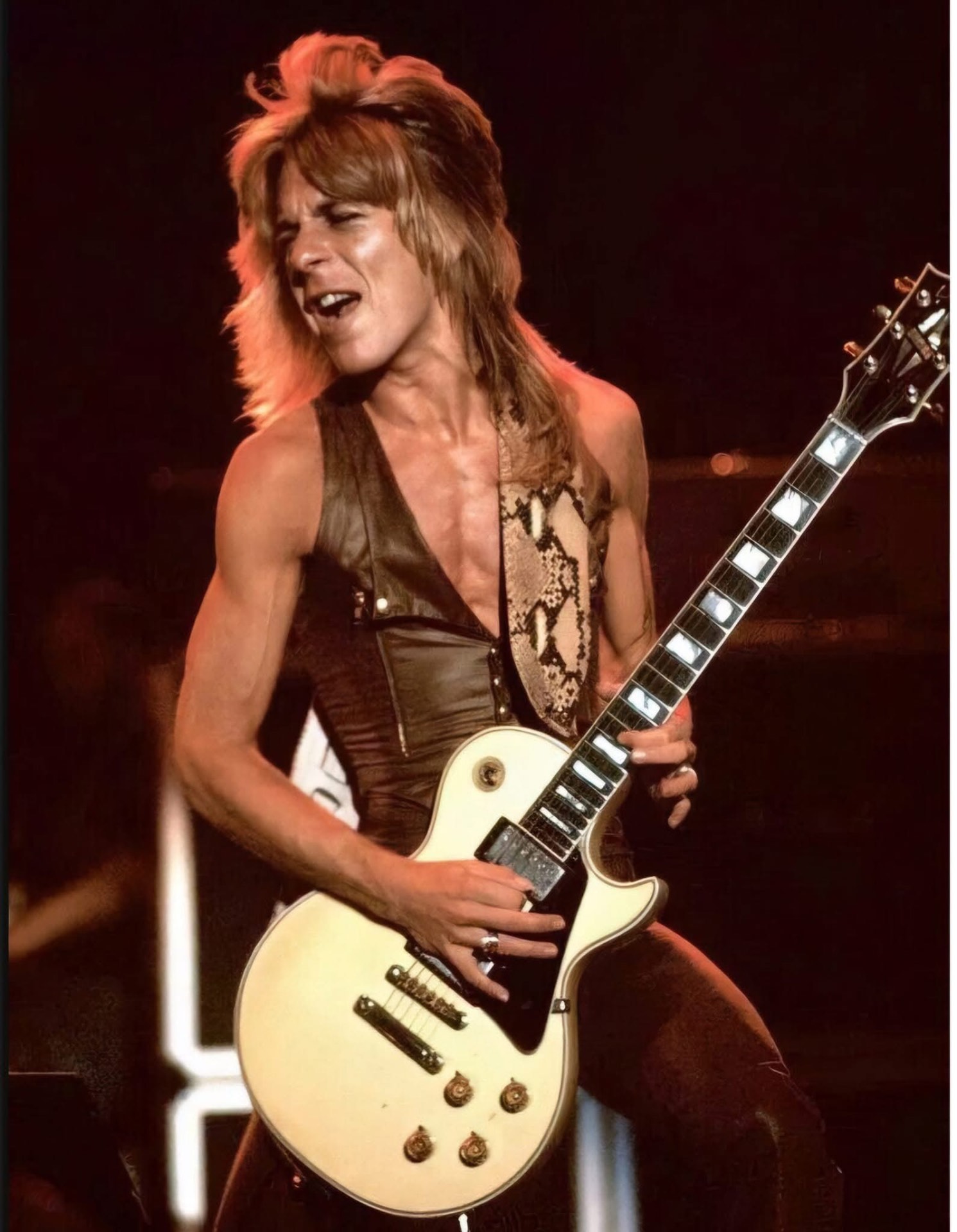
Randy's iconic cream Les Paul Custom delivered the warmth, sustain, and bite that defined the Blizzard of Ozz era.
Cranked 100-watt Plexis pushed into natural overdrive — the foundation of his singing, dynamic lead tone.
Stacked into the Marshall for extra gain and harmonic content without losing pick attack.
Shaped the midrange and tamed harshness so leads cut without becoming brittle.
Subtle phase swirl that added motion and depth to clean and lead passages.
Warm, short repeats that thickened solos and added the sense of space behind the Mr. Crowley outro.
Why Guitarists Still Study It
The Mr. Crowley solo teaches nearly every important element of lead guitar playing — melodic phrasing, bend accuracy, vibrato control, alternate picking, classical-inspired note choices, dynamic expression, and solo construction. It isn't just a collection of impressive licks. It's a masterclass in how to build excitement and emotion across multiple sections of a song.
X Concepts Strings • Made in USA
Never Run Out of Strings Again.
Join the X Concepts String Club and get fresh USA-made strings delivered every month—plus Premium membership options for the full Guitar Plugged experience.
Unlike many modern high-gain sounds, Randy's tone remained remarkably dynamic. Pick softer and it cleans up. Dig in and it roars. That responsiveness is part of why the solo still feels alive every time you hear it.
The Classical Machinery Under the Metal
“Randy wasn't simply showing off technique — he was telling a story. Every bend has purpose. Every phrase feels like part of a larger conversation.”
What separated Rhoads from nearly every hard rock player of his generation was that he understood harmony rather than just scale shapes. 'Mr. Crowley' sits in a minor key with dramatic, almost baroque chord movement, and Randy plays to the chords rather than parking on a single minor pentatonic box. When the harmony shifts, his note choices shift with it, which is why the solo sounds composed rather than improvised over a backing track.
You can hear the classical training in the shapes too: three-note-per-string diatonic runs, pedal-tone figures where a repeated open or fretted note anchors a moving line, and wide interval leaps borrowed from violin writing rather than blues vocabulary. Yngwie Malmsteen would formalise this language a few years later, but Rhoads got there first and kept it in service of the song.
He was also famously disciplined about it. Rhoads took classical lessons in nearly every city Ozzy's tours passed through, hunting down local teachers between shows. That habit says more about his approach than any piece of gear does.
Learning It Without Wrecking It
The first solo is the harder of the two to play convincingly, which surprises people. Its slow, exposed bends demand perfect intonation and a vibrato that starts after the note settles rather than immediately. Practise those bends against a fretted target note until they land dead in tune every time.
For the outro, break it into its component figures rather than running it top to bottom. Most of the fireworks come from a handful of repeating patterns played at speed with strict alternate picking. Get each pattern clean at 60 percent tempo, then chain them. Rushing the chaining stage is why most bedroom versions sound smeared.
Tone-wise, resist the urge to add gain. Randy's sound has far less saturation than modern ears expect, which is exactly why the fast passages stay articulate. Back the gain off until single notes start to feel slightly bare, then add a touch of the amp's own compression by pushing the volume rather than the preamp.
The Legacy
Randy Rhoads' career was tragically cut short in 1982, but his influence remains enormous. Players ranging from Zakk Wylde to modern metal virtuosos continue to cite him as a major inspiration.
His impact also runs through gear history. The polka-dot Flying V and the offset Jackson Concorde he designed with Grover Jackson effectively launched the pointy-guitar era, and the Marshall-plus-MXR chain he used became the default blueprint for eighties hard rock lead tone.
And if there is one performance that captures everything Randy brought to guitar, it's 'Mr. Crowley.' Technical. Emotional. Elegant. Aggressive. More than forty years later, it still sounds like the future. That's why the Mr. Crowley solo remains one of the most iconic guitar solos ever recorded.
What to Remember
- ▸Released in 1980 on Blizzard of Ozz, 'Mr. Crowley' features two distinct solos that together form one of rock's greatest guitar moments.
- ▸The first solo is a masterclass in melodic phrasing; the outro solo blends neoclassical runs with explosive technique while staying musical.
- ▸Randy's tone came from a Gibson Les Paul Custom into Marshall Super Leads with MXR Distortion+, EQ, Phase 90, and Analog Delay.
- ▸Studying the solo teaches phrasing, bend accuracy, vibrato, alternate picking, dynamics, and how to construct a memorable solo.
- ▸More than 40 years later, Randy Rhoads' influence still shapes hard rock and metal guitar — and Mr. Crowley is the performance that captures it all.
Keep Exploring the Greatest Solos Ever Recorded
Mr. Crowley is just one chapter in the story of rock's most iconic guitar moments. Dive deeper into note-by-note breakdowns of the solos that changed everything — from Jimmy Page and Ritchie Blackmore to David Gilmour and beyond — in our Iconic Solos section on TheGuitarPlugged.
Some links are affiliate links — we may earn a small commission at no cost to you.
Experience-driven coverage, not algorithm bait.
- 20+ years of guitar playing experience
- Real-world retail experience at Guitar Center
- Thousands of hours testing guitars, amps, and pedals
- A community of 50,000+ guitar enthusiasts across platforms
- Partnerships with Fender, DistroKid, TrueFire, Card Chords, and Enya
- Editorial standards published openly — see how we test gear
The Modern Guitar Magazine. Delivered to your inbox.
No spam. No gimmicks. Just great guitar content — stories, tones, iconic solos, and honest gear takes. Every week.
Ask GP
3 free questions a dayStill curious? Ask GP about this story.
Your personal classic-rock and guitar guide — ask anything about The Mr. Crowley Solo.
Discussion (0)
Sign in to join the discussion.
Sign in to commentLoading comments…
Discover another guitar story
Swipe through our latest features, breaking news and iconic solos — one story at a time.
Open Swipe →More in Iconic Solos
The Story Behind the "Hotel California" Guitar Solo: How Don Felder and Joe Walsh Created Rock's Greatest Guitar Duel
Nearly five decades on, the final minutes of the Eagles' "Hotel California" still stop guitarists in their tracks. Inside the composition, tone, and interplay of Don Felder and Joe Walsh's legendary dual-guitar finale.

10 Underrated Guitar Solos Every Player Should Learn
Ten overlooked guitar solos — from Larry Carlton to Derek Trucks — that will make you a better player through phrasing, feel, and note choice.
Iconic Solos: Marty Friedman's "Tornado of Souls" — The Crown Jewel of Thrash Guitar
More than 35 years later, Marty Friedman's solo on Megadeth's Tornado of Souls is still the gold standard for melodic shred — exotic phrasing, vocal-like bends, and an ending run that breaks brains.