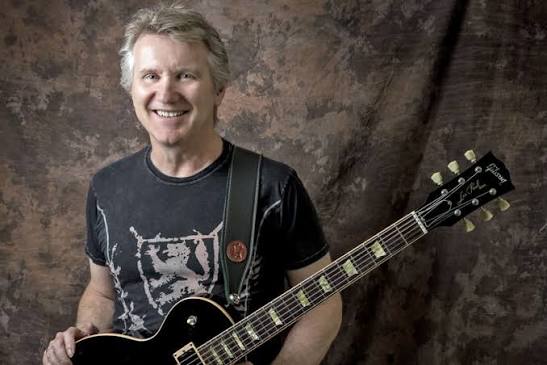
Rik Emmett Never Thought Triumph Would Tour Again—Then the Guitar Heroes Came Back
After decades away from a full-scale tour, Triumph returned to the stage in 2026. For Rik Emmett, it meant confronting the passing of time, adapting to a different kind of band—and discovering that the music still had some unfinished business.
There is a moment every rock fan knows.
The arena goes dark.
Thousands of conversations disappear into a single roar. Somewhere behind the curtain, guitars are waiting. Amplifiers are humming. A drum kit sits beneath the lights.
And then you hear it.
A song you haven't experienced live in decades.
For Triumph fans, 2026 delivered something many had stopped believing they would ever experience again.
Rik Emmett was back onstage.
Gil Moore was behind the drums.
And the music of Triumph was filling arenas once more.
This wasn't simply another classic-rock band heading back onto the road. Triumph's return carried the weight of more than three decades without a proper tour—and even Emmett himself had once believed that chapter of his life was finished.
Then the impossible happened.
Triumph came back.
And this time, another formidable guitarist was standing beside Emmett.
Phil X.
What to Remember
- ▸Triumph's 2026 tour is the band's first full-scale run in more than three decades — a 50th-anniversary celebration.
- ▸Rik Emmett has been open about arthritis and cancer recovery, and has adapted his approach to keep playing at a high level.
- ▸Phil X joined the touring lineup, giving Triumph two guitars for the first time and letting Emmett share the load.
- ▸Original bassist Mike Levine sat out most of the tour due to a hand issue; Todd Kerns and Brent Fitz filled out the expanded lineup.
- ▸Emmett has tuned lower to reduce string tension and make demanding vocals more manageable — a pragmatic veteran-guitarist move.
The Band That Wasn't Supposed to Tour Again
To understand why Triumph's return felt so significant, you have to remember what this band once represented.
Triumph emerged from Canada in the 1970s as one of rock's great power trios: guitarist and vocalist Rik Emmett, drummer and vocalist Gil Moore, and bassist and keyboardist Mike Levine.
Three musicians. A massive sound. And songs built for stages far larger than the clubs where most bands begin.
Triumph's music could be muscular one moment and melodic the next. There was hard rock, progressive ambition and the kind of soaring guitar work that made young players sit inches away from their stereos trying to figure out exactly what Emmett was doing.
"Lay It on the Line." "Magic Power." "Fight the Good Fight." "Hold On." "Rock & Roll Machine."
For guitar players, Emmett was the centerpiece of something special. He wasn't simply playing riffs between vocal lines. His role demanded almost everything a guitarist could be asked to do: rhythm, lead, acoustic textures, intricate passages and explosive solos—all while handling a significant share of the vocals.
Onstage, there was nowhere to hide. That was the beauty of Triumph as a power trio.
It was also what made the idea of returning decades later such an enormous challenge. The musicians weren't in their twenties anymore. The road is unforgiving. Voices change. Hands change. Bodies change.
Get Rik Emmett’s “Lay It on the Line” Tone
Tell ToneMD what guitar and gear you own and we’ll show you how to get as close as possible using the equipment you already have — full signal chain, real numbered settings, no guesswork.
Included with The Guitar Plugged Premium
Emmett, now in his seventies, has spoken openly about dealing with arthritis and about having recovered from cancer. He has also acknowledged that there are good days and bad days when it comes to his hands.
For a guitarist whose identity is tied to precision, control and technique, those realities matter. Yet Emmett has found that continuing to play can itself be part of the answer. Rather than retreating from the instrument when his hands aren't cooperating, he has described pushing himself to practice and work through his routines.
It's the kind of mentality guitar players understand. Sometimes the guitar fights you. You pick it up anyway.
Then Came 2026
When Triumph announced its return to touring, the response provided an immediate reminder of how much the band still meant to people.
This was billed as Triumph's first proper tour in more than 30 years, a 50th-anniversary celebration that would bring the band's music back to North American stages.
What followed proved there was still an audience waiting. Fans who had grown up with Triumph were suddenly buying tickets to see the songs of their youth again.
But these weren't necessarily the exact same fans who had stood in those arenas decades earlier. Some were bringing their children. Others had discovered Triumph years after the band's original run. A new generation had found the records, the concert footage and, inevitably, Rik Emmett's guitar playing.
The lights were coming back on. The Rock & Roll Machine was moving again. But it wasn't going to look exactly like it did in 1981.
And perhaps that was the smartest decision Triumph could have made.
Enter Phil X
X Concepts Strings • Made in USA
Never Run Out of Strings Again.
Join the X Concepts String Club and get fresh USA-made strings delivered every month—plus Premium membership options for the full Guitar Plugged experience.
The classic image of Triumph will always be three musicians standing on a stage.
For the 2026 return, however, the touring operation expanded. Joining Emmett and Moore were guitarist Phil X, bassist and vocalist Todd Kerns and drummer and keyboardist Brent Fitz. Original bassist Mike Levine was unable to participate in most of the tour because of a hand problem that affected his ability to play.
For longtime fans, the expanded lineup represented a major change. For Emmett, it also opened possibilities. Because for perhaps the first time in Triumph's touring life, Rik Emmett didn't have to carry every guitar responsibility alone.
Standing nearby was Phil X.
“The guitarist returning to Triumph in 2026 isn't trying to become the Rik Emmett of 1980. He's figuring out what Rik Emmett sounds like now.”
Most mainstream rock fans know Phil X from his work with Bon Jovi, where he ultimately stepped into one of the most visible guitar positions in rock. Guitar players know there is much more to him than that.
Phil X is an explosive player. He has the technical ability required for demanding music, but his playing also carries the aggression and unpredictability of someone who grew up understanding that rock guitar is supposed to feel dangerous.
Put that next to Rik Emmett and something fascinating happens. You don't have a replacement. You have another weapon.
The arrangement allowed Triumph's music to become larger without asking Emmett to pretend the last several decades never happened. Two guitars can divide responsibilities. Vocals can be shared. Arrangements can breathe differently. Songs written for three musicians can suddenly become enormous.
For Emmett, the possibilities of having Phil X alongside him appeared to outweigh any concern about changing the sacred power-trio formula. And after all, the goal wasn't to recreate 1983 frame by frame. It was to make Triumph powerful again in 2026.
Rik Emmett Had to Rethink the Guitar
One of the most interesting parts of Triumph's return wasn't simply that Emmett was playing again. It was how he approached the instrument.
Instead of insisting that everything had to be done exactly as it was during Triumph's original arena years, Emmett adapted.
One significant change involved tuning guitars lower. For a guitarist dealing with arthritis, that can make a meaningful difference. Lower string tension can make bends easier and reduce some of the physical fight between the player's hands and the instrument.
It also offers another advantage. Lower keys can make demanding vocal material more manageable decades after it was originally recorded.
This is the reality many veteran rock musicians eventually face. Do you stubbornly chase the exact conditions of the original recording? Or do you adapt so the music can continue to live?
Triumph chose life.
Emmett has also continued his relationship with Canadian guitar maker Godin. Among the instruments discussed around his return was a custom guitar based on the Montreal Premiere Supreme, along with work on a Rik Emmett 24/7 model incorporating elements that bridge familiar Fender- and Gibson-style design ideas.
It's fitting. The guitarist returning to Triumph in 2026 isn't trying to become the Rik Emmett of 1980. He's figuring out what Rik Emmett sounds like now. That distinction matters.
When "Magic Power" Means Something Different
Imagine standing in the crowd when the opening notes begin.
Maybe you first heard Triumph on vinyl. Maybe the cassette lived in your car. Maybe you spent an entire summer trying to learn an Emmett solo. Maybe you haven't thought about any of that in years.
Then suddenly you're standing beneath the arena lights again. The first notes hit. And for a few minutes, the distance between then and now disappears.
That's the strange power of these reunions when they're done for the right reasons. The musicians age. The audience ages. The world outside the venue changes almost beyond recognition. But a song doesn't know how old you are.
"Magic Power" still begins. "Lay It on the Line" still has to be played. The guitar solo still arrives. And somewhere in the building, somebody is playing air guitar just as badly as they did 40 years ago.
That might be the real story behind Triumph's return. It isn't about pretending time stopped. It's about acknowledging that it didn't—and playing anyway.
Triumph's Return Wasn't a Perfect Recreation—and That's the Point
There will always be purists. For some fans, Triumph means Rik Emmett, Gil Moore and Mike Levine. Nothing more and nothing less.
That lineup built the legacy. Nothing can rewrite that history.
But the circumstances surrounding the 2026 tour required a different approach. Levine's hand issues prevented him from taking part in most of the dates, while Emmett had his own physical realities to manage.
So Triumph evolved. Phil X brought another guitar into a band historically defined by having one. Todd Kerns and Brent Fitz added further muscle and experience. Gil Moore returned to the drums and vocals. And Rik Emmett stood at the center with a guitar in his hands.
Not as a museum exhibit. As a working musician.
That's an important distinction. Rock history has enough monuments. Sometimes you want to hear the amplifiers turn on.
One More Night Under the Lights
There is something poetic about Rik Emmett's position today.
For years, another Triumph tour seemed unlikely. He had moved forward with his life and career. Decades had passed since the band's arena-rock peak. Age and health introduced questions that no amount of nostalgia could answer.
Then the opportunity appeared. Fans responded. Tickets sold. The band rehearsed. And Triumph walked back onto the stage.
Perhaps that is why this reunion resonates beyond the band's own catalog. Every guitarist eventually discovers that playing is a negotiation with time. The things that once came easily require more work. Hands stiffen. Priorities change. Life gets in the way. The guitar sits in the corner.
Then one day you pick it up. You hit a chord. And something is still there.
Rik Emmett's return with Triumph feels like the arena-sized version of that moment. He didn't need to prove he was still 25 years old. He didn't need to carry every note alone. He didn't need Triumph to look exactly as it did in an old concert photograph. He just needed to play.
And with Phil X standing alongside him, Gil Moore behind the drums and a crowd waiting to hear those songs again, the music had room to breathe once more.
Maybe that's why Triumph's 2026 return matters. Not because the clock somehow turned backward. Because it didn't. The years passed. The band changed. The players changed. And when the lights went down, they plugged in anyway.
For a band called Triumph, there may be no more appropriate ending than that.
- Marshall JCM800-Style 100W HeadCheck price·Check on Amazon →
- Triumph — Allied Forces (Vinyl / CD)Check price·Check on Amazon →
- Triumph — Greatest Hits & Classic AlbumsCheck price·Check on Amazon →
Some links are affiliate links — we may earn a small commission at no cost to you.
Experience-driven coverage, not algorithm bait.
- 20+ years of guitar playing experience
- Real-world retail experience at Guitar Center
- Thousands of hours testing guitars, amps, and pedals
- A community of 50,000+ guitar enthusiasts across platforms
- Partnerships with Fender, DistroKid, TrueFire, Card Chords, and Enya
- Editorial standards published openly — see how we test gear
Get More Guitar Deep Dives
Comeback stories, Tone Decoded features, gear reviews and long-form guitar journalism — straight to your inbox.
Ask GP
3 free questions a dayStill curious? Ask GP about this story.
Your personal classic-rock and guitar guide — ask anything about Rik Emmett Never Thought Triumph.
Discussion (0)
Sign in to join the discussion.
Sign in to commentLoading comments…
Discover another guitar story
Swipe through our latest features, breaking news and iconic solos — one story at a time.
Open Swipe →More in Guitar Talk
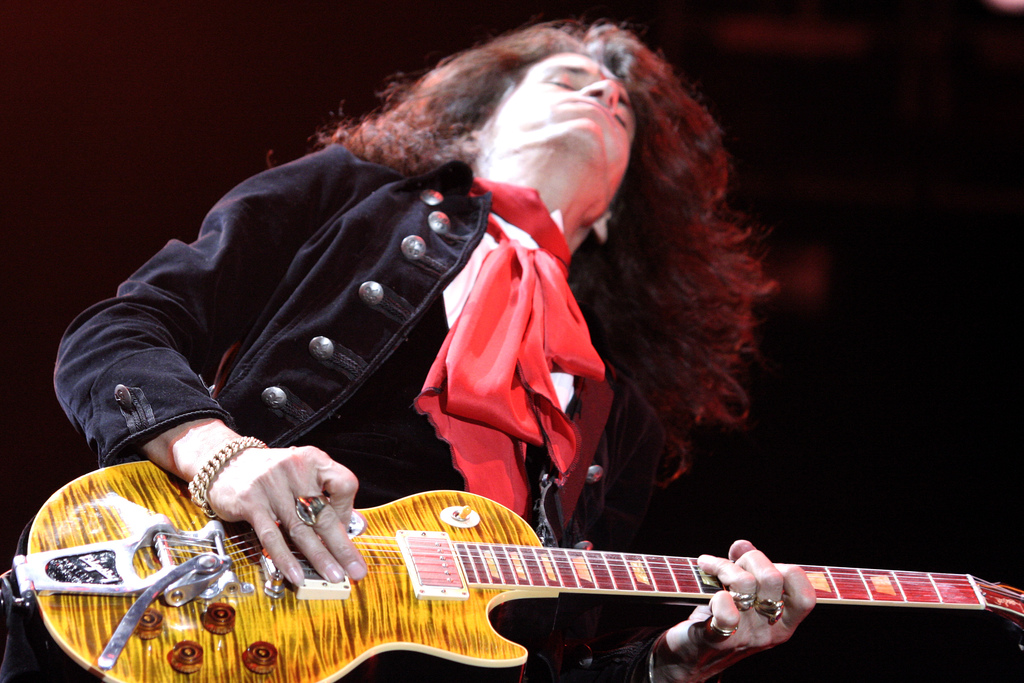
Happy Birthday, Joe Perry: The Riff Machine Who Gave Aerosmith Its Swagger
Joe Perry turns 76 today. From the swampy grind of “Sweet Emotion” to the reunion that saved a band, this is the career of the guitarist who taught American hard rock how to strut.
History of the Riff: How Joe Satriani Made “Flying in a Blue Dream” Feel Weightless
An acoustic guitar in an unusual tuning, a stray broadcast and a melody that seems to hang in the air: inside the construction of Satriani’s 1989 masterpiece.
Tony Iommi Opens Up About His Final Conversation With Ozzy Osbourne: “I Still Can't Get It in My Head”
The Black Sabbath guitarist says Ozzy was exhausted after the band's emotional farewell — but determined to give fans one final show.