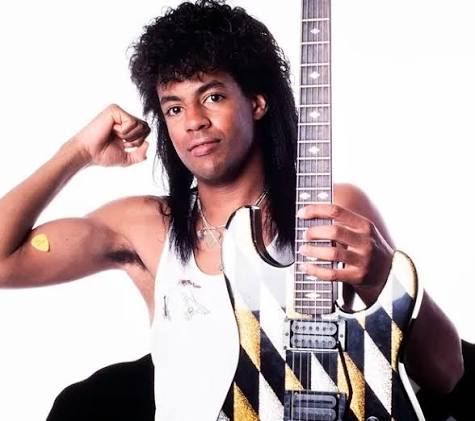
Tony MacAlpine: The Virtuoso Who Deserved a Bigger Stage
Ask a room full of pro guitarists to name the greatest players ever and Tony MacAlpine's name shows up fast. So why didn't the world at large catch up? An in-depth look at one of shred guitar's most quietly influential figures.
There are guitarists who become household names, and then there are guitarists who become legends among musicians.
Tony MacAlpine firmly belongs to the latter.
Ask the average rock fan to name the greatest guitarists of all time, and they'll likely mention Eddie Van Halen, Slash, Eric Clapton, Jimmy Page, or Stevie Ray Vaughan. Ask a room full of professional guitarists, however, and Tony MacAlpine's name almost always enters the conversation before long. His peers have long regarded him as one of the most technically gifted players ever to pick up the instrument, yet his name has never carried the same mainstream weight as many of the artists whose albums he helped shape.
It raises an interesting question: how does someone with world-class technique, extraordinary musicality, and a résumé that spans four decades remain one of rock guitar's best-kept secrets?
The answer isn't simple. It has less to do with talent than timing, changing musical tastes, and a career built on artistic integrity rather than commercial compromise.
A Classical Foundation Unlike Any Other
Long before Tony MacAlpine became known for blistering alternate picking and fluid legato, he was immersed in classical piano.
Born in Springfield, Massachusetts in 1960, MacAlpine studied piano as a child, spending countless hours learning the works of Beethoven, Chopin, Mozart, and Bach. He would later add cello and violin to his conservatory training. Those early lessons would permanently shape the way he approached music. While many guitarists think in pentatonic boxes or blues phrases, MacAlpine often thinks like a composer.
That distinction becomes obvious the moment you hear one of his instrumental compositions.
His melodies don't merely showcase technical ability; they evolve with the kind of harmonic movement more commonly associated with classical music than hard rock. Complex chord substitutions, modal shifts, and sophisticated arrangements became trademarks of his writing decades before progressive guitar became fashionable.
Even today, it's rare to find another rock guitarist equally comfortable performing a Chopin étude on piano before switching to a seven-string guitar without missing a beat.
He didn't approach guitar like a rock player who learned some theory later. He approached it like a classical composer who happened to pick up an electric guitar.
The Shred Era Arms Race
To understand what MacAlpine walked into, you have to picture the mid-1980s guitar landscape.
Eddie Van Halen had already redefined what an electric guitar could sound like on the first two Van Halen records. Yngwie Malmsteen had detonated the neoclassical movement with Rising Force in 1984. Randy Rhoads' influence, tragically frozen after his death in 1982, still loomed over every kid who wanted to marry classical phrasing to Marshall gain. Shrapnel Records, run by producer Mike Varney, had become the launchpad for a new generation of technically astonishing guitarists — Vinnie Moore, Jason Becker, Marty Friedman, Greg Howe, Paul Gilbert.
Guitar magazines devoted entire columns to alternate picking exercises. Instructional VHS tapes turned into a genuine industry. Every teenager who saved up for a Kramer or an Ibanez was chasing a bar they couldn't quite reach.
It was, in the truest sense, an arms race. And into that race stepped a piano prodigy from Springfield who happened to have the hands of a surgeon.
Maximum Security Changed Everything
MacAlpine's debut Edge of Insanity (1985) had already put the guitar world on notice, but when Maximum Security arrived in 1987, the shred guitar movement was reaching full velocity.
Joe Satriani had just released Surfing with the Alien. Steve Vai was redefining virtuosity alongside David Lee Roth. Racer X had introduced the world to Paul Gilbert. Malmsteen was already a household name inside the guitar community.
Competition among elite guitarists had never been fiercer.
Instead of trying to imitate anyone else, MacAlpine released an album that combined neoclassical precision, jazz harmony, progressive composition, and frightening technical control.
Tracks like The Stranger, Hundreds of Thousands, and Tears of Sahara demonstrated not only speed but maturity. Every note served a purpose. His phrasing remained lyrical even during passages that seemed physically impossible to play. Autumn Lords showcased the composer's ear — a moody, cinematic piece that could have soundtracked a film long before instrumental guitar was expected to do that kind of work.
Unlike many shred albums from the era, Maximum Security still feels remarkably musical nearly forty years later. That's perhaps its greatest achievement.
Most shred records from '87 are museum pieces now. Maximum Security still sounds like a record you'd put on for pleasure, not for study.
Edge of Insanity and Freedom to Fly: Bookends of a Voice
It's worth going back to Edge of Insanity to understand how fully-formed MacAlpine already was at 25.
Recorded with Billy Sheehan on bass and drummer Steve Smith, Edge of Insanity opens with Wheel of Fortune — a track that could have carried an entire album on its own. The neoclassical melody is anchored by real harmonic thinking, not just diminished arpeggios for their own sake. Even at his most technical, MacAlpine sounds like a musician playing through the guitar, not at it.
Freedom to Fly, released in 1992, is the counterweight. By then the shred boom had cracked. Grunge was in the process of erasing the entire late-'80s aesthetic. Many virtuosos disappeared, downshifted, or quietly retooled for session work.
MacAlpine, meanwhile, made a more mature record.
Freedom to Fly leans harder on melody, dynamics, and long-form composition. It's less about impressing anyone and more about writing pieces that hold together. Listen to the title track back to back with something off Maximum Security and you can hear a player who has stopped auditioning and started conversing.
The Planet X Years
In 2000, MacAlpine joined keyboardist Derek Sherinian (ex-Dream Theater) and drummer Virgil Donati to form Planet X.
Progressive metal was in its own arms race at that point. Dream Theater had scaled up. Symphony X was breaking through. Meshuggah was quietly building the vocabulary that would eventually become djent. Planet X plugged into the moment and made records that felt genuinely dangerous.
Albums like Universe (2000) and MoonBabies (2002) are relentless. Odd-time metric modulations, long unison lines between keys and guitar, sudden harmonic pivots — the kind of playing where every member has to be operating at the ceiling of what's humanly possible or the whole thing collapses.
Get Tony MacAlpine’s “The King's Cup” Tone
Tell ToneMD what guitar and gear you own and we’ll show you how to get as close as possible using the equipment you already have — full signal chain, real numbered settings, no guesswork.
Included with The Guitar Plugged Premium
For MacAlpine, Planet X was proof that a virtuoso from the shred era could not only survive the death of that scene but thrive in a much heavier, much stranger context. The band didn't sell platinum records. It didn't need to. Its influence on the modern progressive metal community — from Animals as Leaders to Plini to Intervals — is impossible to overstate.
Touring With Steve Vai
Playing lead guitar next to Steve Vai is not a job most guitarists would accept.
The demands are enormous. Vai's material is technically punishing, harmonically demanding, and stylistically all over the map. His touring bands have historically been staffed with players operating at a level almost no one else on the planet can meet.
Tony MacAlpine spent years in that band.
He joined Vai's touring lineup in 2007 and stayed through some of Vai's most ambitious tours, sharing the stage on songs like Bad Horsie, Building the Church, and For the Love of God. Watching video of those shows, one thing becomes obvious: MacAlpine wasn't there as decoration. He was there because the material required a second player who could shoulder any part of the show without dropping a stitch.
Vai doesn't put musicians on stage who need training wheels. The fact that MacAlpine held that chair for years is its own kind of Grammy.
It's the kind of résumé line that means everything to musicians and almost nothing to casual fans. And it's a big reason MacAlpine has become the guitarist that other guitarists talk about at NAMM long after the crowd leaves.
Speed Was Never the Point
One of the greatest misconceptions surrounding Tony MacAlpine is that he belongs exclusively in the "shred guitarist" category.
Yes, his alternate picking borders on superhuman. Yes, his sweep picking remains among the cleanest ever recorded. Yes, his left-hand technique appears almost effortless.
But reducing MacAlpine to speed alone misses the point entirely.
Listen carefully to albums like Freedom to Fly, Edge of Insanity, or Concrete Gardens, and another quality emerges: restraint.
He knows exactly when not to play.
Silence, dynamics, phrasing, and melody occupy just as much space in his music as rapid-fire sixteenth notes. That's one reason fellow musicians hold him in such high regard. Technical ability becomes a tool for expression rather than the destination itself.
Signature Technique: A Closer Look
MacAlpine's playing is worth breaking into its component parts, because each one is a small master class in efficiency.
Alternate picking. His right hand is famous for its economy. There's no wasted motion. The pick barely leaves the string. Where most players start to fall apart at 180 BPM sixteenth notes, MacAlpine cruises comfortably past that with no visible strain. He achieves it through a combination of light pick attack, wrist-dominant motion, and precise synchronization with his left hand — not through brute force.
Legato. His hammer-ons and pull-offs land with the same clarity as picked notes. That's rare. Most players' legato collapses in dynamic level compared to their picking. MacAlpine's doesn't. It gives him the ability to slide between picked and legato passages without the tone dropping out.
Sweep picking. Where a lot of shred-era players used sweeps as a party trick, MacAlpine treats them as a composition tool. His arpeggio runs are often built around unusual voicings — inversions, added color tones, chromatic passing notes — which is why his sweeps sound like harmony rather than exercise.
Phrasing. This is the piece most people miss. MacAlpine phrases like a horn player. He breathes. He leaves space. He lets tension and release do the work that lesser players try to force with more notes.
The result is a guitarist whose vocabulary is enormous but who never sounds like he's showing you his vocabulary. That's the hardest trick in instrumental music.
The Musician Musicians Call
“Ask a professional guitarist to name the greatest players alive, and Tony MacAlpine's name almost always enters the conversation before long.”
If you've followed progressive metal or instrumental rock over the last forty years, you've almost certainly heard Tony MacAlpine — even if you didn't realize it.
His résumé reads like a history of modern virtuoso music.
He spent years performing alongside Steve Vai, proving he could thrive on some of the world's biggest stages while standing shoulder to shoulder with one of the most demanding guitarists alive.
He toured extensively with Planet X, joining keyboard wizard Derek Sherinian, bassist Billy Sheehan, and drummer Virgil Donati to create one of progressive music's most technically astonishing supergroups.
His collaborations have also included work with CAB (with Bunny Brunel and Dennis Chambers), Vinnie Moore, Mark Boals, and numerous other elite musicians who value precision, creativity, and musical sophistication over commercial appeal.
Among professional players, MacAlpine has earned a reputation as someone who can seemingly play anything. That's a level of respect very few musicians ever achieve.
Guitar Tone and Equipment Through the Years
MacAlpine's tone has evolved almost as much as his songwriting.
In the Maximum Security era he was closely associated with sleek superstrats — the visual identity of late-'80s shred. Ibanez RG-series guitars, Charvel-style bodies, thin necks, and Floyd Rose systems built for divebombs and long sustained bends were the tools of the trade.
Amp-wise, that era's tone lived and died on high-gain heads. Marshall JCM800s driven by an overdrive pedal formed the backbone of countless shred records, and MacAlpine's early tone sits comfortably in that family — tight, articulate, and just saturated enough to let long legato lines sing without turning into a wash of noise. When boutique high-gain took over in the '90s, Mesa/Boogie's Mark and Rectifier series became the ubiquitous voice of modern virtuoso guitar.
The signal chain rarely changed dramatically: a screamer-style overdrive in front of a high-gain amp, a stereo delay for solos, a touch of chorus for cleans, and expression control from a wah or volume pedal.
In the modern era, MacAlpine has moved fluidly between traditional tube rigs and modeling. Seven- and eight-string guitars figure heavily in his later work — a natural extension of his composer's appetite for a wider harmonic canvas. The current generation of digital modelers has made his live rig lighter, more consistent, and freer to travel.
The gear changed. The hands didn't. That's the tell of a truly great player.
Why Didn't He Become a Household Name?
This question has followed Tony MacAlpine for decades.
The answer isn't that he lacked charisma. Nor is it because he lacked memorable music.
Instead, several cultural shifts happened at precisely the wrong time.
During the late 1980s, instrumental guitar music briefly enjoyed widespread popularity. Record labels invested heavily in virtuoso guitarists. Magazines dedicated entire issues to advanced techniques. MTV occasionally gave instrumental artists meaningful exposure — Satriani's Surfing with the Alien even cracked the Billboard 200.
Then everything changed.
Grunge shifted popular music toward raw emotion rather than technical precision. Alternative rock pushed flashy solos into the background. Soon afterward, hip-hop, electronic music, and pop became dominant cultural forces. Instrumental guitar albums, once commercially viable, became increasingly niche.
MacAlpine never abandoned his artistic vision to chase trends. Ironically, that may be exactly why his catalog has aged so gracefully. The players who chased grunge sound dated. The ones who chased nu-metal sound worse. MacAlpine sounds like MacAlpine, whether the record was made in 1987 or 2015.
The Pianist Inside the Guitarist
Perhaps the most fascinating aspect of Tony MacAlpine's musicianship isn't his guitar playing at all. It's his piano.
Unlike many guitarists who treat keyboards as a secondary instrument, MacAlpine performs at an elite level on both.
Watching him perform live often feels like witnessing two different virtuosos sharing the same stage. He may begin a concert delivering a breathtaking classical-inspired piano passage before transitioning seamlessly into one of the most technically demanding guitar solos imaginable.
Few musicians in rock history have possessed genuine mastery of two instruments at this level. It gives his compositions a harmonic richness that separates them from many instrumental guitar records released during the shred boom.
Reinvention Without Losing Identity
One of the most admirable aspects of MacAlpine's career is his refusal to become a nostalgia act.
Rather than endlessly recreating his 1980s sound, he has continued evolving. Albums like Concrete Gardens (2015) and Death of Roses (2017) demonstrate heavier production, modern progressive influences, and contemporary songwriting while preserving the melodic sophistication that has always defined his work.
Many guitar heroes become trapped by their greatest successes. MacAlpine never has. He has consistently chosen artistic growth over commercial safety.
Influence Beyond Album Sales
Album sales tell only part of a musician's legacy. Influence often tells the bigger story.
Spend time listening to today's progressive guitar community, and traces of Tony MacAlpine appear everywhere. Modern players embrace wide intervallic melodies, neoclassical phrasing, sophisticated harmony, and seamless transitions between technical passages and memorable themes.
While not every player directly cites him as an influence, many have absorbed ideas that MacAlpine helped popularize decades ago. You can hear it in the composed instrumental work of Plini, Intervals, and Polyphia. You can hear it in the harmonic vocabulary of Guthrie Govan. You can hear it every time a modern seven-string player uses the extended range for actual counterpoint rather than just chugging.
Sometimes influence works quietly. It doesn't always arrive with platinum records or sold-out arenas. Sometimes it spreads from musician to musician, teacher to student, generation to generation.
That may be the truest measure of Tony MacAlpine's career. His fingerprints are all over modern guitar playing, even if casual listeners don't immediately recognize the name.
Career Timeline
The Journey
Born in Springfield, MA
Begins formal classical piano training as a child, later adding cello and violin.
Born in Springfield, MA
Begins formal classical piano training as a child, later adding cello and violin.
Edge of Insanity
Debut album on Shrapnel Records with Billy Sheehan and Steve Smith announces a fully-formed voice.
Maximum Security
The neoclassical, jazz-tinged instrumental masterpiece that still sounds fresh forty years later.
Maximum Security
The neoclassical, jazz-tinged instrumental masterpiece that still sounds fresh forty years later.
Freedom to Fly
A more mature, melody-first record as the shred era fades and grunge takes over.
Planet X — Universe
Joins Derek Sherinian and Virgil Donati in one of prog metal's most demanding lineups.
Planet X — Universe
Joins Derek Sherinian and Virgil Donati in one of prog metal's most demanding lineups.
Joins Steve Vai's touring band
Holds down the second guitar chair on Vai's most ambitious world tours.
Concrete Gardens
A heavier, modern-sounding record that proves he never became a nostalgia act.
Concrete Gardens
A heavier, modern-sounding record that proves he never became a nostalgia act.
Elder statesman of progressive guitar
Continues to tour, teach, and record — quietly influencing a new generation of virtuosos.
Recommended Listening
If you're new to Tony MacAlpine's catalog, these are the essential entry points.
The Songs Every Guitar Player Should Hear
The definitive MacAlpine opener. Neoclassical fire, composer's structure, and the sound of a guitarist who already knew exactly who he was at 27.
Cinematic, patient, and unmistakably classical in its harmonic movement. Proof the album isn't just a shred exhibition.
The debut track that put the guitar world on notice. Billy Sheehan and Steve Smith holding down a rhythm section you'd kill for.
The pivot point. Less about impressing, more about writing. His most singable melody.
A metric modulation clinic with Derek Sherinian and Virgil Donati. Progressive metal at its most fearless.
Planet X at full stretch. Unison lines that shouldn't be humanly possible, executed with room to breathe.
Modern MacAlpine: heavier, denser, seven-string fluency, but still recognizably the same composer.
The Legacy of an Unsung Virtuoso
History has a way of correcting itself.
Many artists who were overlooked during their commercial peak eventually receive the recognition they always deserved. Tony MacAlpine feels destined for that kind of reevaluation.
His recordings continue to inspire guitarists searching for something deeper than speed. His compositions remain remarkably fresh decades after their release. His dedication to musicianship over commercial trends has become even more admirable in today's algorithm-driven music industry.
He may never become a household name. But perhaps that was never the goal. Instead, Tony MacAlpine built something rarer: a career defined by uncompromising artistry, peer respect, and music that rewards every revisit.
For countless guitarists around the world, that's a legacy far more enduring than fame.
Frequently Asked Questions
- Who is Tony MacAlpine?
- Tony MacAlpine is an American guitarist and pianist born in 1960 in Springfield, Massachusetts. He rose to prominence during the 1980s neoclassical shred era with albums like Edge of Insanity (1985) and Maximum Security (1987), and later became a member of Steve Vai's touring band and the progressive metal supergroup Planet X.
- What guitars does Tony MacAlpine play?
- MacAlpine has been closely associated with superstrat-style instruments throughout his career — Ibanez RG-series guitars, Charvel-style bodies with Floyd Rose systems, and later signature seven- and eight-string models. His tone leans on tight, high-gain amplification driven by a classic overdrive pedal into a stereo delay for solos.
- Why isn't Tony MacAlpine more famous?
- Timing more than talent. Instrumental guitar music briefly enjoyed mainstream exposure in the late 1980s, but the rise of grunge, alternative rock, hip-hop and electronic music pushed virtuoso guitar records into a smaller niche. MacAlpine never chased trends, which is exactly why his catalog has aged so well — but it also kept him off mainstream radar.
- What is the best Tony MacAlpine album to start with?
- Most listeners should start with Maximum Security (1987) — his most complete statement, and still the album most other guitarists cite. From there, Edge of Insanity and Freedom to Fly are the essential companions, followed by the Planet X records if you want to hear him in a heavier progressive context.
- Was Tony MacAlpine really a piano prodigy?
- Yes. Before he was known as a guitarist, MacAlpine had years of formal classical training on piano, cello, and violin. That composer's ear is one of the reasons his instrumental writing sounds so different from most shred-era guitar records — harmonically richer, more structural, and less reliant on repeating exercises.
Related Articles
Experience-driven coverage, not algorithm bait.
- 20+ years of guitar playing experience
- Real-world retail experience at Guitar Center
- Thousands of hours testing guitars, amps, and pedals
- A community of 50,000+ guitar enthusiasts across platforms
- Partnerships with Fender, DistroKid, TrueFire, Card Chords, and Enya
- Editorial standards published openly — see how we test gear
Join The Guitar Plugged Newsletter
Deep dives on the guitarists other guitarists talk about — delivered weekly to your inbox.
Ask GP
3 free questionsQuestions about Tony MacAlpine?
Get a straight answer from The Guitar Plugged's knowledge engine.
Discussion (0)
Sign in to join the discussion.
Sign in to commentLoading comments…
Discover another guitar story
Swipe through our latest features, breaking news and iconic solos — one story at a time.
Open Swipe →More in Guitar Talk
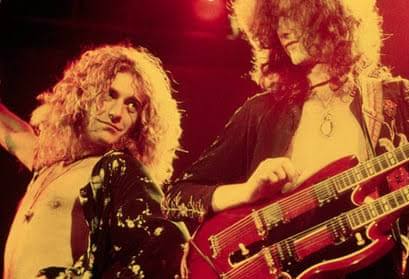
Robert Plant at 78: Why His Chemistry With Jimmy Page Was Led Zeppelin's Real Secret Weapon
Robert Plant turns 78 today. The conventional story says Page played guitar and Plant sang. The truth is stranger and more useful: they behaved like two lead instruments arguing, answering and leaving each other room.
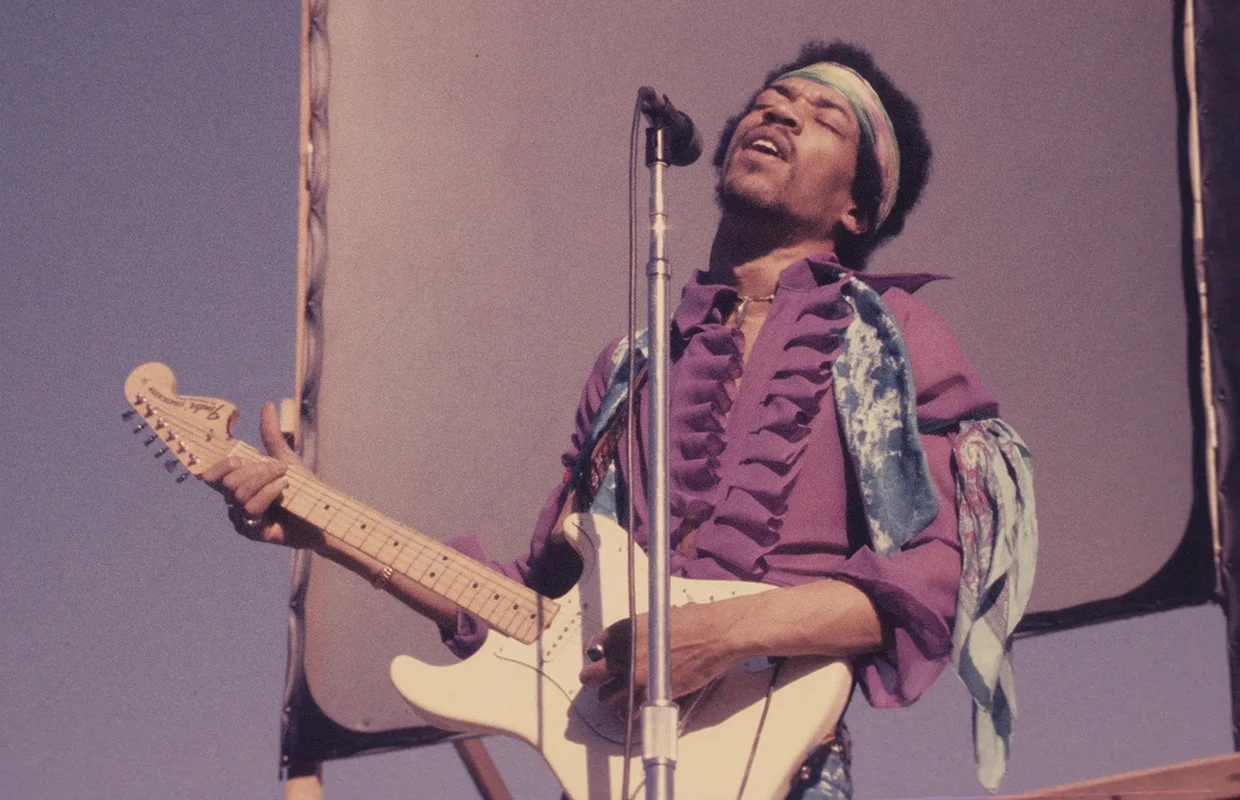
History of the Riff: Jimi Hendrix's "Foxey Lady" — The Sound That Made the Electric Guitar Dangerous
Feedback before the riff, four Marshall cabinets, a microphone eight feet away and a Stratocaster flipped upside down — the full story of the riff that made the electric guitar sound dangerous.
History of the Riff: How Prince Turned "Purple Rain" Into Guitar Immortality
A song born onstage, a guitar part that barely needs distortion, and a solo built on emotion instead of excess — the full story of "Purple Rain" and its immortal guitar moment.