The Shred Years
THE GUITAR PLUGGED
Appetite for Destruction Brings the Strip's Filth Back to Rock Guitar
Guns N' Roses' debut, cut at Rumbo Recorders with producer Mike Clink, trades hair-metal polish for a rhythm section built on Izzy Stradlin's groove and a Les Paul copy nobody outside the band knew about.
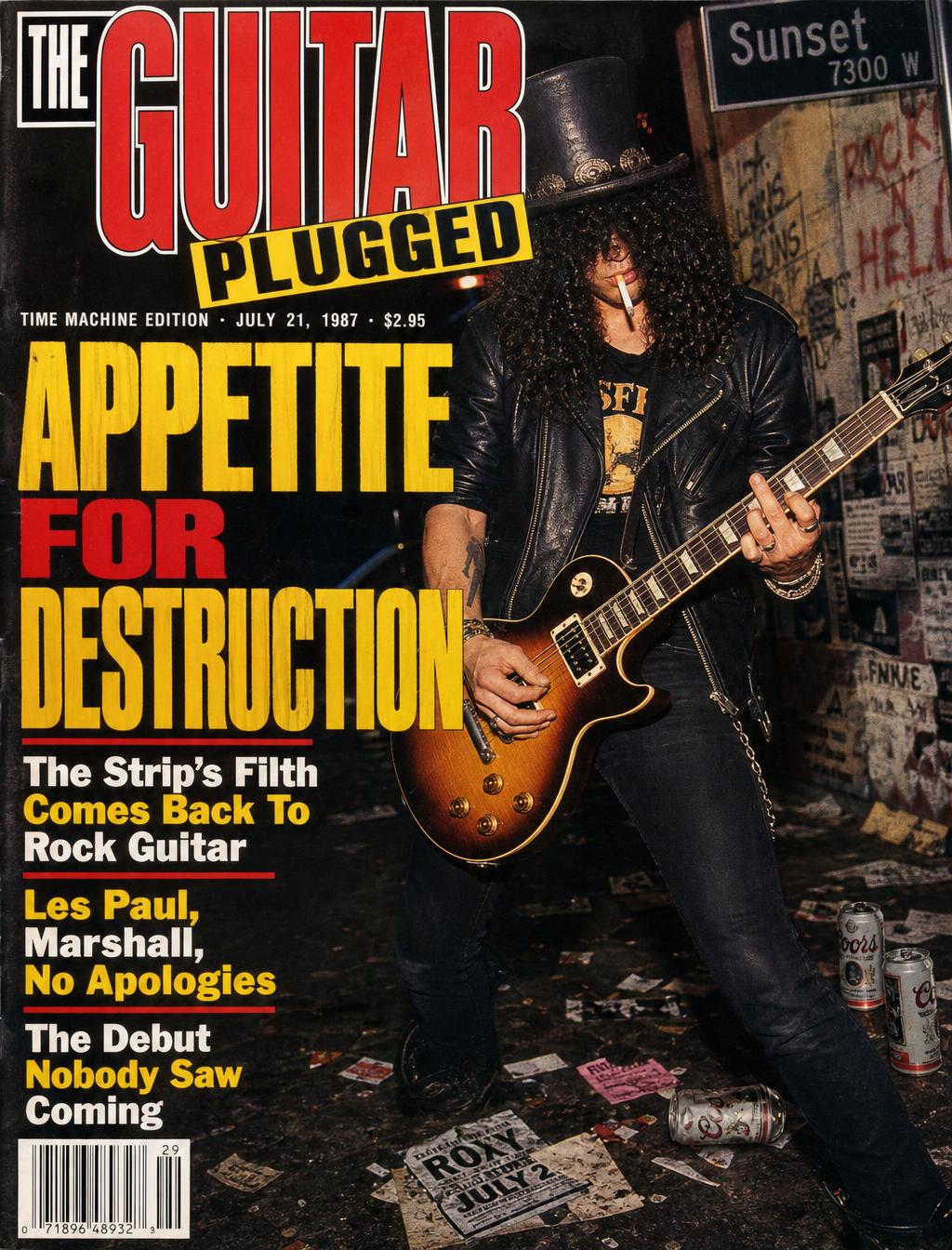
Guns N' Roses' debut album, Appetite for Destruction, is finally out, more than a year after the band started shopping songs to labels and considerably longer since they were a fixture of the grimier end of the Sunset Strip. Where much of the guitar rock coming out of LA right now leans toward big hair, bigger choruses and guitar tones scrubbed clean in the mix, this record sounds like it was recorded by a band that just walked off the stage at the Troubadour with the amps still smoking.
Mike Clink and the Rumbo Sessions
Producer Mike Clink, who cut his teeth as an engineer working with UFO and Metallica among others, tracked the album at Rumbo Recorders out in Canoga Park, the same rooms where the Bangles and other West Coast acts have worked. Clink's approach with Guns N' Roses has reportedly been to let the band's chaos stay audible rather than sand it down — the guitars bleed into each other the way they do in a small club, and the drums have a room sound rather than the gated, triggered snap that's become standard on other LA rock records this year.
A Les Paul With a Secret
Slash's lead guitar sound on the album has already become a subject of speculation among guitarists trying to figure out his rig. The guitar he plays on most of the record is not a vintage Gibson Les Paul but a replica built by luthier Kris Derrig, constructed to Slash's specifications when an original vintage Paul proved out of reach. Through a cranked Marshall amplification setup, the Derrig guitar delivers the thick, singing lead tone heard on “Sweet Child o' Mine” and the album's other guitar solos — a tone many assumed at the time came from a rare original-era Gibson.
Izzy Stradlin's Engine Room
If Slash gets the guitar-magazine attention, it's rhythm guitarist Izzy Stradlin doing the unglamorous work that makes the songs move. Playing Gibson guitars in a loose, rhythmically alive style closer to Keith Richards than to the tight palm-muted chug common in other hard rock right now, Stradlin's parts are what let Slash's leads breathe on top. The interplay between the two guitarists — one holding the pocket, one soloing over it — is a big part of why the record has a swing that a lot of the more rehearsed-sounding LA bands lack.
A Warm-Up Exercise Becomes an Intro
The now-familiar intro figure to “Sweet Child o' Mine” reportedly started life as something closer to a joke: Slash has said he was noodling through a fingering exercise, a kind of technical warm-up he wasn't taking seriously, when the rest of the band picked up on it and insisted on turning it into a song. It's an unusual way for a guitar hook this recognizable to come into the world, and it says something about how unpolished and instinctive the record's biggest moments are.
Rougher Than the Rest of the Radio
Appetite for Destruction lands in a Los Angeles rock scene dominated by bands built for arena tours and big-budget videos. Guns N' Roses, whose members were still playing clubs on Sunset just a couple of years ago, sound like they belong to the Strip's older, meaner tradition rather than to the current crop of glam-metal acts. Whether that rawness translates to the same kind of radio success remains to be seen, but among guitarists who've heard advance copies, the record is already being talked about as a different kind of statement.
Slash's Marshall and the Search for a Sound
Beyond the Derrig Les Paul itself, Slash's lead tone on the record leans heavily on a vintage-style Marshall amplifier pushed into natural overdrive rather than relying on a rack of effects to manufacture sustain and grit. That's a deliberate throwback in a Los Angeles scene where plenty of guitarists have moved toward rack-mounted processors and cleaner, more compressed leads. Slash has cited Aerosmith's Joe Perry and Led Zeppelin's Jimmy Page as reference points for the kind of loose, slightly dirty amp-driven tone he's chasing, a lineage that places this record closer to mid-1970s hard rock than to the more polished guitar sounds coming out of other Sunset Strip bands right now.
A Rhythm Section Built on the Clubs
Bassist Duff McKagan, who came up through Seattle's punk scene before relocating to Los Angeles, and drummer Steven Adler give the band a rhythm section with more rock-and-roll swing than the metronomic precision common among the era's more metal-leaning acts. That looseness, informed as much by punk's energy as by the blues-rock and glam records the band members grew up on, is a big part of why songs like "It's So Easy" and "Nightrain" feel propulsive rather than merely fast, a distinction that separates Appetite for Destruction from records built primarily around technical guitar showcases.
A Year of Delays
The album's release comes only after a lengthy wait: Geffen Records signed the band in 1986, but sessions and the label's uncertainty over how to market a group this openly unpolished pushed the release well into the following summer. Reports from the sessions describe a band still working out internal tensions even as they tracked the record, and Clink's insistence on capturing performances rather than assembling them piecemeal from endless overdubs meant the record took shape slowly despite its raw, spontaneous-sounding final form.
Testing the Strip's Appetite for Something Rougher
Whether radio and MTV are ready for a band this unvarnished remains an open question as the record reaches stores. Guns N' Roses have spent the past two years building a reputation as much for volatile live shows and off-stage chaos as for songwriting, and Appetite for Destruction doesn't sand any of that reputation down for mass consumption. If anything, the record seems to bet that audiences tired of the increasingly interchangeable ballads and big-budget videos dominating hard rock radio are ready for a band that still sounds like it belongs in a club with a low ceiling and a sticky floor.
Why it matters now
Appetite for Destruction eventually became one of the best-selling debut albums in rock history, and its guitar sound helped end the reign of the more polished hair-metal aesthetic that dominated the mid-1980s Sunset Strip. Slash's Kris Derrig Les Paul replica became one of the most famous 'secret' guitars in rock, its story only widely known years later, and it helped popularize the idea that a well-built replica could rival a vintage original in tone and mystique. The interplay between Slash and Izzy Stradlin is now cited by guitar teachers as a textbook example of lead-and-rhythm chemistry, and the accidental origin of the 'Sweet Child o' Mine' intro remains one of rock's most repeated guitar-hook origin stories.
Sources
- Slash — memoir accounts of the Kris Derrig Les Paul replica
- Guitar World — interviews with Slash and Izzy Stradlin on Appetite for Destruction sessions
- Rolling Stone — Appetite for Destruction recording history at Rumbo Recorders