
The Shred Years
THE GUITAR PLUGGED
Dire Straits Cut Brothers in Arms in a Volcano's Shadow
Recorded on a Caribbean island with one of the first fully digital rigs in pop history, Mark Knopfler's fifth Dire Straits album turns fingers into a signature sound.
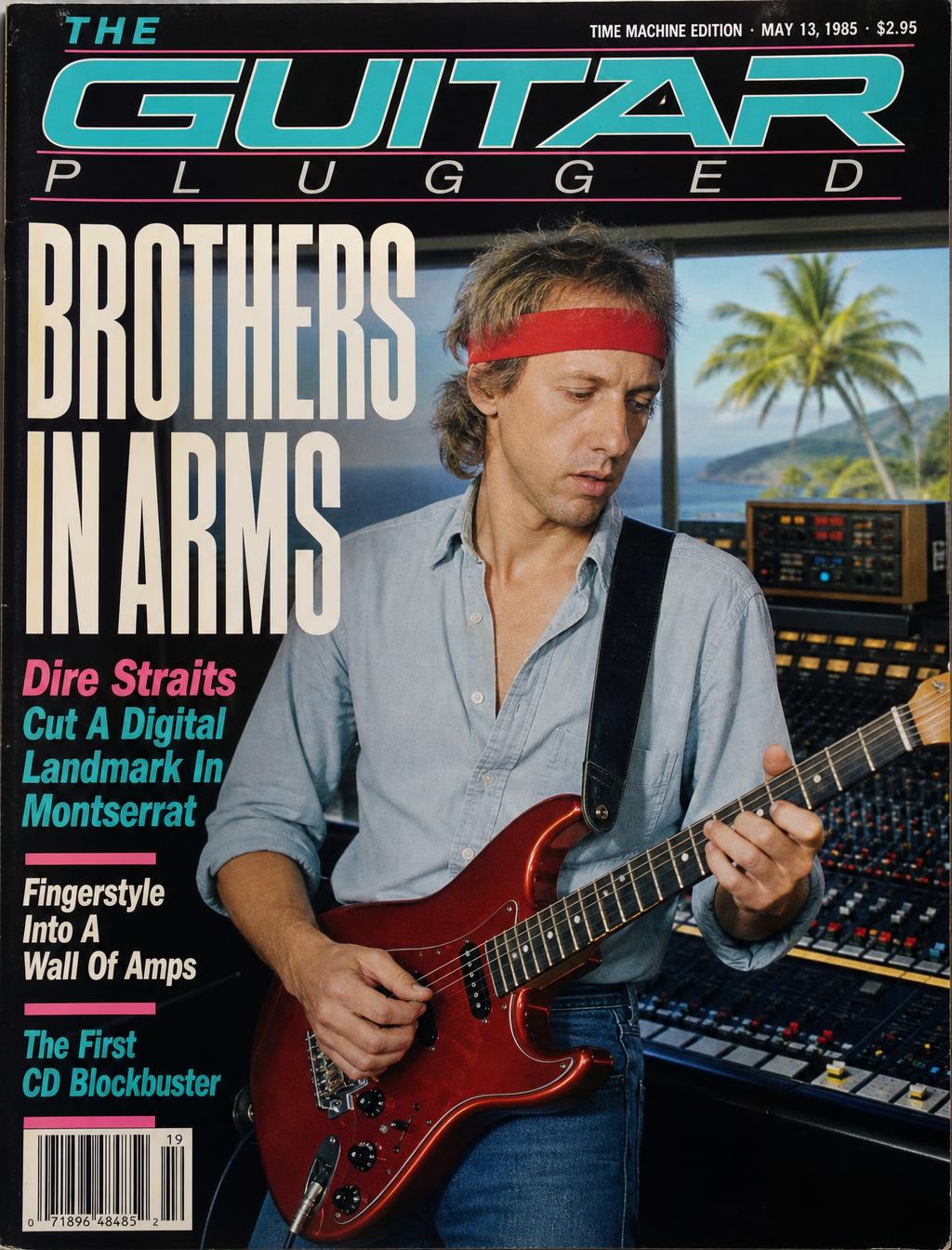
Dire Straits have gone to Montserrat to make a record, and by the time the tape rolls at AIR Studios in the hills above Plymouth, the band's leader has already decided this one will sound like nothing else on the radio. Brothers in Arms, out this month, is being talked about almost as much for how it was made as for what's on it. George Martin's studio, built into the volcanic slopes of the island, has drawn artists chasing isolation and clean air for years. For Mark Knopfler, it offers something else: distance from London, and the chance to track an album with almost none of the tape hiss and print-through that dog a guitar band's records.
An Album Cut for the Digital Age
Engineer Neil Dorfsman, working again with Knopfler after Making Movies and Love Over Gold, has pushed to record much of Brothers in Arms on a Sony PCM-3324 digital multitrack, one of the first rigs of its kind to be used on a major rock album from start to finish. The gear is unforgiving in a useful way: every fret buzz, every pick scrape, sits exposed in the mix rather than buried under analog warmth. Dorfsman has said the format demanded a different kind of care in miking and performance, since there's no tape saturation to smooth over mistakes. The result is a record that sounds startlingly present even coming out of a small radio speaker, which matters enormously to a band whose singles are about to get more airplay than anyone at Vertigo Records predicted.
Knopfler's Fingers, Not a Pick
Anyone who has watched Dire Straits live over the last several years knows Knopfler doesn't use a plectrum. He plays with his bare fingers and thumb, a technique closer to a country picker's than a rock guitarist's, and it's all over this album: the clean, articulate runs that open several tracks, the way single notes bloom and decay without the percussive attack a pick would give them. His main instrument through the sessions is a red Schecter, a Stratocaster-style guitar built from Schecter's aftermarket parts rather than a Fender-branded model, chosen for its bright, glassy voice and its stability under the studio lights. It's the guitar most identified with his tone on this record and on the road behind it.
The Guitar Nobody Expected
For "Money for Nothing," the sound is different by design. Knopfler switches to a Gibson Les Paul, and the riff that opens the track — the one already drawing comparisons to ZZ Top's grittier records — comes from a genuine studio accident. As the story circulating around the sessions goes, a microphone was left in an unusual position relative to the amp, tilted at an angle nobody would have chosen on purpose, and when the tape rolled back the sound had a compressed, slightly overdriven bark that nobody could quite reproduce on demand afterward. Knopfler has also talked about chasing a ZZ Top-style tone through his amp and the room itself rather than through a stack of pedals, and the riff was reportedly worked out with a wah pedal left in a fixed position rather than rocked back and forth, shaping the midrange without the classic wah sweep.
A Resonator for the Title Track
The title track closes the album on a completely different instrument: a National Style O, the steel-bodied resonator guitar built for cutting through a band acoustically long before amplification existed. Knopfler plays it with the same fingerstyle approach, and the metallic ring of the resonator cone gives the ballad a haunted, almost desert-blues quality that has nothing to do with the digital sheen of the rest of the record. It's a reminder that for all the studio innovation on Brothers in Arms, the songs still come down to a guitarist who thinks in melodies first.
A Band Built for the CD Era
Brothers in Arms arrives just as compact discs are creeping into shops, and Dire Straits' clean, dynamically wide recording makes the album an obvious demonstration piece for the format's high end. Whatever the commercial fortunes of the record turn out to be, the guitar sounds on it — the finger-picked clarity, the accidental snarl of "Money for Nothing," the resonator hush of the title track — are already being pored over by other players trying to work out exactly how Knopfler gets there.
Why it matters now
Brothers in Arms became one of the best-selling albums of its decade and one of the defining early CD-era rock records, its clean digital tracking making it a go-to demo disc in hi-fi shops for years. "Money for Nothing" would later become inseparable from MTV history thanks to its groundbreaking computer-animated video, adding another layer to the song's legacy beyond the guitar tone itself. Knopfler's fingerstyle approach and his choice of a Schecter-style Strat over a stock Fender influenced a generation of players who realized a signature tone could come from technique and gear choices outside the usual rock guitar playbook. The Les Paul/wah accident behind the "Money for Nothing" riff has since become one of the most discussed 'happy accidents' in recorded rock guitar, endlessly dissected and never quite duplicated. The album's early full-digital recording also stands as a marker in the analog-to-digital transition in studio engineering, a moment guitarists and engineers still reference when talking about how digital recording changed the way rock guitar was captured on tape.
Sources
- Guitar Player magazine — Mark Knopfler interviews on fingerstyle technique and gear
- Sound on Sound — retrospective on Brothers in Arms digital recording at AIR Studios Montserrat
- Rolling Stone — Brothers in Arms album history and 'Money for Nothing' recording anecdotes