

Editorial graphic by The Guitar Plugged.
One guitar states the melody. The second one changes its emotional weight. We rank the ten harmonized guitar moments that define the twin-lead sound.
There is something about two electric guitars moving together that a single guitar simply cannot reproduce.
A great harmonized guitar line doesn't necessarily sound bigger in the same way that another rhythm track or another layer of distortion does. It sounds wider. One guitar establishes the melody. The other changes its emotional weight. Put the right interval between them and an ordinary lead suddenly sounds heroic, melancholy, dangerous or impossibly huge.
Rock guitarists have been exploiting that effect for decades.
Sometimes it comes from two players standing on opposite sides of the stage, as with Thin Lizzy, Judas Priest and Iron Maiden. Sometimes it is created through overdubbing, with one guitarist building an entire arrangement around himself. And occasionally the line is so perfectly written that the harmony becomes more memorable than the solo that follows it.
This list isn't simply about songs that happen to contain two lead guitars. We're looking for moments where harmony itself is essential to the identity of the guitar part.
Here are The Guitar Plugged's 10 greatest guitar harmonies of all time.
[TOC]
10. “Detroit Rock City” — KISS
Guitarists: Ace Frehley and Paul Stanley
For all the spectacle surrounding 1970s KISS, the band's guitar arrangements could be considerably more sophisticated than their critics sometimes gave them credit for.
“Detroit Rock City” is one of the best examples. The song's closing guitar section turns into a harmonized lead passage that gives the track an almost triumphant finish. Rather than using harmony as decoration, the guitars become part of the composition.
That's an important distinction. The best twin-guitar arrangements don't sound as though somebody finished recording a melody and then decided to throw another guitar underneath it. Both voices feel written together.
Ace Frehley's lead personality remains unmistakable, but the harmonized passages show another side of the KISS guitar sound: melodic, arranged and surprisingly elegant.
It is also a reminder of something that gets overlooked when discussing Frehley's influence. His appeal wasn't built around technical excess. His strongest ideas were usually singable.
That's exactly what makes a harmonized guitar line work. You should be able to remember the melody after the amplifiers stop ringing.
9. “Mr. Crowley” — Ozzy Osbourne
Guitarist: Randy Rhoads
Randy Rhoads approached heavy-metal guitar differently. His classical background is frequently mentioned, but the important part isn't simply that Rhoads knew classical music. It's that he understood arrangement.
Listen carefully to the guitar architecture surrounding “Mr. Crowley.” Rhoads didn't treat overdubs as a way of merely making his guitar louder. He used additional guitar voices to create movement around the central melodic idea. Harmonized and doubled lead parts give sections of the song an orchestral quality without sacrificing the aggression of the electric guitar.
That balance became one of Rhoads' signatures. The guitar can sound enormous, but there is usually structure underneath the size.
And then there is his tone. Rhoads' bright, aggressive midrange allows harmonized lines to remain articulate even when several distorted guitar voices are stacked together. With too much low end or gain, harmony parts can collapse into a wall of indistinct frequencies. Rhoads' sound leaves enough definition for the notes to remain separate.
The result is unmistakably metal, but its logic comes from somewhere much older. Multiple voices. Countermovement. Resolution. Rhoads was effectively applying orchestral thinking to a cranked electric guitar.
8. “Peace of Mind” — Boston
Guitarist: Tom Scholz
Few guitarists understood multitracking like Tom Scholz. Boston's debut album is filled with guitar arrangements that feel almost impossibly polished, particularly considering the recording technology available when much of the material was created.
“Peace of Mind” demonstrates Scholz's ability to turn layers of distorted guitars into something approaching a choir.
That's the key to the Boston sound. These aren't simply double-tracked rhythm guitars with another solo placed over the top. Scholz frequently treats each guitar as an individual voice within a much larger arrangement. The harmony lines remain smooth and controlled, with each part occupying its own musical space.
It's almost the opposite of the loose, dangerous interaction associated with bands like the Allman Brothers. Boston sounds engineered. Precisely engineered.
And in Scholz's case, that description is particularly appropriate. His obsessive approach to recording and guitar tone helped create one of the most recognizable production styles of the 1970s. The guitars are saturated without becoming fuzzy, bright without becoming brittle and layered without disappearing into mush.
“Peace of Mind” is a masterclass in what happens when guitar harmony moves from the stage into the studio. One guitarist can become an entire guitar section.
7. “Aces High” — Iron Maiden
Guitarists: Dave Murray and Adrian Smith
Iron Maiden didn't invent harmonized heavy-metal guitar. They may, however, be the band most responsible for making generations of guitarists desperately want a second guitarist.
“Aces High” demonstrates why. Murray and Smith don't simply alternate rhythm and lead responsibilities. Their guitars frequently function as two voices within the same musical statement. The harmony passages soar over the rhythm section with the unmistakable melodic character that became one of Maiden's signatures.
There is also a lesson here about distortion. The classic Maiden guitar sound is heavy, but it isn't overwhelmingly saturated. That matters when two guitars are playing harmonized lines simultaneously.
Every additional layer of gain introduces compression and harmonic information. Stack enough of it together and individual notes begin fighting for space. Murray and Smith's comparatively articulate tones allow the harmony to breathe. You hear two guitars. Not one enormous blur.
“Aces High” also demonstrates how effectively harmony can create momentum. The lines don't merely decorate the song — they reinforce its sense of speed and movement. It's difficult to imagine the track without them. That's usually the mark of a truly great guitar arrangement.
Get Thin Lizzy’s “The Boys Are Back in Town” Tone
Tell ToneMD what guitar and gear you own and we’ll show you how to get as close as possible using the equipment you already have — full signal chain, real numbered settings, no guesswork.
Included with The Guitar Plugged Premium
6. “Highway Star” — Deep Purple
Guitarist: Ritchie Blackmore
This entry is slightly different. Unlike the classic two-guitar partnerships elsewhere on this list, Deep Purple's guitar identity was centered around one guitarist: Ritchie Blackmore.
But “Highway Star” contains one of rock's defining examples of studio-created harmonized lead guitar.
Blackmore's solo is already remarkable for its construction. Rather than simply improvising blues-rock phrases over the changes, he builds lines with a distinctly classical sense of sequence and development. Then the harmonized guitar parts elevate the whole thing.
The effect sounds almost like a baroque composition being blasted through a Marshall. That's not accidental. Blackmore's interest in classical forms and melodic structures helped separate his playing from many of his blues-rooted contemporaries.
The harmony in “Highway Star” doesn't merely make the guitar solo sound larger. It changes its character. Without the harmony, it's a great rock guitar line. With it, the passage becomes something approaching a miniature electric-guitar concerto.
Countless metal guitarists would explore that territory more deeply during the following decades. You can hear part of the blueprint right here.
5. “Victim of Changes” — Judas Priest
Guitarists: Glenn Tipton and K.K. Downing
Before the twin-guitar attack became a heavy-metal cliché, Judas Priest was helping define what it could actually do.
Glenn Tipton and K.K. Downing were fundamentally different players. That difference mattered. Downing often brought aggression and spontaneity. Tipton frequently supplied a more precise, melodic sensibility.
When the two approaches met, Judas Priest gained a guitar identity that couldn't easily be replicated by a band with one guitarist and an overdub pedal.
“Victim of Changes” captures the early version of that chemistry. The guitars can separate, collide and then reconnect in harmonized passages.
That dynamic became enormously influential. Two-guitar bands discovered that they didn't have to assign one musician permanently to rhythm and the other permanently to lead. Both players could move. Both could solo. Both could harmonize. And when necessary, both could hammer out the same riff.
That flexibility would become foundational to heavy metal. Iron Maiden pushed the concept further. Metallica used harmonized guitars differently. Countless thrash, power-metal and melodic-metal bands built entire styles around it.
But Priest helped establish the language. “Victim of Changes” is where you can hear that language developing.
4. “Jessica” — The Allman Brothers Band
X Concepts Strings • Made in USA
Never Run Out of Strings Again.
Join the X Concepts String Club and get fresh USA-made strings delivered every month—plus Premium membership options for the full Guitar Plugged experience.
Guitarists: Dickey Betts and Les Dudek
“Jessica” proves that harmonized guitar doesn't need distortion, darkness or heavy-metal theatrics to sound enormous.
Dickey Betts' instrumental composition is built around melody. Not shredding. Not aggression. Melody.
The guitar lines have an almost conversational quality, moving together and apart while maintaining the flowing Southern-rock character at the heart of the track. Les Dudek's contributions to the recording helped create the layered guitar arrangement around Betts' central ideas, giving the song a rich, intertwined quality.
The harmony works because the melody underneath it is already strong. That's one of the fundamental rules of harmonized guitar. Harmony cannot rescue a weak melody. It magnifies whatever is already there.
And “Jessica” begins with one of the most effortlessly memorable instrumental melodies in rock.
“Harmony cannot rescue a weak melody. It magnifies whatever is already there.”
There is warmth to these guitar parts that distinguishes them from the harder-edged harmonies elsewhere on this list. Instead of sounding martial or dramatic, they feel open. Almost conversational. The guitars aren't battling for attention. They're finishing each other's sentences.
3. “Hallowed Be Thy Name” — Iron Maiden
Guitarists: Dave Murray and Adrian Smith
Iron Maiden appears twice on this list for a reason. If Thin Lizzy helped establish the emotional possibilities of harmonized rock guitar, Maiden turned the technique into part of heavy metal's vocabulary.
“Hallowed Be Thy Name” may be the band's greatest example. The song itself is extraordinarily dynamic, moving from restraint into increasingly intense sections before exploding into the instrumental passages that helped make it a fan favorite.
Murray and Smith's guitars are central to that escalation. Their harmonized lines don't simply sit above the arrangement. They pull the song forward.
And there is a particular quality to Maiden's harmonies that thousands of guitarists have attempted to imitate. They sound heroic. Part of that comes from interval choice. Part comes from phrasing. Part comes from the underlying chord movement.
But much of it comes from the fact that the harmony is written as an actual melodic statement rather than a production trick. You could strip away the distortion and play many classic Maiden harmony lines on acoustic instruments. They would still work.
That tells you how strong the writing is. The amplification makes them metal. The composition makes them timeless.
2. “The Boys Are Back in Town” — Thin Lizzy
Guitarists: Scott Gorham and Brian Robertson
If you want to understand why harmonized electric guitars became such an important part of hard rock and heavy metal, start with Thin Lizzy.
Scott Gorham and Brian Robertson didn't treat twin leads as occasional special effects. They made them part of the band's identity.
“The Boys Are Back in Town” remains the most universally recognizable example. The harmony lines have everything a great twin-guitar passage needs. They're melodic. They're concise. They're instantly memorable. And most importantly, they sound like two guitarists playing together, rather than a guitarist playing against his own duplicate.
That distinction matters. Two musicians never attack notes exactly the same way. Their vibrato differs. Their pick attack differs. Their timing differs by tiny amounts. Those imperfections create width. It's why a genuine two-guitar harmony can feel different from a perfectly copied digital track shifted by an interval.
Gorham and Robertson sound connected without sounding identical. That human interaction became enormously influential. You can trace a line from Thin Lizzy through Judas Priest and Iron Maiden and into huge portions of 1980s metal and beyond.
But influence alone doesn't earn the #2 position. The part still has to sound great. Half a century later, those guitars still do.
1. “Hotel California” — Eagles
Guitarists: Don Felder and Joe Walsh
There are harmonized guitar passages that guitarists admire. Then there are harmonized guitar passages that virtually everybody recognizes. “Hotel California” belongs to the second category.
Don Felder and Joe Walsh's closing guitar exchange is one of those rare moments where technique, tone, composition and restraint align perfectly. We broke the whole thing down in our feature on the “Hotel California” solo.
The famous solo begins as a conversation. Felder and Walsh trade phrases, each maintaining a recognizable personality. Felder's lines have a smooth, carefully constructed melodic quality. Walsh answers with the unmistakable phrasing and attitude that made him one of rock's most distinctive guitarists.
Eventually, the conversation changes. The guitars begin moving together. And that's where the magic happens. The harmonized closing passage transforms two separate lead voices into one enormous melodic statement.
Nothing feels rushed. Nothing feels inserted simply to demonstrate technique. Every phrase seems to lead naturally toward the next.
That's why the ending is so satisfying. The harmony provides resolution. It feels less like two guitarists reaching the end of a solo and more like the entire song finally arriving at its destination.
There are technically more complicated harmonized guitar parts. There are heavier ones. There are faster ones. There may even be more influential ones within specific genres. But few have become this inseparable from the identity of the song itself.
Play those closing guitar lines without vocals and millions of listeners would still know exactly what they're hearing. That's the standard. And that's why “Hotel California” takes our top spot.
Why Harmonized Guitars Sound So Good
There is a musical reason this technique works. Play the same melody twice in unison and you primarily make it thicker. Move the second guitar to another interval and something different happens. You introduce another melodic relationship.
Thirds are particularly common because they can create rich major and minor relationships while allowing both guitars to retain a strong melodic character.
But harmonizing a guitar line isn't as simple as taking every note and moving it three frets higher. The harmony has to respect the underlying key and chord progression. That means the exact interval between the two guitars may change as the melody moves through the scale.
This is why the greatest harmonized guitar lines feel composed rather than mechanically shifted. The players — or arranger — are thinking about where both voices need to go.
And the best examples often use another crucial ingredient: restraint. If every guitar line in a song is harmonized, the effect stops feeling special. Thin Lizzy understood this. Iron Maiden understands it. The Eagles absolutely understood it on “Hotel California.”
Let the guitars separate. Let each voice establish its own identity. Then bring them together. Suddenly the harmony feels enormous.
The Twin-Guitar Sound Changed Rock
There is another reason these recordings matter. The idea of a two-guitar band evolved dramatically over the course of rock history.
At its simplest, the arrangement was obvious: one guitarist plays rhythm, one guitarist plays lead. But bands began discovering that two guitars offered far more possibilities.
The Allman Brothers Band demonstrated how guitars could intertwine and improvise. Thin Lizzy made harmonized leads part of a hard-rock band's signature sound. Judas Priest weaponized the twin-guitar format for heavy metal. Iron Maiden transformed harmonized melodies into something almost anthemic. And studio obsessives like Tom Scholz demonstrated that you didn't technically need two guitarists at all.
Multitracking allowed a single player to construct enormous guitar arrangements one layer at a time.
Today, the process is easier than ever. A guitarist can record a melody into a DAW, duplicate it, shift the second track and create something resembling harmony in seconds. But convenience doesn't necessarily produce a great arrangement.
The classics on this list demonstrate why. The magic isn't simply having another guitar playing different notes. It's choosing the right notes.
How to Build Better Guitar Harmonies Yourself
If you're experimenting with harmonized leads, resist the temptation to immediately add more gain. Start with the melody. If the original melody isn't memorable by itself, adding another guitar usually won't fix it.
Record the main line cleanly. Then create the harmony as a genuinely separate performance whenever possible. Don't simply copy and pitch-shift the first track. Play it again. Tiny differences in timing, vibrato and attack create the width that makes classic twin-guitar recordings feel alive.
Then experiment with where the harmony enters. You may discover that eight bars of unison followed by four bars of harmony sounds dramatically larger than twelve bars of continuous harmony.
Finally, listen to the records. Not just the notes. Listen to when the second guitar enters. Listen to where it disappears. Listen to which guitarist takes the higher voice. Listen to the amount of gain. Listen to the panning. Listen to the vibrato.
The arrangement is often doing more work than the gear.
Chasing the Sound
Trying to recreate one of these guitar tones is also a useful reminder that a recorded guitar sound is more than an amplifier setting. Pickups, speakers, cabinets, microphones, gain structure, effects and the interaction between multiple guitar tracks all influence the final result.
That's especially true with harmonized guitar. A tone that sounds enormous by itself can become muddy when another distorted guitar occupies the same frequency range. Often, slightly less gain produces a much larger recorded sound once the guitars are layered.
If you're trying to build a rig around one of these classic sounds, ToneMD can help you work backward from the finished guitar tone and develop a practical starting point for your own gear.
But remember: matching the amp is only the beginning. The fingers — and the arrangement — still matter.
Two Guitars, One Idea
Great guitar harmony is ultimately about something much simpler than scales, intervals or recording techniques. It's about two musical voices becoming stronger together than either would be alone.
Felder and Walsh understood it. Gorham and Robertson understood it. Murray and Smith built an entire language around it. And generations of guitarists have plugged two guitars into two amplifiers and chased that feeling ever since.
Now it's your turn. What is the greatest harmonized guitar moment ever recorded? Did we get the Top 10 right? And, more importantly: what did we leave out? Tell us in the comments.
What to Remember
- ▸Harmony works when the underlying melody is already strong — a second guitar magnifies the line, it does not rescue it.
- ▸Less gain usually sounds bigger once two distorted guitars are layered, because the notes keep their separation.
- ▸Play the harmony as a separate performance instead of pitch-shifting a copy; the small timing and vibrato differences create the width.
- ▸Restraint matters: let the guitars separate before bringing them together, or the effect stops feeling special.
- ▸Thin Lizzy, Judas Priest and Iron Maiden turned twin leads into a language that most of 1980s metal was built on.
What is the greatest harmonized guitar moment ever recorded?
Tap your pick. One vote per reader.
Frequently Asked Questions
- What interval are most guitar harmonies played in?
- Thirds are the most common because they create rich major and minor relationships while letting both guitars keep a strong melodic character. The exact interval usually shifts as the melody moves through the scale so the harmony stays in key.
- Why do my harmonized guitars sound muddy?
- Usually too much gain. Distortion adds compression and harmonic content, so two saturated guitars in the same frequency range start fighting. Back the gain off and give each track its own EQ space and panning.
- Can one guitarist record a harmony part?
- Yes — Tom Scholz and Randy Rhoads both built huge harmonized arrangements through overdubbing. Play the second part rather than pitch-shifting a copy so the takes differ slightly.
- Which band is most associated with twin guitar harmonies?
- Thin Lizzy made harmonized twin leads part of a hard-rock band's identity, and Iron Maiden turned the technique into a core part of heavy metal's vocabulary.
Experience-driven coverage, not algorithm bait.
- 20+ years of guitar playing experience
- Real-world retail experience at Guitar Center
- Thousands of hours testing guitars, amps, and pedals
- A community of 50,000+ guitar enthusiasts across platforms
- Partnerships with Fender, DistroKid, TrueFire, Card Chords, and Enya
- Editorial standards published openly — see how we test gear
The Modern Guitar Magazine. Delivered to your inbox.
No spam. No gimmicks. Just great guitar content — stories, tones, iconic solos, and honest gear takes. Every week.
Ask GP
3 free questions a dayStill curious? Ask GP about this story.
Your personal classic-rock and guitar guide — ask anything about The 10 Greatest Guitar Harmonies.
Discussion (0)
Sign in to join the discussion.
Sign in to commentLoading comments…
Discover another guitar story
Swipe through our latest features, breaking news and iconic solos — one story at a time.
Open Swipe →More Guitar News

Top 15 Guitar Intros You Know in One Second
Some songs need a chorus to announce themselves. These barely need the guitarist to get started — 15 intros ranked on recognition, personality, and pure gut reaction.
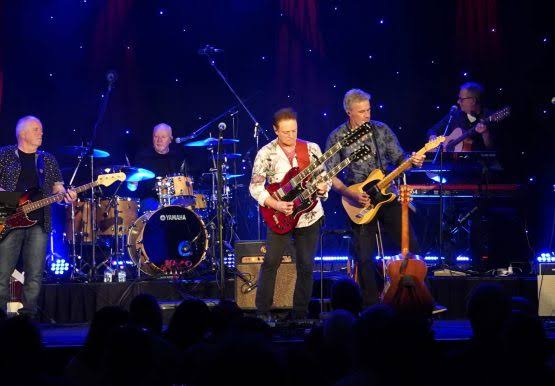
The Story Behind the "Hotel California" Guitar Solo: How Don Felder and Joe Walsh Created Rock's Greatest Guitar Duel
Nearly five decades on, the final minutes of the Eagles' "Hotel California" still stop guitarists in their tracks. Inside the composition, tone, and interplay of Don Felder and Joe Walsh's legendary dual-guitar finale.
Top 20 Guitarists Defined by One Solo
One unforgettable guitar moment can turn a great player into a permanent part of rock history. These are the 20 guitarists most defined by a single solo.