The 20 Greatest Bass Riffs of All Time
The low-end lines that made songs instantly recognizable — from John Deacon and Chris Squire to Flea, Geddy Lee and John Entwistle.
There are guitar riffs that define songs. There are drum grooves that change entire genres. And then there are bass lines that quietly do both jobs at once.
A great bass riff can carry the melody, lock down the rhythm, create tension, make a chorus explode, or turn four notes into something instantly recognizable within half a second.
Some are technically demanding. Others are almost ridiculously simple. But complexity has never been the point.
The greatest bass riffs have personality. They make you move before you even realize what you're hearing.
For this list, we're looking beyond pure difficulty and judging the lines on a combination of influence, recognizability, feel, importance to the song, and just how badly they make you want to pick up a bass.
And before the bass purists attack the comment section: we're using "bass riff" somewhat broadly here. A couple of these famous low-end hooks blur the line between traditional bass guitar, doubled guitar, studio production, and bass-driven arrangement.
That's part of what makes the history interesting.
Here are The Guitar Plugged's 20 greatest bass riffs of all time.
1. Another One Bites the Dust — Queen
Few bass lines have ever done more with less.
The opening of "Another One Bites the Dust" is almost absurdly economical. John Deacon doesn't need a flurry of notes or technical fireworks. He establishes the groove immediately and allows the space between the notes to become part of the riff itself.
That restraint is exactly why it works.
The line is funky without trying too hard to announce itself as funk. It's rock without depending on distorted guitars. It's danceable enough to fill a club yet unmistakably Queen.
Most importantly, remove the bass line and the entire identity of the song disappears. That's the mark of a truly great riff.
2. Money — Pink Floyd
Roger Waters' bass part on "Money" remains one of classic rock's most instantly identifiable low-end figures.
Its unusual rhythmic feel gives the song an off-kilter swagger before David Gilmour ever gets close to the spotlight.
What's especially impressive is how natural the riff feels despite the song's unconventional meter during its main sections. It never sounds like Pink Floyd is trying to impress you with a time signature. It simply grooves.
"Money" is also proof that a bass riff doesn't have to remain buried beneath the guitars. Here, the bass essentially introduces the entire song and provides the framework around which everything else is built.
More than five decades later, bass players still instinctively play it whenever they pick up an instrument in a music store. That tells you everything.
3. Billie Jean — Michael Jackson
The bass line to "Billie Jean" is one of the most recognizable grooves in the history of popular music.
The magic isn't in how many notes are being played. It's in repetition.
The line establishes a sense of movement and tension that almost never lets up. It becomes hypnotic, providing the foundation beneath Michael Jackson's vocal performance while the drums and production build around it.
The bass doesn't simply accompany the song. It creates the atmosphere.
That's why "Billie Jean" works equally well as pop, dance music, funk, and something slightly darker. One bass figure helps hold all of those worlds together.
4. Seven Nation Army — The White Stripes
Yes, we know. Technically, the famous "Seven Nation Army" line was created on guitar rather than a traditional bass guitar. But try making a list about the greatest low-end riffs ever recorded without including it.
Jack White used an octave effect to push the guitar into bass territory, creating one of the most universally recognizable riffs of the 21st century.
It's so recognizable that sports crowds around the world chant it without instruments. That's an extraordinary level of cultural penetration for any riff.
Seven notes became a stadium anthem. Bass guitar or not, the low-end hook belongs in the conversation.
5. Under the Bridge — Red Hot Chili Peppers
"Under the Bridge" is usually remembered first for John Frusciante's beautiful guitar work, but Flea's bass playing is a major reason the track develops the emotional momentum it does.
Rather than dominating the song with slap technique or aggressive funk, Flea plays with remarkable sensitivity. His lines move around the harmony, gradually becoming more expressive as the arrangement expands.
It's an important reminder that great bass playing isn't always about making the listener notice the bass. Sometimes it's about making the entire song feel better.
"Under the Bridge" shows a different side of one of rock's most recognizable bass players.
6. Highway to Hell — AC/DC
AC/DC built a career around proving that simple music isn't necessarily easy music. The low end of "Highway to Hell" is a perfect example.
The bass supports the enormous guitar riff without crowding it, helping create the kind of massive rhythmic foundation that made AC/DC one of the hardest-grooving rock bands ever recorded.
This isn't a bass line designed to show off. It's designed to make the entire band sound heavier.
That distinction matters. Great rhythm sections understand when to fill space and when to leave it alone. On "Highway to Hell," every note serves the song.
7. Baba O'Riley — The Who
John Entwistle was capable of playing things most bassists wouldn't even attempt. But some of his greatest moments came from knowing exactly how to interact with the chaos around him.
"Baba O'Riley" gives Entwistle plenty of room to inject movement beneath Pete Townshend's enormous chords, Keith Moon's explosive drumming, and the famous repeating keyboard sequence.
The bass helps transform the track from atmospheric opening into full-scale rock anthem.
Entwistle didn't approach bass like someone simply supporting a guitarist. He often played as if he were another lead instrument. Few musicians did it better.
8. Rain When I Die — Alice in Chains
Alice in Chains understood darkness better than almost anyone who emerged from the early-'90s Seattle scene. The bass presence in "Rain When I Die" is a huge part of that atmosphere.
The song feels heavy without relying solely on speed or distortion. Instead, the rhythm section establishes a slow, almost menacing pulse beneath Jerry Cantrell's guitar work and Layne Staley's unmistakable voice.
The low end gives the song weight. It's the kind of riff that doesn't need to jump out of the speakers. It drags you into them.
9. Spirit in the Sky — Norman Greenbaum
Some riffs become bigger than the songs that contain them. "Spirit in the Sky" is one of those cases.
The famous fuzzy central hook dominates the track, but the bass and low-end foundation help turn that riff into something almost impossible to escape once you've heard it.
The groove is primitive in the best possible way. There's nothing overly polished about it. It stomps.
That raw combination of fuzz, rhythm, and repetition helped create one of the most recognizable recordings of its era.
10. Roundabout — Yes
And now we get serious.
Chris Squire's playing on "Roundabout" helped redefine what rock bass could be. The instrument doesn't hide beneath the mix. It cuts through it.
Squire's aggressive tone, melodic instincts, rhythmic precision, and willingness to occupy musical space traditionally reserved for guitarists made him one of progressive rock's defining bass players.
"Roundabout" has countless brilliant instrumental moments, but the bass is never merely along for the ride. It is one of the song's central voices.
For generations of players, this was the track that proved bass could be huge, melodic, technical, and unmistakably individual.
11. YYZ — Rush
“The greatest bass riffs have personality. They make you move before you even realize what you're hearing.”
If "Roundabout" opened the door for progressive bass, Geddy Lee kicked it off the hinges.
"YYZ" is Rush operating at full instrumental power. Lee somehow balances precision, aggression, melody, and speed while playing alongside two musicians who were equally uninterested in taking the easy route.
Yet the most impressive thing about "YYZ" isn't simply that it's difficult. It's musical. The bass parts never feel like exercises. They feel essential to the composition.
There are more technically difficult bass pieces in the world, but few have inspired as many rock musicians to sit down and seriously practice.
12. My Generation — The Who
John Entwistle's bass break in "My Generation" was revolutionary.
At a time when bass was usually expected to behave itself, Entwistle stepped forward and treated the instrument like a lead voice. Those explosive passages helped change how rock musicians thought about bass guitar.
You can draw a direct philosophical line from Entwistle's playing to generations of players who refused to stay quietly in the background.
The sound, attack, and attitude were all ahead of their time. "My Generation" wasn't merely a youth anthem. For bass players, it was a declaration of independence.
13. Sweet Child O' Mine — Guns N' Roses
Everyone knows Slash's opening guitar figure. But Duff McKagan's bass work is one of the reasons "Sweet Child O' Mine" feels so alive once the entire band enters.
McKagan brought a melodic punk sensibility into a hard-rock band, often moving beneath the guitars rather than simply doubling them.
His bass lines help connect Slash's melodic guitar parts with Steven Adler's loose, swinging drum feel. It's an underrated part of the classic Guns N' Roses sound.
Listen closely and there's far more happening beneath "Sweet Child O' Mine" than its famous guitar intro suggests.
14. Give It Away — Red Hot Chili Peppers
If you're going to make a list about iconic rock bass, Flea needs more than one appearance.
"Give It Away" captures the aggressive, physical side of his playing. The bass isn't decoration. It's propulsion.
Flea's groove gives Anthony Kiedis room to deliver his rapid-fire vocal while John Frusciante adds scratchy, minimalist guitar textures around the rhythm section. Everything about the song feels kinetic.
And while Flea's reputation sometimes gets reduced to slap bass theatrics, "Give It Away" demonstrates the broader reason he's so influential: feel. The track moves because the bass makes it move.
15. Longview — Green Day
Mike Dirnt's opening line on "Longview" might be the most famous bass riff of the entire '90s pop-punk explosion.
Before Billie Joe Armstrong's guitar takes control, Dirnt establishes the song's personality. The bass is melodic, slightly restless, and instantly memorable.
It also shows how much more adventurous Green Day's rhythm section could be than critics sometimes gave them credit for.
"Longview" became one of those rare songs where kids didn't just want to learn the guitar part. They wanted to learn the bass line first. That's a major accomplishment.
16. Is This Love — Whitesnake
Whitesnake's "Is This Love" might not be the first song people mention when debating legendary bass riffs, but its low-end foundation is crucial to the track's enormous late-'80s production.
The bass locks closely with the drums and guitars, giving the power ballad its sense of size without overwhelming David Coverdale's vocal.
Sometimes an iconic bass part isn't about standing alone. It's about creating the platform beneath everything else.
"Is This Love" demonstrates just how much a well-constructed bass foundation contributes to a massive rock mix.
17. The Chain — Fleetwood Mac
You could make an argument that John McVie's bass figure in the closing section of "The Chain" is the greatest dramatic bass entrance ever recorded.
The song breaks down. The atmosphere changes. Then that bass arrives.
You know exactly what's coming. The tension builds around the repeating figure until Lindsey Buckingham's guitar and Mick Fleetwood's drums push the track into one of rock's most unforgettable climaxes.
It's proof that placement matters. Had the riff appeared constantly throughout the entire song, it might not have the same power.
Instead, Fleetwood Mac makes you wait for it. And the payoff is enormous.
18. What Is Hip? — Tower of Power
This is where the funk players enter the room.
"What Is Hip?" is a masterclass in rhythmic discipline. The bass line is busy without becoming messy, technical without losing its groove, and relentlessly locked into one of the tightest rhythm sections ever put on record.
Tower of Power's music demands precision. But it also demands feel. You can't fake either one.
"What Is Hip?" remains a rite of passage for serious bass players because playing the correct notes is only half the challenge. Making them groove is the real test.
19. Beast of Burden — The Rolling Stones
"Beast of Burden" doesn't beat you over the head with its bass playing. That's exactly why it works.
The Rolling Stones have always been at their best when the rhythm feels loose without actually falling apart. The bass sits inside that pocket, helping create the relaxed, almost conversational flow that makes the song so addictive.
There are technically flashier entries on this list. There are louder ones. There are faster ones.
But few demonstrate the importance of feel better than "Beast of Burden."
20. Under Pressure — Queen & David Bowie
One bass line. Almost no introduction required.
John Deacon's famous figure on "Under Pressure" is among the most recognizable pieces of music ever played on a bass guitar.
The riff doesn't need distortion, speed, slap technique, or complicated harmony. It simply needs to exist.
Its repetition creates tension beneath two of rock's greatest vocalists, giving Freddie Mercury and David Bowie an enormous foundation to work above.
Like the very best riffs, it sounds obvious only after somebody else has already written it. That's harder than it looks. And it is a perfect way to close this list.
What Makes a Great Bass Riff?
This list covers progressive rock, funk, grunge, pop, classic rock, hard rock, alternative music, and more. Yet the greatest lines share several qualities.
They're recognizable. They serve the song. They create movement. And most importantly, they have personality.
John Deacon doesn't sound like Geddy Lee. Geddy Lee doesn't sound like Flea. Flea doesn't sound like John Entwistle. Chris Squire doesn't sound like Mike Dirnt.
That individuality is part of what made these players matter.
In an era when musicians have access to more gear, plugins, lessons, tabs, modeling technology, and information than ever before, it's worth remembering that the most unforgettable bass lines often aren't the most complicated ones. They're the ones you can identify from the first few notes.
Your Turn
We already know this list is going to start arguments. That's the point.
What bass riff should have made the Top 20? And which one on this list is ranked way too high?
Join the conversation with The Guitar Plugged and follow us for more rankings, guitar history, gear, artist stories, and deep dives into the music that shaped generations.
Experience-driven coverage, not algorithm bait.
- 20+ years of guitar playing experience
- Real-world retail experience at Guitar Center
- Thousands of hours testing guitars, amps, and pedals
- A community of 50,000+ guitar enthusiasts across platforms
- Partnerships with Fender, DistroKid, TrueFire, Card Chords, and Enya
- Editorial standards published openly — see how we test gear
More Rankings and Guitar History
Best-of lists, riff histories and artist deep dives from The Guitar Plugged — straight to your inbox.
Discussion (0)
Sign in to join the discussion.
Sign in to commentLoading comments…
Discover another guitar story
Swipe through our latest features, breaking news and iconic solos — one story at a time.
Open Swipe →More in Best Of Lists

20 Easy Guitar Riffs That Sound Way Harder Than They Are
Great riffs are not necessarily complicated riffs. Some of rock's most recognisable guitar moments are built from two strings, three chords and a rhythm that refuses to let go. Here are twenty of them — and how to make each one sound like the record.

Top 25 Classic Rock Bands of All Time
From Led Zeppelin and the Rolling Stones to Rush and the Allman Brothers, these are the 25 classic rock bands that shaped everything that followed — ranked on influence, songwriting, musicianship, longevity and legacy.
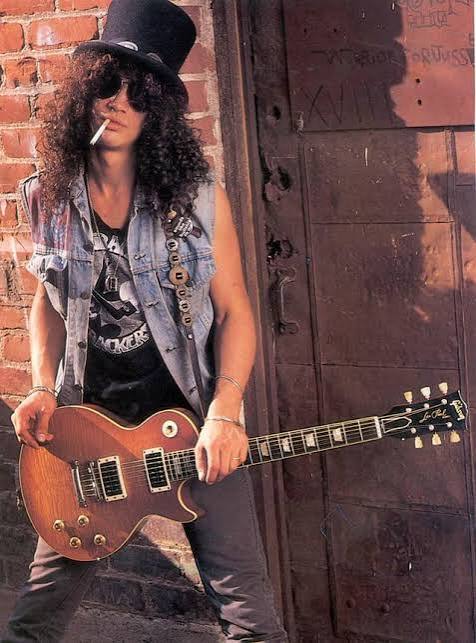
Happy Birthday, Slash: 10 Guitar Solos That Defined a Rock Guitar Hero
Top hat, Les Paul, cigarette, Marshall stack — the image is instantly recognizable. But it's the playing that made Slash a rock guitar hero. Ten solos that explain why.