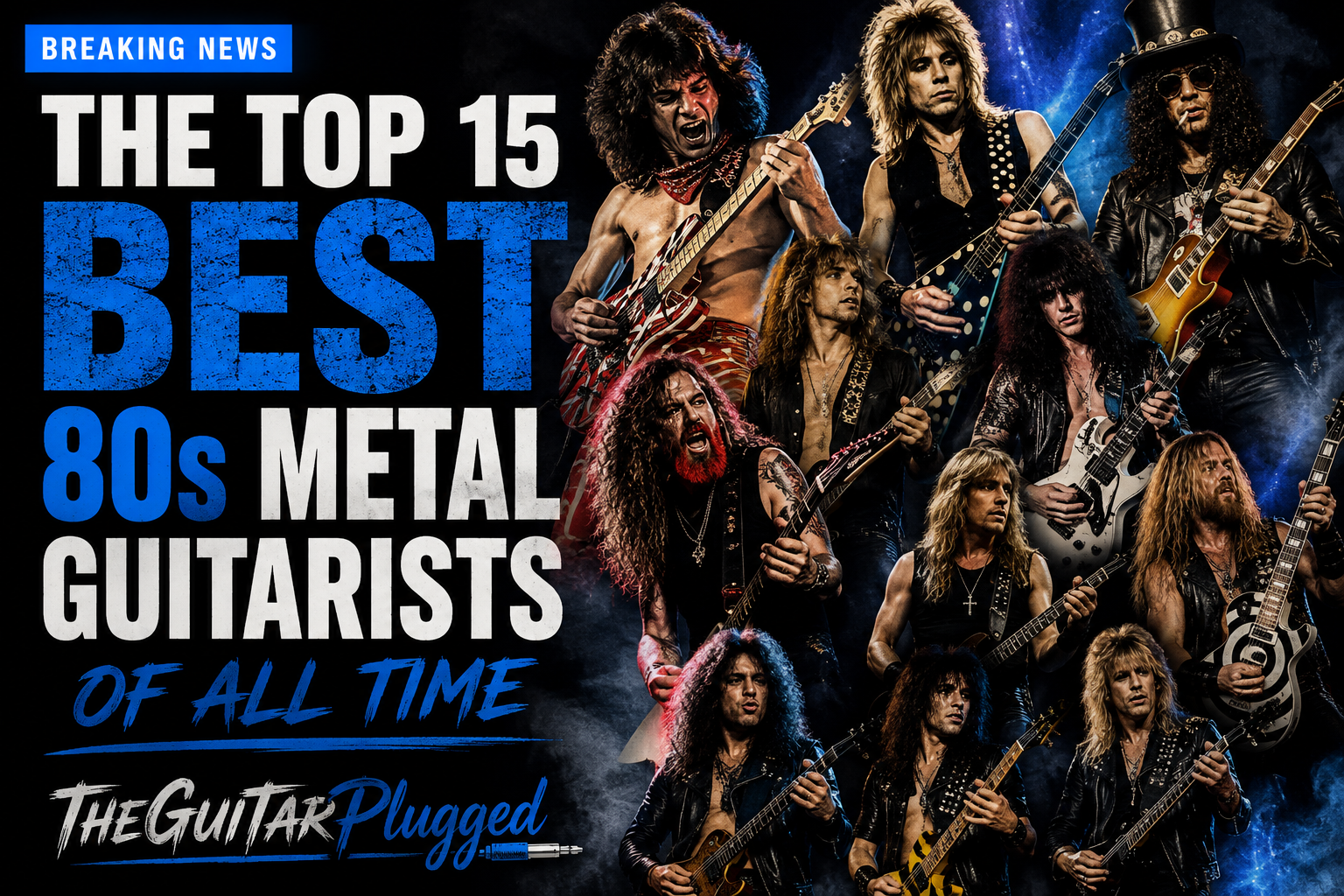
The 15 Best '80s Metal Guitarists of All Time
From Eddie Van Halen and Randy Rhoads to George Lynch, Steve Vai and Dimebag Darrell, these are the players who made an entire generation want to turn the gain up.
There may never be another decade for guitar quite like the 1980s.
The guitar wasn't simply an instrument in '80s metal. It was the main event.
Amplifiers got louder. Racks got bigger. Floyd Rose tremolos were abused within an inch of their lives. Solos became songs within songs, and seemingly every guitarist walking onto the Sunset Strip was expected to have a trick that the guy playing down the street didn't.
But beneath all the hairspray, pointy headstocks and refrigerator-sized effects racks was something much more important: an extraordinary generation of guitar players.
The decade produced innovators who fundamentally changed the mechanics of playing the electric guitar. It produced riff writers, shredders, blues-based gunslingers, studio perfectionists and outright eccentrics.
And then there was Eddie Van Halen.
Ranking these players isn't easy — and it isn't supposed to be. We're considering technical ability, originality, songwriting, riffs, solos, tone, influence and, perhaps most importantly, whether the guitarist left the instrument different from how they found it.
One clarification: we're treating “'80s metal guitarist” as a guitarist who was an important part of the 1980s hard-rock and metal guitar movement, not simply someone whose commercial peak occurred entirely between January 1, 1980 and December 31, 1989. That distinction matters for a couple of names near the top of this list.
Now plug in.
15. Phil Collen — Def Leppard
Phil Collen rarely receives the shred-guitar recognition given to some of his contemporaries, but listen closely to Def Leppard's enormous 1980s records and his importance becomes obvious.
Collen wasn't interested in simply filling every available space with notes. His playing was controlled, melodic and extraordinarily polished. After joining Def Leppard during the making of Pyromania, Collen became part of a guitar partnership with Steve Clark that helped give the band one of the most identifiable sounds of the decade. And while Def Leppard eventually transcended the metal label entirely, the guitars remained central to the band's identity.
The genius was in the arrangement. Instead of thinking about a guitar part as one giant wall of distortion, Def Leppard records often stacked individual guitar textures into something almost orchestral.
Collen could absolutely play. He simply understood that knowing when not to play was equally valuable.
Essential listening: “Photograph,” “Rock of Ages,” “Animal,” “Pour Some Sugar on Me”
The tone: Polished British crunch, tight low end, layered rhythm guitars and singing lead tones.
14. Steve Stevens — Billy Idol
Steve Stevens is one of the great stylists of the era. You can hear only a few seconds of his playing and know who's holding the guitar. That's difficult.
Behind Billy Idol's punk-meets-pop persona was a guitarist capable of combining hard rock, metal, effects experimentation, flamenco influences and downright strange noises into something completely his own.
“Rebel Yell” alone should earn Stevens a place in the conversation. The rhythm guitar is massive. The lead work is explosive. And then there are those sounds. Stevens understood effects as an extension of the instrument rather than decoration added afterward. His Grammy-winning work on “Top Gun Anthem” further demonstrated that he didn't need a vocalist standing in front of him to make the guitar sound enormous.
While some players on this list built their identities around speed, Stevens built his around personality. That's arguably harder.
Essential listening: “Rebel Yell,” “Eyes Without a Face,” “Flesh for Fantasy,” “Top Gun Anthem”
The tone: Saturated Marshall-style crunch, dramatic ambience, modulation, delays and creative effects.
13. Kerry King — Slayer
Nobody ever accused Kerry King of trying to sound pretty. That was precisely the point.
While much of the 1980s guitar world chased increasingly polished production and increasingly sophisticated soloing, Slayer took the instrument somewhere darker. King's playing with Jeff Hanneman helped establish a vocabulary for extreme metal guitar that countless bands would follow. The riffs were violent. The tempos were ridiculous. The solos frequently sounded like the guitar itself was trying to escape. And on Reign in Blood, Slayer condensed that philosophy into one of metal's most important records.
King's lead playing can be divisive when judged by traditional standards of melody and phrasing. But judging Kerry King like a conventional blues-rock guitarist misses the point entirely. His guitar was supposed to sound dangerous. Mission accomplished.
Essential listening: “Angel of Death,” “Raining Blood,” “South of Heaven,” “Mandatory Suicide”
The tone: Aggressive high-gain Marshall attack, biting mids and very little concern for subtlety.
12. Mick Mars — Mötley Crüe
Mötley Crüe may have represented nearly every excess associated with the Sunset Strip, but underneath the spectacle was one seriously underrated guitar player.
Mick Mars was the band's anchor. Where younger players were often racing toward increasingly elaborate solos, Mars brought something dirtier and more sinister to the table. His riffs had weight. “Live Wire” still sounds dangerous. “Looks That Kill” is enormous. “Dr. Feelgood” contains one of the most instantly recognizable riffs of the band's career.
Mars' playing frequently leaned closer to bluesy hard rock than neoclassical shred, and that contrast helped distinguish Mötley Crüe from the army of bands that followed them. The band might have looked glamorous. Mars' guitar rarely did.
Essential listening: “Live Wire,” “Looks That Kill,” “Kickstart My Heart,” “Dr. Feelgood”
The tone: Thick, dirty, mid-heavy crunch with enough gain to sound huge without losing the riff.
11. Nuno Bettencourt — Extreme
Yes, Nuno's biggest commercial explosion came as the 1980s became the 1990s. But Extreme's debut arrived in 1989, and Bettencourt belongs to the final wave of the guitar revolution the decade created.
Get Van Halen’s “Panama” Tone
Tell ToneMD what guitar and gear you own and we’ll show you how to get as close as possible using the equipment you already have — full signal chain, real numbered settings, no guesswork.
Included with The Guitar Plugged Premium
What separated Nuno from thousands of other technically gifted players? Groove. Bettencourt could shred with virtually anybody, but his rhythm playing was equally frightening. He combined funk-style syncopation, Van Halen-inspired athleticism, hard-rock aggression and a remarkable sense of time.
Later, “Get the Funk Out” would become practically a masterclass in this approach. And “Play With Me,” from Extreme's 1989 debut, gave guitarists an early warning of what was coming. Nuno wasn't simply another Eddie disciple. He absorbed the lessons of the previous decade and started pushing them somewhere else.
Essential listening: “Play With Me,” “Get the Funk Out,” “He-Man Woman Hater”
The tone: Percussive high-gain attack, articulate mids and remarkably tight rhythm definition.
10. Steve Vai
Steve Vai sometimes sounds like somebody explained the basic rules of the guitar to him and he decided they were optional.
His résumé entering the 1980s was already unusual. Frank Zappa. Then Alcatrazz. Then David Lee Roth. By the time Vai appeared alongside Roth, Billy Sheehan and Gregg Bissonette, guitar fans were watching one of the most technically outrageous rock bands ever assembled.
But Vai wasn't merely fast. That description has always been inadequate. His vibrato, whammy-bar vocabulary, phrasing and almost vocal manipulation of pitch gave him a musical fingerprint that was immediately identifiable. Listen to “Ladies' Nite in Buffalo?” and then “Yankee Rose.” Same guitarist. Completely different job.
Then came Whitesnake at the end of the decade, setting the stage for Vai's 1990 solo masterpiece Passion and Warfare. Vai demonstrated that virtuosity didn't have to eliminate personality. It could amplify it.
Essential listening: “Yankee Rose,” “Shyboy,” “Ladies' Nite in Buffalo?,” “For the Love of God”
The tone: Saturated lead gain, heavy ambience, dramatic harmonics and expressive whammy-bar manipulation.
9. Zakk Wylde — Ozzy Osbourne
Imagine being the guitarist hired by Ozzy Osbourne after Randy Rhoads and Jake E. Lee. No pressure.
Zakk Wylde arrived in Ozzy's band in 1987 and immediately sounded like himself. That's significant. Rather than attempting to recreate Rhoads' neoclassical vocabulary or Lee's slippery style, Wylde brought enormous pick attack, blues-rock aggression, wide vibrato and his now-famous use of pinched harmonics.
No Rest for the Wicked introduced a guitarist who sounded less like a precision machine and more like someone physically wrestling the instrument. His style would become even more recognizable during the following decade, but the blueprint was already there.
Essential listening: “Miracle Man,” “Crazy Babies,” “Devil's Daughter”
The tone: Hot humbuckers, roaring British-style gain, muscular mids and pinched harmonics that could cut through concrete.
8. George Lynch — Dokken
There are guitarists who play notes. George Lynch seemed to bend the entire fretboard around them.
Lynch was one of the quintessential Los Angeles guitar heroes, but his playing was stranger than the stereotypical Sunset Strip shredder. His phrasing could be slippery and unpredictable. His vibrato was unmistakable. His tone had a woody aggression that guitarists still chase.
And then there's “Mr. Scary.” Few instrumental guitar tracks capture an individual player's personality so completely. Lynch had plenty of technique, but the technique was always filtered through his peculiar musical vocabulary. Even today, play a handful of classic Lynch phrases to an experienced rock guitarist and they'll probably recognize him immediately. That is the mark of a great player.
Essential listening: “Mr. Scary,” “In My Dreams,” “Tooth and Nail,” “Dream Warriors”
The tone: Hot-rodded high-gain crunch with strong mids, aggressive harmonics and a surprisingly organic response.
7. Warren DeMartini — Ratt
If the Sunset Strip guitar sound had to be represented by one player, Warren DeMartini would have a legitimate claim. His playing was flashy without becoming chaotic. Technical without sounding clinical. Bluesy without sounding old-fashioned.
“Eddie Van Halen didn't merely dominate an era of guitar playing. He created the environment in which much of that era happened.”
Ratt's “Round and Round” remains a near-perfect example of 1980s hard-rock guitar construction: a memorable riff, enormous rhythm tone and a lead player who knows exactly when to step forward.
DeMartini's phrasing also revealed the enormous influence Eddie Van Halen had on the generation without simply becoming an Eddie imitation. That's an important distinction. Thousands copied Van Halen. The great ones absorbed the lesson and developed their own language. DeMartini did exactly that.
Essential listening: “Round and Round,” “Lay It Down,” “You're in Love,” “Wanted Man”
The tone: Hot-rodded Marshall crunch, articulate humbuckers and classic LA-metal bite.
6. John Sykes — Whitesnake / Thin Lizzy
John Sykes' guitar tone on Whitesnake's self-titled 1987 album should be placed in a museum. It is absurdly huge. But focusing exclusively on the tone undersells the guitarist creating it.
Sykes possessed a combination of muscular rhythm playing and highly melodic lead work that made his guitar sound simultaneously heavy and elegant. Before Whitesnake, he had already played with Thin Lizzy and brought additional firepower to the band's final era.
Then came Whitesnake. “Still of the Night.” “Bad Boys.” “Crying in the Rain.” The record became one of the defining hard-rock albums of its era, and Sykes' fingerprints are everywhere. His vibrato alone could qualify him for this list.
Essential listening: “Still of the Night,” “Bad Boys,” “Crying in the Rain,” “Cold Sweat”
The tone: Les Paul-style thickness through screaming British amplification, enormous sustain and a wide, authoritative vibrato.
5. Jake E. Lee — Ozzy Osbourne
Following Randy Rhoads was an almost impossible assignment. Jake E. Lee wisely didn't try to become Randy Rhoads. He became Jake E. Lee.
The result was one of the most distinctive guitar voices of the decade. Lee had an unusual physical vocabulary on the instrument, incorporating wide stretches, strange chord voicings, aggressive legato and unconventional techniques that remain difficult to imitate accurately.
“Bark at the Moon” is the obvious calling card. But dig deeper. “Killer of Giants” shows his ability to create atmosphere. “Rock 'n' Roll Rebel” demonstrates his riff writing. “Shot in the Dark” reveals how effectively he could serve a song. Jake was a virtuoso who didn't need every song to announce that he was a virtuoso. That restraint mattered.
Essential listening: “Bark at the Moon,” “Rock 'n' Roll Rebel,” “Killer of Giants,” “Shot in the Dark”
The tone: Sharp, articulate high gain with a muscular attack and enough clarity for complex chord work.
4. Slash — Guns N' Roses
By 1987, rock guitar was drowning in shredders. Then Slash walked into the conversation wearing a top hat and carrying a Les Paul.
Appetite for Destruction didn't eliminate technical guitar playing — Slash himself was a formidable lead guitarist. But he shifted the emphasis. Feel mattered again. Phrasing mattered. A note held in exactly the right place could matter more than fifteen notes squeezed into the same space.
The opening of “Sweet Child o' Mine” became one of the most recognizable guitar passages ever recorded. “Welcome to the Jungle” sounded genuinely dangerous. “Paradise City” combined atmosphere, melody and aggression. And Slash's lead playing carried an unmistakable vocal quality.
In an era obsessed with advancement, Slash reminded everyone that the blues still had plenty left to say.
Essential listening: “Sweet Child o' Mine,” “Welcome to the Jungle,” “Paradise City,” “Nightrain”
The tone: Les Paul, Marshall-style amplification, wah, moderate-to-high gain and huge melodic sustain.
3. Dimebag Darrell — Pantera
Here's where the arguments begin. Dimebag Darrell's most influential recordings belong primarily to the 1990s. Cowboys from Hell was released July 24, 1990, and became the record that introduced Pantera's transformed sound to a massive audience.
So why is Dimebag on an '80s list? Because Darrell Abbott didn't magically appear in 1990. Pantera spent the 1980s developing through a very different incarnation, and Dimebag's technical foundation was already being forged during the decade's shred explosion. Then he took those influences somewhere much heavier.
The title riff from “Cowboys from Hell” announced that something had changed. Dimebag combined Eddie Van Halen's sense of fun and physicality with metal's increasingly aggressive vocabulary, enormous groove and a lead style capable of going from chaotic squeals to beautifully melodic passages.
Dimebag wasn't merely the end of the '80s guitar movement. In many ways, he was the bridge into what came next.
Essential listening: “Cowboys from Hell,” “Cemetery Gates,” “Domination,” “Floods”
The tone: Brutally tight high gain, scooped aggression, extreme harmonics and a lead tone capable of cutting through anything.
2. Randy Rhoads — Ozzy Osbourne
Randy Rhoads had an astonishingly short amount of time to change guitar history. He did it anyway.
When Ozzy Osbourne launched his solo career, Rhoads helped establish a guitar sound that was dramatically different from Black Sabbath. Classical influence became central. But calling Randy a “classical metal guitarist” doesn't fully capture what made him special.
Listen to “Crazy Train.” The riff is brilliant. Listen to “Mr. Crowley.” The solos are compositional. Listen to “Diary of a Madman.” The guitar arrangement demonstrates a musician thinking beyond conventional hard-rock vocabulary. Rhoads wasn't simply decorating songs with difficult solos. He was composing guitar parts.
His tragic death in 1982 at only 25 years old froze his recorded legacy at an almost impossibly high level. We never heard his mature period. What would Randy Rhoads have sounded like at 30? At 40? What would he have done with the technological revolution that transformed guitar rigs later in the decade?
We'll never know. What we do know is that two Ozzy studio albums were enough to influence generations.
Essential listening: “Crazy Train,” “Mr. Crowley,” “Flying High Again,” “Diary of a Madman”
The tone: British crunch, focused mids, controlled saturation and a distinctive lead sound often enhanced by doubling and modulation.
1. Eddie Van Halen — Van Halen
There was never really another choice. The debate starts at No. 2.
Eddie Van Halen didn't simply become the greatest metal/hard-rock guitarist of the 1980s. He changed what guitarists believed the electric guitar could do.
Technically, the influence is obvious. Two-handed tapping became a global phenomenon. Harmonics became weapons. The tremolo bar became an expressive device capable of outrageous sounds. Eddie's rhythm playing incorporated swing, syncopation and percussive detail that imitators frequently overlooked while concentrating on “Eruption.”
But Eddie's greatest contribution wasn't tapping. It was imagination. He approached the guitar without appearing overly concerned about what guitarists were traditionally supposed to do. That mentality produced “Mean Street.” “Unchained.” “Panama.” “Hot for Teacher.” “Drop Dead Legs.” The list keeps going.
And Eddie could write riffs every bit as effectively as he could play solos. That's what separated him from the army of technically gifted players who appeared in his wake. Plenty of guitarists learned to play fast. Plenty learned tapping. Plenty bought striped guitars. Very few could write something as instantly memorable as the opening riff to “Unchained.”
Then there's the sound. The mythical “brown sound” remains one of the most relentlessly pursued guitar tones in history. Players have spent decades experimenting with Plexi-style amplifiers, Variacs, speakers, pickups, effects and studio techniques trying to capture it.
But Eddie's tone contained one component nobody can purchase: Eddie Van Halen. The pick attack. The hands. The timing. The touch. The attitude. The little rhythmic imperfections that made everything feel alive.
Eddie Van Halen didn't merely dominate an era of guitar playing. He created the environment in which much of that era happened. Without Eddie, this entire list looks different.
Why Eddie Van Halen Still Sits at No. 1
Randy Rhoads may have brought more formal compositional sophistication. Steve Vai eventually pushed technique into even stranger territory. Dimebag took high-gain guitar into the next generation. Slash brought blues phrasing roaring back into the mainstream. George Lynch had his own vocabulary. Nuno brought unbelievable groove.
But Eddie influenced virtually the entire ecosystem. That's the difference.
The 1980s became the decade of the guitar hero partly because Eddie Van Halen had demonstrated just how exciting a guitar hero could be. Every music store had kids trying to tap. Every manufacturer wanted a hotter pickup. Every amp company wanted more gain. Every young player wanted a Floyd Rose. And every new guitarist entering Los Angeles knew the standard had changed. The ripple effect was enormous.
The Final Ranking
1. Eddie Van Halen — Van Halen 2. Randy Rhoads — Ozzy Osbourne 3. Dimebag Darrell — Pantera 4. Slash — Guns N' Roses 5. Jake E. Lee — Ozzy Osbourne 6. John Sykes — Whitesnake / Thin Lizzy 7. Warren DeMartini — Ratt 8. George Lynch — Dokken 9. Zakk Wylde — Ozzy Osbourne 10. Steve Vai — David Lee Roth / Whitesnake 11. Nuno Bettencourt — Extreme 12. Mick Mars — Mötley Crüe 13. Kerry King — Slayer 14. Steve Stevens — Billy Idol 15. Phil Collen — Def Leppard
Build an '80s Metal Rig
Want to chase these tones yourself? Start here:
TheGuitarPlugged participates in affiliate programs, including the Amazon Associates Program. We may earn a commission from qualifying purchases made through links on this page at no additional cost to you.
Who Did We Get Wrong?
That's our 15. Now comes the fun part. Who is too high? Who is too low? And who did we completely disrespect by leaving off the list?
Yngwie Malmsteen? Adrian Smith? Dave Murray? Vivian Campbell? Akira Takasaki? Dave Mustaine? Glenn Tipton? Jeff Hanneman?
The comments should be perfectly peaceful. Probably.
Experience-driven coverage, not algorithm bait.
- 20+ years of guitar playing experience
- Real-world retail experience at Guitar Center
- Thousands of hours testing guitars, amps, and pedals
- A community of 50,000+ guitar enthusiasts across platforms
- Partnerships with Fender, DistroKid, TrueFire, Card Chords, and Enya
- Editorial standards published openly — see how we test gear
The Modern Guitar Magazine. Delivered to your inbox.
No spam. No gimmicks. Just great guitar content — stories, tones, iconic solos, and honest gear takes. Every week.
Discussion (0)
Sign in to join the discussion.
Sign in to commentLoading comments…
Discover another guitar story
Swipe through our latest features, breaking news and iconic solos — one story at a time.
Open Swipe →More in Best Of Lists

20 Easy Guitar Riffs That Sound Way Harder Than They Are
Great riffs are not necessarily complicated riffs. Some of rock's most recognisable guitar moments are built from two strings, three chords and a rhythm that refuses to let go. Here are twenty of them — and how to make each one sound like the record.

Top 25 Classic Rock Bands of All Time
From Led Zeppelin and the Rolling Stones to Rush and the Allman Brothers, these are the 25 classic rock bands that shaped everything that followed — ranked on influence, songwriting, musicianship, longevity and legacy.
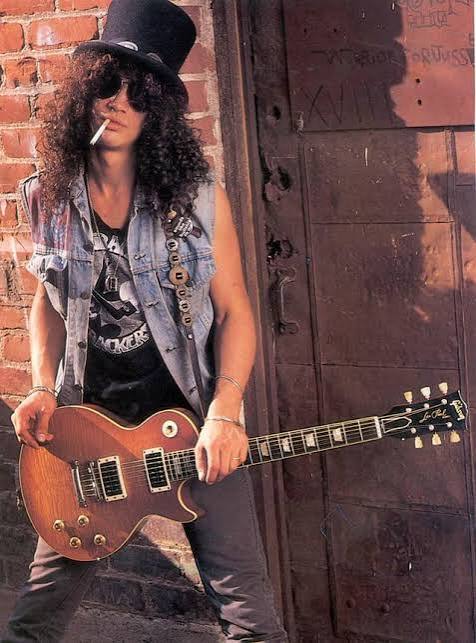
Happy Birthday, Slash: 10 Guitar Solos That Defined a Rock Guitar Hero
Top hat, Les Paul, cigarette, Marshall stack — the image is instantly recognizable. But it's the playing that made Slash a rock guitar hero. Ten solos that explain why.