
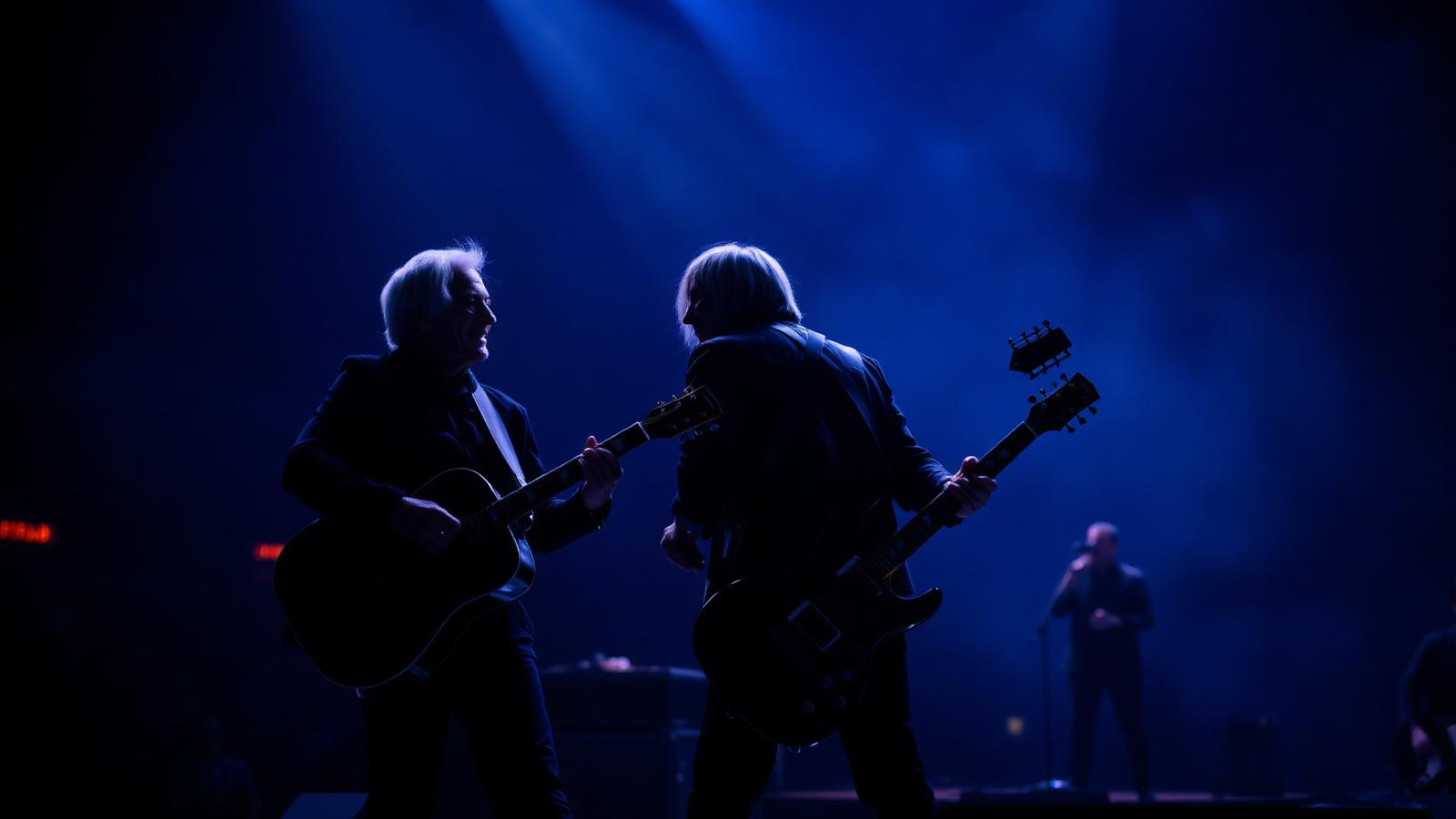
Bruce Springsteen Joins Bon Jovi On Stage at Madison Square Garden — A New Jersey Rock Moment for the Ages
Bruce Springsteen's surprise appearance during Bon Jovi's Madison Square Garden show was more than a guest spot — it was a full-circle New Jersey rock moment featuring Jon Bon Jovi, Phil X, and the enduring shadow of Richie Sambora.
There are guest appearances, and then there are moments the room decides it will remember forever. When Bruce Springsteen walked out from the wings during Bon Jovi's Madison Square Garden set, the sound the crowd made was not applause. It was recognition — the collective gasp of twenty thousand people realizing they were watching a piece of New Jersey rock history happen in real time.
Jon Bon Jovi and Springsteen have crossed paths on stages before, but never quite like this: at the Garden, in front of a hometown-adjacent crowd, with a full Bon Jovi lineup behind them and Phil X standing to the side, ready to trade licks with one of the most iconic guitar-slinging songwriters of the last fifty years. By the time the two of them leaned into a shared microphone, phones were up, mouths were open, and the internet was already deciding which clip to share first.
[TOC]
Key Takeaways
- Bruce Springsteen made a surprise on-stage appearance at Bon Jovi's Madison Square Garden performance, joining Jon Bon Jovi and the band for a moment fans are calling a career highlight.
- The appearance reinforced the deep New Jersey rock lineage that connects Springsteen and Bon Jovi across four decades.
- Guitarist Phil X, Bon Jovi's touring and studio lead player since Richie Sambora's departure, held down the six-string spotlight and reminded a global audience why he earned the role.
- The moment also reignited the perennial fan conversation about Richie Sambora's monumental contributions to Bon Jovi's sound and the possibility of a future reunion.
- Madison Square Garden — one of the most storied stages in music — added the kind of weight that only the Garden can add to a rock story.
What Actually Happened at Madison Square Garden
Bon Jovi's set had already been building the way their shows tend to build: a run of arena-defining hooks, a stretch of newer material, and the crowd steadily rising toward that specific octave New York arena audiences reach when they sense something special is coming. Then the lights shifted, Jon Bon Jovi grinned toward stage left, and Bruce Springsteen stepped into view carrying an acoustic guitar.
The reaction was immediate and physical. People stood up who were already standing. The room got louder in that particular way rooms get louder when the audience is trying to tell the moment it's happening — not for the artists, but for themselves. Jon and Bruce hugged at center stage, shared a microphone, and the band leaned into a shared moment that felt less like a scheduled guest appearance and more like two neighbors deciding, on the spot, to sing together.
Within an hour, clips were everywhere. Within a day, fan forums were parsing every note. The moment did what the very best surprise appearances always do: it made everyone in the building — and everyone who watched it later — feel like they were witnessing something that belonged to a specific city, a specific state, and a specific version of American rock that only shows up at Madison Square Garden.
For a few electric minutes at Madison Square Garden, the state of New Jersey stood on one stage — and rock felt like it always should.
Bruce Springsteen and Jon Bon Jovi: A Friendship Written in Jersey
To understand why this hit as hard as it did, you have to understand what these two men represent to each other and to their state. Springsteen is New Jersey's poet laureate — the working-class chronicler who turned the Turnpike, the boardwalk, and the factory floor into American mythology. Jon Bon Jovi is the arena-rock son who took that same New Jersey identity and pushed it into the Top 40, into stadiums, and eventually into the Rock and Roll Hall of Fame.
They are not clones of each other, and both have said as much publicly for decades. What they are is respectful, complementary, and — from every credible interview both have given — genuinely friendly. Springsteen has spoken warmly about Bon Jovi's work ethic; Bon Jovi has repeatedly cited Springsteen as a hero, a mentor figure, and a benchmark for what a rock lifer is supposed to look like at every decade of a career.
They have shared stages before at benefits, tributes, and Jersey-flavored events over the years. But there is a difference between showing up for a cause and showing up in the middle of your friend's Madison Square Garden set. That difference is exactly why the room reacted the way it did.
Why It Still Feels Special
There is something specifically moving about watching two artists in their sixties and seventies still choosing to do this — still choosing to walk out on a Tuesday night in New York and play music with each other, unannounced, for the sheer joy of it. Neither one needs the appearance. Neither one is promoting anything. That is the whole point.
Phil X: The Guitarist Who Held the Room
In the middle of all the commentary about Springsteen's cameo, the person who quietly did the heaviest lifting on stage was Phil Xenidis — better known as Phil X — the Canadian-born session veteran who has been Bon Jovi's touring and recording lead guitarist since Richie Sambora's departure.
Phil X did not stumble into the Bon Jovi chair. He earned it over years of session work, YouTube demonstrations that turned him into a low-key cult hero among guitar players, and a résumé that includes credits with Rob Zombie, Alice Cooper, Chris Daughtry, Kelly Clarkson, Tommy Lee, and dozens of high-profile Los Angeles sessions. When Bon Jovi needed a player who could disappear into the band on the classics and bring a distinct voice to the new material, Phil X was one of the very few names on any short list.
What He Brings to the Role
On stage he is, put simply, a professional's professional. His tone is muscular and mid-focused, built around Gibson-style humbuckers into a stacked Friedman-influenced overdriven voice that cuts through an arena mix without ever swallowing the vocal. His rhythm playing is tight enough to run a click track and loose enough to breathe. His solos on the Sambora catalog respect the phrases fans have memorized, then punctuate them with his own vocabulary — his signature aggressive vibrato, his hybrid-picked triads, his willingness to bend a whole step past what the audience expects and pull it back at the last second.
That combination — reverence for the source material plus the personality to make it his own — is exactly what a band in Bon Jovi's position needs. Fans want to hear the solo they know. They also want to feel like they're watching an actual guitarist, not a tribute act.
Fan Reaction Over the Years
It would be dishonest to pretend Phil X was universally embraced overnight. Any guitarist stepping into a Richie Sambora-shaped hole was going to face scrutiny — that comes with the job. But a decade-plus into the role, the arc of fan sentiment has bent clearly and steadily in one direction: respect. Concert reviews consistently praise his execution. Long-time Bon Jovi fans regularly cite specific solos he has elevated. Guitar publications have profiled him repeatedly as one of the more underrated live players working in mainstream rock.
And on the Madison Square Garden stage, standing between Jon Bon Jovi and Bruce Springsteen, Phil X did what a great sideman does when a moment like that arrives: he made sure nothing about the music got in the way of it.
[MEMBERS_CTA]
Richie Sambora: The Chapter That Still Matters
You cannot honestly write about Bon Jovi's guitar legacy without writing about Richie Sambora, and there is no reason to try. For more than two decades, Sambora was the six-string identity of Bon Jovi — the co-writer, the harmony vocalist, the talkbox specialist, the double-neck flourish, and the melodic sensibility behind some of the most recognizable rock hooks of the late twentieth century.
The Songwriting Partnership
Sambora's co-writing partnership with Jon Bon Jovi is one of the most commercially successful in modern rock history. From Slippery When Wet through These Days and beyond, the two of them built a catalog that turned Bon Jovi from a promising New Jersey rock band into a global phenomenon. The credits speak for themselves: 'Livin' on a Prayer,' 'Wanted Dead or Alive,' 'You Give Love a Bad Name,' 'Bad Medicine,' 'I'll Be There for You,' 'Bed of Roses,' 'Always,' 'It's My Life.' Whatever your opinion of any individual song, the songwriting résumé is undeniable.

X Concepts Strings • Made in USA
Never Run Out of Strings Again.
Join the X Concepts String Club and get fresh USA-made strings delivered every month—plus Premium membership options for the full Guitar Plugged experience.
Iconic Riffs, Solos, and Vocals
Sambora's playing was never about shred for shred's sake. His signature was melodic — bluesy pentatonic phrasing shaped into hooks, talkbox lines that became as iconic as the choruses they preceded, and a vocal harmony sensibility that made him arguably the single most important background voice in the band's recorded history. The 'Livin' on a Prayer' talkbox is one of the most recognizable four-second guitar phrases ever committed to tape. The 'Wanted Dead or Alive' twelve-string double-neck moment is a signature image of an entire era of arena rock.
Why Fans Still Hope for a Reunion
Sambora left Bon Jovi in 2013, and the reasons have been discussed at length by all parties in ways that need no rehashing here. What matters is that the door has never fully closed in public. Both Jon Bon Jovi and Sambora have spoken warmly about each other in recent years, and Sambora's own inclusion in the Rock and Roll Hall of Fame ceremony with the band made clear how important that shared history remains to everyone involved.
“For a few electric minutes at Madison Square Garden, the state of New Jersey stood on one stage — and rock felt like it always should.”
That is why moments like the Madison Square Garden Springsteen appearance always reignite the same conversation. If Bon Jovi can create surprise arena moments this powerful, the argument goes, imagine what a Sambora walk-on would do. It is a fan wish, not a prediction. But it is a fair one.
Two Chapters, Not Rivals
The healthy way to hold both Phil X and Richie Sambora in the same story is the way the band itself has always framed it: as chapters, not competitors. Sambora built the foundation. Phil X protected and extended it. Both eras have produced great nights. Neither one erases the other, and any honest Bon Jovi fan can love both without feeling like they are betraying either.
Why Madison Square Garden Made This Bigger
There are venues that host history, and there is Madison Square Garden — the room that manufactures it. From Led Zeppelin's 1973 stand to John Lennon's final full-length concert appearance with Elton John in 1974, from The Concert for Bangladesh to Billy Joel's record-breaking residency, the Garden is the closest thing rock music has to a cathedral in North America.
The Weight of the Room
Play any arena in America and you will hear great music. Play Madison Square Garden and you will hear great music inside a room that has already witnessed a hundred definitive nights. Musicians talk openly about how the Garden listens differently — how the sound feels bigger, how the crowd reactions land harder, how a surprise guest walk-on triggers a specific New York roar that no other venue can quite replicate.
That weight is a huge part of why the Springsteen-Bon Jovi moment traveled the way it did. The same appearance in a different city would have been a wonderful clip. At the Garden, it became a headline.
Legendary Nights Still Casting a Shadow
Every rock artist who steps on the Garden stage is, whether they like it or not, standing in the acoustic shadow of everyone who has done it before. That is intimidating, and it is also empowering. It is why Springsteen's surprise appearance did not feel like a stunt — it felt like a chapter being added to a book that has been written continuously since 1968.
Did You Know?
Madison Square Garden has hosted rock's most defining nights for more than half a century — from The Concert for Bangladesh in 1971 to John Lennon's final full-length concert appearance with Elton John on Thanksgiving 1974, to Billy Joel's record-breaking multi-year residency. When artists talk about 'playing the Garden,' they are talking about stepping into that specific lineage — which is exactly why unannounced walk-ons at MSG carry the mythology they do.
What This Means for Bon Jovi
The obvious question after a night like this is the one every fan is already asking: does this signal more special appearances to come?
The honest answer is that nobody outside the two camps can say for certain. What can be said is that a moment like this only happens when the relationships behind the scenes are genuinely warm and the band is confident enough in its live show to accommodate a surprise this big without missing a beat. Both of those things now appear to be true.
The Legacy Question
Bon Jovi's late-career legacy has been shaped by two competing narratives. The first is the one written by decades of arena tours, diamond-certified records, and one of the most recognizable brand identities in rock. The second — quieter, more recent — is about how a band that big keeps evolving in a music economy that keeps changing under its feet.
Nights like this are the answer to the second question. They demonstrate that Bon Jovi is not just protecting a catalog. It is still capable of creating live moments people will tell their kids about.
A Celebration of New Jersey Rock
In the end, what happened at Madison Square Garden was not really about a guest appearance. It was about a specific idea of American rock music — the kind that grew up on the Jersey Shore, worked its way up through club circuits and biker bars and blue-collar bars, and eventually filled the biggest room in New York. Springsteen and Bon Jovi are two of the most important standard-bearers of that tradition still doing this at the highest level.
When they stood on the Garden stage together, with Phil X carrying the guitar duties and the ghost of every previous MSG legend in the rafters, they reminded a full room — and a global online audience — why rock music at its best is a community, not a transaction. That is worth celebrating. And it is worth remembering, the next time somebody claims the genre has nothing left to say.
Frequently Asked Questions
Did Bruce Springsteen really join Bon Jovi at Madison Square Garden?
Yes. Springsteen made a surprise on-stage appearance during Bon Jovi's Madison Square Garden set, joining Jon Bon Jovi and the band for what fans quickly described as one of the most memorable New Jersey rock moments in recent memory.
Who is Bon Jovi's current guitarist?
Phil X (Phil Xenidis) has been Bon Jovi's touring lead guitarist since Richie Sambora's 2013 departure and has been an official member of the band since 2016. He is a Canadian-born session veteran with credits across mainstream rock, and is widely respected among guitar players for his tone, his versatility, and his live consistency.
Is Richie Sambora coming back to Bon Jovi?
There is no confirmed reunion at this time. Both Jon Bon Jovi and Richie Sambora have spoken warmly about each other in recent years, and Sambora participated in the band's Rock and Roll Hall of Fame induction, but no full return to the touring lineup has been announced.
How long have Bruce Springsteen and Jon Bon Jovi been friends?
The two artists have known and publicly supported each other for decades, connected by their shared New Jersey roots and their overlapping generations of American arena rock. They have appeared together at benefit shows and tributes over the years and have consistently spoken about each other with respect and affection.
Why is Madison Square Garden considered so important in rock history?
Madison Square Garden has hosted many of rock's most defining live moments — from Led Zeppelin's legendary 1973 stand to The Concert for Bangladesh, John Lennon's final full-length concert appearance in 1974, and Billy Joel's record-breaking residency. Its role as a benchmark venue is why surprise guest appearances there carry additional weight.
Related Reading
External References
Experience-driven coverage, not algorithm bait.
- 20+ years of guitar playing experience
- Real-world retail experience at Guitar Center
- Thousands of hours testing guitars, amps, and pedals
- A community of 50,000+ guitar enthusiasts across platforms
- Partnerships with Fender, DistroKid, TrueFire, Card Chords, and Enya
- Editorial standards published openly — see how we test gear
The Modern Guitar Magazine. Delivered to your inbox.
No spam. No gimmicks. Just great guitar content — stories, tones, iconic solos, and honest gear takes. Every week.
Ask GP
3 free questions a dayStill curious? Ask GP about this story.
Your personal classic-rock and guitar guide — ask anything about Bruce Springsteen Joins Bon Jovi.
Discussion (0)
Sign in to join the discussion.
Sign in to commentLoading comments…
Discover another guitar story
Swipe through our latest features, breaking news and iconic solos — one story at a time.
Open Swipe →More in Guitar Talk
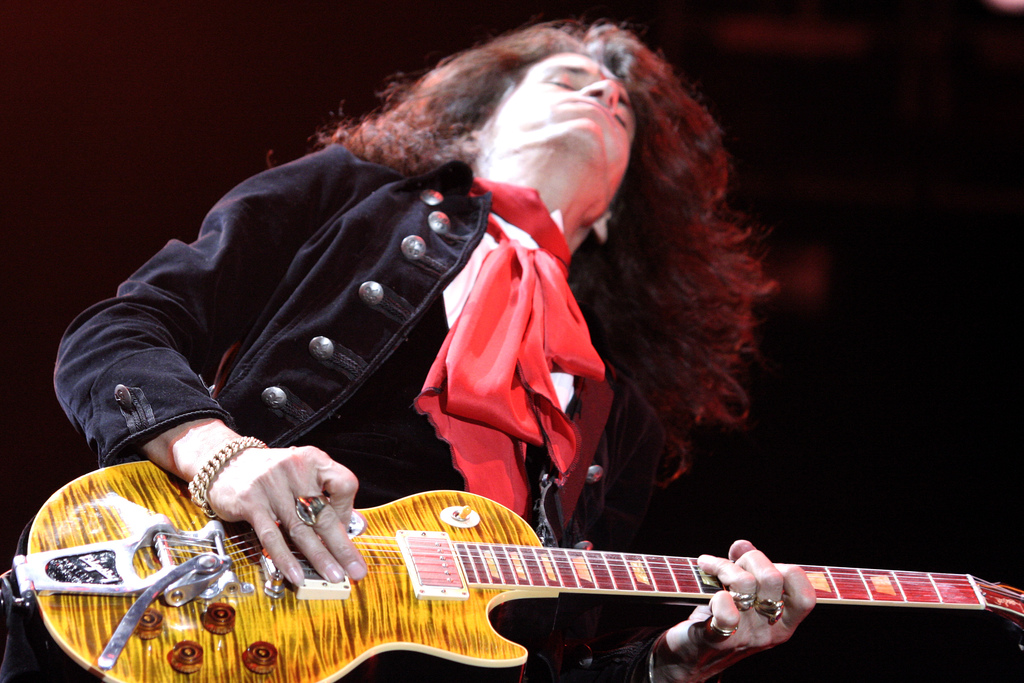
Happy Birthday, Joe Perry: The Riff Machine Who Gave Aerosmith Its Swagger
Joe Perry turns 76 today. From the swampy grind of “Sweet Emotion” to the reunion that saved a band, this is the career of the guitarist who taught American hard rock how to strut.
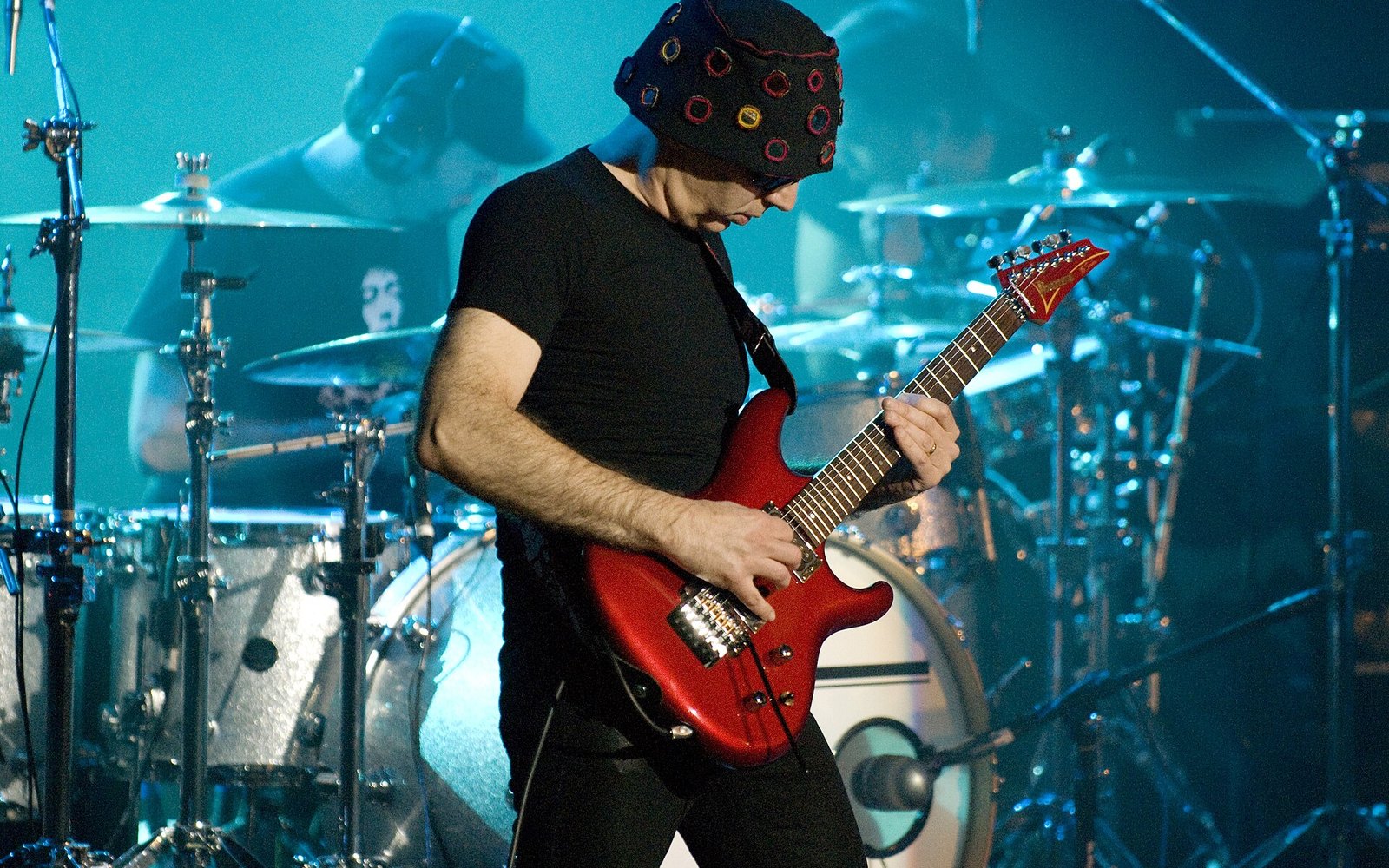
History of the Riff: How Joe Satriani Made “Flying in a Blue Dream” Feel Weightless
An acoustic guitar in an unusual tuning, a stray broadcast and a melody that seems to hang in the air: inside the construction of Satriani’s 1989 masterpiece.
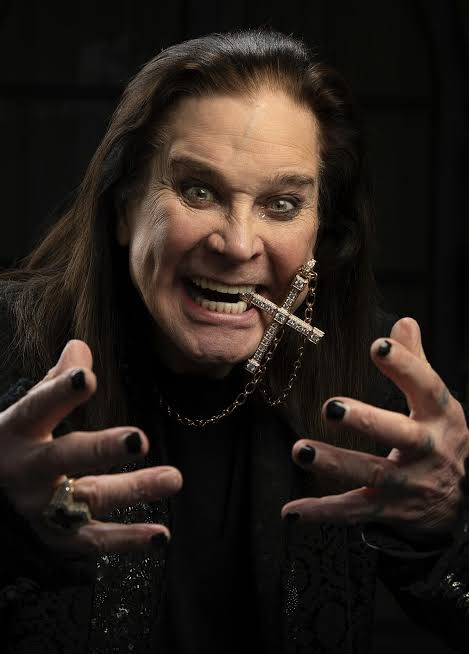
Tony Iommi Opens Up About His Final Conversation With Ozzy Osbourne: “I Still Can't Get It in My Head”
The Black Sabbath guitarist says Ozzy was exhausted after the band's emotional farewell — but determined to give fans one final show.