
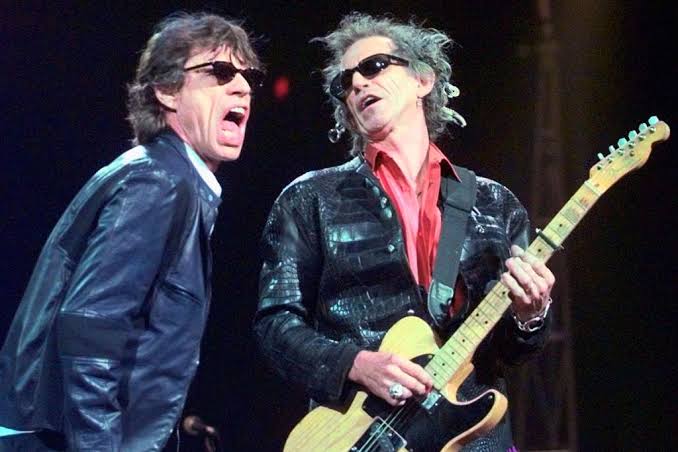
Mick Jagger Turns 83: Looking Back at the Extraordinary Guitar Career of Keith Richards
Mick Jagger celebrates his 83rd birthday on July 26, 2026 — and no reflection on his legacy is complete without the guitarist standing to his right for more than six decades. This is Keith Richards' extraordinary guitar career, told through the riffs, the five-string Telecasters and the open G tuning that helped build The Rolling Stones.
Mick Jagger turns 83 today, July 26, 2026 — a milestone birthday for one of the most important frontmen in the history of rock and roll. Born in Dartford, Kent, in 1943, Jagger has spent more than six decades as the voice, face and creative co-architect of The Rolling Stones.
But no honest reflection on Jagger's legacy is complete without the guitarist who has stood to his right for almost the entire ride. Keith Richards — born December 18, 1943, also in Dartford — is not just Jagger's songwriting partner. He is the sonic identity of The Rolling Stones. Every time you hear a Stones record, you are really hearing a conversation between those two men.
So on Jagger's 83rd, we're using the occasion to do something the birthday coverage almost never does: celebrate the extraordinary guitar career of Keith Richards, and the partnership that helped build one of the greatest rock and roll catalogs ever made.
[TOC]
• Co-founded The Rolling Stones in 1962 and has anchored the band's guitar identity for more than six decades.
• Co-wrote — with Mick Jagger — some of the most recognizable riffs in rock: Satisfaction, Jumpin' Jack Flash, Brown Sugar, Start Me Up, Gimme Shelter, Honky Tonk Women.
• Popularized open G tuning on a five-string Telecaster as a rhythm-guitar language.
• Inspired generations of players to prioritize groove, feel and songwriting over speed and virtuosity.
• Inducted into the Rock and Roll Hall of Fame with The Rolling Stones in 1989.
The Guitarist Behind the Stones
Keith Richards did not grow up wanting to be a rock star. He grew up wanting to be a blues guitarist.
As a teenager in post-war Kent, Richards fell hard for the American music that trickled into Britain on imported 78s and BBC broadcasts. Three names, above all, shaped the guitar player he would become: Chuck Berry, Muddy Waters and Jimmy Reed.
Chuck Berry gave him the architecture — the double-stops, the boogie shuffle, the idea that a guitar riff could carry a song from start to finish. Muddy Waters and the wider Chicago blues world gave him the depth: the low-string menace, the space between notes, the sense that a rhythm guitar could hold an entire band up on its own. Jimmy Reed gave him something more subtle — the loping shuffle feel and understated economy that would eventually surface in Stones songs like Little Red Rooster and countless slower blues cuts.
The famous meeting with Jagger on a Dartford train platform in October 1961 — Mick carrying a stack of Chuck Berry and Muddy Waters albums under his arm — is a piece of rock mythology precisely because it is also true. The blues brought them together before The Rolling Stones existed as a band.
The Birth of the Rolling Stones Sound
When The Rolling Stones formed in London in 1962, they were, by their own description, a blues covers band. Early setlists leaned heavily on Chess Records material: Muddy Waters, Chuck Berry, Bo Diddley, Jimmy Reed, Howlin' Wolf.
What separated them from the other British R&B groups of the era was how the guitars were arranged. Instead of a strict lead/rhythm split, Richards and founding member Brian Jones played what Richards would later famously call "the ancient art of weaving" — two guitars trading roles, filling each other's gaps, sometimes doubling a riff, sometimes locking into a groove, sometimes stepping on each other in a way that made the whole thing feel alive. When Mick Taylor and later Ronnie Wood took Jones's place, that principle stayed.
That is the foundation of the Stones' guitar identity, and it is Keith Richards' fingerprint on every version of the band. The Rolling Stones don't really have a lead guitarist and a rhythm guitarist in the traditional sense — they have two rhythm guitarists who are always in conversation, one of whom writes the riffs.
The Riffs That Changed Rock
Any list of the greatest guitar riffs of the rock era is going to be heavy with Keith Richards songs. There is a reason for that: he built his career on the riff as a unit of composition. The riff isn't an intro on a Stones record. It's the song.
Here are the ones every guitar player should know — and why they matter.
(I Can't Get No) Satisfaction (1965)
The most famous fuzz-tone riff in rock history. Richards has said many times that he woke up in a Florida hotel, mumbled the riff into a cassette recorder, went back to sleep, and found it waiting for him in the morning. He originally imagined the fuzz-guitar line as a placeholder for a horn part. Producer Andrew Loog Oldham and the rest of the band disagreed. They were right. That three-note riff, pushed through a Maestro Fuzz-Tone, became a career-defining sound and one of the first mainstream uses of fuzz on a pop single.
Jumpin' Jack Flash (1968)
The riff that reintroduced The Rolling Stones as a hard-rock band. By Richards's own account, the recording is deceptively simple: an acoustic guitar tracked hot into a small cassette recorder, pushed to the edge of distortion, layered with electric guitar. The result is a riff with enormous width — thick, aggressive and dry, without ever using a huge amplifier. A blueprint for every garage-rock guitarist who came after.
Honky Tonk Women (1969)
Get Keith Richards’ “Brown Sugar” Tone
Tell ToneMD what guitar and gear you own and we’ll show you how to get as close as possible using the equipment you already have — full signal chain, real numbered settings, no guesswork.
Included with The Guitar Plugged Premium
Arguably the moment Keith Richards' mature style clicks fully into place. The rhythm figure — that hitching, syncopated shuffle — is built on open G tuning on a five-string Telecaster. It's a country song, a blues song and a rock song at the same time. If you want to understand what people mean when they say Keith Richards plays behind the beat, put this on.
Gimme Shelter (1969)
The most cinematic Rolling Stones song, opened by one of the most atmospheric guitar intros ever recorded. Richards achieved that famously eerie shimmering tone on a Maton EG240 Supreme electric — a guitar that reportedly fell apart at the end of the session — using open E tuning and a capo, layered with subtle tremolo. The song is a masterclass in how a guitar part can set an entire emotional weather system for a track.
Brown Sugar (1971)
Open G tuning on a five-string Telecaster, again. The main riff is the sound of Richards' new tuning system reaching full flower — a driving, syncopated rhythm figure that a lead guitarist can't play. It requires the specific chord voicings that only appear when you tune a guitar to an open chord and remove the low E. That's a design choice, not a shortcut.
Can't You Hear Me Knocking (1971)
Open G tuning yet again, this time as the launchpad for one of the great extended jams in the Stones' catalog. Richards' rhythm figure sets up the entire song; when the tune opens into its long instrumental coda, it's Mick Taylor's Latin-flavored soloing that takes the spotlight — but the reason that solo works is the harmonic ground Richards laid underneath it.
Start Me Up (1981)
The last classic-era Stones riff, and one of the most instantly recognizable songs the band ever released. Once again: open G tuning, five-string electric, a rhythm figure that lives or dies on the space between the chords. Nearly 45 years later, it is still a stadium-opening riff for exactly the reason it always was — nobody else writes riffs quite like this.
The Open G Revolution
If Keith Richards has a single technical fingerprint that separates him from every other guitarist of his era, it is his adoption of open G tuning on a modified Fender Telecaster.
X Concepts Strings • Made in USA
Never Run Out of Strings Again.
Join the X Concepts String Club and get fresh USA-made strings delivered every month—plus Premium membership options for the full Guitar Plugged experience.
Around 1968, encouraged in part by fellow guitarist Ry Cooder, Richards began experimenting with open G — tuning the guitar, low to high, to G–D–G–B–D. The tuning is native to a lot of Delta and country blues, and it produces a major chord when you strum the open strings. It also completely rewires what your fretting hand does.
Richards then did something more radical: he removed the low sixth string entirely. On his five-string Telecasters, that leaves the strings tuned G–D–G–B–D, with the highest string as the root.
There are two reasons this matters.
First, it locks the tuning around the strongest, most useful notes for a rhythm guitarist. There is no redundant low G to clutter the low end (that's the bass player's job, in Richards' view), and every chord voicing sits in the range where the guitar cuts through a full band mix.
“Keith Richards didn't invent the electric guitar riff — but for more than sixty years he has written some of the best ones ever recorded. That, more than any solo, is his true legacy.”
Second, and more importantly, it forces a particular style. The classic Keith Richards rhythm move — that ringing suspended-second chord that resolves into a straight major triad, then slides into a syncopated single-note answer — comes naturally out of open G tuning on five strings, and awkwardly (if at all) out of standard tuning. That single voicing is the DNA of Honky Tonk Women, Brown Sugar, Start Me Up, Tumbling Dice and dozens more.
His rhythm philosophy is inseparable from that tuning. Richards plays behind the beat, leaves enormous space for the drums and vocals, and treats the guitar as a percussion instrument that occasionally sings. Generations of guitarists — from Ronnie Wood and Izzy Stradlin to countless indie and country players — have borrowed directly from that vocabulary.
[MEMBERS_CTA]
Keith Richards' Most Famous Guitars
Richards has owned an enormous stable of instruments across six decades. A handful of them are as recognizable as the riffs themselves.
"Micawber" — 1953 Fender Telecaster
The single most iconic Keith Richards guitar. Micawber is a butterscotch-blonde 1953 Telecaster given to Richards by Eric Clapton for his 27th birthday in 1971. It's set up in open G tuning with five strings, features a brass bridge and a humbucker in the neck position (reportedly wired in reverse), and it is the guitar you can hear on countless Stones classics from Exile on Main St. forward, including live versions of Brown Sugar, Honky Tonk Women and Start Me Up. If you had to pick one instrument to represent Keith Richards' mature guitar sound, this is it.
"Malcolm" — 1954 Fender Telecaster
Malcolm is Micawber's sibling — another blackguard-era Telecaster set up the same way in open G, five strings, and used interchangeably with Micawber on stage. Together, they are the working core of Richards' live rhythm rig, and a big part of the reason Stones concerts sound the way they do.
Additional Fender Telecasters
Micawber and Malcolm are the famous ones, but Richards' Tele obsession runs deep. Over the years he has owned and played a long series of blackguard and rosewood-fretboard Telecasters, most of them modified in similar ways — brass bridges, wound-out pickups, minimalist finishes. The Telecaster, more than any other model, is the Keith Richards guitar. Fender's classic Telecaster line is where any player who wants to explore this sound should start.
Gibson Les Paul Custom ("Black Beauty") and Gibson Les Paul Standards
Before the Telecaster era, and especially in the mid-to-late 1960s, Richards was one of the most visible players of the sunburst Gibson Les Paul in Britain. He played a 1959 Les Paul Standard heavily during that period and can be seen with Black Beauty-style Les Paul Customs in numerous vintage photos. His Les Paul years are one of the reasons the reissue Les Paul market ever became what it is today.
Gibson ES-335 and ES-355
Semi-hollow Gibsons have been part of Richards' arsenal since the earliest Stones days. An ES-355 shows up in some of the band's most famous 1960s live footage and photography, and hollowbody and semi-hollow Gibsons — including various ES models — have remained a constant presence on his studio racks ever since.
Gibson Les Paul Junior
The single-cutaway Les Paul Junior — one pickup, a slab of mahogany, dog-ear P-90 — is a Richards live favorite. The instrument's stripped-down brutality suits his approach exactly: no wasted controls, no wasted tone, no wasted notes. It's the same design philosophy that drove Billie Joe Armstrong's Epiphone Les Paul Junior signature, profiled elsewhere in these pages.
Acoustic Guitars: The Songwriter's Tools
The Rolling Stones' catalog is full of songs that started life on an acoustic, and Richards' acoustic collection reflects that. Various Gibson Hummingbirds and other jumbo and dreadnought acoustics have been his primary writing instruments for decades, and it is on acoustic guitar — often in open tunings — that many of the great riffs were first sketched, including the acoustic-driven Street Fighting Man and the recording of Jumpin' Jack Flash.
More Than a Lead Guitarist
One of the persistent misreadings of Keith Richards is that he is primarily a lead guitarist who chose to play rhythm. He isn't. He is a rhythm-guitar master who, when a song requires it, plays a lead line.
There is a musical philosophy underneath this. Richards has always believed that great rock and roll is built on groove, not virtuosity — that the point of a guitar in a band is to serve the song, hold the rhythm section together and give the singer something to lean on. He is famous for saying that the whole band is the instrument and that nobody in The Rolling Stones is a soloist, including him.
That is why his rhythm parts feel like compositions. Listen to Tumbling Dice, Beast of Burden, Waiting on a Friend or Sway and pay attention only to the rhythm guitar. Those aren't strummed chords behind a melody. They're melodic rhythm parts, engineered so that a singer can sit on top of them and a lead guitarist can answer them. The lead guitar voice on many Stones records — Brian Jones's slide work, then Mick Taylor's fluid single-note lines, then Ronnie Wood's slide and lap steel — exists because Keith Richards' rhythm playing left exactly the right amount of room for it.
This is also why, as a songwriter, Richards is one of the most influential riff writers in rock history. Speed is not part of the equation. Simplicity almost always is. The best Keith Richards riffs are ideas any competent guitarist can play — and almost nobody else could have written.
The Partnership That Built a Rock Empire
Which brings us back to Mick Jagger, and to why this birthday matters.
Jagger and Richards have been writing songs together since the mid-1960s, when manager Andrew Loog Oldham famously locked them in a kitchen and refused to let them out until they came back with an original. Since then, songs credited to Jagger–Richards have won them the Rock and Roll Hall of Fame (1989), a Grammy Lifetime Achievement Award, induction into the Songwriters Hall of Fame, and — as of the release of 2023's Hackney Diamonds — a hit-making career that stretches across seven decades, an achievement essentially unmatched in popular music.
The partnership works, and has always worked, because their strengths are inverted. Richards is the harmonic and rhythmic architect: he builds the riff, sets the groove and gives the song a body. Jagger is the melodic, lyrical and theatrical genius: he hears the vocal line the riff is asking for, writes the words that a stadium will scream back at him, and turns the whole thing into a performance. They almost never work in the same way twice — some songs start with Keith's riff, others with Mick's lyric, others with a full demo tossed across a hotel room — but the results are unmistakable.
For guitarists in particular, the lesson is clear. Keith Richards' entire career is a demonstration that the most important thing a rock guitarist can do is help write a great song. The riffs sit at the top of every "greatest riffs of all time" list precisely because they aren't performances — they're compositions.
You can hear the direct lineage of this thinking everywhere. In our ranked list of The 25 Greatest Guitarists of All Time, Richards' presence is one of the reasons the list refuses to be reduced to a list of shredders. In our History of the Riff series, you can trace how his rhythm-first, riff-centered approach reshaped every band that followed. And in our long-running Guitar Talk coverage, his influence turns up in almost every conversation about tone, feel and taste.
Conclusion: A Birthday for Mick, a Legacy for Keith
Mick Jagger deserves every bit of the celebration his 83rd birthday will bring. He remains — genuinely, not sentimentally — one of the most complete frontmen popular music has ever produced. But the reason a Rolling Stones song sounds like a Rolling Stones song is that, standing to his right for more than six decades, there has been a guitar player who understood that a great riff is worth more than a great solo.
Keith Richards will turn 83 himself in December. Between now and then, thousands of guitarists — professional and bedroom, teenager and lifer — will pick up a Telecaster, tune it to open G, take off the low string, and try to figure out how a man with five strings and a handful of chords managed to write the soundtrack of rock and roll.
Happy birthday, Mick. And thank you, Keith, for showing generations of guitar players that groove, feel and a great riff will always beat everything else.
For more on the guitarists who shaped rock history, explore our Guitar Talk section, our tribute to Terry Kath, and our ranking of The 25 Greatest Classic Rock Albums of All Time.
*Affiliate disclosure: The Guitar Plugged may earn a small commission from qualifying purchases made through Amazon or Reverb links in this article, at no additional cost to you. See our affiliate disclosure for details.*
- Life: Keith Richards Autobiography$14·Check on Amazon →
- The Rolling Stones — Hot Rocks 1964–1971$16·Check on Amazon →
- Chuck Berry — The Great Twenty-Eight$12·Check on Amazon →
- D'Addario NYXL Electric Guitar Strings (.010–.046)$12·Check on Amazon →
Some links are affiliate links — we may earn a small commission at no cost to you.
Experience-driven coverage, not algorithm bait.
- 20+ years of guitar playing experience
- Real-world retail experience at Guitar Center
- Thousands of hours testing guitars, amps, and pedals
- A community of 50,000+ guitar enthusiasts across platforms
- Partnerships with Fender, DistroKid, TrueFire, Card Chords, and Enya
- Editorial standards published openly — see how we test gear
The Modern Guitar Magazine. Delivered to your inbox.
No spam. No gimmicks. Just great guitar content — stories, tones, iconic solos, and honest gear takes. Every week.
Ask GP
3 free questions a dayStill curious? Ask GP about this story.
Your personal classic-rock and guitar guide — ask anything about Mick Jagger Turns 83.
Discussion (0)
Sign in to join the discussion.
Sign in to commentLoading comments…
Discover another guitar story
Swipe through our latest features, breaking news and iconic solos — one story at a time.
Open Swipe →More in Guitar Talk
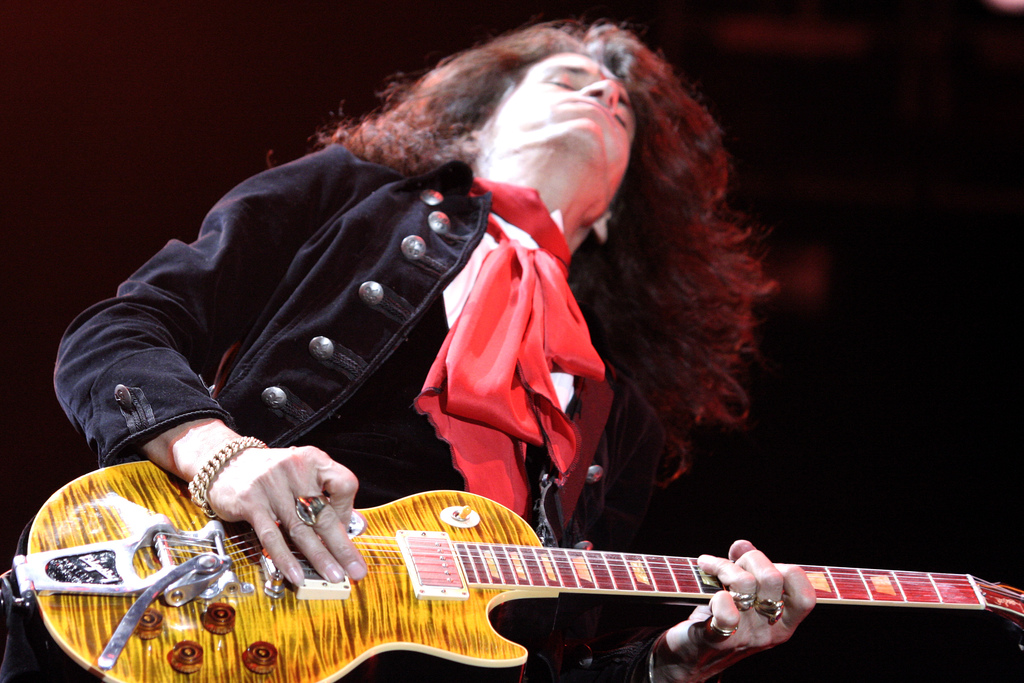
Happy Birthday, Joe Perry: The Riff Machine Who Gave Aerosmith Its Swagger
Joe Perry turns 76 today. From the swampy grind of “Sweet Emotion” to the reunion that saved a band, this is the career of the guitarist who taught American hard rock how to strut.
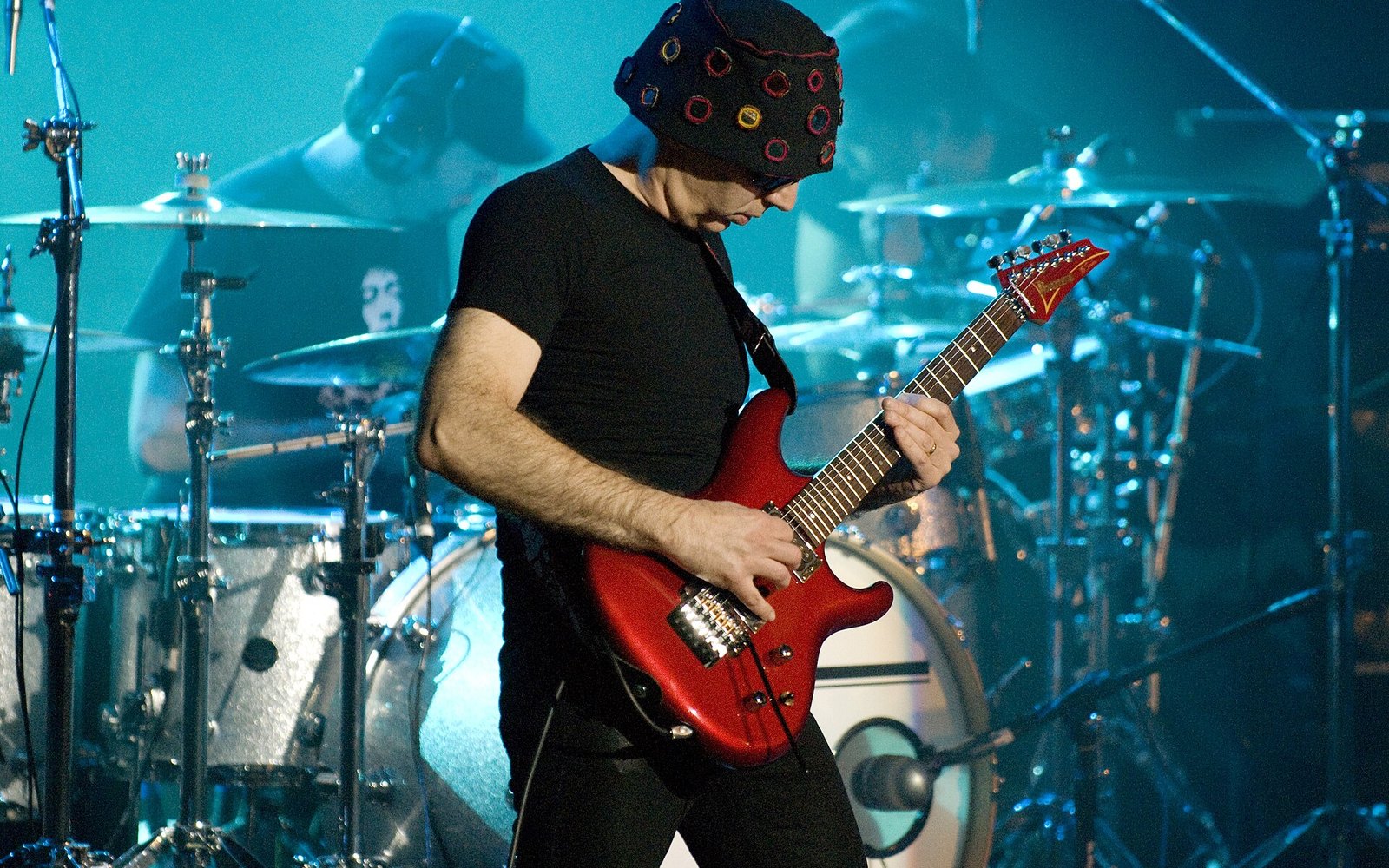
History of the Riff: How Joe Satriani Made “Flying in a Blue Dream” Feel Weightless
An acoustic guitar in an unusual tuning, a stray broadcast and a melody that seems to hang in the air: inside the construction of Satriani’s 1989 masterpiece.
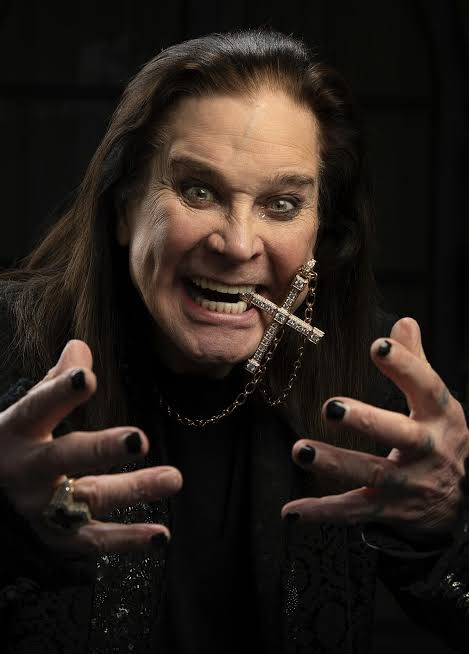
Tony Iommi Opens Up About His Final Conversation With Ozzy Osbourne: “I Still Can't Get It in My Head”
The Black Sabbath guitarist says Ozzy was exhausted after the band's emotional farewell — but determined to give fans one final show.