
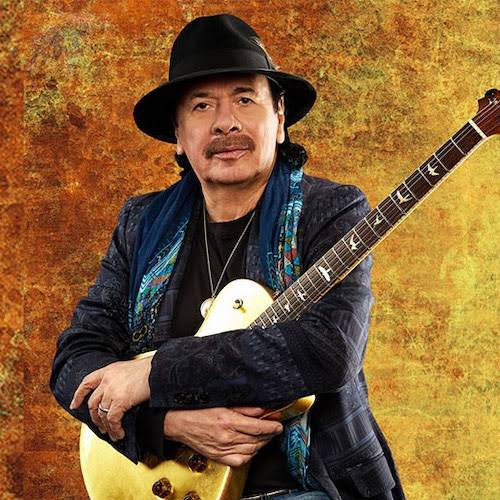
Tone Decoded: Carlos Santana — The Secret Behind the Most Recognizable Sustain in Guitar History
One note is all it takes to recognize Carlos Santana. We decode the PRS guitars, Mesa/Boogie and Dumble amps, humbucker choices, controlled feedback, and singing vibrato behind the most vocal lead tone in electric guitar.
There are guitarists whose tone you recognize after a riff.
Carlos Santana needs one note.
Not a chord. Not a signature lick. Not even a full phrase.
One note — held long enough to bloom into feedback, wrapped in a thick midrange, pushed by an amplifier hovering somewhere between singing and screaming — is often all it takes.
For more than five decades, Santana has possessed one of the most immediately identifiable electric guitar sounds ever recorded. It is warm without being dull, distorted without becoming abrasive, and saturated without losing the identity of the note underneath.
Most importantly, it sings.
Listen to the aching melody of Europa. The soaring instrumental voice of Samba Pa Ti. The controlled fire running through Black Magic Woman. The explosive performance of Soul Sacrifice at Woodstock. Or the polished, radio-dominating guitar sound of Smooth.
The equipment changed. The production changed. The musical landscape changed. The voice remained.
That is what makes Carlos Santana such a fascinating subject for Tone Decoded. His sound cannot be reduced to a single PRS guitar, a Mesa/Boogie amplifier, or a particular setting on a tone knob. Those pieces matter enormously, but Santana's tone is ultimately an ecosystem.
It begins with the guitar. It is shaped by the amplifier. It is sustained by volume. It is controlled by touch. And it becomes music through phrasing.
This is the story of how Carlos Santana created one of the closest things the electric guitar has ever had to a human singing voice — and how you can begin chasing that sound yourself.
TheGuitarPlugged may earn a commission from qualifying purchases made through links on this page, at no additional cost to you.
Before the PRS: The Raw Santana Sound
The modern image of Carlos Santana is almost inseparable from Paul Reed Smith guitars. For generations of younger players, a double-cutaway PRS with two humbuckers and a carved maple top simply looks like a Santana guitar.
But the sound existed before the PRS.
Go back to Santana's breakthrough era in the late 1960s and early 1970s and the ingredients were considerably rougher. The famous Woodstock performance in 1969 presents a very different visual from the polished Santana rigs that would follow. This is young Carlos — Gibson SG, enormous stage volume, percussion exploding around him — playing with an urgency that feels almost dangerous.
The tone is rawer. Sharper. Less refined. But the DNA is already there: the long notes, the vocal bends, the aggressive vibrato, the obsession with sustain. And perhaps most importantly, the willingness to interact with the amplifier rather than simply play through it.
This distinction matters. For Santana, feedback is not something that happens when things go wrong. Controlled correctly, feedback becomes part of the instrument. A guitarist picks a note. The pickup converts the vibration into an electrical signal. The amplifier turns that signal into sound. At sufficient volume, the speaker physically excites the guitar and strings. The note begins feeding itself.
In the wrong hands, it becomes uncontrollable noise. In Santana's hands, it becomes another form of expression.
The Guitar: Why Humbuckers Matter
If you are trying to build a Santana-inspired tone, the guitar is the logical place to begin. You do not necessarily need a PRS. You do, however, want to understand what the PRS contributes.
At the heart of the classic Santana sound is a solid-body electric guitar equipped with humbucking pickups. Compared with many traditional single-coil designs, a humbucker generally gives you a thicker output, more midrange weight and a smoother top end. Those qualities become extremely important when the goal is to create a saturated lead tone that remains warm rather than piercing.
Santana's sound lives in the midrange. There is plenty of bass. There is treble. But the emotional center of the tone is in the mids. That is where the guitar begins to resemble a voice. And for many of Santana's most recognizable lead sounds, the neck pickup is the key.
The Neck Pickup: Where the Voice Lives
One of the easiest mistakes when attempting a Santana tone is using too much treble. A bright bridge pickup into a bright amplifier can give you clarity and attack, but Santana's signature lead voice often demands something rounder.
Switch to the neck humbucker. Immediately, the fundamental character changes. The pick attack becomes less dominant. The note becomes thicker. The high frequencies soften. The sound begins to feel less like a guitar string being struck and more like a note being sung.
This is especially effective when playing high on the neck. A high note played through a bridge pickup can become thin or sharp. The same note through a warm neck humbucker retains considerably more body. Now add tube saturation, then volume, then controlled feedback. Suddenly the note becomes enormous.
The Most Underrated Part of the Santana Formula: Your Tone Control
Many modern guitarists leave their guitar's tone control permanently at 10. For Santana territory, that can be a mistake.
Rolling the tone control back slightly can remove the brittle upper frequencies that make distorted guitar sound fizzy or harsh. The key word is slightly. You are not trying to make the guitar dark — you are trying to make it smooth. Imagine the difference between a knife and a paintbrush.
Try starting with the neck pickup and rolling the guitar tone back to approximately 6 or 7. Depending on your pickups and amplifier, you may prefer more or less. If the note has a sharp edge when you pick it, reduce the tone slightly. If it becomes muddy and loses definition, bring some back.
The goal is not to copy a number. The goal is to find the point where the guitar stops sounding like a piece of wire being struck and starts sounding like a voice. That is the zone.
The PRS Era: The Guitar Becomes Part of the Identity
Santana's relationship with Paul Reed Smith became one of the most significant artist-and-builder partnerships in modern electric guitar history. Santana needed an instrument capable of producing a thick, sustaining lead voice while remaining comfortable across the entire fretboard. PRS's double-cutaway design, humbucking pickups and carefully constructed instruments provided an ideal platform.
What matters from a tonal perspective is the overall recipe: a substantial solid body, a shorter-feeling scale compared with the traditional Fender experience, two humbuckers, excellent upper-fret access, and a guitar designed to sustain.
Get Carlos Santana’s “Europa” Tone
Tell ToneMD what guitar and gear you own and we’ll show you how to get as close as possible using the equipment you already have — full signal chain, real numbered settings, no guesswork.
Included with The Guitar Plugged Premium
There is also a psychological element to the PRS/Santana combination. The guitar does not fight the player. Santana's music depends on controlling notes after they have been played. A note may begin with a pick attack, but the real performance happens afterward: the bend, the vibrato, the sustain, the feedback, the decay, the transition into the next note. A guitar that feels stiff or unforgiving makes that conversation more difficult.
The Yamaha Years: The Bridge Between Eras
Before PRS became synonymous with Santana, Yamaha played an important role in the evolution of his sound. The Yamaha SG-style instruments associated with Santana's late-1970s period helped move his tone toward the smoother, thicker and more refined voice many players now associate with him.
This era is crucial because it demonstrates something important: the Santana sound did not suddenly appear when he picked up a PRS. It evolved. Early Santana could be raw, aggressive and almost primitive in the best possible way. As his equipment evolved, the rough edges became smoother, the sustain became more controlled, the midrange became richer, and the guitar became increasingly vocal.
The Amplifier: The Birth of the Boogie Connection
You cannot discuss Carlos Santana's tone without discussing Mesa/Boogie. The relationship between Santana and Mesa founder Randall Smith occupies an important place in guitar-amplifier history. The famous story surrounding the early high-gain Boogie amplifiers involves Santana trying one of Smith's modified amplifiers and reacting to its extraordinary sustain.
At a time when guitarists often generated distortion by turning large amplifiers up to punishing stage volumes, the emerging Boogie concept offered another path: substantial preamp gain and sustain in a compact amplifier. For a player like Santana, this was transformative.
He did not simply need distortion. He needed sustain. There is a major difference. Distortion can make a note aggressive. Sustain allows a note to become expressive over time.
Why a Mesa-Style Amp Works
The classic Santana lead tone requires several amplifier characteristics working simultaneously. First, gain — enough saturation to compress the note and extend its sustain. Second, midrange — a heavily scooped modern metal tone is almost the opposite of what you want. Third, smoothness — too much high-end fizz destroys the illusion of a singing voice. Fourth, responsiveness — the amplifier should react differently when you pick softly versus aggressively. And finally, volume.
Santana's legendary sustain is not simply the result of turning a gain knob to 10. It comes from the physical interaction between the guitar, amplifier, speaker and room. That interaction becomes much easier when air is moving.
The Secret Weapon: Controlled Feedback
Here is where Santana tone becomes less about shopping and more about physics. If you watch experienced players using feedback, you may notice them moving around the stage while sustaining a note. That movement is not always random. Different physical positions relative to a loud amplifier can encourage different frequencies to feed back.
Santana has spent decades mastering this relationship. Imagine holding a bent note. At first, you hear the fundamental. Then the amplifier begins interacting with the vibrating string. The note swells. Sometimes it shifts toward a harmonic. The sound seems to open.
This is the magic players often attempt to recreate by simply adding more distortion. But distortion and feedback are not the same thing. Santana's tone often feels alive because the sound is literally part of a feedback loop. The guitar is influencing the amplifier. The amplifier is influencing the guitar. And Santana is controlling the conversation between them.
The Dumble Factor
Santana's amplifier story extends beyond Mesa/Boogie. In later rigs, Dumble amplification has also played a role in his pursuit of an expressive, touch-sensitive lead voice. Dumble amplifiers have become legendary partly because of their ability to produce harmonically rich overdrive while preserving dynamics and note definition.
For Santana, those qualities are enormously valuable. His sound requires saturation, but it cannot collapse into mush. That balance — compression without suffocation — is one of the defining characteristics of great lead guitar tone.
Of course, an original Dumble is wildly unrealistic for almost every guitarist. Fortunately, you do not need one to understand the lesson. You are looking for smooth, harmonically rich overdrive, strong mids, controlled compression and a top end that remains clear without becoming brittle. That can be achieved with many modern amplifiers and modelers. The philosophy matters more than the logo.
How Much Gain Do You Actually Need?
Probably less than you think. Players hear Santana's endless sustain and assume the answer is enormous amounts of distortion. Turn the gain too high, however, and several problems appear: the pick attack becomes less defined, noise increases, chords lose separation, dynamics disappear.
Santana's sound is saturated, but it retains clarity. Try setting your gain to the point where single notes sustain comfortably, then stop. If you need additional sustain, consider increasing volume, adding a mild boost or compressor, or changing your physical position relative to the speaker. More gain is not always more Santana. Sometimes it is simply more gain.
Starting Amp Settings for a Santana-Style Tone
Every amplifier behaves differently, so these settings should be treated as a starting point rather than a formula.
“Gear creates the environment. The hands create the voice.”
Gain: 6–7 Bass: 4–5 Middle: 7–8 Treble: 4–6 Presence: 3–5 Reverb: 2–3
If your amplifier has a master volume, experiment with the relationship between preamp gain and master volume. The objective is a thick, sustaining sound without excessive fizz. The mids should be prominent. The bass should support the note without becoming loose. The treble should provide definition without adding ice-pick attack. Your ears are the final EQ.
Pedals: Why Less Is Often More
Santana is not primarily known as a guitarist whose identity comes from an enormous pedalboard. The foundation is guitar and amplifier. Effects are seasoning. Not the meal.
If you already have an amplifier capable of smooth saturation, you may need very little between the guitar and amp. However, most players do not own a vintage Mesa/Boogie or Dumble, nor can they run an amplifier at concert volume in their living room. This is where pedals become useful.
Overdrive: Push, Don't Obliterate
A mid-focused overdrive such as an Ibanez Tube Screamer-style circuit can help push an amplifier toward Santana territory. Instead of treating the pedal as the entire distortion sound, try using it as a boost. Set the drive relatively low. Increase the level. Adjust tone to avoid excessive brightness.
A useful starting point — Drive: 2–4, Tone: 4–5, Level: 7–9. With a clean amp, you may need more drive. With an already overdriven tube amp or convincing model, use less. You want the pedal to make the amplifier feel more alive — not replace it.
Compression, Reverb, Delay and Wah
Compression can be extremely helpful for Santana-style sustain at low volume. But be careful — too much compression can flatten your playing. Santana's phrasing depends heavily on dynamics.
Reverb helps the lead voice feel larger, but too much moves the guitar backward in the mix. Try a modest plate or spring-style reverb. You want to notice it when you turn it off — not when it is on.
Delay can add width and sustain. Try 300–400 ms with 2–3 repeats and a 10–15% mix. Not mandatory, but useful at bedroom volume.
Wah has appeared as part of Santana's tonal vocabulary, but the important lesson is not to rock the pedal constantly. A wah can function almost like a movable EQ. Leaving it in a partially engaged position can emphasize a specific midrange frequency and create a more vocal quality.
The Real Secret: Santana's Hands
Now we arrive at the part no affiliate link can sell you. Carlos Santana sounds like Carlos Santana because of how Carlos Santana plays. You could hand him your guitar, your amplifier and your pedalboard. He would still sound remarkably like himself.
That is because his tonal identity is inseparable from his phrasing. Gear creates the environment. The hands create the voice.
Vibrato: The Heartbeat of the Note
Santana's vibrato is one of the most important elements of his sound. Listen closely to a sustained note. It rarely sits completely still. The pitch moves — not randomly, musically. His vibrato can be wide and emotional, but it remains controlled.
Long sustain without vibrato can sound lifeless. Imagine a singer holding a note perfectly flat for five seconds. Now imagine that singer allowing the pitch to move naturally. The second feels human. Santana treats the guitar the same way. The note breathes.
To practice this, play one note and sustain it. Do not play a lick. Listen. Then introduce vibrato slowly. Try controlling the speed — slow, medium, faster. Then control the width — narrow, wide. The goal is to choose your vibrato rather than simply shake the string.
Bending: Arriving at the Note
Santana's bends often function like a singer sliding into pitch. The destination matters. But so does the journey. A technically perfect bend that reaches pitch instantly can still sound sterile. Santana often allows the bend itself to carry emotion. The note climbs. The tension increases. Then it arrives. And once it arrives, vibrato takes over.
This sequence is fundamental: pick, bend, arrive, hold, vibrato, sustain, release. Those six or seven seconds can contain more musical information than an entire bar of fast alternate picking.
Space: The Notes He Doesn't Play
Santana understands something every great melodic guitarist eventually learns. Silence is part of the solo. His best phrases often leave room for the listener. This is especially powerful over the dense rhythmic foundation of Santana's music. The percussion may be busy. The bass may be moving. The keyboards may be filling harmonic space. The guitar does not need to compete by playing constantly. Instead, it floats above everything.
"Europa": The Masterclass
If you want to understand Santana's tone, study Europa. The melody unfolds slowly. Notes are allowed to develop. Bends become emotional events. Sustain becomes part of the composition. The tone is thick enough to carry the melody almost like a vocalist.
Try playing the melody with a thin, heavily scooped tone. The emotional weight disappears. Now add mids. Use the neck pickup. Smooth the treble. Increase sustain. Play with controlled vibrato. Suddenly the melody begins to make sense. The tone and composition are connected.
"Samba Pa Ti" and "Black Magic Woman"
Samba Pa Ti reveals another side of Santana's voice — lyrical, patient, almost conversational. The tone has enough sustain that Santana does not need to fill every available space. Great sustain does not necessarily encourage more playing. Sometimes it gives you the confidence to play less.
Black Magic Woman demonstrates how Santana's tone can sit inside a darker, more mysterious arrangement. A strong mid-focused guitar can remain present without needing enormous amounts of treble. The instrument occupies its own space. It does not need to stab through the mix. It simply exists at the center of it.
"Smooth": The Modern Santana Sound
The 1999 hit introduced Santana's guitar to an entirely new generation. The production is more polished. The guitar sits inside a modern pop-rock mix. But the Santana fingerprint remains unmistakable — the midrange, the sustain, the phrasing, the vibrato, the ability to turn short melodic statements into hooks.
This is perhaps the greatest evidence that Santana's tone was never dependent on a single vintage rig. Decades after Woodstock, with completely different production technology surrounding him, he still sounded like Santana. That is what a true signature tone is. It survives the equipment.
Three Ways to Build a Santana-Inspired Rig
The Budget Rig. Start with any solid-body guitar equipped with a decent neck humbucker. Run it into a mid-focused overdrive. Use a clean or slightly overdriven amplifier. Add subtle reverb. If available, add a compressor for additional low-volume sustain.
The Mid-Level Rig. A PRS SE Santana-style guitar is an obvious choice. Pair it with a quality tube amplifier or a convincing Mesa-style digital model. Add a Tube Screamer-style overdrive for boosting. Use a subtle reverb. Add wah if desired.
The Dream Rig. A high-end PRS Santana instrument. A vintage or boutique Mesa/Boogie-style amplifier. A Dumble-inspired amplifier or circuit for blending. High-quality speakers. Minimal effects. Serious volume. And a room where the guitar can physically interact with the amplifier.
The Modeler Version
Modern digital modelers make it easier than ever to approximate the Santana signal chain without owning rare amplifiers. Look for a Mesa/Boogie Mark-style amplifier model, a Dumble-style overdrive model if available, a 1x12 or 2x12 cabinet with a smooth speaker response, a low-gain Tube Screamer-style boost, subtle compression, short plate reverb and optional delay.
Start with the neck humbucker. Then build the amplifier sound first. Do not begin by stacking effects. Get the amp close. Then add only what is missing. If the tone lacks sustain, add a small amount of compression or gain. If it lacks presence, increase mids before treble. If it sounds harsh, reduce presence. If it sounds muddy, reduce bass before adding large amounts of treble.
The Santana Tone Checklist
Guitar: Solid body with humbuckers Pickup: Neck humbucker Guitar tone control: Slightly rolled back Gain: Medium to moderately high EQ: Strong mids, controlled bass, smooth treble Overdrive: Optional mid-focused boost Compression: Light, especially at lower volume Reverb: Subtle Delay: Optional and low in the mix Wah: Optional for midrange shaping Volume: As much as your environment safely allows Vibrato: Wide, controlled and deliberate Bends: Accurate and vocal Phrasing: Melodic Most important setting: Patience
Why Most Santana Tone Attempts Fail
The most common failure is focusing exclusively on gain. A player plugs in, selects the neck pickup, turns up the distortion, plays the right notes, and wonders why it does not sound like Santana. The missing ingredient is often movement.
Santana's notes are alive. They bend. They swell. They vibrate. They interact with feedback. The amplifier is not simply producing a static distorted tone. The entire system is dynamic. This is why a completely accurate Santana rig can still sound wrong in someone else's hands. Tone is not a photograph. It is a process.
The One-Note Test
Here is the ultimate Santana exercise. Build your best Santana-inspired tone. Select the neck pickup. Turn the guitar toward the amplifier. Play one note at the 12th fret. Hold it for ten seconds. No additional notes. Listen.
Does the note die immediately? Does it sustain? Does it begin to feed back? Can you control the vibrato? Can you change the emotional intensity without changing notes? Can you make that single note interesting?
If the answer is yes, you are beginning to understand Carlos Santana. Because his genius was never about how many notes he could fit into a measure. It was about how much emotion he could fit into one.
Tone Decoded Verdict: You Can Buy the Gear. You Have to Learn the Voice.
Carlos Santana's tone is one of the great paradoxes of electric guitar. On paper, the formula seems straightforward: humbuckers, a warm guitar, a high-gain tube amplifier, plenty of midrange, controlled treble, a little ambience, volume, sustain. You can assemble those ingredients in an afternoon. And still sound nothing like Carlos Santana.
Because the final component cannot be ordered online. Santana's greatest piece of gear is his relationship with the note. He knows when to strike it. He knows how far to bend it. He knows when to introduce vibrato. He knows when to let feedback take over. And perhaps most importantly, he knows when to leave it alone.
The PRS helps. The amplifier helps. The humbuckers help. The volume helps. But the equipment is only giving Santana a voice. What he chooses to say with it is why we're still listening.
More than half a century after Woodstock, guitar technology has advanced beyond anything players in 1969 could have imagined. And yet guitarists are still chasing that note — warm, sustaining, vocal, hovering at the edge of feedback, unmistakably Santana. Some tones belong to an era. Carlos Santana's belongs to Carlos Santana.
Keep Reading
- PRS SE Custom 24Check Price·Check on Amazon →
- Ibanez TS9 Tube ScreamerCheck Price·Check on Amazon →
- Dunlop Cry Baby WahCheck Price·Check on Amazon →
- Electric Guitar Strings (.010 Set)Check Price·Check on Amazon →
Some links are affiliate links — we may earn a small commission at no cost to you.
Experience-driven coverage, not algorithm bait.
- 20+ years of guitar playing experience
- Real-world retail experience at Guitar Center
- Thousands of hours testing guitars, amps, and pedals
- A community of 50,000+ guitar enthusiasts across platforms
- Partnerships with Fender, DistroKid, TrueFire, Card Chords, and Enya
- Editorial standards published openly — see how we test gear
Chasing Great Tone?
Join The Guitar Plugged for deep dives into the guitars, amps, pedals and players behind the sounds that changed music.
Ask GP
3 free questions a dayStill curious? Ask GP about this story.
Your personal classic-rock and guitar guide — ask anything about Carlos Santana.
Discussion (0)
Sign in to join the discussion.
Sign in to commentLoading comments…
Discover another guitar story
Swipe through our latest features, breaking news and iconic solos — one story at a time.
Open Swipe →More in Tone Decoded
Dimebag Darrell Didn't Just Make Metal Heavier—He Made It Swing
Inside the fearless Texas guitar language, brutal-but-musical tone, and melodic instinct that made Dimebag Darrell impossible to imitate — and impossible to replace.
The Infamous Stevie Ray Vaughan Soundcheck
No crowd. No spectacle. Just Stevie Ray Vaughan checking levels at the Syria Mosque in 1986 — and sounding absolutely monstrous. What the footage reveals about tone, touch and the myth of the rig.
The Last 10%: Why You Can Copy a Famous Guitarist’s Entire Rig and Still Miss the Tone
You bought the guitar, the amp, and the pedals — so why doesn’t it sound right? The last 10 percent of guitar tone is the most important part, and it’s almost never about the gear list.