
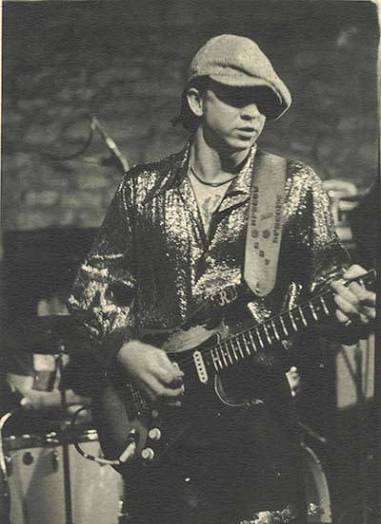
Tone Decoded: Stevie Ray Vaughan — The Truth Behind the Biggest Strat Tone in Texas
The Strat. The heavy strings. The Tube Screamer. The wall of amplifiers. We break down what really made Stevie Ray Vaughan's guitar tone sound so enormous.
There may be no electric guitar tone more frequently imitated — and more frequently misunderstood — than Stevie Ray Vaughan's.
For more than four decades, guitarists have chased it with the same familiar shopping list: buy a Stratocaster, string it with cables disguised as guitar strings, tune down to E-flat, put an Ibanez Tube Screamer in front of a loud Fender amp and start attacking the instrument like it owes you money.
On paper, that sounds about right. In practice, it rarely sounds anything like Stevie.
The problem is that Vaughan's tone was never the product of a single guitar, pedal, amplifier or magic combination of settings. It was a complete system, and the most important component in that system was the player standing in front of it.
Stevie Ray Vaughan created one of the largest guitar sounds in blues history without relying on the kind of heavily saturated distortion that modern players often associate with a "big" tone. His sound had weight without becoming muddy, aggression without losing clarity and sustain without dissolving into compression.
You could hear the strings. You could hear the pick. You could hear the guitar fighting back.
Listen closely to Texas Flood, Lenny, Riviera Paradise, Couldn't Stand the Weather or a great live version of Voodoo Child (Slight Return) and you aren't hearing five variations of one preset. You are hearing an incredibly dynamic guitarist manipulating a responsive signal chain.
The equipment mattered enormously. But the equipment was built around the way Stevie played. That distinction is the key to understanding his sound.
This is Stevie Ray Vaughan's tone, decoded.
TheGuitarPlugged may earn a commission from qualifying purchases made through links on this page, at no additional cost to you.
The Sound: Bigger Than a Stratocaster Should Be
A traditional Stratocaster can be many things. Glassy. Hollow. Bell-like. Snappy. Cutting. "Massive" isn't always the first adjective that comes to mind.
Yet Stevie Ray Vaughan could make a Strat sound almost impossibly large. His low strings carried a piano-like authority. Chords exploded from the amplifier. Single-note lines could be round and vocal one moment, then viciously percussive the next. Even when the sound became aggressive, individual notes remained remarkably defined.
That last part is important. The stereotypical imitation of SRV tone usually involves too much distortion. Turn up the gain on an overdrive pedal, roll off some treble, switch to the neck pickup and play blues licks. The result might be a perfectly good blues tone, but it usually lacks the physical dimension of Vaughan's sound.
Stevie's tone was built on volume, headroom and dynamics. Distortion was part of the equation, but it wasn't the foundation. The foundation was a relatively clean, extremely powerful amplifier sound that responded dramatically to how hard the guitar was being played. Add the midrange shaping and level boost of a Tube Screamer, the naturally scooped character of a Stratocaster and an extraordinarily heavy picking hand, and the result became something that felt much more distorted than it actually was.
That is one of the great illusions of Stevie Ray Vaughan's sound. The aggression often came from the performance. Not the gain knob.
Number One: The Guitar at the Center of It All
Any discussion of Stevie Ray Vaughan's tone eventually arrives at one guitar. Number One. Also known as his "First Wife," the battered sunburst Stratocaster became so visually inseparable from Vaughan that it is difficult to picture him without it.
It looked exhausted. The finish was worn away from years of punishment. The hardware had been changed and repaired. The frets endured relentless bending. The pickguard carried the unmistakable SRV initials. It was not a pristine collector's guitar preserved behind glass. It was a working instrument. And Stevie worked it hard.
The guitar's identity has been discussed endlessly by gear historians, but what matters most from a tonal perspective is the basic architecture: a vintage-style Stratocaster with three single-coil pickups, a rosewood fingerboard and the fundamental sonic characteristics that made pre-CBS-style Strats legendary.
Single-coil Strat pickups do something particularly important in Vaughan's signal chain. They leave space. Compared with a powerful humbucker, a traditional Strat pickup produces less output and generally preserves more transient detail. There is an immediacy to the initial attack of the note. The low end remains relatively open. The upper frequencies carry the familiar Strat sparkle.
That can sound thin through the wrong rig. Through Vaughan's rig, it became an advantage. His amplifiers provided enormous scale. His Tube Screamer could fill in the midrange. His hands supplied the aggression. The pickups didn't need to manufacture size. They needed to preserve information.
That is part of the reason Vaughan's tone remained articulate even when everything around him became enormous.
Why the Neck Pickup Mattered
If there is one sound most guitarists immediately associate with Stevie Ray Vaughan, it is probably the neck pickup of a Stratocaster. There is a reason.
A good Strat neck pickup has a particular vocal quality that is difficult to reproduce with anything else. It has warmth, but unlike a neck humbucker, it retains a certain hollow openness. Dig into the string and the note can bark. Back off and it becomes round, almost flute-like.
Stevie exploited that entire dynamic range. Listen to the slower material. The neck pickup could produce enormous, singing notes that seemed to hang in the air without becoming excessively distorted. The fundamental remained strong while the upper harmonics gave the note dimension.
Then listen to him attack a shuffle. Suddenly that same pickup becomes percussive. The difference isn't a pedal change. It's touch.
This is where the phrase "tone is in the hands" stops being a cliché and becomes an engineering reality. The output of a passive guitar pickup changes depending on how the string moves through its magnetic field. Attack the string differently and you change the transient being delivered to everything downstream. Stevie's hands were effectively the first gain stage.
The Heavy String Myth
Few details about Stevie Ray Vaughan's equipment have achieved more mythological status than his string gauges. Yes, he was famous for using extremely heavy strings. Accounts vary because his setup changed over time, but Vaughan is widely associated with sets beginning around .013 on the high E, with customized gauges across the rest of the instrument.
That is extraordinarily heavy by modern electric-guitar standards. For comparison, many players use .009 or .010 sets. The temptation is to conclude: heavy strings = Stevie Ray Vaughan tone. It isn't that simple.
Heavier strings can change the feel of the instrument dramatically. They create greater resistance under the fingers and pick. Depending on the guitar, setup and playing style, they can contribute to a stronger fundamental and a firmer attack. But installing .013s on your Stratocaster will not suddenly make Texas Flood come out of your amplifier. It may, however, make your fingers hate you.
The more important question is why heavy strings worked for Stevie. The answer is that they suited his physical approach. Vaughan attacked the guitar with tremendous authority. Lighter strings under that kind of right-hand force could feel unstable. Heavy strings gave him something to push against.
That resistance became part of the feedback loop between player and instrument. The guitar fought back. Stevie hit harder. The strings responded. The amplifier reacted. Tone emerged from that relationship.
For players chasing his sound today, this is an important lesson: don't blindly copy the gauge. Copy the principle. Use a set of electric guitar strings heavy enough that you can attack the instrument confidently without the strings collapsing under your picking hand. For one player, that might be .013s. For another, it might be .011s. For someone else, .010s may be ideal.
If heavy strings prevent you from bending accurately or playing dynamically, they are moving you farther away from Stevie's sound, not closer to it.
E-Flat Tuning: More Important Than It Looks
Stevie Ray Vaughan commonly tuned his guitar down one half-step. E-flat standard: Eb – Ab – Db – Gb – Bb – Eb.
This contributed to the feel of his setup in several ways. First, lowering the pitch reduces string tension. That matters when you're dealing with unusually heavy strings. A .013 set tuned to E-flat is still substantial, but the reduced tension makes bending and vibrato somewhat more manageable than the same strings at concert pitch.
Second, the lower tuning subtly changes the sonic character of the instrument. Everything sits slightly deeper. Open strings resonate differently. Riffs feel heavier. Chords have a darker center of gravity. It isn't a dramatic effect in isolation, but combined with the rest of Vaughan's rig, it becomes part of the overall architecture.
Get Stevie Ray Vaughan’s “Texas Flood” Tone
Tell ToneMD what guitar and gear you own and we’ll show you how to get as close as possible using the equipment you already have — full signal chain, real numbered settings, no guesswork.
Included with The Guitar Plugged Premium
If you're chasing the SRV experience, tuning to E-flat is one of the easiest and cheapest places to start. You may immediately notice that familiar looseness under the fingers and weight in the sound.
The Real Secret Weapon: Volume
Here is where many modern attempts at Stevie Ray Vaughan tone go wrong. They use too much gain and not enough volume. Those are not the same thing.
Vaughan's rigs could be extraordinarily loud. His amplifier collection evolved over the years and included various Fender combos, Dumble amplifiers and other equipment, sometimes used together in increasingly elaborate combinations. The common thread was power. Headroom. Air movement.
A loud amplifier behaves differently from a small amplifier being heavily overdriven at bedroom volume. The speakers move. The power section responds. The guitar begins interacting acoustically with the amplifier. Sustain becomes easier without requiring extreme preamp distortion. You get physical feedback. Notes bloom. The entire system becomes interactive.
This helps explain why Stevie's live sound could feel almost three-dimensional. He wasn't simply feeding a distorted guitar signal into a speaker. He was standing inside a high-volume ecosystem. The guitar affected the amplifier. The amplifier affected the room. The room affected the strings. And Stevie controlled the whole thing.
That experience is difficult to reproduce at home. But understanding it changes how you should approach the tone. Instead of asking "How much distortion did Stevie use?" ask "How can I create sustain and size while preserving clarity?" That question will lead you much closer.
The Fender Vibroverb
Among the amplifiers most closely associated with Vaughan is the Fender Vibroverb. Vintage Fender amplifiers form a crucial part of the SRV tonal vocabulary. The classic Fender recipe — strong clean headroom, extended highs, a broad low end and the familiar scooped-mid character of many black-panel circuits — creates an ideal platform for a Stratocaster.
On its own, that combination can produce a gorgeous clean tone. But push the amplifier hard and something else happens. The edges begin to soften. The sound becomes harmonically richer. The transient remains present, but the amplifier starts responding differently depending on how aggressively you play.
Pick softly and the sound stays relatively clean. Hit hard and it begins to break apart. That transition zone is where much of the magic lives. Modern guitarists often call it "edge of breakup." Stevie turned that edge into a weapon. His right hand could effectively control how dirty the sound became.
That is radically different from using a high-gain amplifier where almost every note is compressed into the same level of saturation. Vaughan's sound breathed.
The Super Reverb and the Scale of the Sound
The Fender Super Reverb is another major piece of the SRV story. A 4x10 Fender combo can produce a remarkably wide and immediate sound. Multiple 10-inch speakers respond quickly while moving enough air to create serious stage presence.
That combination works beautifully with a Stratocaster. The low end stays relatively controlled. The upper mids remain articulate. The high frequencies retain their snap. Turn it up and the amplifier becomes something you don't just hear. You feel it.
That physical response matters when discussing Vaughan. His tone wasn't created exclusively for a microphone. It was created onstage. The interaction between guitarist and amplifier was fundamental. A large, high-headroom Fender platform like the Fender '65 Super Reverb gave Stevie room to hit the strings as hard as he wanted without the entire signal collapsing into fuzz.
That is a crucial distinction. The amplifier had to survive the attack.
Enter the Dumble
Later Vaughan rigs also incorporated amplifiers built by Alexander "Howard" Dumble, including the legendary Steel String Singer. Few amplifiers carry more mythology.
The Steel String Singer was designed around enormous clean headroom, clarity and dynamic response rather than conventional high-gain distortion. That makes perfect sense in the context of Vaughan's evolving sound. He didn't need an amplifier to manufacture aggression. He already had aggression. What he needed was an amplifier capable of reproducing it.
A high-headroom amp allows the personality of the player to remain intact. Hit harder and the transient gets bigger. Play softly and the sound backs away. This is part of why later SRV tones can sound simultaneously polished and ferocious. The rig became more sophisticated. The fundamental philosophy remained the same: clarity first, power second, gain as seasoning.
The Tube Screamer: The Most Misunderstood Piece of the Puzzle
Now we arrive at the green box. The Ibanez Tube Screamer. Few artist-and-pedal combinations are more famous. Stevie Ray Vaughan and the Tube Screamer have become so closely connected that generations of guitarists have purchased TS808s, TS9s and countless derivatives specifically to chase his sound.
The association is justified. But the way many players use the pedal is not.
If you want to understand the SRV approach, stop thinking of the Tube Screamer primarily as a distortion pedal. Think of it as a signal shaper and boost.
The classic Tube Screamer circuit emphasizes the midrange while tightening the low frequencies. In front of a relatively scooped Fender-style amplifier, that is extremely useful. The Strat provides clarity and high-end detail. The Fender amp provides scale, lows and sparkling highs. The Tube Screamer fills the hole in the middle.
Suddenly the guitar pushes forward. Single notes gain authority. The low end becomes tighter. The amplifier is driven harder. And because the pedal's own gain does not need to be maxed out, much of the original pick attack remains intact.
“The aggression often came from the performance. Not the gain knob.”
That is the formula. Not: Strat → maximum Tube Screamer distortion → clean amp. More like: Strat → Tube Screamer providing level and midrange focus → already loud, responsive amplifier. That difference is enormous.
A useful SRV-inspired starting point is to keep the Tube Screamer's Drive relatively low, raise the Level significantly and adjust Tone to suit the amplifier. Then let the amp and your hands do the rest. The goal isn't to hear "pedal distortion." The goal is to feel the entire rig become more urgent.
TS808 or TS9?
Both models are connected to Vaughan's history. The original TS808 and later TS9 are similar enough that either can serve as the foundation for an SRV-inspired rig. Players can spend years debating subtle circuit differences. For most guitarists, that isn't where the battle will be won.
If your picking dynamics, amplifier settings and overall volume structure are wrong, finding the "correct" vintage Tube Screamer will not save you. A modern TS808 or TS9 can get you remarkably close to the functional role the pedal played in Vaughan's rig.
Start with something like: Drive low, Level high, Tone around the middle, adjusted for your guitar and amp. Then listen. If the pedal sounds like a separate layer of distortion sitting on top of your clean tone, you may have too much drive. If switching it on makes the guitar feel larger, tighter and more vocal, you're heading in the right direction.
The Forgotten Ingredient: A Clean Tone Worth Boosting
This may be the single most useful lesson in the entire SRV signal chain. Your base tone needs to sound good before you turn on the Tube Screamer. If the clean amplifier tone is thin, harsh or lifeless, the pedal is not going to transform it into Texas Flood.
Stevie's foundation was powerful. The overdrive enhanced it. This is why players chasing SRV tone should spend more time adjusting the amplifier than the pedalboard. Plug the Strat directly into the amp. Turn off every pedal. Find the biggest, most dynamic clean-to-edge-of-breakup sound you can achieve at a practical volume. Then add the Tube Screamer. The difference should be enhancement. Not rescue.
Texas Flood: The Sound of Space
The title track from Texas Flood remains one of the definitive documents of Vaughan's tone. What makes the guitar sound so enormous? Part of the answer is surprisingly simple. There is room around it.
The trio format matters. Bass. Drums. Guitar. There isn't a wall of rhythm guitars occupying the same frequencies. There aren't layers of synthesizers competing with the Strat. The guitar has space to breathe. That allows Vaughan's tone to remain relatively open.
Listen to the attack of the notes. There is distortion, but there is also air. The notes have edges. The quieter phrases retreat. The harder phrases jump forward. This dynamic range creates the illusion of even greater size. If everything were compressed and distorted equally, nothing would feel huge.
Stevie understood contrast instinctively. The quiet makes the loud feel louder. The clean makes the dirty feel dirtier. The space makes the guitar feel bigger.
Pride and Joy: Tone as Rhythm
If Texas Flood demonstrates the vocal side of Vaughan's sound, Pride and Joy demonstrates its percussive side. This is where gear obsession becomes particularly dangerous. You can own every piece of equipment associated with Stevie and still sound completely wrong playing this song. Because the tone is in the rhythm.
Vaughan's shuffle feel is inseparable from the sound of the guitar. The aggressive upstrokes. The muted strings. The ghost notes. The accents. The way full chord fragments collide with single-note figures. The guitar functions almost like a drum kit.
This produces an important tonal effect. The muted strings create bursts of broadband noise and percussion around the pitched notes. That makes the entire guitar part sound larger and more energetic. A sterile transcription of the correct notes won't capture it. You need the mess between the notes.
Controlled mess. That was one of Vaughan's greatest gifts. He could make the guitar sound like it was about to come apart while remaining completely in command.
Lenny: The Other Side of Stevie's Tone
Then there is Lenny. If your understanding of SRV tone begins and ends with heavy strings and a Tube Screamer, Lenny forces you to reconsider everything.
The sound is delicate. Spacious. Almost weightless. The aggression disappears and the touch becomes extraordinarily sensitive. Yet it is unmistakably Stevie. That tells us something important.
The identity of Vaughan's tone did not come from distortion. It came from phrasing, vibrato, dynamics and touch. Remove the aggressive overdrive and the identity remains. That's the ultimate test of a guitarist's sound. Stevie passed it effortlessly.
Riviera Paradise: The Mature Version of the Formula
By the time of In Step, Vaughan's sound had evolved. Riviera Paradise captures a more refined side of his playing — clean, spacious and harmonically rich.
The fundamental ingredients remain familiar. Stratocaster clarity. Large amplifier headroom. Dynamic touch. But the result feels more sophisticated than the raw attack associated with his earlier work.
This is another reason reducing Vaughan's tone to one pedal is such a mistake. His sound evolved because he evolved. The equipment changed. The rigs grew. His touch developed. His musical priorities shifted. Yet the core relationship remained: hands, strings, Strat, volume, headroom. Everything else was built around that.
The Vibrato: The Part You Cannot Buy
Stevie Ray Vaughan's vibrato may be the most important component of his lead tone. It was enormous. Not simply wide. Authoritative. He could grab a note and make it sound physically larger through pitch movement alone.
This is especially important on sustained notes. A player with weak vibrato often compensates with more gain because distortion creates sustain and harmonic activity. Stevie didn't need to rely exclusively on that. His vibrato created movement. His hands kept the note alive. This allowed him to use less saturation while maintaining intensity.
If you want to sound more like Stevie, spending six months improving your vibrato will probably move you closer than spending $3,000 on vintage gear. Work on: wide vibrato, controlled pitch, vibrato at the top of bends, varying vibrato speed, delaying vibrato after the initial attack, adding vibrato gradually. Those details create expression. And expression creates perceived tone.
The Pick Attack
Listen to isolated examples of Vaughan's playing and pay attention to the front of each note. The attack is enormous. This is another reason excessive gain works against the SRV sound. High levels of distortion compress transients. The difference between picking softly and picking hard becomes smaller.
Stevie needed the opposite. His rig had to preserve the difference. His heavy right hand created explosive transients that hit the front of the amplifier. That attack is a major part of the "snap" people associate with his tone.
To approximate it, try turning down your gain. Then play harder. At first, the sound may feel less forgiving. Good. That's the point. Now your hands have to create the excitement.
The SRV Tone Equation
If we reduce Stevie Ray Vaughan's sound to its essential components, the formula looks something like this:
Stratocaster single coils + firm string setup + E-flat tuning + high-headroom amp + Tube Screamer-style boost + aggressive pick attack + wide vibrato + dynamic control = The SRV Formula.
That final ingredient is the most important. Dynamics. Stevie could whisper and scream through essentially the same signal chain. That's what made the rig feel alive.
How to Get the SRV Tone Today
You do not need Number One. You do not need a vintage Vibroverb. You definitely do not need a Dumble Steel String Singer. What you need is to recreate the behavior of the rig.
Start with a Stratocaster-style guitar. Vintage-output or moderately hot single coils are ideal. You want clarity and dynamic response more than sheer output. A Fender Player II Stratocaster is an accessible modern platform; a Fender Stevie Ray Vaughan Signature Stratocaster takes you closer to the source. If you want to chase the pickup character specifically, a set of Fender Texas Special Stratocaster pickups is a common upgrade path.
Tune down to E-flat if you want the authentic feel. Use strings that give your picking hand enough resistance without destroying your ability to bend and play comfortably.
Plug into a clean or edge-of-breakup Fender-style amplifier — a Fender '65 Deluxe Reverb Reissue at home, or a Fender '65 Super Reverb Reissue if you have the volume space. Set the amp louder than you normally would if your environment allows it, but protect your hearing and use attenuation or modern modeling solutions when necessary. Keep the gain lower than you think.
Add a Tube Screamer-style pedal. Set the drive low. Push the level. Use the tone control to balance brightness. Then stop adjusting knobs. Play. Hit the strings. Back off. Hit them again. Listen to how much distortion you can create with your hands. That is where the chase really begins.
A Practical Modern SRV Rig
For players who want a straightforward setup, start here:
Guitar: Stratocaster or S-style guitar with three single-coil pickups. Pickup: Neck pickup for the classic vocal lead tone. Tuning: E-flat standard. Strings: .010s or .011s to start; move heavier only if your hands prefer the additional resistance. Overdrive: Ibanez TS9, TS808 or another quality Tube Screamer-style circuit. Drive: approximately 2–3. Tone: approximately 3–5, adjusted for your amp. Level: high. Amplifier: Fender-style clean platform. Amp Gain: low to moderate. Volume: as high as practical and safe. Reverb: light.
The most important instruction: play the rig dynamically. Don't expect the pedal to create the sound.
The Bedroom-Volume Problem
There is an uncomfortable truth about chasing Stevie Ray Vaughan's tone. The original thing was loud. Really loud. Most people cannot — and should not — recreate concert-level amplifier volume in their living room.
Fortunately, modern gear provides alternatives. Digital modelers can simulate cranked Fender-style amplifiers at manageable monitoring levels. Reactive load boxes and attenuators can allow tube amplifiers to operate harder without delivering their full acoustic output. Smaller amplifiers can reach their dynamic sweet spot earlier.
But there is one trap. Don't compensate for low physical volume by adding huge amounts of distortion. Instead, look for ways to preserve dynamics. A good model of a Super Reverb, Vibroverb or similar Fender-style circuit with a Tube Screamer boost can get remarkably close to the structural ingredients of Vaughan's tone. The feel won't be identical to standing in front of multiple roaring amplifiers. But the philosophy remains intact. Headroom. Attack. Midrange focus. Dynamics.
What Most Players Get Wrong
The typical failed SRV rig sounds like this: too much Tube Screamer gain, too little amplifier volume, too much compression, too little pick attack, too much concern about string gauge, too little attention to vibrato, too much gear, not enough dynamics.
The irony is that players often add more equipment while moving farther away from the sound. Stevie's rigs could certainly become complex, particularly later in his career. But the complexity existed to make a fundamentally dynamic guitar sound larger. It wasn't there to hide the guitar. You should always be able to hear the Strat.
The Gear Was Important — But It Wasn't the Point
It is fashionable to say gear doesn't matter. Of course it matters. A Stratocaster reacts differently from a Les Paul. A Tube Screamer shapes frequencies differently from a Big Muff. A high-headroom Fender-style amplifier responds differently from a saturated high-gain stack.
Stevie Ray Vaughan chose equipment that complemented his playing style brilliantly. But Brian Setzer once described the revealing experience of playing one of Vaughan's Strats through his setup and discovering an eternal truth of guitar playing: the player remains the player.
Hand Stevie's guitar to someone else and they do not become Stevie Ray Vaughan. The gear establishes the boundaries. The musician determines what happens inside them. That may be the greatest lesson hidden inside Vaughan's rig. His equipment didn't create his identity. It amplified it.
Tone Decoded Verdict
Stevie Ray Vaughan's tone wasn't enormous because he used enormous amounts of distortion. It was enormous because everything in the signal chain preserved and magnified the physical energy of his playing.
The Stratocaster gave him clarity. The heavy strings gave him resistance. E-flat tuning balanced the tension. The amplifiers gave him headroom and scale. The Tube Screamer gave him midrange focus and additional push. Volume created sustain and interaction. And his hands supplied the violence.
That's the real SRV tone. Not a pedal setting. Not a vintage serial number. Not a particular string gauge. A system. One in which every piece of equipment was ultimately subordinate to the player.
You can buy a Strat. You can buy a Tube Screamer. You can buy a vintage Fender amp. You can even string the guitar with .013s and tune the whole thing down a half-step. But when you hit the first note, the rig is still waiting for you to tell it who you are. Stevie Ray Vaughan already knew. And that's why, decades later, guitarists are still trying to figure out how he made six strings sound that big.
Keep Reading
- Fender Player II StratocasterCheck Price·Check on Amazon →
- Ibanez TS808 Tube ScreamerCheck Price·Check on Amazon →
- Ibanez TS9 Tube ScreamerCheck Price·Check on Amazon →
- Fender '65 Super Reverb ReissueCheck Price·Check on Amazon →
- Fender '65 Deluxe Reverb ReissueCheck Price·Check on Amazon →
- Fender Texas Special Stratocaster PickupsCheck Price·Check on Amazon →
- Electric Guitar Strings (.010–.011)Check Price·Check on Amazon →
Some links are affiliate links — we may earn a small commission at no cost to you.
Experience-driven coverage, not algorithm bait.
- 20+ years of guitar playing experience
- Real-world retail experience at Guitar Center
- Thousands of hours testing guitars, amps, and pedals
- A community of 50,000+ guitar enthusiasts across platforms
- Partnerships with Fender, DistroKid, TrueFire, Card Chords, and Enya
- Editorial standards published openly — see how we test gear
Chasing Great Tone?
Join The Guitar Plugged for deep dives into the guitars, amps, pedals and players behind the sounds that changed music.
Ask GP
3 free questions a dayStill curious? Ask GP about this story.
Your personal classic-rock and guitar guide — ask anything about Stevie Ray Vaughan.
Discussion (0)
Sign in to join the discussion.
Sign in to commentLoading comments…
Discover another guitar story
Swipe through our latest features, breaking news and iconic solos — one story at a time.
Open Swipe →More in Tone Decoded
Dimebag Darrell Didn't Just Make Metal Heavier—He Made It Swing
Inside the fearless Texas guitar language, brutal-but-musical tone, and melodic instinct that made Dimebag Darrell impossible to imitate — and impossible to replace.
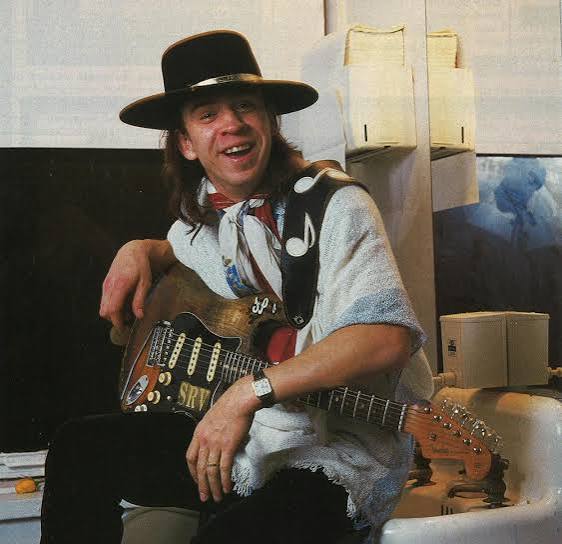
The Infamous Stevie Ray Vaughan Soundcheck
No crowd. No spectacle. Just Stevie Ray Vaughan checking levels at the Syria Mosque in 1986 — and sounding absolutely monstrous. What the footage reveals about tone, touch and the myth of the rig.

The Last 10%: Why You Can Copy a Famous Guitarist’s Entire Rig and Still Miss the Tone
You bought the guitar, the amp, and the pedals — so why doesn’t it sound right? The last 10 percent of guitar tone is the most important part, and it’s almost never about the gear list.