Marcus King’s First Guitar Comes Full Circle: Inside the New Epiphone El Dorado
Epiphone / Gibson press image.
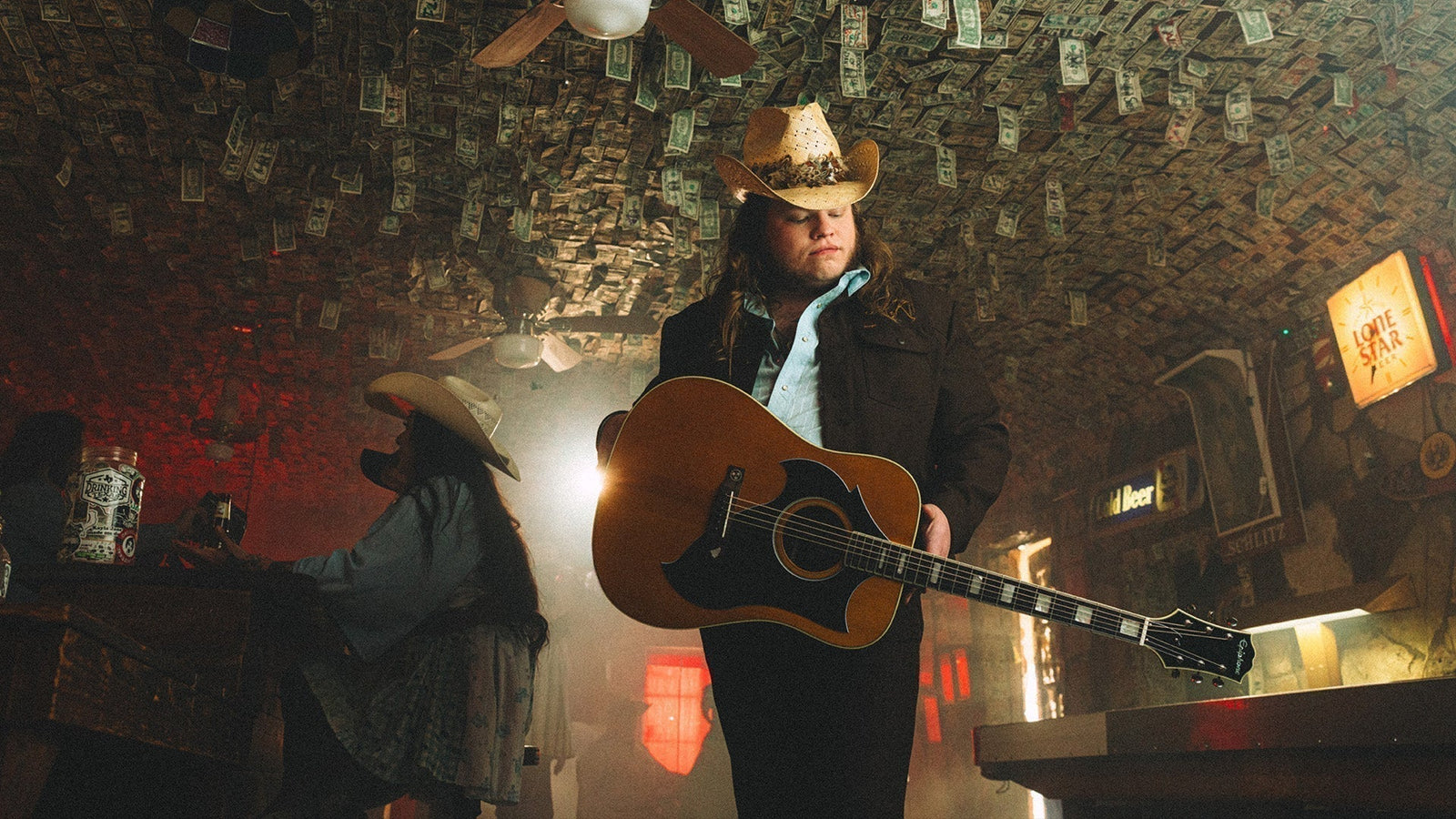
The new Marcus King El Dorado isn’t simply another signature guitar. It recreates the Epiphone that helped start King’s musical life — and it might be one of the most interesting artist acoustics Epiphone has released in years.
There are signature guitars built around specifications, and there are signature guitars built around stories.
Marcus King’s new Epiphone El Dorado belongs firmly in the second category.
Long before King became one of the most recognizable young guitarists to emerge from the modern blues and Southern-rock world, before the tours, Grammy nomination and increasingly impressive collection of vintage guitars, there was an Epiphone El Dorado.
It came from his father.
And for King, it was essentially where everything started.
Now Epiphone has brought that guitar back in the form of the limited-edition Marcus King El Dorado, an all-solid-wood acoustic-electric that takes inspiration directly from King’s original instrument.
At $999, it also occupies an increasingly interesting part of Epiphone's modern lineup: guitars that aren't simply inexpensive alternatives to Gibson models, but serious instruments designed to stand on their own.
And the deeper you get into King's story with the El Dorado, the more this particular signature model makes sense.
[TOC]
What to Remember
- ▸Epiphone's limited-edition Marcus King El Dorado is based on the acoustic King's father gave him as his first guitar.
- ▸All-solid construction: solid spruce top with solid rosewood back and sides, bone nut and saddle.
- ▸A 25.5-inch scale gives it more tension and attack than Gibson's usual 24.75-inch spec.
- ▸L.R. Baggs Element Bronze electronics with soundhole-mounted controls make it gig-ready.
- ▸$999 including a signature hardshell case — competitive for an all-solid dreadnought.
Before the Signature Guitar, There Was the Original
King grew up in a musical family in South Carolina.
His father, Marvin King, was a guitarist, as was his grandfather. Guitar playing wasn't some distant rock-star fantasy in the King household. It was part of everyday life.
The El Dorado was King's first guitar.
King recently described it as the first guitar he actually remembers strumming and becoming fascinated with.
That distinction matters.
Most guitarists can remember that instrument.
Maybe it wasn't the most expensive guitar they would ever own. Maybe it wasn't even particularly good. But it was the guitar that made the entire thing feel possible.
King's El Dorado became exactly that kind of instrument.
Eventually, however, the guitar left the family.
Years later, after King moved to Nashville in 2018, he mentioned to his father that he wished he still had it.
King assumed it was gone.
Then his father arrived at King's East Nashville home carrying the El Dorado as a housewarming present.
The timing bordered on cinematic.
King had also recently acquired a 1981 Cadillac Eldorado.
Two El Dorados had suddenly entered his life again.
When King released his first solo album in 2020, he called it El Dorado.
The guitar had officially become part of the Marcus King story.
Recreating a Guitar Without Recreating Every Flaw
Epiphone could have approached the new signature guitar as a forensic reproduction.
Instead, the company did something arguably more useful.
It captured the character and visual identity of King's original instrument while building a modern acoustic that players could actually use night after night.
The Marcus King El Dorado uses the classic square-shouldered dreadnought format.
Underneath the Antique Natural finish is a solid spruce top paired with solid rosewood back and sides.
That's an important specification at this price.
Solid rosewood construction immediately separates the King El Dorado from the enormous number of laminate-back-and-side acoustics occupying the lower and middle portions of the market.
The spruce-and-rosewood combination is also one of the most established acoustic recipes for a reason.
You get the potential projection and articulation of spruce with the low-end depth, harmonic complexity and top-end character associated with rosewood.
It's a combination capable of handling the exact territory King inhabits: delicate acoustic passages one minute and aggressive, heavy-handed rhythm playing the next.
A 25.5-Inch Scale Changes the Personality
One particularly interesting detail is the scale length.
The Marcus King El Dorado uses a 25.5-inch scale rather than the shorter 24.75-inch scale players often associate with Gibson-family instruments.
That gives the strings a slightly different feel under the fingers.
There's a little more tension.
For a strong acoustic player, that's not necessarily a drawback. It can contribute to the authoritative attack and definition that make large dreadnoughts so effective.
King is hardly a timid guitarist.
Even when he's playing acoustically, there's weight behind his right hand.
The El Dorado's architecture suits that approach.
The Neck Keeps Things Familiar
Want Marcus King’s Tone?
Tell ToneMD what guitar and gear you own and we’ll show you how to get as close as possible using the equipment you already have — full signal chain, real numbered settings, no guesswork.
Included with The Guitar Plugged Premium
The mahogany neck uses a comfortable C profile and traditional dovetail neck joint.
Up top is another unusual detail.
Rather than simply adopting the current Epiphone headstock design, the guitar takes inspiration from the Japanese-made Epiphone era of King's original instrument.
There's even a volute behind the headstock.
The rosewood fingerboard is dressed with 20 frets and rounded-corner mother-of-pearl block inlays.
It's handsome without becoming gaudy.
That description applies to much of this guitar.
Until you notice the pickguard.
That Pickguard Is the Star
Acoustic guitars aren't generally where designers get to go wild.
The Marcus King El Dorado finds a loophole.
Its oversized decorative pickguard is modeled after the customized guard on King's original guitar.
It gives the El Dorado an identity from across the room.
That's significant because King himself has talked about the importance of instruments making an impression.
Plenty of natural-finished dreadnoughts are beautiful.
Very few are immediately identifiable.
This one is.
The bridge contains more subtle Marcus King details.
Mother-of-pearl inlays reference South Carolina, King's home state, and Tennessee, the state that became his adopted musical home.
They're personal details without turning the guitar into merchandise.
There's also King's signature on the rear of the headstock.
Again, subtle.
It's Built to Leave the House
A signature acoustic connected this closely to a vintage instrument could easily have become a nostalgia piece.
X Concepts Strings • Made in USA
Never Run Out of Strings Again.
Join the X Concepts String Club and get fresh USA-made strings delivered every month—plus Premium membership options for the full Guitar Plugged experience.
Thankfully, Epiphone remembered that Marcus King actually plays gigs.
The El Dorado comes equipped with an L.R. Baggs Element Bronze undersaddle pickup and preamp system.
Volume and tone controls are mounted discreetly around the soundhole.
That means no giant preamp panel carved into the side of an otherwise traditional-looking guitar.
Plug it into a PA, acoustic amplifier or recording interface and the El Dorado is ready to work.
That's exactly how a modern signature acoustic should function.
It should look like something you'd want in the living room and operate like something you'd trust onstage.
• Body: square-shoulder dreadnought, Antique Natural
• Top: solid spruce
• Back and sides: solid rosewood
• Neck: mahogany, rounded C profile, dovetail joint, headstock volute
• Scale: 25.5 inches
• Fingerboard: rosewood, 20 frets, mother-of-pearl block inlays
• Nut and saddle: bone
• Electronics: L.R. Baggs Element Bronze undersaddle pickup and preamp
• Extras: oversized custom pickguard, state inlays at the bridge, signature hardshell case
• Price: $999
The $999 Question
“There are signature guitars built around specifications, and there are signature guitars built around stories.”
Then there's the price.
$999.
That's not inexpensive in absolute terms.
But context matters.
This is an all-solid spruce-and-rosewood signature acoustic with L.R. Baggs electronics, bone nut and saddle, distinctive appointments and an included signature hardshell case.
Suddenly $999 starts looking much more interesting.
Epiphone has spent years moving beyond its old reputation as simply “the cheaper Gibson.”
The upper reaches of the company's catalog now routinely blur that distinction.
The Marcus King El Dorado fits perfectly into that strategy.
You're not getting a Gibson headstock.
You're also not paying Gibson acoustic money.
For a working guitarist, that calculation can make a lot of sense.
[RIG]
Marcus King's Growing Guitar Legacy
There's another reason this release feels significant.
Marcus King is gradually assembling one of the more interesting signature-gear catalogs among guitarists of his generation.
Electric players already know his connection to the Gibson ES-345.
His famous “Big Red” 1962 ES-345 is another family instrument, passed through generations before reaching King.
There was eventually a Gibson Custom Shop recreation and an Epiphone Marcus King ES-345.
He's also had signature amplifier equipment.
Now the El Dorado brings the acoustic side of King's history into the picture.
There's a common thread running through all of it.
Family.
These aren't random guitars pulled from a product-development meeting.
They're connected to King's musical lineage.
That authenticity is increasingly rare in an era where signature gear can sometimes feel like little more than an artist's name printed on an existing product.
A Guitarist Who Still Thinks Like a Guitar Fan
King's recent comments about vintage instruments reveal something else about him.
Despite everything he's accomplished, he still seems fascinated by guitars in exactly the way ordinary guitar players are.
He's had opportunities to play historically significant instruments, including guitars associated with Jerry Garcia and Freddie King.
King has described the sensation of playing instruments belonging to his heroes almost as though some of the original player's DNA remains in them.
Every guitarist who has picked up a genuinely old instrument probably understands some version of that feeling.
Objectively, it's wood, wire, glue and metal.
Emotionally, it can be something completely different.
That's what makes this particular Epiphone interesting.
The company isn't selling Marcus King's original El Dorado.
It can't.
What it can sell is an instrument designed around the things that made that guitar meaningful to him.
And then another guitarist gets to put their own miles on it.
The Bigger Epiphone Story
There was a time when recommending an Epiphone often required a qualifier.
“It's good for the money.”
That phrase has become increasingly unnecessary.
Modern Epiphone has pushed much further upmarket, particularly through artist models and the Inspired by Gibson family.
The result is an interesting middle ground.
A thousand-dollar Epiphone would have seemed unusual to many players 15 or 20 years ago.
Today it isn't shocking.
Players are paying for better construction, better components, improved electronics and instruments that increasingly aren't embarrassed to have Epiphone written across the headstock.
The Marcus King El Dorado may be one of the clearest examples of that evolution.
Who Is It For?
Obviously, Marcus King fans are going to notice it first.
But limiting the guitar to that audience misses the point.
This is potentially compelling for anyone looking for a stage-ready, all-solid dreadnought around the $1,000 mark.
Singer-songwriters should look at it.
Southern-rock players should look at it.
Blues players who need an acoustic capable of handling an aggressive right hand should look at it.
And players who have always wanted a visually distinctive American-style dreadnought without moving into considerably more expensive territory should probably look at it too.
The fact that it's a Marcus King signature model almost becomes secondary.
That's usually the mark of a good signature instrument.
The Guitar Comes Full Circle
The best part of the El Dorado story isn't a specification.
It's what happens after the guitar leaves the factory.
Marcus King's original El Dorado started as a guitar his father gave him.
It became part of King's childhood.
It disappeared.
It returned.
It followed him to Nashville.
It helped inspire an album title.
And decades after King first remembers strumming it, that same basic instrument has inspired a production guitar that another kid could conceivably receive from their own parent.
That's a pretty great full-circle moment.
King has said he hopes players use the guitar to write stories of their own.
Normally that sort of statement could sound like marketing copy.
Here, it doesn't.
Because that's exactly what happened to him.
And perhaps 20 years from now, somewhere, a beat-up Marcus King Epiphone El Dorado will have an entirely different story attached to it.
That's ultimately what guitars are supposed to do.
The Guitar Plugged Take
The Marcus King El Dorado succeeds because the story isn't being used to compensate for the instrument. The specifications stand on their own: all-solid spruce and rosewood construction, a full 25.5-inch scale, L.R. Baggs electronics, bone components and an included hardshell case for $999.
The history simply makes it cooler.
In a crowded signature-guitar market, Epiphone and Marcus King have created something that feels unusually personal.
And this time, the signature on the headstock might be the least interesting thing about it.
Where to Look
Some links may be affiliate links. We may earn a small commission at no cost to you.
Sources & further reading
Experience-driven coverage, not algorithm bait.
- 20+ years of guitar playing experience
- Real-world retail experience at Guitar Center
- Thousands of hours testing guitars, amps, and pedals
- A community of 50,000+ guitar enthusiasts across platforms
- Partnerships with Fender, DistroKid, TrueFire, Card Chords, and Enya
- Editorial standards published openly — see how we test gear
The Modern Guitar Magazine. Delivered to your inbox.
No spam. No gimmicks. Just great guitar content — stories, tones, iconic solos, and honest gear takes. Every week.
Ask GP
3 free questions a dayStill curious? Ask GP about this story.
Your personal classic-rock and guitar guide — ask anything about Marcus King’s First Guitar Comes.
Discussion (0)
Sign in to join the discussion.
Sign in to commentLoading comments…
Discover another guitar story
Swipe through our latest features, breaking news and iconic solos — one story at a time.
Open Swipe →More Guitar News
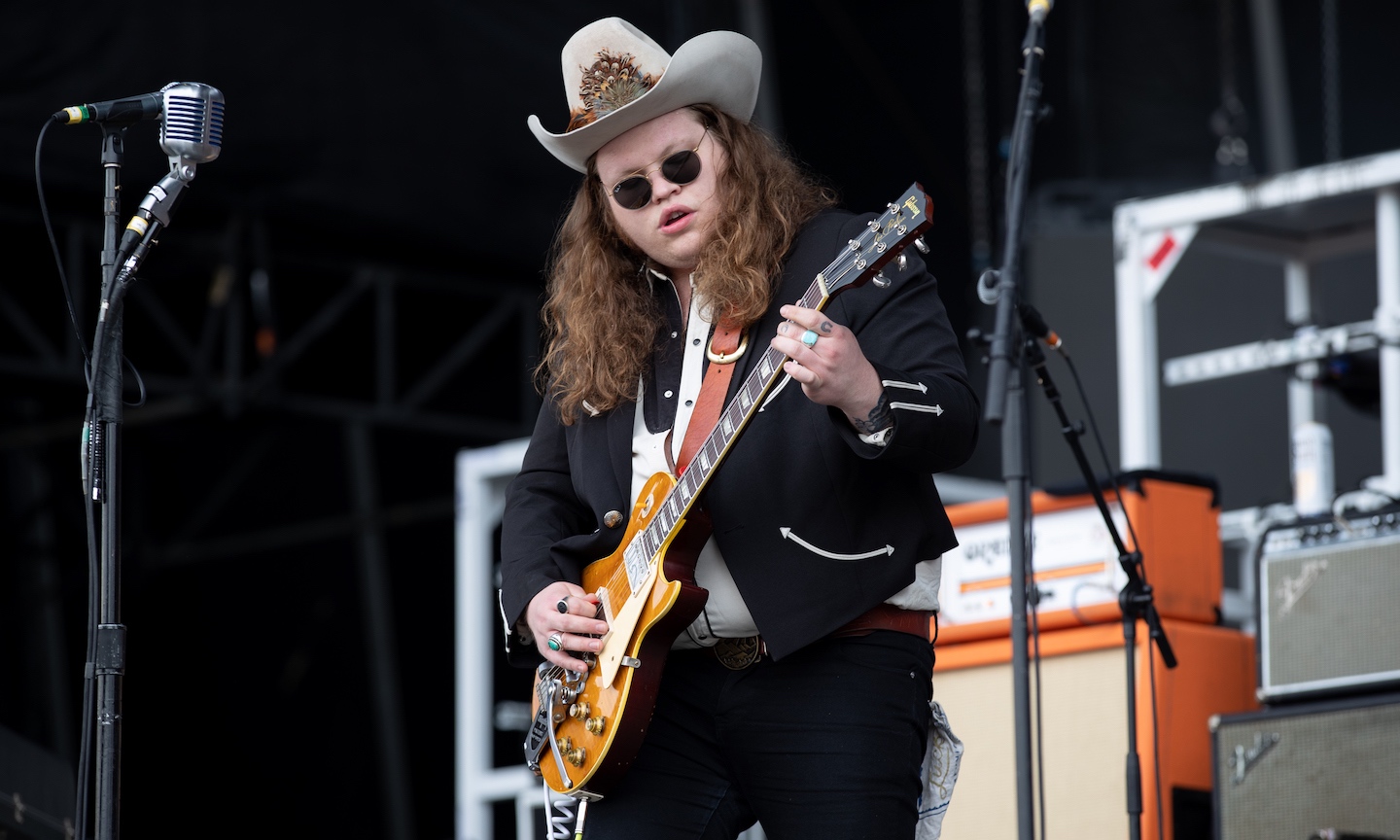
Marcus King: The Blues Prodigy Carrying Southern Guitar Into a New Generation
Vocal bends, elite vibrato and a semi-hollow tone the size of a room. A guitarist's deep dive into Marcus King's technique, phrasing vocabulary, gear and why he may be the most complete young blues musician working today.
Gibson Breaks a 70-Year Habit: The ELEV8 Is Its First Alnico 8 Humbucker
For seventy years Gibson humbuckers have run on Alnico 2, 3, 4 and 5. The new ELEV8 series finally reaches for Alnico 8 — and it is aimed squarely at high-gain players.
Christone "Kingfish" Ingram: The Modern Blues Guitar Hero Reviving a Legendary Tradition
At 27, Christone "Kingfish" Ingram has a No. 1 blues debut, a Grammy and a phrasing vocabulary that reminds every guitarist tone starts in the hands, not the pedalboard.