
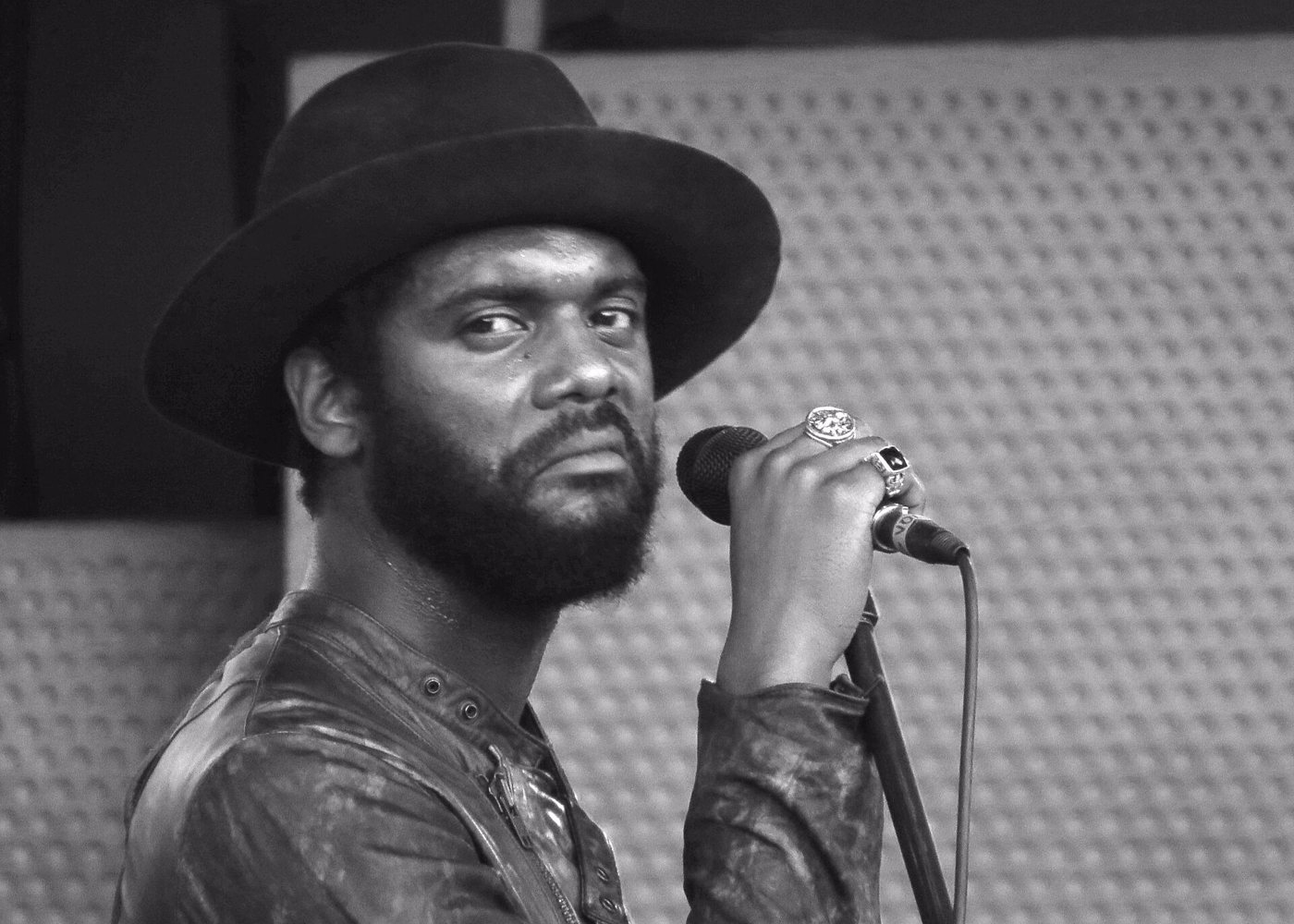
Gary Clark Jr. Brings Crossroads Home: Why This Weekend in Austin Belongs to Him
Gary Clark Jr. at Chicago Blues Fest, 2017. Photo: Michael Lucas / Wikimedia Commons, CC BY 2.0.
Antone's co-owner, Gibson signature artist and Austin's bridge between old blues and new — Gary Clark Jr. plays Crossroads in his own city this weekend. Here's why it matters.
Every Crossroads Guitar Festival has a centre of gravity. This weekend, when Eric Clapton's festival sets up at the Moody Center in Austin on September 26 and 27, it's hard to argue it's anyone but Gary Clark Jr.
The bill is stacked the way Crossroads bills always are — Clapton, Buddy Guy, Billy Gibbons, Joe Bonamassa, Marcus King, Sierra Hull and more. But only one of them grew up a few miles from the arena, cut his teeth in the city's clubs as a teenager, and now owns a piece of the room where it all started.
That's what makes this edition different. Crossroads has moved around over the years, and each city has lent the weekend a flavour of its own. Austin brings something no other host city could: a festival headliner who is, in the most literal sense, playing a home game. Clark will be looking out at people who saw him play clubs before he had a record deal, and at kids who picked up a guitar because of him.
Why Austin changes everything
Austin's guitar identity is built on lineage. The city's blues scene was shaped by players who came up through small rooms, learned from the generation above them, and passed it on. For decades, the thread ran through a handful of clubs and a handful of names, and the question that hangs over any scene like that is simple: who carries it forward when the old guard steps back?
Plenty of local writers have answered that question the same way. Clark has been an important bridge from those long-established styles to something more modern — not just someone keeping the tradition alive, but someone making it feel current and fresh. That's a difficult trick. Lean too hard on reverence and the music turns into a museum piece. Lean too hard on novelty and you lose the thing that made it matter. Clark has spent his career walking that line in public.
Crossroads, in turn, is the festival that best understands that balancing act. Clapton built it to celebrate the full family tree of the guitar — the elders, the torch-bearers, the genre-crossers — and it has always given room to players who connect one era to the next. Put that festival in Clark's town and the symbolism writes itself.
The Antone's connection
Clark was 15 when he first played Antone's, Austin's self-styled Home of the Blues. Today he's a partner and co-owner of the club, and this year he spent a big chunk of the summer back on its stage with an eight-show residency that sold out.
It is hard to overstate how unusual that arc is. Most players leave the club that gave them a start and never look back except in interviews. Clark went back and bought into it. The same stage where a teenager once talked his way into sitting in with the grown-ups is now, partly, his responsibility — its bookings, its future, its role in keeping the city's blues culture alive for the next 15-year-old with a borrowed amp.
That matters for how you hear him at Crossroads. Clark isn't arriving as a visiting star. He's the local who became the bridge between Austin's older generation of blues players and something more modern — the guy who made the tradition sound like it was written this year rather than preserved in amber.
The residency itself said a lot about where his head is in 2026. Rather than filling an arena, he chose a run of nights in a room where the audience is close enough to see his hands. Those shows sold out, and the second half of the residency sold out too, which tells you the appetite in Austin hasn't cooled one bit.
From club kid to four-time Grammy winner
The broad strokes of Clark's rise are well known to guitar fans. He came up through Austin's clubs, broke nationally in the early 2010s, and turned a reputation for incendiary live shows into a major-label career. His debut, Blak and Blu, introduced a wider audience to a player who could swing from a slow, aching blues to fuzzed-out rock and soul inside a single set.
Later records pushed further. This Land took on heavier themes and harder sounds, and JPEG Raw went further still, folding in textures and rhythms far from the standard blues-rock playbook. Along the way he picked up four Grammy Awards, and he's now recognised not only as a singer and guitarist but as an accomplished songwriter and producer.
What ties all of that together is the guitar. Whatever the production around him, the moment Clark steps into a solo, the record changes shape. The tone gets thicker, the notes get fewer and the space between them gets louder. It's a style that sounds simple until you try to copy it.
A tour that went back to the blues
Clark's 2026 has been busy. He opened the summer with a tiny club show at New York's 250-capacity Mercury Lounge, joined Bruce Springsteen for a concert celebrating America's 250th birthday, played back-to-back nights at Buddy Guy's Legends in Chicago with Guy himself sitting in, and extended his headline tour after saying life on the road had reconnected him with the power of the blues.
That phrase — the power of the blues — is worth dwelling on. Clark has never been a player who treats the blues as a costume. It's the foundation he builds everything else on, and his most adventurous records still come back to it. But there's a difference between the blues being your foundation and the blues being your focus, and this year the focus has been unmistakable.
The shape of the tour tells the story. Festival slots at Newport Jazz, Bourbon & Beyond and Crossroads sit alongside theatre and mid-size hall dates stretching from Dallas and New Orleans to Atlanta, Detroit, Denver, Seattle and Los Angeles. It is the itinerary of a player who wants to be heard properly, in rooms built for listening.
Some of those shows have been deliberately stripped of distraction. At the Keswick Theatre outside Philadelphia this month, fans sealed their phones in pouches before the lights went down — no photos, no filming, just the band and the guitar. The stage was dressed like a living room, with lamps and a throne, and reviewers came away saying the guitar made them forget they'd ever had a phone.
It's a telling choice for a player whose best moments have always been about feel and dynamics rather than clips. A Clark solo isn't built for a 15-second vertical video. It builds slowly, sometimes over minutes, and the payoff only lands if you've been there for the whole climb.
Not every date has gone to plan: his September 17 show at The Chicago Theatre was cancelled, with refunds issued to ticket holders. No reason was given in the venue's notice, and TGP won't speculate. With Bourbon & Beyond and Crossroads straight ahead, all eyes are on this weekend.
How Gary Clark Jr. actually plays
If you've only heard Clark on record, the live version can be a shock. He's a quiet presence on stage — few words, not much movement — and then he hits a note and the whole room tilts. That contrast is part of the magic. The intensity is all in the hands.
His phrasing leans on space. Where many blues-rock players fill every bar, Clark will play a phrase, let it hang, and wait. When the next line arrives, it lands harder because of the silence in front of it. It's a lesson every guitarist can steal: the notes you don't play set up the ones you do.
He also plays with volume and attack the way other players use a pedalboard. A light touch cleans the tone up; digging in pushes it into grit. Rolling the guitar's volume back and forth, he can move from a conversational rhythm part to a snarling lead without touching a single switch.
Then there's the fuzz. Clark's heaviest moments sit somewhere between classic blues and garage rock — a thick, almost broken tone with a ragged edge that sounds huge in a room. It's a big part of why his music crosses over to rock audiences who'd never think of themselves as blues fans.
“Not just someone keeping the tradition alive, but someone making it feel current and fresh.”
Rhythmically, he's just as distinctive. Listen to how his grooves sit slightly behind the beat, loose and heavy, borrowing as much from soul and hip-hop as from Texas shuffle. That rhythmic feel is arguably harder to copy than any solo.
Why his guitar playing fits Crossroads perfectly
Crossroads has always rewarded players who can move between eras, and that's Clark's whole game. He can play a slow blues straight enough to satisfy the purists, then kick a fuzz-soaked riff into something that sounds closer to garage rock or hip-hop production. The tone is thick and a little broken-up, the phrasing is patient, and the volume swells do as much talking as the notes.
He's also no stranger to the festival itself — Crossroads has put him on its stage before, and his sets have become some of the ones people talk about afterwards. Playing it in Austin, in front of the city that raised him, is a different kind of pressure.
The festival's format also plays to his strengths. Crossroads thrives on collaboration — players sitting in on each other's sets, unexpected pairings, one-off moments you can't see anywhere else. Clark has shared stages with many of the names on this year's bill, and a weekend like this is exactly where those surprises tend to happen.
Gibson's man on the ground
Gibson has partnered with the festival this year, and Clark is one of six Gibson signature artists representing the brand in Austin alongside Joe Bonamassa, Billy Gibbons, Sierra Hull, Marcus King and Keb' Mo'. Between them, those six cover blues, rock, bluegrass, roots and Americana — a neat snapshot of how wide the Gibson family has become.
Away from the stage, the company's booth will have more than 30 Gibson and Epiphone guitars and MESA/Boogie amps to plug in and try, along with photo opportunities and hands-on product experiences.
The headline item at the booth is the first public look at Epiphone's new Eric Clapton 1964 ES-335 reissue, based on the guitar Clapton played at Cream's farewell show at the Royal Albert Hall in 1968. It's due in summer 2027, so Crossroads is the only place to get your hands on one for a while.
For Clark, representing Gibson in his own city adds another layer to the weekend. He's not just a performer here; he's one of the faces of the event.
The other names to watch
Clark may be the local hero, but Crossroads is never a one-player show. Clapton himself is the host and the reason the festival exists. Buddy Guy, one of the elders whose shadow looms over this whole scene — and who joined Clark at Legends earlier this year — brings the kind of history no one else on the bill can match.
Billy Gibbons carries the Texas flag alongside Clark. Joe Bonamassa brings his encyclopaedic command of blues-rock. Marcus King represents the next wave of Southern players, and Sierra Hull shows how far the definition of a guitar festival can stretch. Tedeschi Trucks Band and Trey Anastasio add their own very different takes on improvisation.
Put all of that together and you get a festival that functions as a living history of the electric guitar — with its current chapter being written by players like Clark.
What comes next
Crossroads is one stop in a packed stretch. Clark is on the Bourbon & Beyond lineup in Louisville this week, sharing the bill with the likes of Foo Fighters, Queens of the Stone Age and Joan Jett & the Blackhearts.
On October 1 he's part of the all-star “Buddy's Got the Blues” night at Radio City Music Hall, alongside Buddy Guy, Eric Clapton, John Mayer, Derek Trucks, Susan Tedeschi, Jon Batiste, Joe Bonamassa, Billy F Gibbons, Samantha Fish, Eric Gales, Kenny Wayne Shepherd, Jimmie Vaughan and more. His headline tour then continues through October.
He's also been teasing new music recorded at his Austin studio, posting snippets online. Nothing has been formally announced — but if there were ever a weekend to road-test something new, it's the one where the whole guitar world comes to his town.
What guitarists can take from Clark
You don't need to be headlining Crossroads to learn from the way Clark plays. Start with space: take a solo you know and cut a third of the notes, letting the remaining phrases breathe. You'll be surprised how much bigger it sounds.
Next, work your volume knob. Set your amp just on the edge of break-up and practise moving between a clean rhythm tone and a gritty lead using only your guitar's controls and your picking hand.
Finally, respect the roots while refusing to be boxed in by them. Clark's career is proof that you can love the blues deeply and still bring in whatever else you love — soul, rock, hip-hop, fuzz, noise. The tradition gets stronger when it keeps moving.
The bottom line
Crossroads always celebrates guitar heroes. This weekend it's celebrating one on his home turf — the kid who first played Antone's at 15, now co-owns it, and is about to walk onto one of the biggest guitar stages in the world a few miles from where it all began.
If you're in Austin, Gary Clark Jr.'s set is the one to plan your day around. If you're not, it's the one to go looking for afterwards.
Sources & further reading
- 1.Pollstar — Gary Clark Jr. Announces Summer/Fall U.S. Tour
- 2.CultureMap Austin — Gary Clark Jr. extends tour
- 3.MNPR Magazine — Crossroads teams up with Gibson in Austin
- 4.WXPN — Gary Clark Jr.'s no-phone Glenside show
- 5.Consequence — Gary Clark Jr. 2026 US tour
- 6.The Chicago Theatre — cancellation notice
Experience-driven coverage, not algorithm bait.
- 20+ years of guitar playing experience
- Real-world retail experience at Guitar Center
- Thousands of hours testing guitars, amps, and pedals
- A community of 50,000+ guitar enthusiasts across platforms
- Partnerships with Fender, DistroKid, TrueFire, Card Chords, and Enya
- Editorial standards published openly — see how we test gear
The Modern Guitar Magazine. Delivered to your inbox.
No spam. No gimmicks. Just great guitar content — stories, tones, iconic solos, and honest gear takes. Every week.
Ask GP
3 free questions a dayStill curious? Ask GP about this story.
Your personal classic-rock and guitar guide — ask anything about Gary Clark Jr. Brings Crossroads.
Discussion (0)
Sign in to join the discussion.
Sign in to commentLoading comments…
Discover another guitar story
Swipe through our latest features, breaking news and iconic solos — one story at a time.
Open Swipe →More in Guitar Talk
The 10 Greatest Guitar Renditions of “The Star-Spangled Banner”
From Jimi Hendrix's controlled chaos at Woodstock to modern performances by H.E.R., Gary Clark Jr. and Jack White, these guitarists turned America's national anthem into something deeply personal.
Happy Birthday, Joe Perry: The Riff Machine Who Gave Aerosmith Its Swagger
Joe Perry turns 76 today. From the swampy grind of “Sweet Emotion” to the reunion that saved a band, this is the career of the guitarist who taught American hard rock how to strut.
History of the Riff: How Joe Satriani Made “Flying in a Blue Dream” Feel Weightless
An acoustic guitar in an unusual tuning, a stray broadcast and a melody that seems to hang in the air: inside the construction of Satriani’s 1989 masterpiece.