
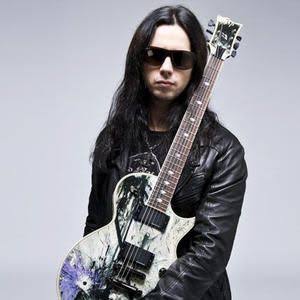
After 40 Years, King Diamond's Guitar Partnership Is Over — And Gus G. Is Stepping Into the Fire
Andy LaRocque has left King Diamond after nearly 40 years. Gus G. — the Firewind founder and former Ozzy Osbourne guitarist — is stepping in to compose, record and tour, opening a genuinely new chapter for one of metal's most important bands.
King Diamond has entered a new era. After nearly four decades as the band's lead guitarist and long-time musical co-architect, Andy LaRocque has departed — and Greek guitarist Gus G., best known for his work with Firewind and Ozzy Osbourne, has been announced as his replacement.
For a band whose identity has been shaped as much by its guitar arrangements as by King Diamond's operatic vocals, this is one of the most consequential lineup changes in the group's history.
[TOC]
• Andy LaRocque has exited King Diamond after nearly 40 years as the band's lead guitarist and long-time musical partner.
• Gus G. (Firewind, ex-Ozzy Osbourne) has been announced as the band's new guitarist.
• Gus G. is expected to compose, record and tour with King Diamond going forward, per official statements.
• No specific reason for LaRocque's departure has been publicly disclosed beyond the announcement itself.
• King Diamond has a new album and touring cycle in development.
The Announcement and What Has Changed
The lineup change was made public through official King Diamond, Metal Blade Records and Gus G.'s own channels, confirming both LaRocque's exit and Gus G.'s arrival simultaneously.
The band has framed the transition as a full creative role rather than a live-only fill-in. Gus G. is expected to compose new material, record on the next King Diamond album currently in progress, and tour with the band as an official member.
Neither King Diamond nor LaRocque has publicly detailed the reasons behind the split. The messaging from all sides has been respectful — a mutual acknowledgment that one era is ending and another is beginning — but no further private motivations have been shared, and readers should be cautious of any coverage that claims otherwise.
Why Andy LaRocque's Departure Is Historically Significant
Andy LaRocque joined King Diamond in the mid-1980s and appeared on the band's landmark 1987 debut Abigail — an album that is still routinely cited among the greatest heavy metal records ever made.
From that point forward, LaRocque was a fixture. He played on every studio album across the band's original run and its 2000s revival, including "Them" (1988), Conspiracy (1989), The Eye (1990), The Spider's Lullabye (1995), The Graveyard (1996), Voodoo (1998), House of God (2000), Abigail II: The Revenge (2002) and Give Me Your Soul...Please (2007).
Beyond the studio, LaRocque became one of the most respected guitarists in extended metal circles. His Sonic Train Studios in Sweden produced records for artists including Dimmu Borgir, Evergrey and At the Gates, and his guest solo on Death's Individual Thought Patterns (1993) alongside Chuck Schuldiner is still studied as a benchmark of taste and melodicism in extreme metal.
In short: this is not a session player leaving a project. This is the co-author of a catalog stepping away from the band he helped define.
The Guitar Partnership That Shaped King Diamond
King Diamond has always been a two-guitar band by design. The arrangements are layered, contrapuntal and often orchestrated — harmony parts weaving around lead lines while a supporting rhythm guitarist locks in with the drums.
LaRocque's role inside that framework was distinctive. His solos tended to favor melodic phrasing, minor-mode arpeggios and vocal-style bends over pure speed, giving King Diamond's most dramatic moments a genuinely composed feel. His rhythm work provided the low-end tension the vocals sat on top of, and his production instincts shaped how those parts translated to tape.
That combination — a lead voice that could sing on the fretboard and a producer's ear for arrangement — is a big part of what made King Diamond songs sound like King Diamond songs rather than generic traditional metal. Losing that voice, after nearly four decades, is a real change.
[MEMBERS_CTA]
Why Gus G. Is a Consequential Choice

X Concepts Strings • Made in USA
Never Run Out of Strings Again.
Join the X Concepts String Club and get fresh USA-made strings delivered every month—plus Premium membership options for the full Guitar Plugged experience.
Gus G. — born Konstantinos Karamitroudis in Thessaloniki, Greece — is not a surprise pick when you look at his résumé, but he is a genuinely bold one.
He founded Firewind in the early 2000s and used the band as a platform for a very specific style of European power metal: melodic, neoclassically informed, technically demanding and unashamedly hook-driven. Albums like Forged by Fire (2005), Allegiance (2006) and Days of Defiance (2010) established him as one of the leading modern power-metal guitarists of his generation.
Then came Ozzy Osbourne. In 2009, Gus G. was hand-picked to replace Zakk Wylde in Ozzy's touring and recording band. He played on the 2010 album Scream and remained Ozzy's lead guitarist through 2017 — one of the most visible lead-guitar chairs in all of rock music. That role required him to honor a catalog written by Randy Rhoads, Jake E. Lee and Zakk Wylde, while also writing new material and delivering live shows on the largest stages in the world.
“This isn't a substitution. Andy LaRocque helped define what King Diamond sounded like for almost 40 years. Gus G. isn't inheriting that voice — he's being asked to help write the next one.”
He has since continued Firewind, released solo material and remained active as a clinician and session player. There are very few working guitarists who can credibly step from that background into a band with King Diamond's history and demands.
What Gus G. Could Bring to the Next King Diamond Era
This section is analysis, not reporting.
On paper, Gus G.'s vocabulary — melodic phrasing, neoclassical influences, modern-metal rhythm precision and arena-tested lead playing — fits comfortably inside the world King Diamond has always occupied. He is fluent in the harmonic minor and diminished ideas that have always been part of the band's DNA, and he is used to writing solos that serve songs rather than showcases.
At the same time, he brings his own identity. His attack is tighter and more modern than LaRocque's, his rhythm playing leans heavier and more percussive, and his phrasing carries clear traces of both Ritchie Blackmore and post-Van Halen shred. Applied to King Diamond arrangements, those tendencies could push the band's sound toward something a little more contemporary without abandoning its theatrical, story-driven core.
The strongest editorial reading is that this is not a replacement. Gus G. is not being asked to be Andy LaRocque. He is being asked to help King Diamond write its next chapter — with a new voice sitting alongside the vocals rather than continuing the previous one.
What "Compose, Record and Tour" Actually Means
The specific wording used in the band's announcement matters. Framing Gus G.'s role as "compose, record and tour" — as opposed to "perform live with" — signals a full creative partnership, not a hired-gun arrangement.
In practice, that would mean:
- Composition credit on the next studio album. New King Diamond material would carry Gus G.'s writing fingerprints alongside King Diamond himself, bassist Pontus Egberg and the rest of the band.
- Full recording responsibilities. Lead guitar tones, harmony arrangements and solo construction on the forthcoming record would be shaped by Gus G. rather than modeled on LaRocque's approach.
- Long-term touring commitment. Rather than a temporary substitution, Gus G. would be the face of King Diamond's guitar section on stage for the foreseeable future.
As of publication, King Diamond has an album in progress and touring plans in the pipeline. Specific release dates and tour routing have not yet been announced.
What Remains Unknown
Several important questions have not been answered publicly, and we won't invent answers:
- Whether Andy LaRocque's departure is fully permanent or leaves room for future collaboration.
- The private reasons — creative, personal or logistical — behind the split.
- How much material for the forthcoming album was already tracked before the lineup change, and how much will be rewritten with Gus G.
- Whether Gus G. will continue Firewind and his solo work in parallel, or scale those projects back to focus on King Diamond.
Those are the things worth watching over the next 12 months. Everything else is speculation.
The Bigger Picture
Whatever comes next, this moment closes one of the longest and most important guitarist partnerships in heavy metal. King Diamond and Andy LaRocque built a body of work that shaped extreme metal's melodic wing for almost 40 years — a lineage that runs through Mercyful Fate, through countless European power-metal bands, and into the modern black and death metal scenes that borrowed from those records.
The arrival of Gus G. doesn't undo any of that. What it does is force King Diamond, as a band, to become something new. For fans who value King Diamond primarily as a story-driven, guitar-centered project, that's genuinely interesting news — and, on paper, they've picked one of the few players in the world equipped to help write the next chapter.
For more heavy-metal guitar history and long-form features, see our Guitar Talk section, our tribute to Randy Rhoads' Mr. Crowley solo, and our recent feature Remembering Ozzy Osbourne: The Guitarists Who Helped Define the Prince of Darkness.
*Affiliate disclosure: The Guitar Plugged may earn a small commission from qualifying purchases made through Amazon or Reverb links in this article, at no additional cost to you. See our affiliate disclosure for details.*
Experience-driven coverage, not algorithm bait.
- 20+ years of guitar playing experience
- Real-world retail experience at Guitar Center
- Thousands of hours testing guitars, amps, and pedals
- A community of 50,000+ guitar enthusiasts across platforms
- Partnerships with Fender, DistroKid, TrueFire, Card Chords, and Enya
- Editorial standards published openly — see how we test gear
The Modern Guitar Magazine. Delivered to your inbox.
No spam. No gimmicks. Just great guitar content — stories, tones, iconic solos, and honest gear takes. Every week.
Ask GP
3 free questions a dayStill curious? Ask GP about this story.
Your personal classic-rock and guitar guide — ask anything about After 40 Years, King Diamond's.
Discussion (0)
Sign in to join the discussion.
Sign in to commentLoading comments…
Discover another guitar story
Swipe through our latest features, breaking news and iconic solos — one story at a time.
Open Swipe →More in Guitar Talk
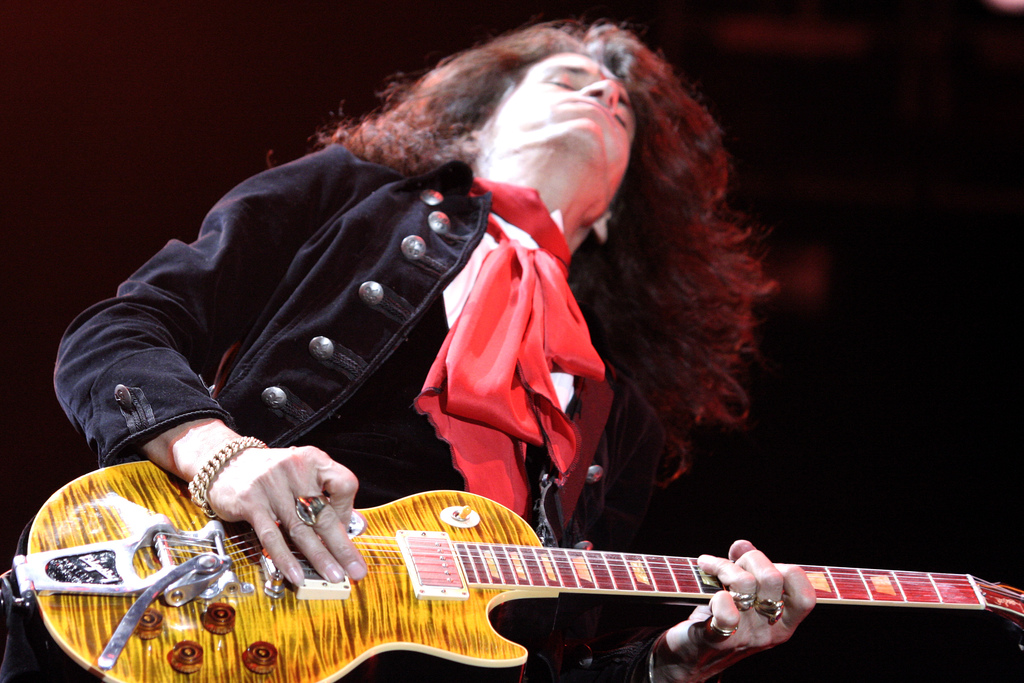
Happy Birthday, Joe Perry: The Riff Machine Who Gave Aerosmith Its Swagger
Joe Perry turns 76 today. From the swampy grind of “Sweet Emotion” to the reunion that saved a band, this is the career of the guitarist who taught American hard rock how to strut.
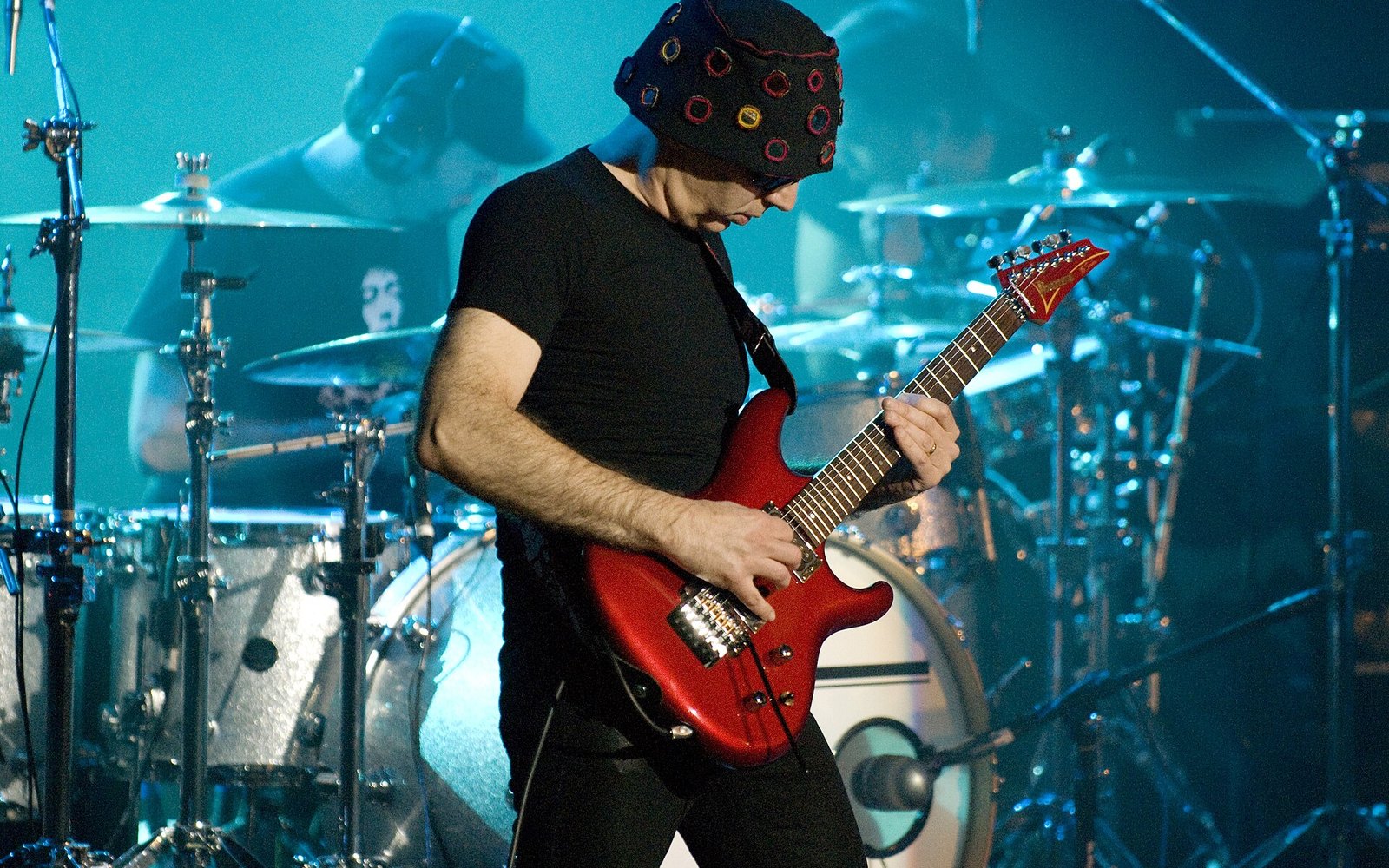
History of the Riff: How Joe Satriani Made “Flying in a Blue Dream” Feel Weightless
An acoustic guitar in an unusual tuning, a stray broadcast and a melody that seems to hang in the air: inside the construction of Satriani’s 1989 masterpiece.
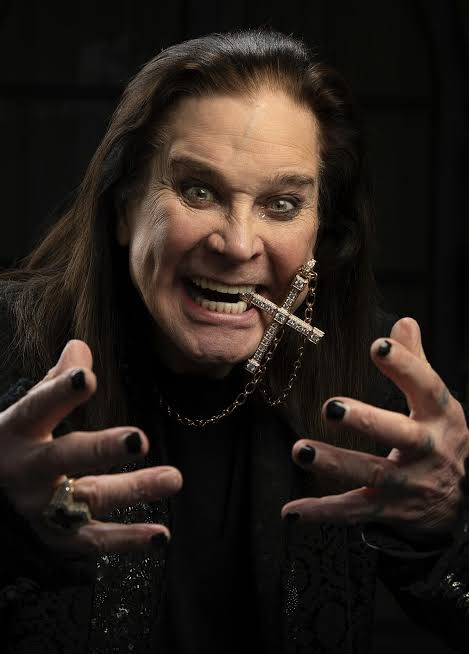
Tony Iommi Opens Up About His Final Conversation With Ozzy Osbourne: “I Still Can't Get It in My Head”
The Black Sabbath guitarist says Ozzy was exhausted after the band's emotional farewell — but determined to give fans one final show.