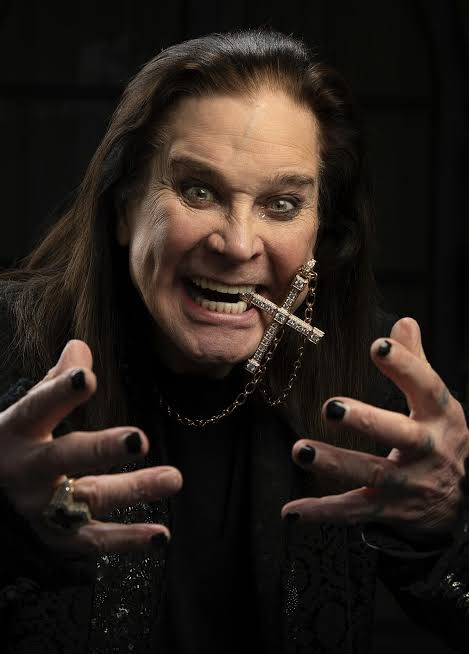
Remembering Ozzy Osbourne: The Guitarists Who Helped Define the Prince of Darkness
One year on from Ozzy Osbourne's death, we remember the Prince of Darkness through the guitarists who stood beside him — from Tony Iommi and Randy Rhoads to Jake E. Lee, Zakk Wylde, Gus G and the collaborators in between.
One year ago today, on July 22, 2025, Ozzy Osbourne died.
A full trip around the sun has passed, and the strange truth is that heavy music still feels a little quieter without him. Not quieter in volume — the world has more guitars, more amps and more distortion than it has ever had. Quieter in a different way. Quieter the way a room gets when the person who first taught it how to be loud finally leaves.
Trying to measure Ozzy's influence on heavy music is like trying to measure the influence of thunder on the sky. With Black Sabbath, he stood at the front of a band that didn't simply invent a new style — it drew the blueprint that thousands of bands are still tracing. His solo career then became one of the most remarkable showcases for guitar talent in the entire history of rock and roll.
Because here is the thing about Ozzy that guitar players understood better than almost anyone else:
Ozzy may have been the unmistakable voice at the microphone, but standing somewhere behind, beside or across the stage from him was almost always an extraordinary guitarist.
Some of them were already legends. Some of them became legends the moment Ozzy handed them a spotlight. Some of them changed the way electric guitar sounds forever. And every one of them, in their own way, helped build the sound of the Prince of Darkness.
One year on, this is his story told through his six strings.
What to Remember
- ▸Tony Iommi is the foundation of the entire Ozzy story — no Sabbath, no solo career, no genre.
- ▸Randy Rhoads reinvented what heavy-metal guitar could be over just two studio albums with Ozzy.
- ▸Bernie Tormé and Brad Gillis kept the tour alive in 1982 during the impossible weeks after Randy's death.
- ▸Jake E. Lee's Bark at the Moon and The Ultimate Sin era is one of the most underrated runs in metal guitar history.
- ▸Zakk Wylde is Ozzy's longest-serving major guitarist and became something closer to family across No More Tears, Ozzmosis and Ozzy's final era.
- ▸Joe Holmes carried a direct line from Randy Rhoads into Ozzy's mid-1990s touring band.
- ▸Gus G brought a modern European metal sensibility to Scream and beyond.
- ▸Ozzy's late-era records with Andrew Watt drew guest appearances from Jeff Beck, Eric Clapton, Tony Iommi, Mike McCready and more.
Tony Iommi — The Riff Architect
No conversation about Ozzy and the guitar can begin anywhere but Birmingham.
Tony Iommi didn't just play in Ozzy's first band. Iommi built the entire universe Ozzy would sing inside of for the rest of his life. The two of them, along with Geezer Butler and Bill Ward, invented something in the late 1960s that didn't have a name yet. It would eventually get one — heavy metal — but the four of them were too busy trying to survive Birmingham to worry about vocabulary.
Iommi's story is almost mythological at this point. The industrial accident. The lost fingertips. The homemade thimbles. The detuned strings and lighter gauges. A guitarist who should have quit found a way to sound heavier than anyone else instead. The limitation became the sound.
You can hear the whole genre being born in the opening seconds of "Black Sabbath." That slow, doomy tritone crawls out of the amp like something you're not supposed to hear. Then Ozzy's voice appears, and suddenly a template exists. "Paranoid," "Iron Man," "War Pigs," "N.I.B.," "Sweet Leaf," "Children of the Grave," "Snowblind," "Symptom of the Universe" — every one of them built on a riff no other guitarist would have written the same way.
By the time albums like Master of Reality and Sabbath Bloody Sabbath arrived, the world was catching up. Iommi's dark, downtuned rhythm playing and Ozzy's ghostly wail were the two halves of the same monster. Neither would have sounded like themselves without the other.
This article is largely about the guitarists who played in Ozzy's solo band, but any honest telling has to make one thing absolutely clear:
Tony Iommi is the foundation of the entire story. Every guitarist who ever plugged in beside Ozzy did so on ground that Iommi cleared.
For a deeper look, revisit our full Tony Iommi feature.
Randy Rhoads — The Virtuoso Who Changed Everything
When Ozzy was fired from Black Sabbath in 1979, most of the music industry wrote him off.
Then he met a small, quiet, classically obsessed guitarist from Los Angeles named Randall William Rhoads.
Randy Rhoads was 22 years old. He had already co-founded Quiet Riot. He wore polka dots and played a Flying V. He carried classical guitar books on tour and looked for classical instructors in every city Ozzy's band rolled into. He treated the electric guitar with a seriousness that most rock players in 1980 simply did not.
Then he made records with Ozzy that rewrote the possibilities of the instrument.
Blizzard of Ozz and Diary of a Madman are two of the most influential guitar albums of the entire 1980s. "Crazy Train." "Mr. Crowley." "I Don't Know." "Suicide Solution." "Flying High Again." "Over the Mountain." "You Can't Kill Rock and Roll." "Diary of a Madman." A generation of guitarists learned every one of those solos note by note and are still learning them today.
Randy's genius wasn't only in his technical command, although that was extraordinary. It was in the way he combined things that weren't supposed to fit together. He fused classical composition with heavy-metal aggression. He fused elegant melodic development with a genuinely dangerous rhythm-guitar tone. He fused the discipline of an academic musician with the wildness of an arena rock band led by Ozzy Osbourne, of all people.
The results still don't sound dated. "Crazy Train" isn't nostalgia — it's a working piece of music that lands as hard on a car radio in 2026 as it did on a turntable in 1980. Our Mr. Crowley solo breakdown digs into why.
In March of 1982, on the tour supporting Diary of a Madman, Randy was killed in a small plane crash in Florida. He was 25.
It is impossible to overstate what the guitar community lost that morning. Randy had only recorded two studio albums with Ozzy. He was already being discussed as one of the most important electric guitarists in the world. What he might have done next is one of rock and roll's great unanswerable questions.
What he did do continues to shape the way guitarists approach the instrument more than four decades later. Read our full tribute in Randy Rhoads: Still Ahead of His Time.
And, in a way that will always sit at the emotional core of Ozzy's story, Randy is the guitarist Ozzy never stopped talking about.
Bernie Tormé — Stepping Into the Impossible
The days after Randy's death are almost too painful to write about.
Want This Tone?
Tell ToneMD what guitar and gear you own and we’ll show you how to get as close as possible using the equipment you already have — full signal chain, real numbered settings, no guesswork.
Included with The Guitar Plugged Premium
Ozzy and the band were shattered. The tour had shows on the calendar. Something had to happen. Somebody had to plug in a guitar and play "Crazy Train" while the audience was still mourning the guitarist who had made "Crazy Train" what it was.
That somebody was Bernie Tormé.
The Irish guitarist, best known at the time for his work with Gillan, was flown in on almost no notice to help Ozzy honor the tour dates. He was not there to replace Randy. Nobody could have been. He was there because Ozzy Osbourne needed a friend with a guitar strap around his neck while the world felt like it was ending.
Bernie's tenure lasted only a handful of shows, but he deserves permanent recognition in this story. He walked into an emotionally impossible situation and did the honorable thing. That matters, and it should never be forgotten simply because his time in the band was short.
Brad Gillis — The Guitarist Who Helped Keep the Show Going
Brad Gillis picked up where Bernie left off and helped Ozzy get through the rest of the Diary of a Madman tour.
Gillis brought a distinctive whammy-bar style and a much more overtly Californian hard-rock sensibility to the material. You can hear his contributions on the 1982 live album Speak of the Devil, an all-Sabbath live set recorded while Ozzy's solo band was still catching its breath.
Gillis would soon go on to co-found Night Ranger and become widely known for "Sister Christian" and a long career in melodic hard rock. But for a few crucial months in 1982, he was the guitarist standing beside Ozzy while the entire world watched to see whether the solo band could go on at all.
It could. He helped make sure of it.
Jake E. Lee — The Underrated Firebrand
By 1983, Ozzy was ready to make a new record. He needed a new guitarist to write it with.
He found Jake E. Lee.
Jake had come up on the Los Angeles club scene, playing in Ratt and Rough Cutt. His audition famously involved Ozzy simply throwing him into songwriting sessions to see what he could do. What he could do turned out to be enormous.
Bark at the Moon (1983) was the first Ozzy studio album without Randy Rhoads. It sold in the millions. The title track alone — "Bark at the Moon," with its galloping main riff and its extended, technically demanding solo — established Jake as one of the most exciting new guitar players of the mid-1980s.
Then came The Ultimate Sin in 1986: "Shot in the Dark," "Killer of Giants," "Rock 'n' Roll Rebel." Jake's playing across both records combined muscular blues-rock phrasing, precise metallic articulation, unusual harmonic ideas and one of the great vibratos of the decade. He didn't try to be Randy. He gave Ozzy his own thing, which was exactly what the band needed.
Then, quietly and without a public fight, he was gone.

X Concepts Strings • Made in USA
Never Run Out of Strings Again.
Join the X Concepts String Club and get fresh USA-made strings delivered every month—plus Premium membership options for the full Guitar Plugged experience.
In the years since, Jake E. Lee's reputation has only grown among guitar players. Ask any working guitarist about the Bark at the Moon solo and watch their face. Our full retrospective, Jake E. Lee: Replacing Randy Rhoads, tells the whole story.
He belongs on the very short list of the greatest guitarists Ozzy ever employed. On some days, if you catch guitar players in the right mood, they will tell you he is the most underrated of all of them.
Zakk Wylde — The Longest and Loudest Partnership
In 1987, a 19-year-old kid from New Jersey named Jeffrey Wielandt got the call.
By the time he was done, he had become Zakk Wylde — the longest-running, most visually recognizable, most instantly identifiable guitar personality in Ozzy's entire solo history.
“Ozzy may have been the unmistakable voice at the microphone, but standing somewhere behind, beside or across the stage from him was almost always an extraordinary guitarist.”
Zakk debuted on No Rest for the Wicked in 1988 with tracks like "Miracle Man" and "Crazy Babies." But the album that made him a household name for a generation of rock and metal fans was No More Tears in 1991.
The title track. "Mama, I'm Coming Home." "Road to Nowhere." "Time After Time." No More Tears is one of the most successful albums of Ozzy's entire career, and Zakk's fingerprints are on all of it. His giant, singing pinch harmonics. His trademark wide vibrato. His obsession with the Gibson Les Paul, run into a wall of Marshall stacks, cranked to the point where the guitar itself began to feel like a living thing.
Ozzmosis in 1995 pushed the sound in a more polished direction, with Zakk still driving the guitars. Then came his own band, Black Label Society, and one of the most colorful ongoing careers in modern hard rock. Read our full appreciation in Zakk Wylde: The Last Great Guitar Hero Standing.
Zakk left Ozzy's band. He came back. He left again. He came back again. Somewhere in that long, on-and-off partnership, the relationship became something bigger than the traditional hired-gun dynamic. Zakk wasn't just Ozzy's guitarist. He was Ozzy's brother.
When Ozzy needed a guitarist to walk beside him through his final era of touring and one last chapter with Black Sabbath, it was Zakk. It was always going to be Zakk.
No other guitarist has spent that many years standing to the left of Ozzy Osbourne. There is a very good reason for that.
Joe Holmes — The Overlooked Live Era
Between Zakk's various tenures, there was Joe Holmes.
Holmes deserves a lot more credit than he usually gets in discussions of Ozzy's guitar lineage. He was a genuinely gifted player who spent years touring with Ozzy in the mid-to-late 1990s. And in one of the more remarkable footnotes in this entire story, he was, as a young player, a guitar student of Randy Rhoads.
Read that sentence again. Ozzy Osbourne, at one point in the 1990s, was fronted onstage every night by a guitarist who had been personally taught by Randy Rhoads.
Holmes did not appear as the primary guitarist on an Ozzy studio album, which is part of why his name comes up less often than his contribution deserves. But if you were in the crowd at an Ozzy or Ozzfest show in the mid-1990s, chances are very good that Joe Holmes was the one making "Mr. Crowley" ring across the arena.
That is not a small thing to have done.
Gus G — Carrying the Torch Into a New Generation
When Ozzy needed a new guitarist for Scream in 2010, he turned to a Greek player who was already respected across the modern metal world for his work in Firewind: Konstantinos "Gus G" Karamitroudis.
Gus stepped into a lineage that already included Iommi, Rhoads, Lee and Wylde. That is not a small doorway to walk through. To his credit, he did not try to be any of them. He brought a modern European power-metal precision and a fluid technical vocabulary that felt right for the era.
The Scream album and the tours that followed introduced Ozzy to a younger generation of metal fans who had grown up on modern extreme metal, and it introduced Gus to arena stages that most players of his generation never get to stand on.
Whether or not Scream ranks with the mythology of Blizzard or No More Tears is beside the point. The point is that Ozzy, in his sixties, went out and hired a legitimate modern shredder — because that is what Ozzy Osbourne did his entire career. He gave guitarists a stage.
The Collaborators, Guest Guitarists and Might-Have-Beens
Ozzy's core solo band is only part of his guitar story.
Across his solo albums, guest appearances and collaboration records like Under Cover, Ordinary Man and Patient Number 9, Ozzy worked with an astonishing range of guitarists. Some played on single songs. Some contributed to entire projects. Some are permanent presences in rock guitar history in their own right.
Andrew Watt, the producer and guitarist who helped shape Ordinary Man and Patient Number 9, deserves particular mention. He co-wrote and played guitar across those late-era Ozzy records and was a major creative force in Ozzy's final chapter as a recording artist.
Patient Number 9 alone brought guest guitar contributions from an almost unthinkable list: Jeff Beck on the title track, Eric Clapton on "One of Those Days," Tony Iommi returning on "Degradation Rules" and "No Escape from Now," Mike McCready of Pearl Jam on "Immortal" and Zakk Wylde continuing his lifelong partnership.
Elsewhere, Slash collaborated with Ozzy on "Gets Me Through" and shared stages with him repeatedly. Jerry Cantrell of Alice in Chains contributed to Ozzy's work multiple times. Steve Vai co-wrote and played on the Ordinary Man track "Straight to Hell." Tom Morello of Rage Against the Machine joined the Patient Number 9 sessions. The list keeps going.
It's worth being clear about the distinction here. These guitarists were not permanent members of Ozzy's touring band. They were peers, collaborators, guests and friends. But their willingness to keep showing up for Ozzy across decades tells you something important:
The greatest guitarists in the world wanted to work with him.
There are also names that lived on the edges of Ozzy's guitar story — players who were briefly involved, considered, rehearsed or in conversation for a role that never quite happened. That gray area exists in almost every long-running band, and it's part of why Ozzy's guitar mythology is so rich. Careers were quietly changed by phone calls that either came or didn't.
The Ozzy Osbourne Guitar Family Tree
The Journey
Tony Iommi
The riff architect of Black Sabbath and the foundation of Ozzy's entire musical universe.
Tony Iommi
The riff architect of Black Sabbath and the foundation of Ozzy's entire musical universe.
Randy Rhoads
The classically influenced virtuoso who defined the sound of Ozzy's early solo career on Blizzard of Ozz and Diary of a Madman.
Bernie Tormé
Stepped in during the impossible days immediately following Randy's death to keep the tour alive.
Bernie Tormé
Stepped in during the impossible days immediately following Randy's death to keep the tour alive.
Brad Gillis
Completed the Diary tour and appears on the live album Speak of the Devil before going on to Night Ranger.
Jake E. Lee
The underrated firebrand behind Bark at the Moon and The Ultimate Sin.
Jake E. Lee
The underrated firebrand behind Bark at the Moon and The Ultimate Sin.
Zakk Wylde (Era 1)
Ozzy's longest-running major guitar partnership begins — No Rest for the Wicked, No More Tears, Ozzmosis.
Joe Holmes
The overlooked live-era guitarist and former student of Randy Rhoads.
Joe Holmes
The overlooked live-era guitarist and former student of Randy Rhoads.
Zakk Wylde (Return)
Back at Ozzy's side through Down to Earth, Black Rain, Scream tours and Ozzy's final era.
Gus G
Carried the torch into a new generation on Scream and the touring cycles that followed.
Gus G
Carried the torch into a new generation on Scream and the touring cycles that followed.
Notable studio collaborators and guest guitarists include: Andrew Watt (producer / co-writer / guitarist on Ordinary Man and Patient Number 9), Jeff Beck, Eric Clapton, Slash, Jerry Cantrell, Steve Vai, Tom Morello and Mike McCready — among many others across a five-decade career.
The Prince of Darkness and His Guitar Heroes
One year ago, Ozzy Osbourne died.
In the days that followed, the tributes came from every direction — musicians, actors, athletes, wrestlers, presidents and, most of all, fans. Some of them had grown up on Black Sabbath. Some had grown up on Blizzard of Ozz. Some had grown up on No More Tears. Some had grown up on The Osbournes. All of them, whether they realized it or not, had grown up in a world Ozzy helped build.
For guitar players, there is a specific way to say goodbye.
You reach for the instrument.
You plug it in.
You play a riff.
And when you think about what Ozzy Osbourne gave to the electric guitar, remember that he did it by handing his stage — over and over again, across five decades — to some of the greatest guitarists who have ever lived.
Tony Iommi. Randy Rhoads. Jake E. Lee. Zakk Wylde.
That list alone would already put Ozzy among the most important frontmen in the history of rock and roll. And that list is only the beginning. Add Bernie Tormé and Brad Gillis and Joe Holmes and Gus G. Add Andrew Watt. Add Jeff Beck and Eric Clapton and Slash and Steve Vai and Jerry Cantrell and Mike McCready and Tom Morello. Add the countless working guitarists who spent their careers being asked, "Have you heard this Ozzy song?"
Very few singers in the history of rock and roll can point to a guitar lineage anywhere close to that. Almost none can point to one that stretches from the invention of heavy metal all the way to the final year of their life.
Ozzy could.
And now, one year after his death, every time a guitarist plugs into an amp, kicks up the gain and plays the opening riff of "Crazy Train," or the crushing detuned chords of "Black Sabbath," or that soaring, classical-tinged solo in "Mr. Crowley," a small piece of Ozzy's musical legacy keeps going.
That is exactly the way he would have wanted it.
Rest easy, Prince of Darkness. The riffs are still ringing.
Frequently Asked Questions
See the FAQ section below for quick answers on Ozzy's most famous guitarists, his longest-serving player and where Tony Iommi fits into the story.
Support The Guitar Plugged
The Guitar Plugged is dedicated to the riffs, solos, tones and stories that made guitar music legendary — and the players carrying it forward.
If features like this one mean something to you, consider joining The Guitar Plugged Premium and helping fund the next round of tributes, deep dives and Tone Decoded breakdowns.
Who's your favorite Ozzy Osbourne guitarist? Drop it in the comments — we read every one.
Shop the Ozzy Osbourne Catalog
Some links may be affiliate links. We may earn a small commission at no cost to you.
Experience-driven coverage, not algorithm bait.
- 20+ years of guitar playing experience
- Real-world retail experience at Guitar Center
- Thousands of hours testing guitars, amps, and pedals
- A community of 50,000+ guitar enthusiasts across platforms
- Partnerships with Fender, DistroKid, TrueFire, Card Chords, and Enya
- Editorial standards published openly — see how we test gear
Get More Deep-Dive Guitar Features
Long-form tributes, tone breakdowns and player deep dives — delivered straight to your inbox.
Ask GP
3 free questions a dayStill curious? Ask GP about this story.
Your personal classic-rock and guitar guide — ask anything about Remembering Ozzy Osbourne.
Discussion (0)
Sign in to join the discussion.
Sign in to commentLoading comments…
Discover another guitar story
Swipe through our latest features, breaking news and iconic solos — one story at a time.
Open Swipe →More in Guitar Talk
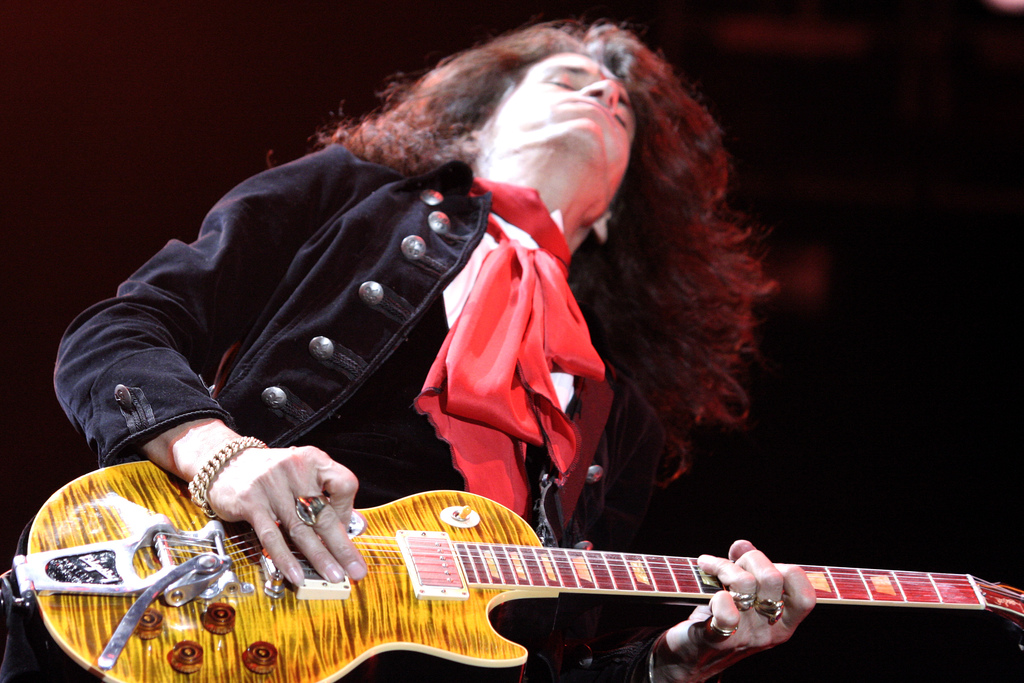
Happy Birthday, Joe Perry: The Riff Machine Who Gave Aerosmith Its Swagger
Joe Perry turns 76 today. From the swampy grind of “Sweet Emotion” to the reunion that saved a band, this is the career of the guitarist who taught American hard rock how to strut.
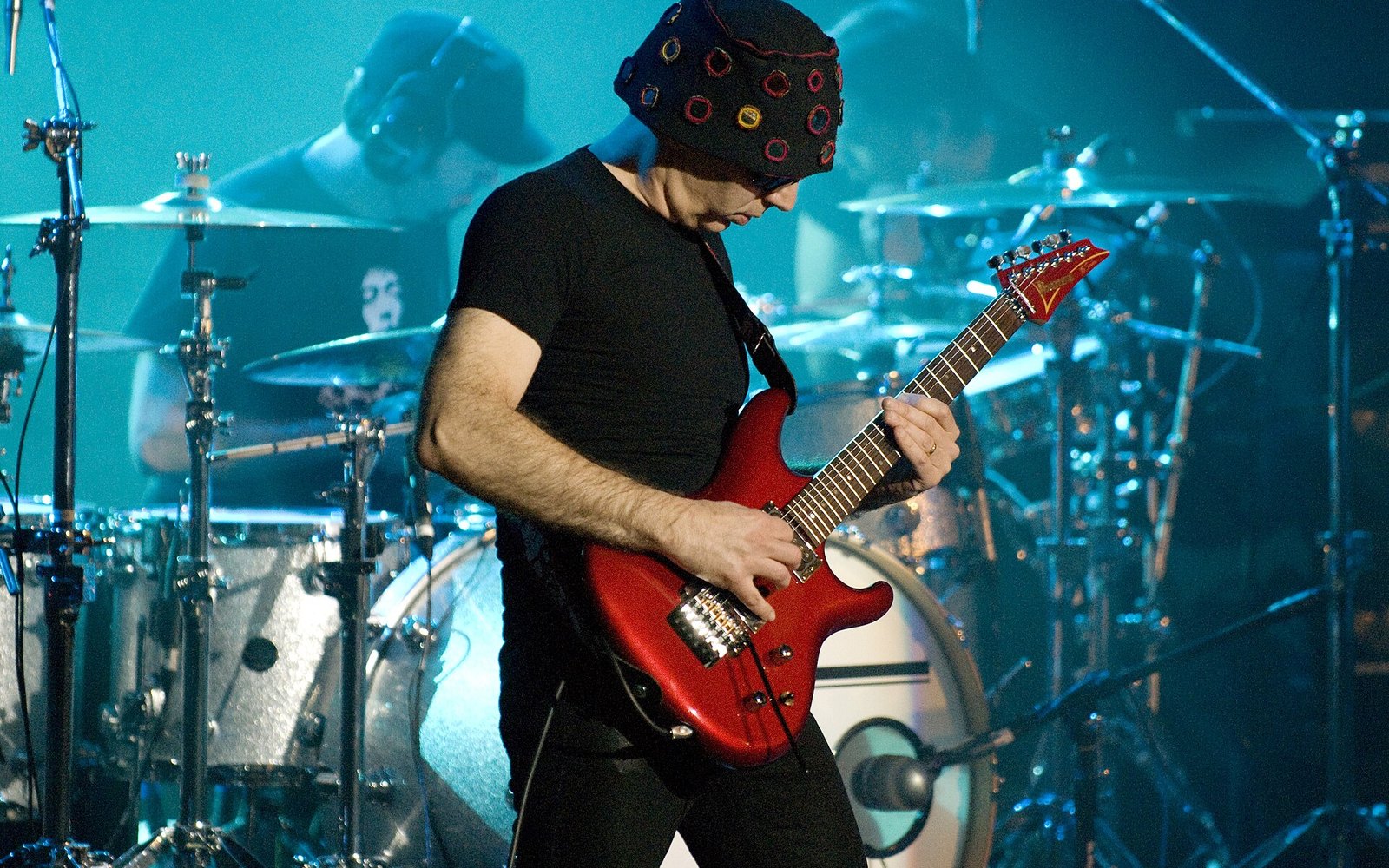
History of the Riff: How Joe Satriani Made “Flying in a Blue Dream” Feel Weightless
An acoustic guitar in an unusual tuning, a stray broadcast and a melody that seems to hang in the air: inside the construction of Satriani’s 1989 masterpiece.
Tony Iommi Opens Up About His Final Conversation With Ozzy Osbourne: “I Still Can't Get It in My Head”
The Black Sabbath guitarist says Ozzy was exhausted after the band's emotional farewell — but determined to give fans one final show.