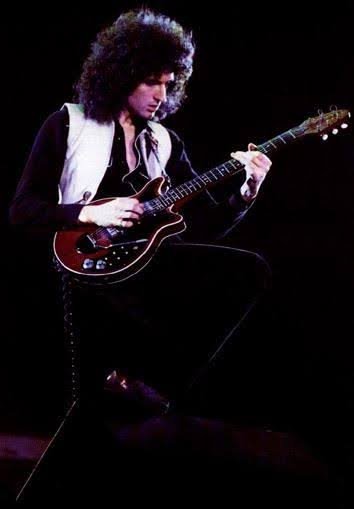
Happy 79th Birthday, Brian May: Celebrating the Guitar Hero Who Gave Queen Its Voice
From the homemade Red Special to "Bohemian Rhapsody," Live Aid and some of the most recognizable guitar tones ever recorded, we celebrate the extraordinary career of Queen legend Brian May.
There are guitarists who play great solos.
There are guitarists who write great songs.
And then there are the rare players whose sound becomes so distinctive that you can recognize them before the first phrase is finished.
Brian May belongs firmly in that final category.
Today, July 19, we celebrate the 79th birthday of Sir Brian May — a guitarist, songwriter and musical architect whose playing helped turn Queen into one of the defining rock bands of all time.
For more than five decades, May has occupied a unique place in guitar history. His sound is massive without sacrificing melody, technically sophisticated without becoming cold, and instantly recognizable without relying on the same tricks over and over again.
The Red Special. The Vox AC30s. The treble booster. The sixpence. The towering layers of harmonized guitars.
Those ingredients are legendary. But Brian May's greatness has never been about the gear alone. It is about what he did with it.
From the soaring solo in "Bohemian Rhapsody" to the orchestral guitar arrangements of "Killer Queen," the raw power of "Tie Your Mother Down," the stadium-sized simplicity of "We Will Rock You" and the emotion running through "Who Wants to Live Forever," May created a guitar vocabulary that remains entirely his own.
So, on his birthday, The Guitar Plugged looks back at the instrument, songs, performances and career-defining moments that made Brian May one of rock guitar's true originals.
• Guitar: The Red Special (built with his father, Harold May)
• Amp: Vox AC30
• Boost: Treble booster (Dallas Rangemaster / John Deacon–built)
• Pick: A sixpence coin
• Pickups: Burns Tri-Sonic–style single coils
• Signature move: Layered harmonized guitar orchestras
Before Queen: The Birth of the Red Special
Every great guitar story needs a great guitar. Brian May's story has one of the best.
Long before signature guitars became a standard part of the music industry, May and his father, Harold, set out to build an electric guitar themselves. The instrument that emerged from their work would eventually become known around the world as the Red Special.
It wasn't simply a childhood project that was eventually replaced when fame arrived. It became the guitar.
The Red Special would follow May into studios and onto stages around the world, becoming inseparable from the sound and visual identity of Queen.
That alone makes May unusual among guitar legends. Jimmy Page had his Les Pauls. Eric Clapton moved between Gibsons and Fenders. Eddie Van Halen continuously modified, rebuilt and reinvented his instruments. May built his sound around something that essentially existed nowhere else.
The guitar's switching system gave him access to an enormous range of pickup combinations, while his use of Vox AC30 amplifiers, treble boosters and a sixpence instead of a traditional guitar pick helped complete a signal chain that became one of the most identifiable sounds in recorded music.
The result could be smooth and vocal-like one moment, then aggressive and almost orchestral the next. Most importantly, May learned how to make the Red Special sound like him.
Queen Changes Everything
The story of Brian May cannot be separated from the story of Queen.
What eventually became Queen grew from the ashes of Smile, the band May formed alongside drummer Roger Taylor. With Freddie Mercury ultimately taking center stage and John Deacon completing the classic lineup, four musicians with remarkably different musical personalities found a way to create something larger than any one of them.
May became essential to that chemistry. Freddie Mercury was one of rock's greatest frontmen. Roger Taylor brought power and personality from behind the drums. John Deacon provided understated brilliance on bass and wrote some of the band's biggest songs. And Brian May gave Queen its guitar voice.
But calling May simply the band's "lead guitarist" dramatically undersells his contribution. He was also one of Queen's most important songwriters.
May wrote some of the band's defining songs, including "We Will Rock You," "Fat Bottomed Girls," "Tie Your Mother Down," "Hammer to Fall," "Who Wants to Live Forever" and "The Show Must Go On."
That songwriting ability is one of the keys to understanding May as a guitarist. His solos rarely sound disconnected from the songs surrounding them. They feel composed. Melodies develop. Phrases answer one another. Climaxes arrive at exactly the right moment. May wasn't simply waiting for his turn to solo. He was arranging.
The "Bohemian Rhapsody" Solo
If Brian May had recorded only the guitar solo from "Bohemian Rhapsody," guitar players would probably still be talking about him today.
It lasts only a matter of seconds, yet it contains nearly everything that makes his playing special. The tone is unmistakable. The bends are precise. The vibrato is vocal. And most importantly, the solo has a melody. You can sing it.
That is one of May's greatest gifts as a lead guitarist. His solos frequently function like songs within songs. "Bohemian Rhapsody" didn't need a long technical showcase. It needed a guitar passage capable of carrying the listener from one section of an already extraordinarily ambitious composition into the next. May delivered exactly that.
Then there are the layered guitar harmonies heard throughout the recording — one of the defining characteristics of Queen's studio sound. Where other guitarists might have treated overdubbing as a way to make a guitar sound bigger, May often treated the recording studio as a canvas for creating entire guitar orchestras. His Red Special became a choir.
Get Brian May’s “Bohemian Rhapsody” Tone
Tell ToneMD what guitar and gear you own and we’ll show you how to get as close as possible using the equipment you already have — full signal chain, real numbered settings, no guesswork.
Included with The Guitar Plugged Premium
"Killer Queen" and the Art of the Guitar Orchestra
To understand how Brian May changed the role of the electric guitar in rock production, listen closely to "Killer Queen."
The guitar isn't simply sitting on top of the arrangement. It is woven through it. May's harmonized lines and layered tones create textures that feel closer to orchestration than conventional rhythm-and-lead guitar playing.
This became one of Queen's signatures. Before digital modeling. Before modern DAWs made endless guitar tracks commonplace. Before guitarists could pull up dozens of harmonizer effects with the push of a button. Brian May was painstakingly building enormous guitar arrangements one part at a time.
That approach helped Queen sound unlike almost anyone else.
Writing "We Will Rock You"
There may be no better example of Brian May understanding the power of simplicity than "We Will Rock You."
For most of the song, there isn't even a traditional guitar riff driving the arrangement. There is a beat. Stomp. Stomp. Clap.
Then, after an entire song built around one of the simplest and most recognizable rhythmic patterns in popular music, May arrives with the guitar. The closing solo feels enormous precisely because the song has been waiting for it. It's a masterclass in restraint.
May understood something that every guitarist eventually has to learn: sometimes the most powerful thing you can play is nothing — until the moment arrives when the guitar actually matters.
"We Will Rock You" would become one of Queen's defining anthems and one of the most universally recognizable songs ever written. And it came from the band's guitarist.
The Power of "Tie Your Mother Down"
If anyone ever questions whether Brian May belongs among the great riff writers, point them toward "Tie Your Mother Down."
The song shows another side of his playing. This isn't the elegant, layered guitar orchestra of "Killer Queen." It isn't the carefully constructed melodic lead work of "Bohemian Rhapsody." It's a rock riff. Big. Direct. Aggressive.
May's guitar sounds like it could push an entire arena backward. "Tie Your Mother Down" is an important reminder of his versatility. For all the sophistication associated with Queen, May never lost his ability to plug in and deliver a riff with genuine weight.

X Concepts Strings • Made in USA
Never Run Out of Strings Again.
Join the X Concepts String Club and get fresh USA-made strings delivered every month—plus Premium membership options for the full Guitar Plugged experience.
Live Aid: Queen Conquers Wembley
On July 13, 1985, Queen walked onto the stage at Wembley Stadium for Live Aid. What happened next became rock history.
Queen's Live Aid set is regularly remembered as one of the greatest live performances ever staged. Freddie Mercury commanded the crowd with almost supernatural confidence, but the entire band operated with remarkable precision. And Brian May was right there.
The Red Special cut through Wembley. There were no endless guitar solos required. No unnecessary displays of technique. May did what he had always done best. He served the songs.
The performance distilled Queen's greatness into roughly 20 minutes of music and reminded the world just how powerful the band could be in front of a massive audience. Decades later, the performance remains one of the defining moments of Queen's career — and of May's.
"Who Wants to Live Forever": When the Guitar Serves the Emotion
“Millions of guitarists have played through Vox amplifiers. But when Brian May hits a note, you know. That's Brian May.”
Brian May's best playing isn't always his flashiest. "Who Wants to Live Forever" demonstrates why.
Written by May, the song carries an enormous emotional weight, and the guitar work respects it. Rather than overwhelming the composition, May allows the arrangement to breathe. When the guitar rises, it feels like an extension of the emotion already present in the song.
This is where May separates himself from guitarists who measure greatness exclusively through speed or complexity. He understands context. A Brian May guitar part belongs to the song. Remove it, and something essential disappears.
"The Show Must Go On"
Few songs carry the emotional weight of "The Show Must Go On." Written during the final chapter of Freddie Mercury's life, the song became one of Queen's most powerful late-career statements.
May's contribution went far beyond guitar. As a songwriter, he helped create a piece of music that seemed to capture the determination, tragedy and defiance surrounding Queen during an unimaginably difficult period. As a guitarist, he delivered exactly what the song demanded. Power without excess. Drama without losing control. Emotion without sentimentality.
It remains one of Queen's most enduring performances and one of May's greatest compositions.
After Freddie: Carrying Queen's Legacy Forward
Freddie Mercury's death in 1991 changed Queen forever. There could be no replacing him. Brian May and Roger Taylor never pretended otherwise. Instead, May became one of the most important guardians of Queen's legacy.
The Freddie Mercury Tribute Concert in 1992 brought together some of the biggest artists in rock music to honor Mercury while raising awareness for AIDS. Queen's music continued to reach new generations.
Eventually, May and Taylor returned to touring — first with Paul Rodgers and later with Adam Lambert. The approach allowed Queen's music to live again on the scale for which it had been created: massive stages, enormous crowds and songs designed to be sung by tens of thousands of people at once.
Through it all, the Red Special remained there. So did the sound.
The Night Brian May Played on Buckingham Palace
Some images become instantly iconic. Brian May standing on the roof of Buckingham Palace playing "God Save the Queen" is one of them.
The performance took place during the Golden Jubilee celebrations in 2002 and placed May — and the Red Special — in one of the most recognizable locations in the world. It was theatrical. It was unmistakably British. And it was completely Brian May.
Few guitarists could have occupied that moment without it feeling like a gimmick. For May, it felt like history.
From Rock Star to Doctor of Astrophysics
Brian May's story would already be remarkable if it ended with Queen. It doesn't.
Long before global rock stardom, May had pursued serious academic work in astrophysics. Decades later, he returned to complete that unfinished chapter of his life, ultimately earning his PhD.
Think about the absurdity of that résumé. Founding member of Queen. Writer of "We Will Rock You." One of the most recognizable guitarists in history. Performer at Live Aid. Owner of arguably the world's most famous homemade guitar. Doctor of Astrophysics.
May has never fit comfortably into the traditional definition of a rock star. That is part of what makes him so fascinating.
Sir Brian May
In the 2023 New Year Honours, Brian May received a knighthood for his services to music and charity. Sir Brian May.
For generations of guitar players who grew up listening to Queen, the honor felt appropriate. By that point, May's contribution extended far beyond individual records or guitar solos. He had become part of British cultural history.
The Brian May Sound
Ask a guitarist to describe the classic Brian May tone and you'll probably hear the same ingredients mentioned repeatedly: the Red Special, Vox AC30 amplifiers, treble boosters, Burns Tri-Sonic–style pickups, a sixpence used as a pick, delay and harmonized guitar layers.
But copying the equipment doesn't automatically create the sound. The real secret is Brian May. His touch. His phrasing. His vibrato. His control of feedback. His ability to stack harmonies without losing clarity. His understanding of melody.
Gear gets you closer. Musicianship gets you the rest of the way.
Five Essential Brian May Guitar Moments
Choosing only five is nearly impossible, but these performances provide a starting point for understanding May's brilliance.
1. "Bohemian Rhapsody" — The solo is melodic lead guitar perfection. Every note feels necessary.
2. "Brighton Rock" — A showcase for May's creativity with delay and one of the clearest demonstrations of how he could turn a single guitar into something far larger.
3. "Killer Queen" — The layered harmonies reveal May's orchestral approach to guitar arranging.
4. "Tie Your Mother Down" — Proof that beneath all the sophistication was a guitarist capable of writing a devastatingly effective rock riff.
5. "We Will Rock You" — One of rock's greatest examples of knowing exactly when the guitar should enter — and making that entrance count.
Why Brian May Still Matters
The guitar world loves categories. Blues players. Shredders. Riff writers. Technical virtuosos. Songwriters. Tone chasers. Brian May doesn't fit neatly into any one of them.
He can write the riff. He can write the song. He can play the solo. He can arrange the harmonies. He can create the tone. He can make the guitar sound enormous. And somehow, through all of it, he remains instantly recognizable.
That may ultimately be the greatest achievement available to any guitarist. To sound like yourself.
Millions of guitarists have played through Vox amplifiers. Millions have used humbuckers or single coils. Thousands have experimented with treble boosters and layered harmonies. But when Brian May hits a note, you know. That's Brian May.
Happy Birthday, Brian May
Today, on his 79th birthday, Brian May's legacy isn't confined to nostalgia.
Put on "Bohemian Rhapsody." Listen to the solo. It still works. Turn up "Tie Your Mother Down." The riff still hits. Watch Queen at Live Aid. The performance still feels dangerous, immediate and alive. Listen to the harmonized guitars in "Killer Queen." They still sound like they arrived from somewhere else.
That is the difference between music that was simply popular and music that becomes timeless. Brian May helped create the latter.
He gave Queen a guitar sound no other band possessed. He showed generations of players that technique and melody don't have to exist on opposite sides of the instrument. He proved that a guitar built at home with your father could eventually become one of the most famous instruments in the world.
And nearly six decades after the Red Special first began its journey, guitarists are still trying to figure out exactly how Brian May made it sing the way he did.
Happy 79th birthday, Sir Brian May. Thanks for the riffs. Thanks for the solos. And thanks for showing us just how big one guitar can sound.
— The Guitar Plugged
What to Remember
- ▸Brian May built the Red Special with his father Harold — a homemade guitar that became one of the most famous instruments in rock history.
- ▸May's signal chain (Red Special → treble booster → Vox AC30, played with a sixpence) produced one of the most instantly recognizable tones ever recorded.
- ▸He isn't just Queen's guitarist — he wrote "We Will Rock You," "Tie Your Mother Down," "Fat Bottomed Girls," "Who Wants to Live Forever" and "The Show Must Go On."
- ▸May pioneered the multi-tracked "guitar orchestra" approach heard on "Bohemian Rhapsody" and "Killer Queen" long before modern DAWs made layering easy.
- ▸Beyond music, May earned a PhD in astrophysics and was knighted in 2023 — a résumé no other rock guitarist can match.
Keep Exploring
- Brian May's Red Special (Book)$25·Check on Amazon →
- Queen — Greatest Hits Guitar TAB Songbook$29·Check on Amazon →
- The Best of Queen Signature Licks$24·Check on Amazon →
Some links are affiliate links — we may earn a small commission at no cost to you.
Shop Brian May–Inspired Gear
Some links may be affiliate links. We may earn a small commission at no cost to you.
Experience-driven coverage, not algorithm bait.
- 20+ years of guitar playing experience
- Real-world retail experience at Guitar Center
- Thousands of hours testing guitars, amps, and pedals
- A community of 50,000+ guitar enthusiasts across platforms
- Partnerships with Fender, DistroKid, TrueFire, Card Chords, and Enya
- Editorial standards published openly — see how we test gear
The Modern Guitar Magazine. Delivered to your inbox.
No spam. No gimmicks. Just great guitar content — stories, tones, iconic solos, and honest gear takes. Every week.
Ask GP
3 free questions a dayStill curious? Ask GP about this story.
Your personal classic-rock and guitar guide — ask anything about Happy 79th Birthday, Brian May.
Discussion (0)
Sign in to join the discussion.
Sign in to commentLoading comments…
Discover another guitar story
Swipe through our latest features, breaking news and iconic solos — one story at a time.
Open Swipe →More in Guitar Talk
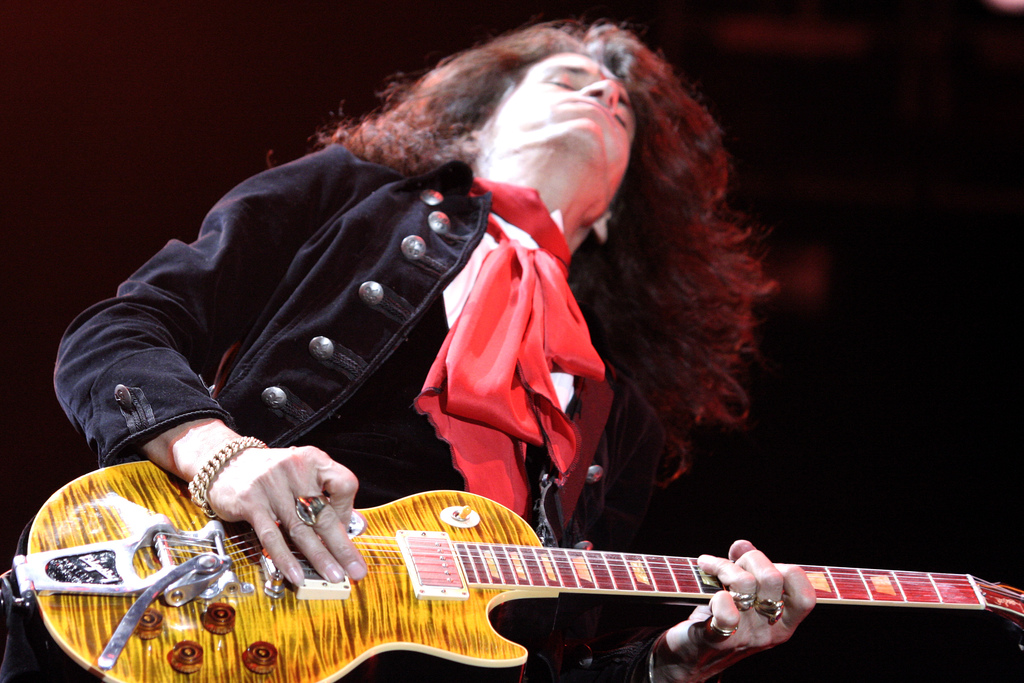
Happy Birthday, Joe Perry: The Riff Machine Who Gave Aerosmith Its Swagger
Joe Perry turns 76 today. From the swampy grind of “Sweet Emotion” to the reunion that saved a band, this is the career of the guitarist who taught American hard rock how to strut.
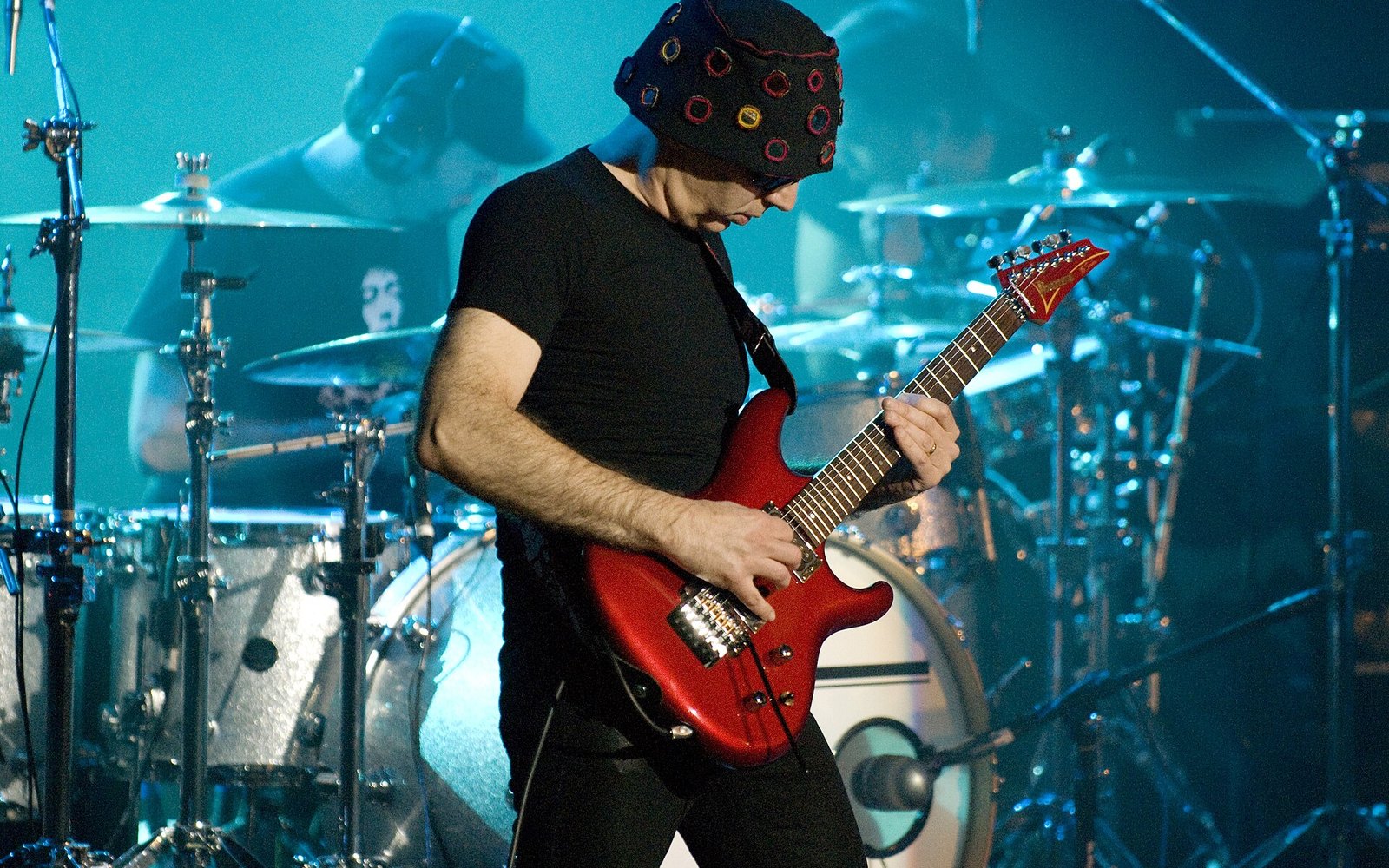
History of the Riff: How Joe Satriani Made “Flying in a Blue Dream” Feel Weightless
An acoustic guitar in an unusual tuning, a stray broadcast and a melody that seems to hang in the air: inside the construction of Satriani’s 1989 masterpiece.
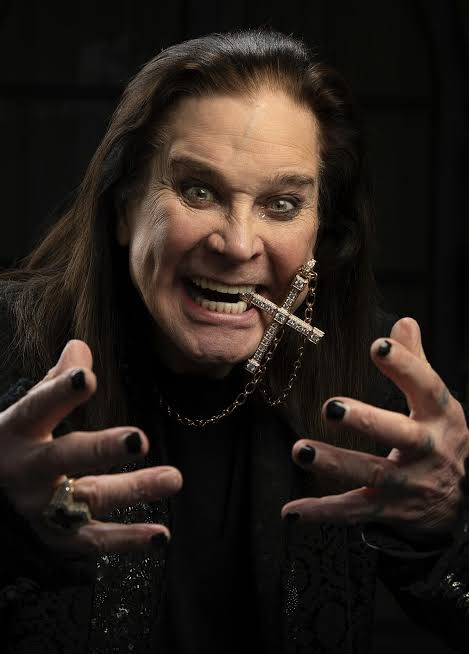
Tony Iommi Opens Up About His Final Conversation With Ozzy Osbourne: “I Still Can't Get It in My Head”
The Black Sabbath guitarist says Ozzy was exhausted after the band's emotional farewell — but determined to give fans one final show.