
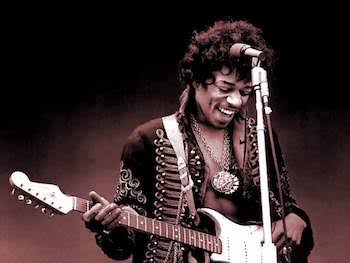
The Jimi Hendrix the Audience Never Saw: Why New Firsthand Accounts Still Matter
Every time a member of Jimi Hendrix's road crew or inner circle sits down and starts talking, we learn something new about the greatest electric guitarist of the twentieth century. Here's why that still matters.
There is a version of Jimi Hendrix that lives in posters, T-shirts and highlight reels — teeth on the strings at Monterey, flames at the Fillmore, the ragged coda of "The Star-Spangled Banner" at Woodstock — and there is another version that only a handful of people ever actually saw. That second Hendrix is the one who tuned quietly in a dressing room, argued with a manager about a Marshall setting, tried out a chord voicing on a hotel bed at three in the morning and asked a roadie whether the wah was tracking correctly during soundcheck.
Those two Hendrixes are not the same person. The first one is a myth. The second one is a musician.
The publication and re-publication of firsthand recollections from people who lived alongside Hendrix on the road — most recently, extended interviews with figures from his equipment and road-crew world, including longtime personal tech Eric Barrett — is once again pulling that private Hendrix a little closer into view. And it is a useful reminder of something that has been true since 1970: the more eyewitness testimony we get about Jimi Hendrix, the less certain we should be about the version of him we thought we already knew.
What to Remember
- ▸Firsthand accounts from Hendrix's road and equipment crew — including longtime personal tech Eric Barrett — continue to add technical and human detail no biographer alone can provide.
- ▸Verified facts (tour dates, personnel, released recordings), personal recollections and editorial analysis should be kept clearly separate in any serious Hendrix writing.
- ▸Hendrix's rhythm playing, chord vocabulary and feedback control are as important to his legacy as the well-known lead solos.
- ▸Modern guitarists from Eric Gales to Stevie Ray Vaughan carry direct traces of Hendrix's harmonic and tonal language.
- ▸New eyewitness testimony matters not because it changes the myth, but because it moves us closer to the working musician behind it.
Why New Hendrix Stories Still Matter
Hendrix died on September 18, 1970. He had been a household name for roughly three and a half years. The recorded catalog he left behind — three studio albums with the Jimi Hendrix Experience, the Band of Gypsys live document, and the enormous cloud of posthumous releases assembled by the Hendrix estate and Experience Hendrix LLC — has been analyzed by more guitarists, more musicologists and more biographers than any other electric player in history.
You would think, by now, there would be nothing left to say.
There is a great deal left to say.
Most of what we "know" about Hendrix's day-to-day working life is filtered through a small number of official biographies, a handful of documentary films and decades of secondhand quotation. When someone who was actually in the room — a tech, a road manager, a musician who shared a stage — sits down and describes what they saw, the picture almost always shifts. Sometimes it shifts a little. Sometimes it shifts a lot. In either case, the shift is worth paying attention to, because it is one of the only ways we ever get closer to the person as opposed to the poster.
That is the value of firsthand testimony in music history. It cuts through mythology in a way that even the best critical analysis cannot.
Who the Eyewitnesses Were
Hendrix's inner circle on the road was smaller than most people assume. His management structure changed multiple times across his short career, but the group of people who actually loaded the amps, tuned the Strats, wound the cables and stood behind the backline while he played was tight and, by all verifiable accounts, fiercely loyal.
The name that keeps coming back up in serious Hendrix scholarship is Eric Barrett. Barrett is widely credited as Hendrix's personal equipment tech and one of his most trusted road-crew hires during the final chapter of his career. He worked with the Jimi Hendrix Experience and with the Band of Gypsys era lineup, and he has been quoted, interviewed and consulted for decades in books, magazine features and documentary programs about Hendrix's live rig, on-stage habits and gear evolution.
It's important to be precise here. Barrett is not a biographer. He is not a musicologist. What he is — and what makes him valuable — is one of the very few people alive who watched Jimi Hendrix set up, play and break down a guitar rig night after night. When Barrett talks about a specific amp setting, a specific tour or a specific onstage moment, that is the primary source. Everyone else in the conversation is working from paperwork, tape and legend.
Other figures who have added similarly grounded firsthand color to the Hendrix record over the years include former Experience bassist Noel Redding, drummer Mitch Mitchell, Band of Gypsys drummer Buddy Miles, engineer Eddie Kramer and Hendrix's longtime friend and collaborator Billy Cox. Their accounts don't always agree with each other. That is the point. Eyewitness testimony is inherently partial, and any one of these voices is only telling us the piece of the elephant they happened to be holding.
Life on Tour With Hendrix
One of the details firsthand accounts consistently emphasize — Barrett's included — is how physically demanding Hendrix's touring life actually was. The Jimi Hendrix Experience, and later the Band of Gypsys and Cry of Love lineups, operated at a pace that would exhaust most modern arena acts.
Get Jimi Hendrix’s “Voodoo Child (Slight Return)” Tone
Tell ToneMD what guitar and gear you own and we’ll show you how to get as close as possible using the equipment you already have — full signal chain, real numbered settings, no guesswork.
Included with The Guitar Plugged Premium
The verified touring record makes that clear on its own. In 1968 alone, the Experience played dozens of North American shows on top of European and UK dates. By 1969 and 1970 the workload had escalated to include festival appearances (Woodstock in August 1969, Isle of Wight in August 1970 among them), television tapings, radio broadcasts, benefit concerts and studio work on what would eventually be released as First Rays of the New Rising Sun.
The stories that come from people who were actually inside that machine are less about legend and more about logistics. What time the truck left. Which venue had a stage too small for the amps. Which cities got the best guitars because Hendrix wanted the best guitars in the best rooms. Which airports lost which flight cases. How the crew improvised when a Marshall head died fifteen minutes before showtime.
None of that lands on a T-shirt. All of it is where the real Hendrix actually lived.
What These Recollections Add to Hendrix History
The scholarly Hendrix record is deep, but it is not complete. Firsthand accounts from people like Barrett add three things that no amount of critical writing can:
1. Technical specificity. When a personal tech describes what pickups were being run through what pedals into what amp during a particular week of a particular tour, that is gear history nobody else can provide. Every serious analysis of Hendrix's tone — including our own tone breakdowns of contemporary players — leans, at the base, on the recollections of the small number of people who actually worked on that gear.
2. Human scale. Hendrix has been mythologized to the point where it can be genuinely hard to remember he was a working musician in his mid-twenties. Firsthand recollections restore that scale. He was tired sometimes. He was funny sometimes. He was frustrated sometimes. He experimented onstage because he wanted to hear something new, not because he was performing a ritual for future documentarians.
3. Correction of the record. Every long-form Hendrix biography carries assumptions that turn out, over time, to be wrong. Firsthand testimony is one of the few tools historians have to correct those assumptions. Sometimes it confirms the received wisdom. Sometimes it dismantles it. Both outcomes are useful.

X Concepts Strings • Made in USA
Never Run Out of Strings Again.
Join the X Concepts String Club and get fresh USA-made strings delivered every month—plus Premium membership options for the full Guitar Plugged experience.
The Difference Between Mythology and Firsthand Testimony
It has to be said clearly: firsthand testimony is not the same thing as verified fact.
Anyone who worked with Hendrix in 1968, 1969 or 1970 is now recalling events from more than half a century ago. Human memory is fallible. Details compress. Timelines drift. Two people who were standing on opposite sides of the same stage genuinely remember different things.
“Fifty-five years on, we still don't have a complete picture of Jimi Hendrix. Every new firsthand account is another piece of the puzzle — and another reason to be careful about how we fit the pieces together.”
A serious approach to Hendrix history — the kind we try to practice here at The Guitar Plugged — treats firsthand accounts with respect but not with blind acceptance. Statements from someone like Eric Barrett are enormously valuable because he was there. They are not, by themselves, proof of what happened. They are one line of evidence, to be weighed against tour paperwork, contemporaneous reviews, tape logs, photographs, other eyewitness accounts and, where possible, Hendrix's own recorded statements.
When we cite firsthand recollections in a piece like this one, we are drawing a hard line between three different categories of information: verified historical facts (tour dates, personnel, released recordings), statements made by the person recalling the events (which we attribute clearly) and editorial analysis (which is ours, and which is offered as interpretation rather than fact).
That distinction matters. Hendrix mythology has, over the decades, produced a lot of well-meaning quotations that turned out to be misattributed, misremembered or invented outright. The guitar world is better served when we are careful about which is which.
Inside the Rig: Rhythm, Chord Vocabulary and the Hendrix Approach
Firsthand accounts are also a useful entry point for talking about how Hendrix actually played the guitar. Any working guitarist who studies him closely eventually arrives at the same conclusion: the myth of Hendrix as a lead-guitar hero misses at least half of what made him extraordinary. He was, above all, one of the greatest rhythm guitarists in the history of the electric instrument.
Rhythm approach. Hendrix rarely played a static chord shape. On tracks like "Little Wing," "Castles Made of Sand," "The Wind Cries Mary" and the studio version of "Bold as Love," he moves inside chord shapes almost constantly — sliding partial voicings, hammering-on inner-voice melodies, walking bass notes with his thumb wrapped over the top of the neck. The right-hand attack is percussive one moment and gossamer the next. Nothing sits still.
Chord vocabulary. Hendrix's harmonic language leaned heavily on dominant 7#9 shapes (the so-called "Hendrix chord" in "Purple Haze"), sus4-to-major resolutions, slash chords built off ambiguous bass notes and R&B-derived double-stops. Much of it came directly from his years as a working sideman on the American chitlin' circuit and R&B tour circuit before he was ever a solo star — a heritage he shared with players like Curtis Mayfield.
Improvisation. On extended live pieces like "Machine Gun" and the various "Voodoo Child" workouts, Hendrix improvised the way great jazz players improvise — thematically, developmentally, listening as much as playing. The tape doesn't lie about that.
Stage experimentation. Feedback, in Hendrix's hands, was a controllable resource, not a stunt. He would face the amp at a specific distance, hit a specific note, mute specific strings and shape a specific overtone series. The performance element wasn't decoration on top of the music; the performance element was the music.
Tone. The Hendrix rig — Fender Stratocaster (usually right-handed, flipped and restrung for a left-handed player), Fuzz Face, Vox wah, Uni-Vibe (during the later era), into Marshall Super Lead 100 heads — is one of the most documented signal chains in guitar history, in no small part because of the technical eyewitness accounts of the people who actually assembled it. This is exactly where firsthand recollections from techs like Barrett are irreplaceable.
Feedback control. Watch any Hendrix live footage from 1968 onward and pay attention to how he uses his body to move the guitar in and out of the amp's field. That is not accident. That is a musician who has spent thousands of hours learning what a Strat and a Marshall do to each other at loud volume in a particular room.
Live performance style. Hendrix's shows were built on the tension between chaos and control. The chaos was real. The control was total.
Why Modern Guitarists Still Study Him
Half a century after his death, Hendrix remains an active influence on almost every serious electric guitarist working today. His fingerprints are on modern blues players like Eric Gales, rock virtuosos like Slash, tone obsessives like Stevie Ray Vaughan and every player who has ever picked up a Strat and thought, seriously, about what a chord can be.
Hendrix is also one of the recurring reference points in our broader greatest guitarists of all time coverage — a name that shows up not because he is expected to but because so much of what we now consider standard electric-guitar language ultimately traces back to him.
There is a reason for that. Hendrix expanded the vocabulary of the instrument in a way that has not been surpassed. He did it in less than five years of professional recording. He did it with equipment that, by the standards of modern gear, is almost primitive. And he did it while touring at a pace that would break most players who tried to imitate it.
Every new firsthand account of what those years were actually like — how the rigs worked, how the shows really came together, what the man behind the myth was actually doing between takes — helps us understand not just Hendrix, but the instrument itself.
Closing Thoughts
We are not going to get Jimi Hendrix back. What we can get, one interview and one memoir and one archival release at a time, is a clearer picture of who he actually was as a working guitarist.
The publication of new firsthand recollections from people like Eric Barrett — read carefully, attributed honestly and set alongside the rest of the historical record — is exactly the kind of source material serious guitar journalism should be paying attention to. It is not sensational. It is not scandalous. It is, if anything, quieter and more human than the mythology.
That is precisely what makes it valuable.
Hendrix will always be the poster. But the more we listen to the people who actually stood next to him, the more we get to know the guitarist.
Support The Guitar Plugged
The Guitar Plugged is dedicated to serious, fact-checked writing about the players and gear that shaped electric-guitar history — and to giving working guitarists a place to think about them out loud.
If features like this one mean something to you, consider joining The Guitar Plugged Premium and helping fund the next round of deep-dive features, Tone Decoded breakdowns and long-form guitar history.
*Editorial note: This article draws on the public catalog of interviews, archival releases and biographical work about Jimi Hendrix, including recollections attributed to members of his road and equipment crew such as Eric Barrett. Where a statement is a personal recollection rather than a documented historical fact, we have identified it as such. As with all firsthand testimony, individual accounts should be weighed alongside the broader historical record. Affiliate disclosure: some links in this article are affiliate links; The Guitar Plugged may earn a small commission on qualifying purchases at no additional cost to you. See our affiliate disclosure for details.*
Essential Hendrix Listening & Reading
Some links may be affiliate links. We may earn a small commission at no cost to you.
Experience-driven coverage, not algorithm bait.
- 20+ years of guitar playing experience
- Real-world retail experience at Guitar Center
- Thousands of hours testing guitars, amps, and pedals
- A community of 50,000+ guitar enthusiasts across platforms
- Partnerships with Fender, DistroKid, TrueFire, Card Chords, and Enya
- Editorial standards published openly — see how we test gear
Get More Deep-Dive Guitar Features
Fact-checked guitar journalism, tone breakdowns and long-form features on the players who shaped the instrument — delivered straight to your inbox.
Ask GP
3 free questions a dayStill curious? Ask GP about this story.
Your personal classic-rock and guitar guide — ask anything about The Jimi Hendrix the Audience.
Discussion (0)
Sign in to join the discussion.
Sign in to commentLoading comments…
Discover another guitar story
Swipe through our latest features, breaking news and iconic solos — one story at a time.
Open Swipe →More in Guitar Talk
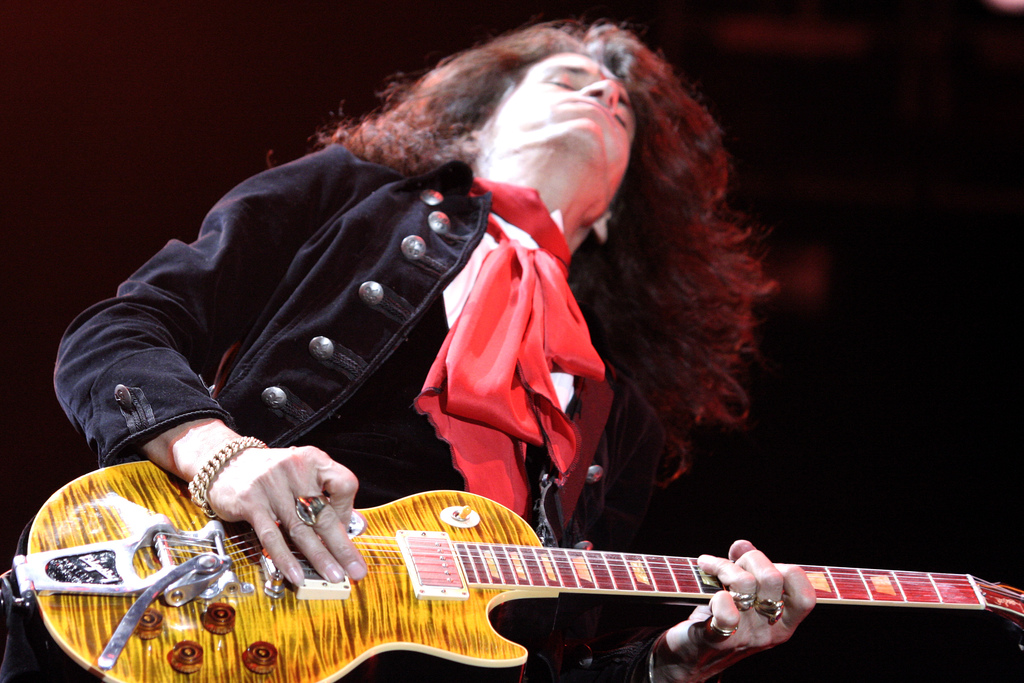
Happy Birthday, Joe Perry: The Riff Machine Who Gave Aerosmith Its Swagger
Joe Perry turns 76 today. From the swampy grind of “Sweet Emotion” to the reunion that saved a band, this is the career of the guitarist who taught American hard rock how to strut.
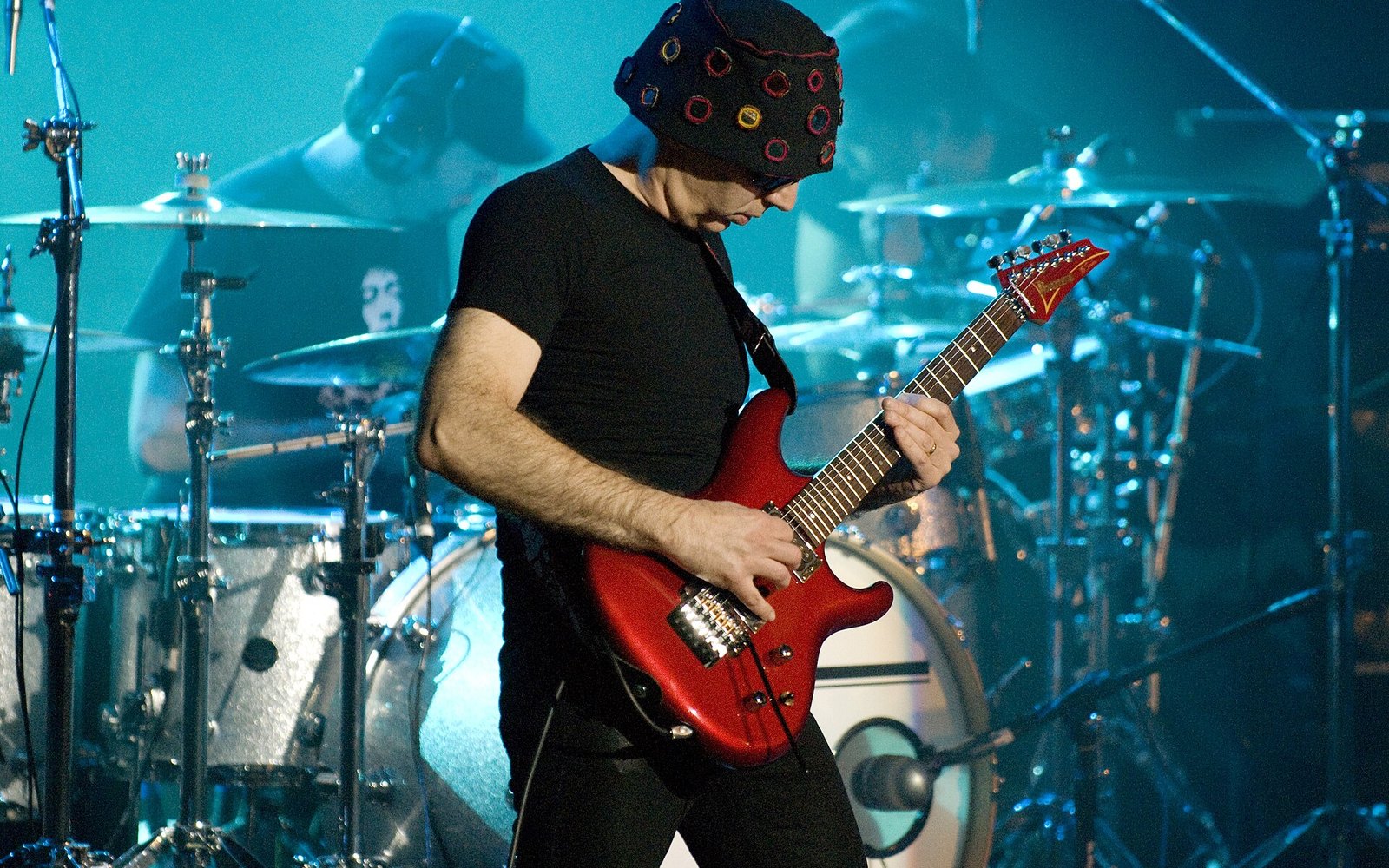
History of the Riff: How Joe Satriani Made “Flying in a Blue Dream” Feel Weightless
An acoustic guitar in an unusual tuning, a stray broadcast and a melody that seems to hang in the air: inside the construction of Satriani’s 1989 masterpiece.
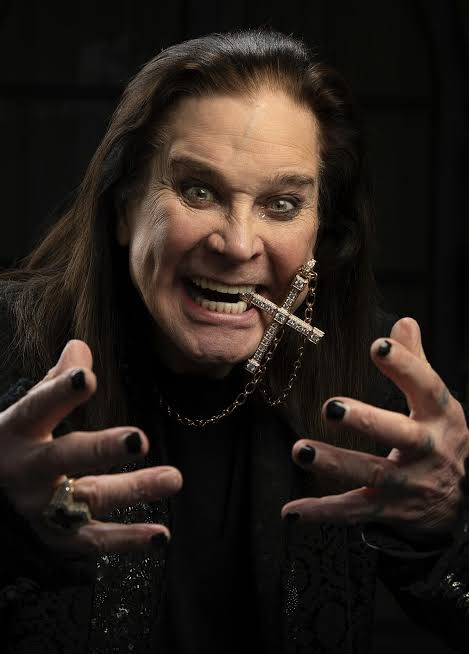
Tony Iommi Opens Up About His Final Conversation With Ozzy Osbourne: “I Still Can't Get It in My Head”
The Black Sabbath guitarist says Ozzy was exhausted after the band's emotional farewell — but determined to give fans one final show.