
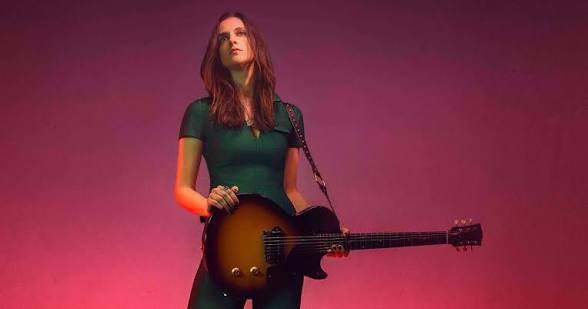
From YouTube Sensation to Touring Guitarist: What Laura Cox Learned After the Views Came First
Laura Cox became one of YouTube's most-watched female guitarists years before most people knew her name. What happened after the views came first tells a bigger story about internet fame, live performance, and the real cost of building a modern guitar career.
There is a version of Laura Cox's story that fits neatly into a headline: French YouTuber posts guitar covers, goes viral, becomes a touring rock artist. It is technically accurate, and it misses almost everything that actually matters.
The more interesting version is what happened after the views. Because for every guitarist who breaks through on YouTube, dozens more quietly plateau — and understanding why Cox didn't is one of the more instructive career studies in modern blues-rock.
[TOC]
Before the Algorithm Noticed
Long before her channel exploded, Cox was doing the same thing thousands of guitarists were doing: filming herself in a bedroom, playing along to the classic rock records she grew up on. AC/DC. ZZ Top. Lynyrd Skynyrd. Status Quo. The kind of no-nonsense riff-driven rock her father raised her on.
That last detail matters. Cox has spoken often about learning from her father, an amateur guitarist himself, and about growing up inside a household where classic rock wasn't nostalgia — it was the default setting. By the time she started posting videos in the early 2010s, she wasn't performing an aesthetic. She was documenting one.
That authenticity is easy to miss now, but it is arguably the single biggest reason her early covers stood out. YouTube in 2012 was full of technically brilliant players. What it did not have much of was a young woman playing 'Highway to Hell' as if she genuinely meant it.
The First Wave: Going Viral Without a Plan
By the mid-2010s, Cox had racked up tens of millions of views across covers of AC/DC, ZZ Top and Dire Straits. Her channel became one of the most-watched guitar channels in France, and one of the most-viewed female-fronted guitar channels globally.
In interviews she has consistently framed that period the same way: it was not a strategy. There was no manager, no content calendar, no monetization roadmap. She was a self-taught guitarist filming what she loved, and the algorithm decided the rest.
This is the part of the story most aspiring guitar creators want to hear. It is also the part most likely to mislead them. Because what happened next is where the real work started.
Can Internet Fame Actually Prepare a Guitarist for a Real Music Career?
This is the central question, and Cox's answer — implicit in almost everything she has done since 2016 — is no, not really, but it can buy you the runway to build one.
YouTube can hand a guitarist an audience. It cannot hand them a live show. It cannot hand them a set list of original songs. It cannot hand them the ability to sing lead for ninety minutes while playing rhythm and taking solos on the same instrument. It cannot hand them the muscle memory of stepping in front of two thousand strangers who paid to hear you rather than scrolled past you.
Those skills are earned somewhere else, and the transition — from bedroom guitarist to bandleader — is the point where most viral players stall.
The Pivot: From Covers to Originals
Cox's first move was the hardest one: she stopped being primarily a covers channel.
In 2017 she released her debut album, Hard Blues Shot, on the French label Verycords, followed by Burning Bright in 2019 and Head Above Water in 2023. Each record leaned deeper into her own writing — a Southern-tinged, boogie-flavored, riff-forward blues rock that owes as much to Rory Gallagher and early ZZ Top as it does to any of the modern names she is often grouped with.
The move from covers to originals is where most YouTube guitarists fail, and the reasons are not mysterious. Covers give you instant credibility — the song is already great, and you just have to play it. Originals demand that you have taste, structure, lyrics, hooks, arrangement, and something to actually say. It is an entirely different job.
Want Laura Cox’s Tone?
Tell ToneMD what guitar and gear you own and we’ll show you how to get as close as possible using the equipment you already have — full signal chain, real numbered settings, no guesswork.
Included with The Guitar Plugged Premium
That Cox managed to make that jump without alienating the audience she built on covers is quietly one of the more impressive things about her career.
[MEMBERS_CTA]
The Real Test: Playing Live
Here is a truth most YouTube-first guitarists learn the hard way: a viewer clicks. A ticket buyer commits. Those are two completely different audiences, and the guitarists who confuse them tend to disappear.
Cox began touring in earnest with the Laura Cox Band, and by the late 2010s she was opening for and sharing stages with acts like Status Quo, Foreigner and ZZ Top on European tours. She has also played major European festivals including Hellfest and Cognac Blues Passions. That kind of run does not happen by accident, and it is emphatically not something a YouTube channel can generate on its own.
Live playing exposes weaknesses fast. Tuning drift. Timing. Endurance. Mic technique. Between-song patter. Sight lines to a drummer you cannot always hear. Cox has been open in interviews about how uncomfortable early shows were, and about the specific work of learning to sing lead vocals while also carrying the guitar parts — a skill that separates functional bandleaders from actual ones.
The lesson is the one every touring guitarist eventually arrives at: recording is a craft, but the room is the exam.
Why Blues-Rock Suits Her
Cox's playing is fundamentally about feel, and blues-rock is a genre that rewards feel more than almost any other. Her vibrato is patient. Her phrasing leans on space instead of density. She resolves lines where a shredder would keep climbing.

X Concepts Strings • Made in USA
Never Run Out of Strings Again.
Join the X Concepts String Club and get fresh USA-made strings delivered every month—plus Premium membership options for the full Guitar Plugged experience.
You can hear the specific fingerprints of her influences: the ZZ Top pinch harmonics and greasy triads, the AC/DC-style rhythm playing that treats groove as the lead instrument, and a Rory Gallagher-esque commitment to letting the note breathe before moving to the next one.
Her solos rarely feel like technique demonstrations. They feel like arguments — statements built out of repeated motifs, question-and-answer bends, and the kind of thumb-over-the-neck bluesy chord grips that come from playing along to records rather than transcribing them.
That approach is unglamorous in an era of tapping virtuosos, and it is exactly why she has aged into being taken seriously as a musician rather than filed away as a viral novelty.
Stage Presence Without Theater
“A viewer clicks. A ticket buyer commits. Those are two completely different audiences, and the guitarists who confuse them tend to disappear.”
Cox's stage presence has become one of the quieter conversations around her live shows. She is not a mover. She does not do rock-star poses. She stands, she plays, she sings, and she lets the material do the work.
In a live guitar economy that often mistakes physicality for authority, that restraint is a choice — and a smart one. It puts the tone and the songs in front of the persona, which is exactly where a blues-rock artist wants them.
Songwriting: The Skill YouTube Cannot Teach
Cox's original catalog has progressed clearly across three albums. Hard Blues Shot leans hard into her AC/DC-and-ZZ-Top DNA. Burning Bright opens the palette — more dynamic range, more nuanced vocal writing, more attention to bridges and pre-choruses. Head Above Water is the most produced and most personal of the three, and the one that finally sounds like she is writing about her own life rather than paying stylistic tribute.
That trajectory — competent debut, more ambitious follow-up, personal third record — is the same one dozens of veteran guitar-band artists follow. It is a normal artist development arc. What makes it notable in Cox's case is that she got to walk it in public, on the same platform that first made her famous.
Laura Cox's Gear: Verified Rig
Cox's rig has evolved with her career, but the through-line is consistent: humbucker-loaded solidbody guitars into a genuine cranked Marshall.
Main guitars. Cox is most publicly associated with two instruments: a Gibson Les Paul Standard and a Gibson SG Standard, both of which she has used extensively on record and on stage. In interviews and gear features she has described her preference in practical terms — the Les Paul for its sustain, weight and thickness on riffs; the SG for its lighter body, upper-fret access and slightly more aggressive midrange snarl for lead work. Both are classic humbucker choices, both suit her AC/DC and ZZ Top influences, and both are the reason her tone reads as unmistakably 'big Gibson into a Marshall' rather than a modeled facsimile of it.
Amplifiers. Her amp of choice on record and in her documented live rigs has been Marshall — the JCM-series voice at the core of her overdriven sound. That is not a marketing pose; it is the sonic fingerprint of essentially every clip and album cut she has released. The combination of a Gibson humbucker and a pushed Marshall is one of the most well-established tone recipes in rock guitar, and Cox uses it about as purely as anyone playing today.
Pedals. Cox's board has historically been minimalist by modern standards, built around a small set of overdrive, wah, and delay pedals rather than a large digital rig. That restraint is the point. She has repeatedly said in interviews that her preferred approach is guitar-and-amp first, pedals second — the classic blues-rock philosophy.
Live rig. In a live context her setup follows the same logic: Gibson solidbody, Marshall amp, small selection of stomps, and a clean signal path that lets pick attack and volume-knob dynamics do the work. It is a professional rig assembled by someone who has clearly figured out what she needs and refused to complicate it.
For anyone chasing this style of tone on a budget, an Epiphone Les Paul Standard into a mid-wattage Marshall combo covers a huge percentage of the sonic territory before you have spent a dollar on effects.
What Aspiring Guitar Creators Can Actually Learn
Reduce Cox's career to a checklist and it looks like this:
1. Build the audience with material you genuinely love — not material you think will perform. Authenticity is the only feature YouTube cannot fake.
2. Treat virality as runway, not as an outcome. The traffic is a resource. You still have to build the business.
3. Move from covers to originals as fast as your writing will let you. The audience that loves you for someone else's songs is borrowed.
4. Take live playing seriously as a separate craft. Recording chops and touring chops are related but not the same, and audiences can tell the difference within a song.
5. Commit to a sound. Cox's blues-rock lane is narrow by 2020s standards. That narrowness is why she owns it.
6. Keep the rig simple. Nothing in Cox's tone is complicated. Almost everything in it is intentional.
None of it is quick. All of it is repeatable.
Why She Has Become One of the Most Respected Modern Blues-Rock Guitarists
Cox's standing today has less to do with her YouTube history than most of the coverage suggests. She is respected because she can play the style convincingly, write in it credibly, tour it professionally, and sing over it live — which is a combination almost no viral guitarist ever assembles.
The internet made her visible. Ten years of unglamorous work made her a musician. Those are not the same thing, and the guitar world's tendency to conflate them is exactly why her story is worth telling honestly.
Final Thoughts
Laura Cox is one of the clearest examples we have of what a modern guitar career actually looks like when it works: a viral start, a deliberate pivot to originals, years of touring in support of the songs, and a rig and style so identifiable you could pick her out of a blind listen.
For any guitarist wondering whether internet fame can prepare them for a real music career, her answer, lived across more than a decade, is the honest one. It can open the door. It cannot walk you through it.
Full affiliate disclosure available on-site. As an Amazon Associate we may earn from qualifying purchases.
Related Reading
- Epiphone Les Paul Standard '50s$699·Check on Amazon →
- Gibson SG Standard$1,799·Check on Amazon →
- Marshall DSL40CR 40W Combo$949·Check on Amazon →
Some links are affiliate links — we may earn a small commission at no cost to you.
Experience-driven coverage, not algorithm bait.
- 20+ years of guitar playing experience
- Real-world retail experience at Guitar Center
- Thousands of hours testing guitars, amps, and pedals
- A community of 50,000+ guitar enthusiasts across platforms
- Partnerships with Fender, DistroKid, TrueFire, Card Chords, and Enya
- Editorial standards published openly — see how we test gear
The Modern Guitar Magazine. Delivered to your inbox.
No spam. No gimmicks. Just great guitar content — stories, tones, iconic solos, and honest gear takes. Every week.
Ask GP
3 free questions a dayStill curious? Ask GP about this story.
Your personal classic-rock and guitar guide — ask anything about From YouTube Sensation to Touring.
Discussion (0)
Sign in to join the discussion.
Sign in to commentLoading comments…
Discover another guitar story
Swipe through our latest features, breaking news and iconic solos — one story at a time.
Open Swipe →More in Guitar Talk

Happy Birthday, Joe Perry: The Riff Machine Who Gave Aerosmith Its Swagger
Joe Perry turns 76 today. From the swampy grind of “Sweet Emotion” to the reunion that saved a band, this is the career of the guitarist who taught American hard rock how to strut.
History of the Riff: How Joe Satriani Made “Flying in a Blue Dream” Feel Weightless
An acoustic guitar in an unusual tuning, a stray broadcast and a melody that seems to hang in the air: inside the construction of Satriani’s 1989 masterpiece.
Tony Iommi Opens Up About His Final Conversation With Ozzy Osbourne: “I Still Can't Get It in My Head”
The Black Sabbath guitarist says Ozzy was exhausted after the band's emotional farewell — but determined to give fans one final show.