
The Loud Revolution
THE GUITAR PLUGGED
Cream and the Case for Three: How Disraeli Gears Proves the Power Trio Works
Eric Clapton, Jack Bruce, and Ginger Baker strip a rock band to guitar, bass, and drums and somehow make it sound bigger than ever on their second LP.
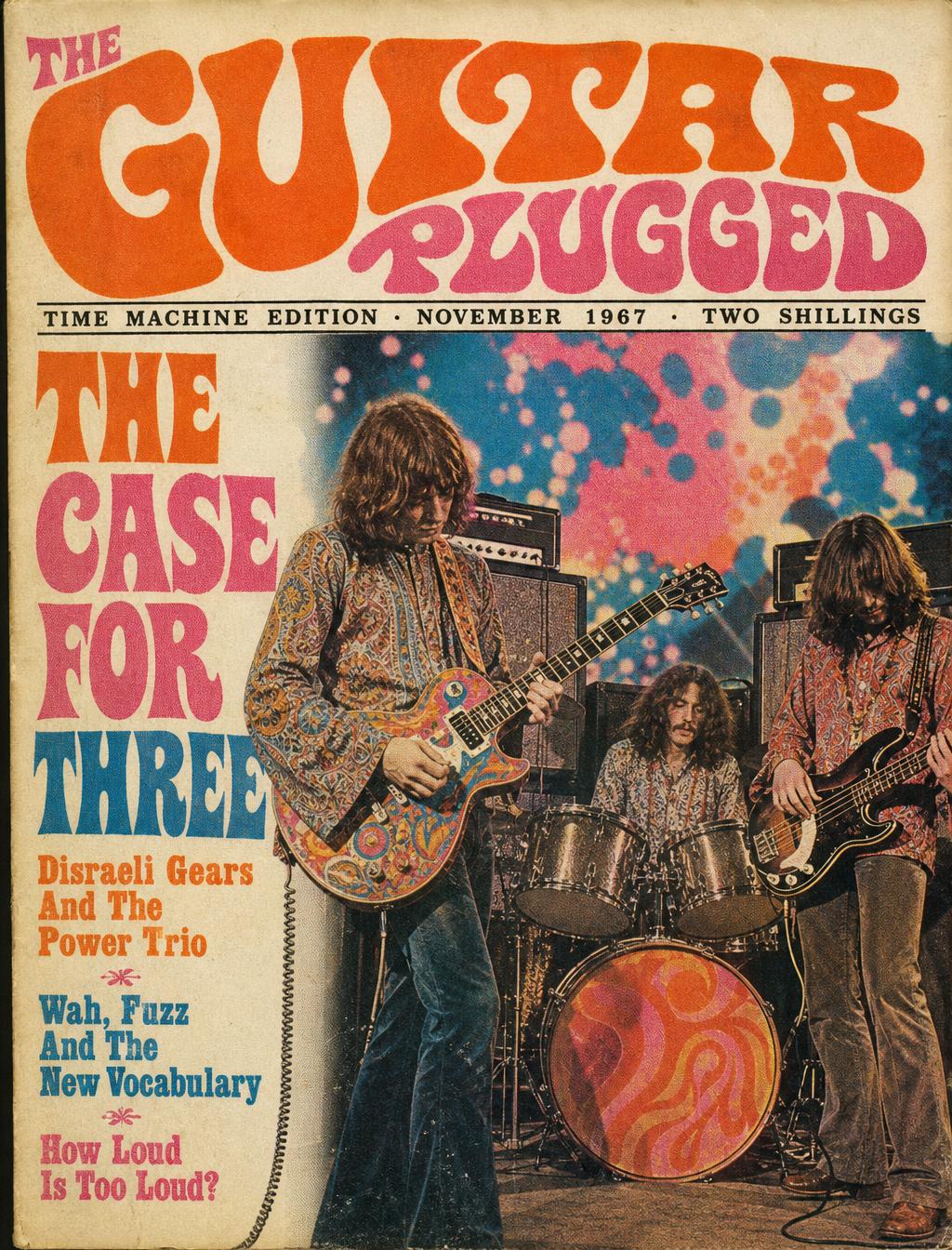
Cream's second album, Disraeli Gears, is out, and it settles a question that's been hanging over the group since they formed last year out of the ashes of John Mayall's Bluesbreakers, the Yardbirds, and the Graham Bond Organisation: can three musicians really fill the space a rock band needs to fill, with no rhythm guitarist and no keyboard player to lean on? Eric Clapton, Jack Bruce, and Ginger Baker answer with a resounding yes, and they do it by treating the trio format not as a limitation but as room to stretch.
The trio came together in the summer of 1966, at a moment when Clapton had grown restless within the Bluesbreakers' strict blues-revivalist format and was looking for players who could match him technically while pushing the music somewhere less orthodox. Bruce and Baker already knew each other from stints in the Graham Bond Organisation, a jazz-inflected R&B outfit, and brought with them a combative, competitive musical relationship that has occasionally spilled into open arguments onstage and off, even as it fuels some of the most exciting interplay in British rock right now.
From the Beano Album to the SG
Clapton's tone on this record traces directly back to the sound he built during his brief but hugely influential stint with the Bluesbreakers, documented on the 1966 album fans have taken to calling the Beano album, after the comic Clapton is pictured reading on its sleeve. There, playing a 1960 Gibson Les Paul through a Marshall combo, he arrived at a thick, singing, heavily sustained lead tone that guitarists around London have spent the past year and a half trying to reverse-engineer. He calls the sound 'woman tone' — achieved by rolling the tone control on the guitar's neck pickup most of the way down while keeping the amplifier driven hard, producing a dark, vocal quality with none of the treble bite of a clean setting.
For Cream, Clapton has largely moved from the Les Paul to a Gibson SG, its finish covered in a swirling hand-painted design by Dutch design collective The Fool, after whom the guitar is now nicknamed. The painted SG has become as much a visual signature of the band's psychedelic image as the woman tone is its sonic one, and Clapton continues to run it through Marshall stacks, chasing the same thick sustain that made his reputation but with more headroom to work the wah and the volume swells that show up throughout the new record.
Three Musicians, No Safety Net
What makes Cream unlike the Bluesbreakers or any conventional blues band is the way all three musicians treat their instruments as lead voices rather than settling into fixed roles. Jack Bruce's bass lines move melodically rather than simply anchoring the root, closer to a second lead instrument than a rhythm section part, and Ginger Baker's drumming, shaped by his background in jazz, pushes and pulls at the tempo rather than locking down a simple backbeat. Clapton has to fill the harmonic space normally occupied by a second guitarist or organ, which is part of why his playing on this album leans so heavily on sustain and on the loud, singing single-note lines the woman tone makes possible — there's no rhythm guitar chugging along underneath him to hide behind.
Atlantic's Man in the Room
Disraeli Gears was recorded quickly in New York, working with Atlantic Records producer Felix Pappalardi, whose arrangement sense and instincts for a hook — brought over from his work on the American folk-rock scene — helped tighten songs like 'Sunshine of Your Love' and 'Strange Brew' into something radio can actually play, without sanding down the interplay that makes the band's live shows so unpredictable. It's a different discipline than the extended jamming Cream is becoming known for onstage, but the record captures enough of that improvisational spark that it plays as a genuine document of the band rather than a compromise.
A Format Other Bands Are Watching
Recorded on American Tape Machines
Unlike the band's debut, which was tracked in London, Disraeli Gears was recorded in New York at Atlantic Studios and at Atlantic's regular room on West 56th Street, giving the band access to American eight-track recording equipment still uncommon in British studios at the time. Engineer Tom Dowd, well known for his work on Atlantic's soul and R&B sessions, handled much of the technical side alongside Pappalardi, and the extra track count allowed the band to layer Clapton's guitar overdubs and vocal harmonies with more flexibility than the more limited facilities back home would have allowed.
Wah, Phasing, and a Guitar Built for Psychedelia
The record also marks Clapton's first serious use of a wah-wah pedal on a studio recording, an effect he leans into on 'Tales of Brave Ulysses' to produce a vocal-like, crying quality that pushes his sound further from the straight blues tone of the Bluesbreakers album. Combined with the SG's inherent midrange bite and the woman-tone technique carried over from his earlier work, the wah gives Clapton's playing a vocabulary that fits the bright, swirling psychedelic colors surrounding it on the record, from the lyrics' fantastical imagery to the album's own kaleidoscopic cover art.
Cream didn't invent the idea of guitar, bass, and drums with no other instrumentation, but they may be the first band to make the format sound like an advantage rather than a stripped-down necessity. Other guitarists around London are taking note of just how much low end and harmonic weight Clapton manages to generate on his own, and it's not hard to imagine more bands following this trio blueprint if Disraeli Gears keeps selling the way early reports suggest it will.
Why it matters now
Cream's power-trio format became one of the most copied structures in rock, directly inspiring Jimi Hendrix's own trio and later acts from ZZ Top to Rush to the Jimi Hendrix-adjacent Band of Gypsys lineage. Clapton's woman tone remains a reference point that guitar teachers and gear reviewers still cite by name when discussing tone-knob technique on a Gibson-style neck pickup. The painted SG, later widely known simply as 'The Fool' guitar, would pass through several owners over the decades and become one of the most recognizable instruments in rock history, its psychedelic finish endlessly reproduced on replica guitars sold decades after Cream's short run as a band ended in 1968.
Sources
- Eric Clapton, Clapton: The Autobiography — Bluesbreakers and Cream gear recollections
- Guitar Player interviews with Eric Clapton — woman tone technique
- Dan Baker/Cream biographical liner notes — Disraeli Gears recording history