
The Shred Years
THE GUITAR PLUGGED
Metallica Pushes Past Thrash on Ride the Lightning
Recording in Copenhagen with producer Flemming Rasmussen, Metallica follows up its debut with a record that stretches the band's sound well beyond straight speed and aggression.
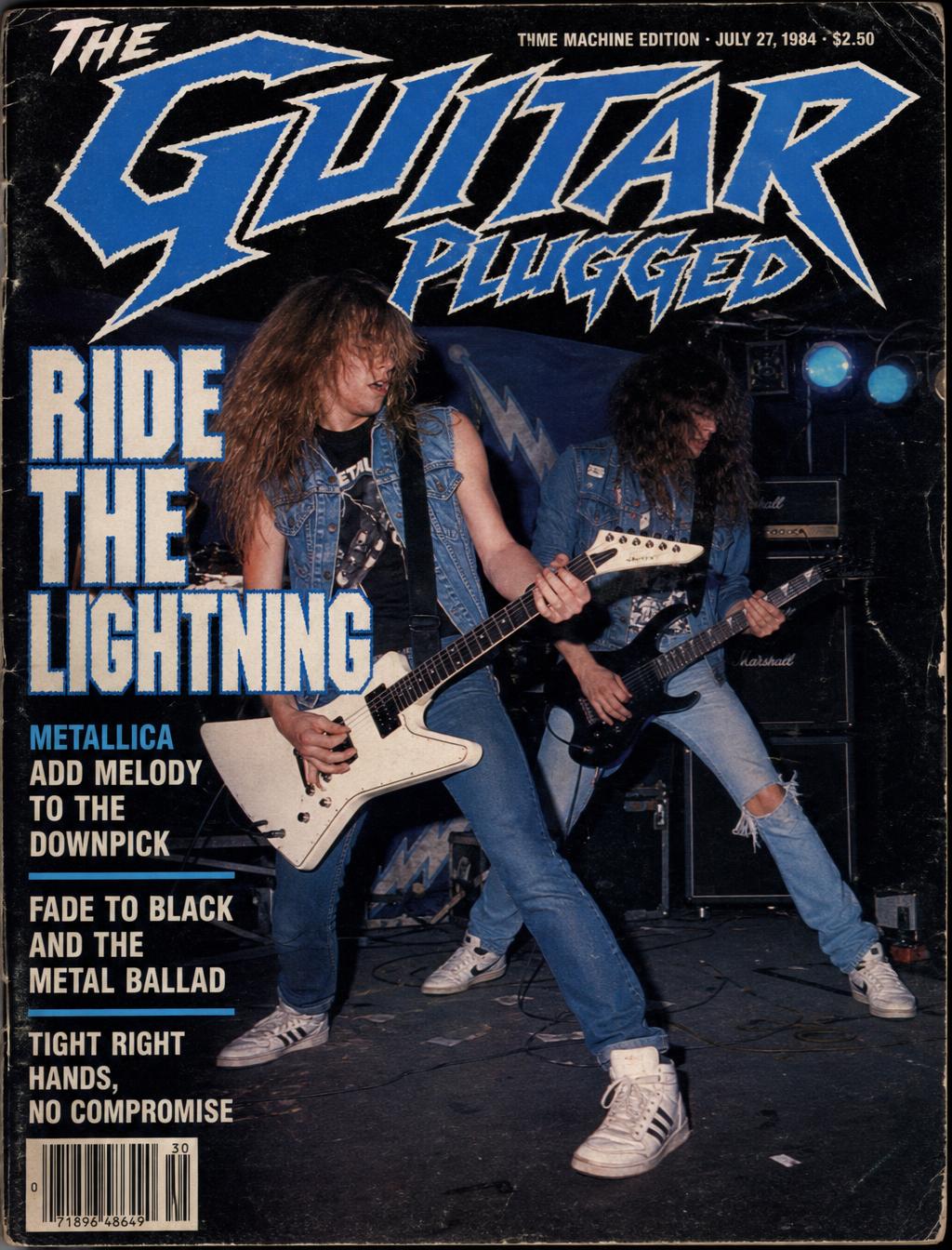
Metallica's second album, Ride the Lightning, is out this week, and it arrives with a lot more ambition than its title alone suggests. The Bay Area band built its name on Kill 'Em All, a record that was fast and blunt in more or less equal measure, but this follow-up, tracked at Sweet Silence Studios in Copenhagen with producer and engineer Flemming Rasmussen, reaches for something with more range: longer song structures, more dynamic shifts, and guitar writing that goes well past the straight-ahead speed that got the band noticed in the first place.
Rasmussen and Sweet Silence
Rasmussen wasn't a metal specialist going into these sessions, but he understood how to get a big, clear guitar sound on tape, and the difference between this record and the debut is audible from the first track. The rhythm guitars sound tighter and heavier without turning to mud, and there's more room in the mix for the songs' quieter passages to actually register as quiet, rather than just being a lower-volume version of the same wall of sound.
Hetfield's Right Hand
James Hetfield's rhythm playing is built almost entirely around downpicking, striking every note with a downward stroke rather than alternating up and down, which produces a tighter, more percussive attack, especially at the tempos this band favors. It's punishing on the picking hand and takes serious stamina to sustain across a full song, let alone a full album, but the payoff is a rhythm tone that sounds mechanically precise, almost like a machine gun, without losing the palm-muted chug that gives the riffs their groove. That downpicked foundation is really the engine of this whole record.
Kirk Hammett's Leads
Lead guitarist Kirk Hammett has been taking lessons with guitarist Joe Satriani, and that study shows up in how much more structured and melodic his solos are on this record compared to the debut. He still reaches for the wah pedal and plenty of aggressive bends, but there's a clearer sense of phrasing and of building a solo toward a peak rather than just filling space with fast runs. His playing gives the band's dense rhythm section a genuine melodic voice on top, which the songs badly need given how much harmonic and structural ground they're covering.
Fade to Black and Creeping Death
"Fade to Black" is the clearest sign of how far this band is willing to stretch, an extended track that opens on clean, arpeggiated guitar before building slowly into a full-band, distorted climax. It's a structure borrowed more from progressive rock than from the thrash scene Metallica came up in, and it's a genuinely bold choice for a band whose audience has largely wanted speed and aggression up to now. "Creeping Death" splits the difference, still fast and riff-driven but with a call-and-response vocal breakdown section that gives the song a second identity partway through, and Hetfield's rhythm guitar work throughout holds the whole shifting structure together.
A Band Outgrowing Its Own Scene
What's clear from this record is that Metallica isn't content to just get faster or heavier than the pack of thrash bands it emerged alongside. The songwriting ambition on display, particularly the willingness to slow down, add dynamics, and let a song breathe before hitting hard again, suggests a band already looking past the confines of the genre it helped define just a year or two ago.
The Guitars and Amps Behind the Wall
Hetfield and Hammett track much of the album's rhythm and lead work through Marshall amplification, run hot enough to generate the crunch this band's riffs demand without collapsing into the smeared, undefined distortion that plagues cheaper setups pushed the same way. Hetfield favors Gibson Explorers and similarly shaped guitars for their output and their ability to sit forward in a dense mix, while Hammett's leads lean on a Stratocaster-style instrument fitted with a higher-output humbucking pickup, a common modification among metal players who want a Fender-shaped guitar without giving up the aggression of a hotter pickup. Rasmussen reportedly double- and triple-tracks the rhythm parts, a technique that widens and thickens the guitar wall on tape without simply turning up a single track, letting the band achieve a heavier sound at a lower risk of the mush that comes from just cranking one amplifier further.
A World Away From the Bay Area
Recording in Copenhagen rather than back home in California is itself a notable choice for a band this closely tied to the Bay Area thrash scene that spawned it alongside acts like Exodus and Slayer. Sweet Silence Studios had already built a reputation in European hard rock circles, and the relative distance from the pressures and expectations of San Francisco's club scene seems to have given Metallica room to work through more ambitious arrangements without an audience looking over their shoulder night after night. It's a long way, literally and otherwise, from the Bay Area garages and small clubs where this band first drew its following barely two years ago.
Cliff Burton's Fingerprints
Bassist Cliff Burton, whose classical and jazz training has always set him apart from most metal bass players, contributes far more than low-end support here. His writing credit runs through several of the album's tracks, and his bass lines frequently carry melodic material independent of the guitars rather than simply doubling Hetfield's riffs an octave down, a habit that gives songs like "For Whom the Bell Tolls" a harmonic depth uncommon in thrash records built primarily around guitar riffing. That opening bass figure on "For Whom the Bell Tolls," run through a wah pedal and distortion to give it an unusually vocal, guitar-like presence, has already become one of the most talked-about moments on the record among bassists and guitarists alike.
The Cover Art and the Album's Reception
The album's cover, a stark image of an electric chair rendered in cold blues, matches the record's tonal shift toward darker, more serious subject matter, songs dealing with capital punishment, nuclear war, and Lovecraftian horror rather than straightforward tales of speed and rebellion. Early reaction from the thrash and hard rock press has been enthusiastic, with several critics singling out the record's willingness to slow down as evidence the band is playing a longer game than most of its peers, more interested in songwriting longevity than in simply winning a speed contest against Slayer, Anthrax, and the rest of the scene's fastest bands.
Why it matters now
Ride the Lightning is now widely regarded as the album where Metallica's songwriting matured beyond straight thrash, laying the groundwork directly for Master of Puppets and the band's eventual mainstream breakthrough with the 1991 self-titled album. Hetfield's relentless downpicking technique on this record became a foundational reference point for rhythm guitar in thrash and later extreme metal subgenres, still cited constantly in technique discussions and instructional material. Kirk Hammett's studies with Joe Satriani during this period are frequently pointed to as the turning point where Metallica's lead guitar work gained the melodic sophistication that would define the band's most celebrated solos on later albums.
Sources
- Mick Wall, 'Enter Night: A Biography of Metallica' — Ride the Lightning recording sessions at Sweet Silence Studios
- Guitar World interviews with Kirk Hammett — study with Joe Satriani
- Joel McIver, 'Justice For All: The Truth About Metallica' — band development between Kill 'Em All and Ride the Lightning