
The Album Era
THE GUITAR PLUGGED
Inside the Record Plant Sausalito, Fleetwood Mac Turn Turmoil Into Rumours
With relationships inside the band collapsing, Fleetwood Mac spent months at the Record Plant Sausalito shaping Rumours around Lindsey Buckingham's fingerstyle electric guitar.
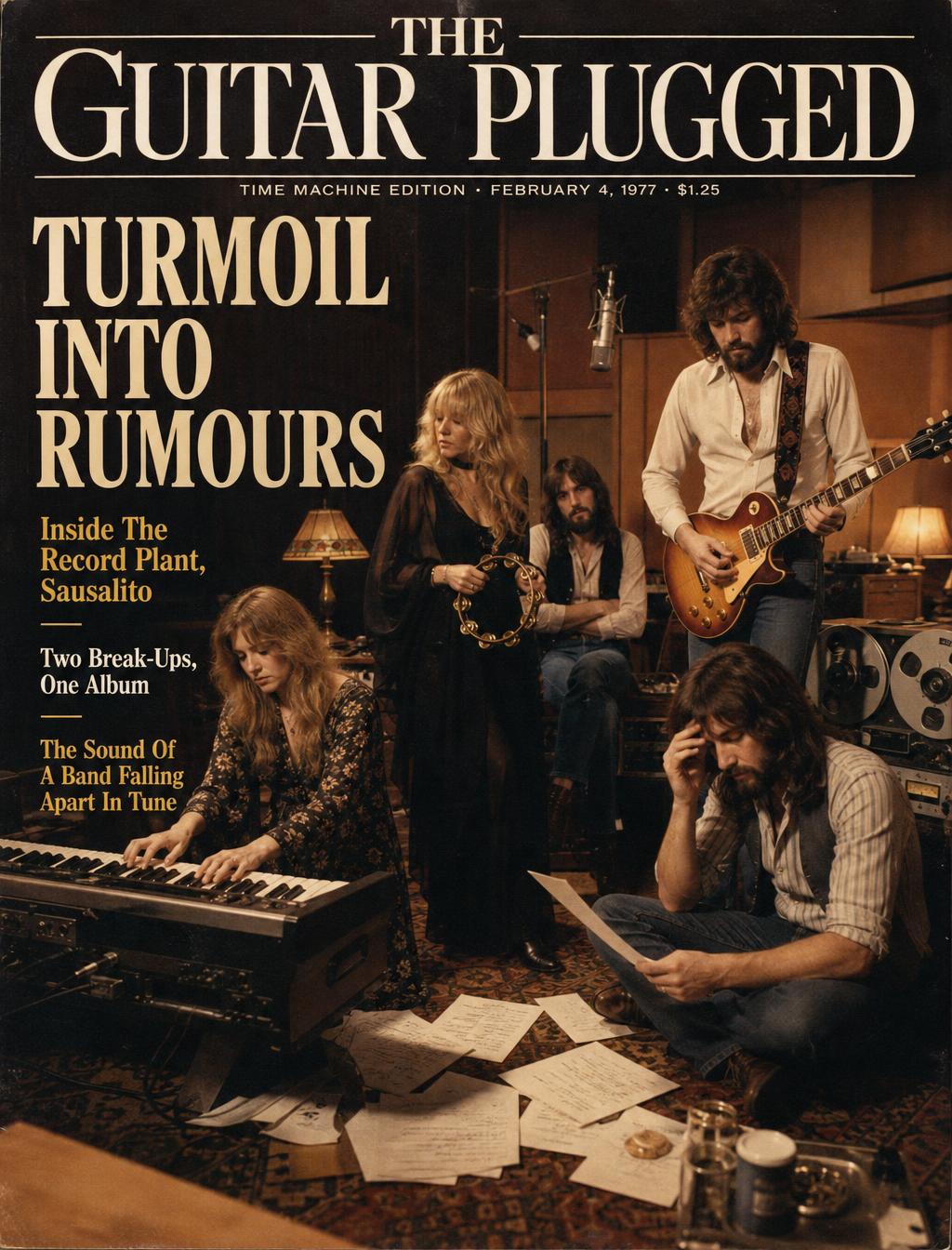
Fleetwood Mac come into these sessions with two couples inside the band breaking apart in real time, Lindsey Buckingham and Stevie Nicks ending their relationship, John and Christine McVie's marriage dissolving, all while the five of them are still required to sit in a room together and finish an album. They choose to record much of it at the Record Plant in Sausalito, California, a studio with a relaxed, almost residential atmosphere on the water north of San Francisco, working odd hours and, by numerous accounts, blowing through a very long production schedule as they piece the record together section by section rather than song by song.
Caillat, Dashut, and a Painstaking Process
Engineers Ken Caillat and Richard Dashut, working alongside the band, end up functioning almost as co-producers by the sessions' end, credited on the finished album for their role shaping the record's sound. The pair develop techniques on the fly to deal with tape hiss, phase issues, and the band's habit of re-recording and layering parts obsessively, a process that stretches the album's production time well beyond what was typical for a rock record at the time. Buckingham in particular is known for pushing arrangements through repeated overdubs, chasing a specific texture rather than settling for an earlier take.
Buckingham's Fingerstyle Attack
Lindsey Buckingham plays electric guitar almost entirely with his fingers rather than a pick, a technique he developed from early exposure to fingerstyle and banjo-influenced playing, and it gives his rhythm and lead parts on this record a percussive, syncopated attack that a flatpicked approach wouldn't produce. His main instrument through this period is a Rick Turner Model 1, a guitar built by luthier Rick Turner featuring an active onboard preamp and a distinctive body design, chosen by Buckingham partly for its clarity and its ability to sit cleanly in a dense mix without turning muddy.
Go Your Own Way's Rolling Riff
Go Your Own Way, written by Buckingham in the direct aftermath of the breakup with Nicks, is built on a distinctive, tumbling rhythm guitar figure that drummer Mick Fleetwood plays against with an unconventional, almost backward-sounding beat, an arrangement choice the band arrives at through experimentation rather than a fixed plan. Buckingham's guitar solo on the track, recorded across multiple takes and pieced together, became one of the more argued-over performances in the band's catalog, with Buckingham himself reportedly never fully satisfied with the version that made the final cut.
The Chain and the Band's Only Joint Credit
The Chain stands apart on the album as the one track credited to all five band members, assembled from several unfinished pieces stitched together during the sessions, including a coda built around a driving bass and guitar riff that becomes one of the record's most recognizable instrumental passages. Buckingham's guitar work throughout locks tightly with John McVie's bass and Fleetwood's drums, and the track's slow-building structure, quiet verses giving way to that hard-driving instrumental close, mirrors the tension running through the band during the sessions that produced it.
Christine McVie's Songs and Her Wurlitzer
Christine McVie contributes some of the album's most enduring melodies, including Don't Stop and You Make Loving Fun, songs she largely builds from the keyboard rather than the guitar, playing a Wurlitzer electric piano that sits alongside Buckingham's parts without crowding them. Her steadier, more pop-oriented songwriting gives the record ballast against the rawer emotional material coming from Buckingham and Nicks, and in the arrangements Buckingham often restrains himself to simple, supportive rhythm parts under her vocals, saving his more elaborate fingerstyle work for his own songs.
Nicks, Songbird, and a Different Kind of Session
Stevie Nicks records Songbird not at the Record Plant's main rooms but at a nearby auditorium, Zellerbach Hall in Berkeley, where the band and engineers set up a mobile recording truck to capture the natural room sound around her voice and a simple piano and acoustic guitar arrangement. It's a deliberate departure from the dense, heavily worked textures dominating the rest of the album, a reminder that despite Buckingham's central role as de facto musical director, the record still leaves space for its other voices to breathe on their own terms.
Dreams and the Sound of Restraint
Dreams, Nicks's other major contribution, is recorded quickly relative to the album's overall pace, built on a spare bassline from John McVie and a drum pattern from Fleetwood that the band reportedly assembles almost by accident while jamming in a different studio room during a break from other sessions. Buckingham's guitar part stays deliberately minimal underneath it, a few clean, chiming figures rather than a fully worked-out arrangement, and that restraint becomes part of the song's appeal, letting Nicks's vocal carry the track in a way few other songs on the record allow.
Mixing at the Wally Heider and Criteria Rooms
With so much material recorded in pieces across different rooms and different months, final mixing becomes its own marathon, with Caillat and Dashut carrying reels between the Record Plant, Wally Heider's studio, and eventually Criteria Studios in Miami to finish the record under a looming deadline from the label. The band's habit of endlessly revisiting takes means the mixing engineers are frequently working from multiple competing versions of the same guitar or vocal part, forcing decisions about which take best serves the song rather than which one is simply the cleanest technically. That editorial discipline, applied on top of Buckingham's already meticulous guitar tracking, is a large part of why the finished album sounds so purposeful despite the chaos of its making.
Why it matters now
Rumours went on to become one of the best-selling albums in history, and the personal turmoil documented in its lyrics has become inseparable from how listeners hear the record, but Buckingham's guitar work often gets undersold in that story. His fingerstyle electric technique and the clean, articulate tone of the Rick Turner Model 1 influenced a generation of players interested in texture and touch over volume, a quieter alternative to the era's dominant hard rock guitar heroics. The Chain's instrumental coda has taken on a life well beyond the album itself, used for decades in broadcast contexts, a testament to how a tightly constructed riff built from studio leftovers can outlast the song around it in public memory.
Sources
- Ken Caillat, Making Rumours — production and engineering details
- Lindsey Buckingham interviews, guitar press — technique and gear
- Fleetwood Mac band histories and contemporary interviews