
The Album Era
THE GUITAR PLUGGED
Van Halen Detonate a Debut at Sunset Sound With Eruption and a Homemade Guitar
Producer Ted Templeman and engineer Donn Landee capture Van Halen live in the room at Sunset Sound, unveiling Eddie Van Halen's tapping and his self-built Frankenstrat.
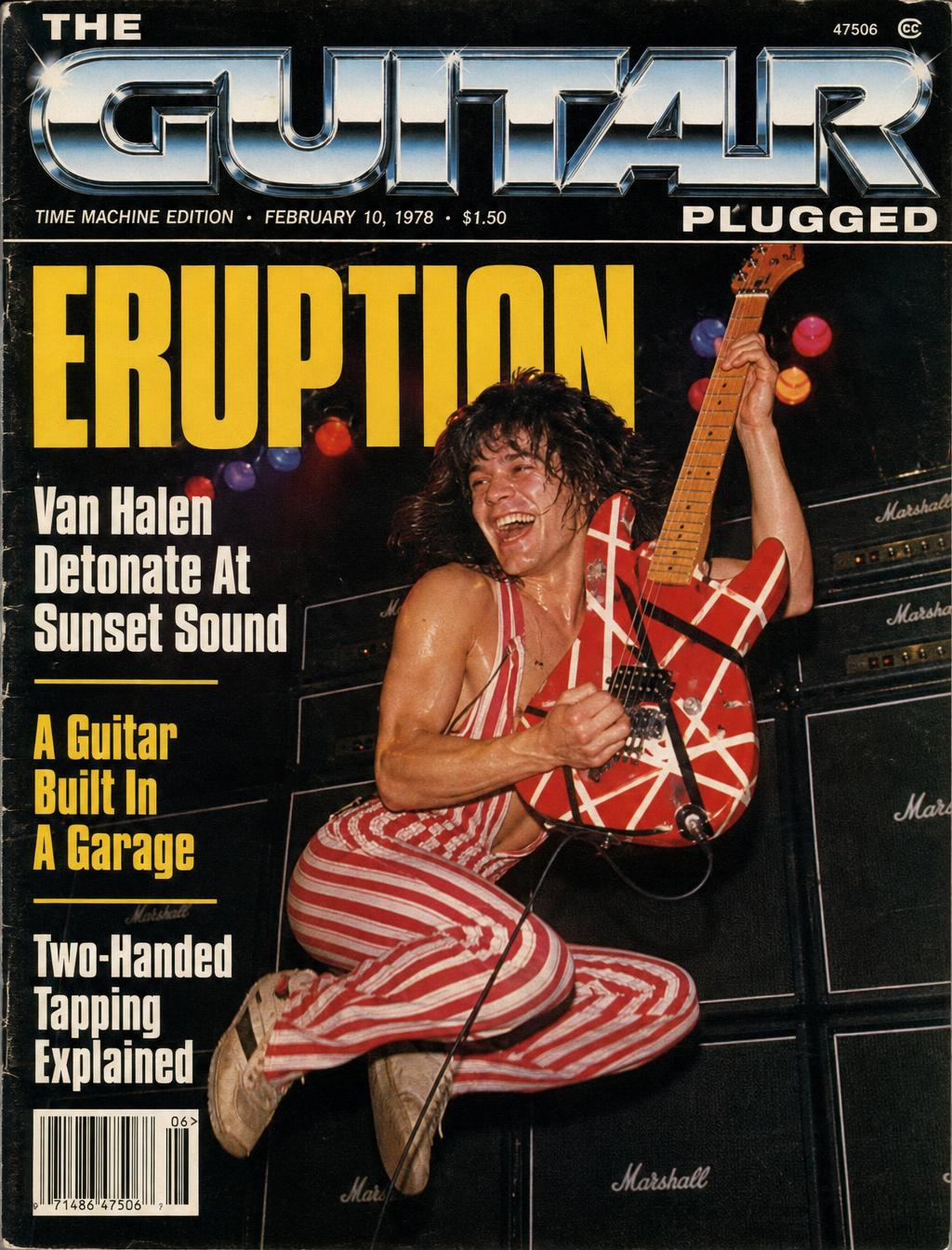
Van Halen have spent years grinding through the Los Angeles club circuit, most notably the Sunset Strip, building a local reputation loud enough that Warner Bros. and producer Ted Templeman come to see them and sign them almost immediately. For the debut album, Templeman and engineer Donn Landee bring the band into Sunset Sound in Hollywood and make a deliberate choice: record the band close to how they sound live, with minimal overdubbing and none of the layered studio polish common on hard rock records of the period.
Templeman and Landee's Live-Room Approach
Templeman, known for a stripped-down production philosophy, and Landee, whose engineering had already shaped a run of Warner Bros. rock and pop records, track most of the album's basic parts with the full band playing together, aiming to preserve the energy and tightness the group had built through years of live shows rather than assembling the record piece by piece. The approach is unusual for a guitar-forward hard rock record at the time, when many bands were leaning into heavily layered guitar tracks, and it puts enormous pressure on the performances themselves to carry the record.
Eruption and Two-Handed Tapping
Eddie Van Halen's solo instrumental Eruption, clocking in under two minutes, is recorded almost as an afterthought, reportedly done in a single pass while warming up, and it introduces much of the guitar world to a two-handed tapping technique Van Halen had been developing and refining on stage, using his right hand to hammer notes onto the fretboard alongside his fretting hand to produce rapid, cascading runs beyond what standard picking alone allows. Though the technique has scattered precedents among other guitarists, Van Halen's fluency and speed with it, combined with the piece's structure and dive-bomb whammy bar effects, make Eruption an instant reference point that guitarists across the country immediately start trying to reverse-engineer off the record.
Building the Frankenstrat
The guitar Van Halen plays throughout the album is one he assembled himself rather than bought off a shelf: a body sourced from Boogie Bodies, a small California parts supplier, paired with a neck acquired from Charvel, and a single humbucker, reportedly a Gibson PAF-style pickup, wired straight to the volume control with no tone knob or pickup selector to complicate the signal path. He finishes the body himself with layers of tape and paint in the red, white, and black pattern that becomes instantly recognizable, less a design statement than a practical solution to getting a Gibson-style humbucker tone out of a Stratocaster-shaped, vibrato-equipped instrument that didn't exist as a factory option at the time.
The Marshall, the Variac, and the Phase 90
For amplification, Van Halen relies on a 100-watt Marshall Plexi-era head, run through a Variac, a variable transformer originally intended for other electrical uses that Van Halen employs to drop the voltage feeding the amp, letting him push the power tubes into full saturation at a lower, more manageable volume while retaining that overdriven character. His main outboard effects on the record are minimal but pointed: an MXR Phase 90 for the swirling modulation heard on tracks like Ain't Talkin' 'Bout Love, and a Univox echo unit used sparingly for texture rather than as a constant crutch, keeping the guitar tone dry and immediate for most of the record.
You Really Got Me and the Choice of Cover
The band's cover of the Kinks' You Really Got Me, chosen partly because it was a favorite from their club sets, becomes the album's breakout single, and Van Halen's guitar tone on it, thick and saturated but still articulate, demonstrates the same Marshall-and-Variac approach used across the rest of the record. Templeman is initially cautious about leading with a cover rather than an original, but the band's take, faster and more aggressive than the original recording, convinces him it belongs on the album and eventually as the lead single.
David Lee Roth's Showmanship on Tape
David Lee Roth's vocal performances across the record, delivered with the same theatrical swagger that had already made Van Halen a draw on the Sunset Strip club circuit, are recorded largely live with the band rather than layered on afterward in isolation, part of Templeman and Landee's overall philosophy of capturing the group's chemistry in real time. That choice extends to the interplay between Roth's ad-libs and Van Halen's guitar fills, several of which are performances rather than punched-in overdubs, giving tracks like Runnin' with the Devil a looseness that a more meticulously assembled record would likely have ironed out.
Bass, Drums, and the Rhythm Section's Discipline
Michael Anthony's bass and Alex Van Halen's drums provide a tight, unfussy foundation that lets Eddie Van Halen's guitar work range freely without the rhythm section ever losing the groove, an arrangement discipline that owes as much to years of playing bars and clubs together as to anything worked out specifically for the record. Landee's engineering keeps the drum sound relatively dry and direct for the period, avoiding the heavier reverb treatments common on hard rock records at the time, a choice that keeps the album's overall sound punchy and immediate rather than cavernous.
An Album That Rewired Guitar Playing Overnight
Word of Eddie Van Halen's playing spreads through the guitar community almost as fast as copies of the album itself, with guitarists in music shops across the country trying to work out by ear exactly how Eruption and the tapping passages scattered through other songs are being produced. Templeman and Landee's insistence on a live, minimally overdubbed record turns out to be exactly the right frame for that guitar playing, presenting it without studio artifice as something a single player is actually doing in real time, which only accelerates how quickly other guitarists start trying to absorb it into their own playing.
Why it matters now
Eruption reset expectations for what a rock guitar solo could sound like, and two-handed tapping, once a novelty, became a standard technique taught in guitar method books within just a few years of this release. The homemade Frankenstrat, born out of necessity rather than luxury, helped inspire the entire superstrat category of guitars that dominated hard rock and metal through the 1980s, as builders raced to offer factory versions of what Van Halen had cobbled together himself. The Marshall-and-Variac trick for controlled saturation, along with Van Halen's spare, precise use of the Phase 90, became widely studied elements of his tone, discussed in gear magazines for decades after this record's release.
Sources
- Ted Templeman and Donn Landee interviews — production approach at Sunset Sound
- Eddie Van Halen interviews, guitar press — Frankenstrat construction and rig details
- Van Halen band histories and contemporary music press coverage