
The Loud Revolution
THE GUITAR PLUGGED
From a Hanwell Drum Shop, Marshall Amps Are Rewriting the British Guitar Sound
Jim Marshall's music shop has grown into an amplifier maker whose JTM45, and now bigger 100-watt heads, are being pushed to their limits by London's loudest guitarists.
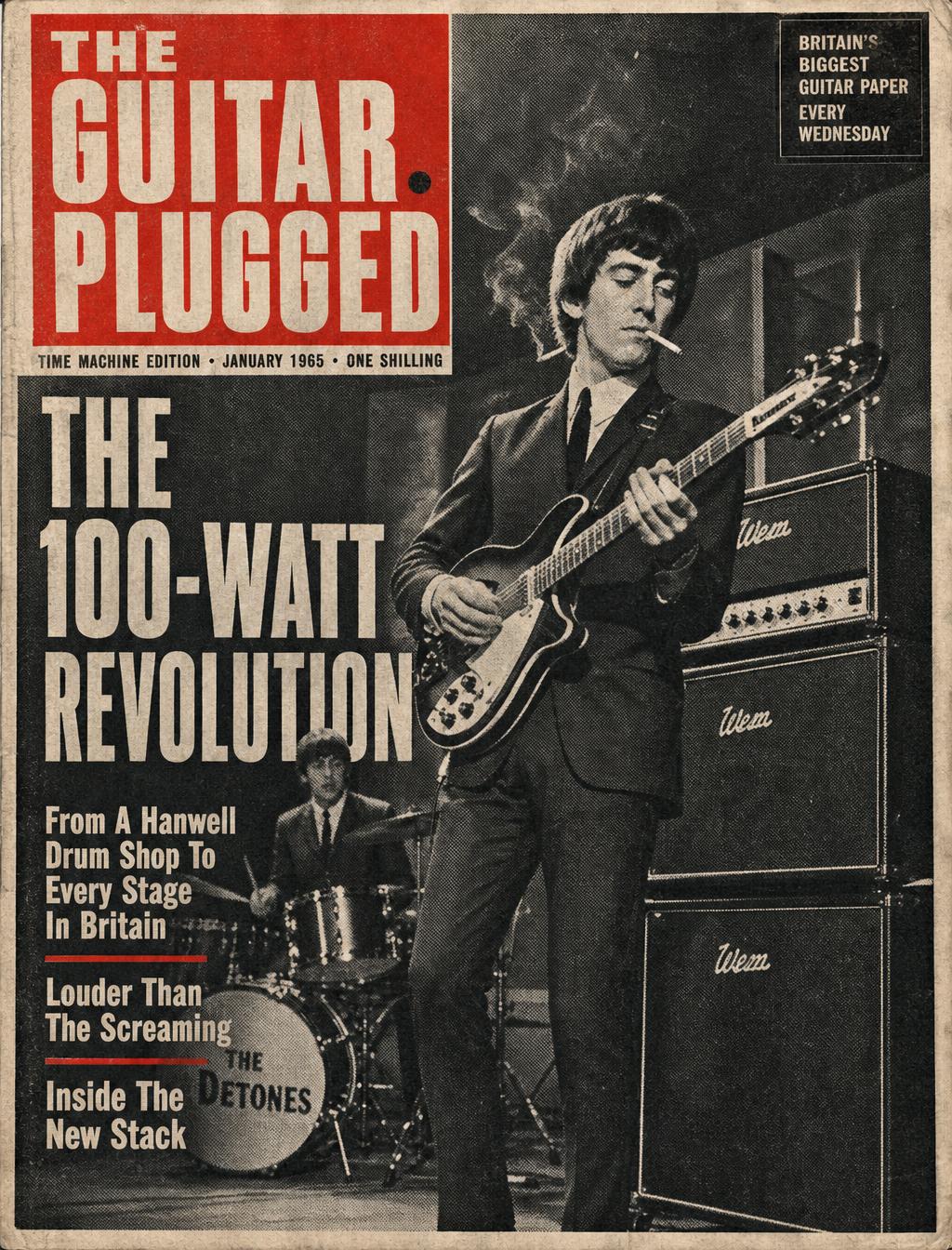
A few years ago, Jim Marshall's shop in Hanwell, West London, was known mainly as a place for drummers, a retail counter and teaching studio Marshall ran out of his own interest in the instrument. But guitarists kept coming in asking him for amplifiers, and Marshall, working with his small team, started building them. What's come out of that shop since is quietly reshaping what a loud guitar sounds like in Britain.
Built on a Fender Chassis
The JTM45, Marshall's first amplifier, owes an open debt to Fender's Bassman circuit, which Marshall and his collaborators studied and adapted rather than copying wholesale. But the components available in Britain aren't identical to what Fender uses in California, and the output transformers, valves, and speakers Marshall's team sourced locally gave the amp a different, grittier character even when the circuit topology started from the same place. Guitarists who've played both describe the JTM45 as tighter and more aggressive at volume than the Fender amps it was drawing from.
Pushing Past 45 Watts
Guitarists working in London's club circuit have been asking Marshall for more volume than the JTM45 can deliver clean, and the answer has been to build bigger. New heads rated around 100 watts are now coming out of the Hanwell operation, designed to be paired with matching 4x12 speaker cabinets, stacking two cabinets underneath a single head to project sound across a room full of dancing, talking, drinking patrons who'd otherwise drown out a smaller rig.
Townshend's Demands
Pete Townshend of the High Numbers, who go by the Who now, has been among the most vocal guitarists pushing Marshall toward bigger and louder gear, reportedly wanting an amplifier loud enough to compete with his own band's volume on stage without miking through the house system. Townshend's use of stacked Marshall cabinets, and his willingness to push the amps into distortion rather than avoid it, is turning what used to be considered amplifier misuse into a deliberate musical choice.
A Different Kind of Loud
What's emerging from Hanwell isn't just bigger numbers on a spec sheet. It's a different relationship between guitarist and amplifier, one where distortion, once treated as a fault to engineer around, is becoming part of the instrument's voice. British guitarists working with these amps are finding that pushing the JTM45 or the new 100-watt heads into overdrive gives them a sustain and grit that clean American amp tones don't offer, and it's starting to define a sound distinct from what's coming out of Fender-driven American rock and roll and surf records.
Ken Bran and Dudley Craven's Circuit Work
Jim Marshall is candid that he isn't the engineer behind the JTM45's circuit. That work fell to Ken Bran, a technician who had been servicing amplifiers for Marshall's shop, and Dudley Craven, a young engineer who joined the effort to help finalize the design. The pair built roughly half a dozen prototypes, working from a Fender Bassman circuit as their starting point, before settling on the configuration that went into production in 1962 and is now, by 1965, the foundation the shop's whole amplifier line has grown from.
British Valves and a Different Grit
Where Fender's Bassman relies on American-made tubes and a particular transformer specification, Marshall's amplifiers are built around KT66 output valves sourced from British suppliers, later giving way to the EL34, a valve with a different harmonic character that breaks up with more compression and a thicker midrange than the American 6L6 tubes fitted in Fender's amps. Combined with the Radiospares and Drake transformers used in early builds rather than exact American equivalents, the amplifier ended up sounding like its own thing almost by necessity, since some of the original components simply weren't available to source in London.
The 4x12 Cabinet Falls Into Place
The now-familiar 4x12 speaker cabinet wasn't part of any grand plan, by most accounts. Early customers wanted more speaker area to handle the amplifier's output without breaking up, and after some experimentation with 8x10 configurations proved unwieldy to transport, the shop settled on stacking two 4x12 cabinets beneath a single head, an arrangement that let bands split the cabinets for easier transport in a van while still projecting a wall of sound onto a club floor. It's this stacked cabinet silhouette, not just the circuit inside the head, that's becoming instantly recognizable on stages across London.
Clapton, Beck, and the Club Circuit
Eric Clapton, working through the Bluesbreakers' lineup with John Mayall, and Jeff Beck, freshly installed in the Yardbirds after Clapton's departure, are both regularly cited among the guitarists favoring Marshall combos and heads on London's club stages, drawn to an amplifier that breaks up with a thick, singing sustain when pushed rather than simply getting louder and harsher. It's a different priority than what most working guitarists have asked amplifier builders for in the past, where clean headroom at higher volumes was the goal. Marshall's amplifiers reward the opposite instinct, and guitarists chasing that sustain are increasingly building their whole approach to soloing around it.
Why it matters now
The Marshall stack, born out of Jim Marshall's small Hanwell shop and Pete Townshend's demand for volume, would become the visual and sonic signature of arena rock, hard rock, and heavy metal for decades to come. The JTM45's Bassman-derived circuit and its British component variations set a template that countless amplifier builders have chased ever since, and the 100-watt head over 4x12 cabinets configuration became the default rig for generations of loud guitarists. What started as a drum shop owner filling a gap for local guitarists ended up giving rock and roll its most recognizable amplifier silhouette.
Sources
- Marshall Amplification company history — JTM45 development and Fender Bassman influence
- Pete Townshend interviews on demanding louder amplification from Jim Marshall