Billy Gibbons: The Bearded Blues Wizard Who Made Tone More Important Than Speed
As the driving force behind ZZ Top, Billy Gibbons proved that you don't need a thousand notes to create something unforgettable. Sometimes one perfectly placed note says everything.
When guitar fans debate the greatest players of all time, names like Hendrix, Van Halen, and Clapton usually dominate the conversation. But Billy Gibbons carved out a completely different legacy — one built on feel, groove, attitude, and one of the most recognizable guitar tones ever captured on tape.
As the driving force behind ZZ Top, Gibbons proved that you don't need a thousand notes to create something unforgettable. Sometimes one perfectly placed note says everything.
Before the Beard: The Early Years
Born in Houston, Texas, Billy Gibbons was immersed in music from an early age. Inspired by blues legends like B.B. King, Muddy Waters, and Freddie King, he also absorbed the raw energy of rock and roll that was exploding in the 1960s.
Before ZZ Top, he fronted the psychedelic rock band Moving Sidewalks, a group that even opened for Jimi Hendrix. Hendrix reportedly praised Gibbons' playing, giving an early indication that something special was happening. By 1969, ZZ Top was born.
The Secret Sauce: Simplicity with Swagger
Billy Gibbons isn't a guitarist known for endless shredding. Instead, he's a master of tasteful phrasing, blues vocabulary, massive vibrato, pinch harmonics, rhythmic precision, and the space between notes. His solos often feel conversational rather than technical exercises. Every bend seems intentional, every phrase memorable. That's far harder than simply playing fast.
That Legendary Tone
Get Billy Gibbons’ “La Grange” Tone
Tell ToneMD what guitar and gear you own and we’ll show you how to get as close as possible using the equipment you already have — full signal chain, real numbered settings, no guesswork.
Included with The Guitar Plugged Premium
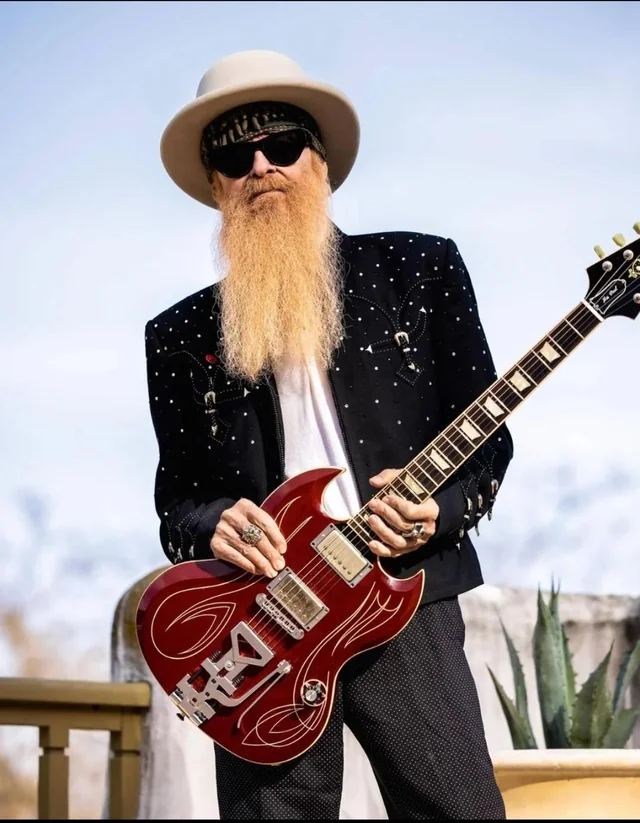
Ask ten guitarists to describe Billy Gibbons' sound and you'll hear words like fat, greasy, Texas, warm, fuzzy, vocal. One of the biggest contributors is his famous 1959 Gibson Les Paul known as "Pearly Gates" — one of rock's most legendary instruments, producing countless iconic recordings over the decades.
Gibbons has become famous for using incredibly light guitar strings — sometimes as low as .007 gauge — which many players find almost impossible to control.
His philosophy? "Why work harder?"
Combined with his touch and massive vibrato, those ultra-light strings became part of his signature identity.
The Rig — Decoded
Arguably the most legendary Burst in rock — fat, vocal, and unmistakable.
Almost impossibly light gauge. The secret behind Billy's effortless bends and bird-like vibrato.
Layered vintage tube amps for that greasy, three-dimensional Texas roar.
Vintage germanium fuzz and clean boosts push the front end without losing dynamics.
Billy famously experiments with coins and hard picks to pull more harmonics out of every note.
Gibbons swears tone lives in the hands. The rig only amplifies what you already are.
The Gear Mythology
X Concepts Strings • Made in USA
Never Run Out of Strings Again.
Join the X Concepts String Club and get fresh USA-made strings delivered every month—plus Premium membership options for the full Guitar Plugged experience.
While Billy Gibbons has experimented with hundreds of guitars and amps over the years, his classic sound has often revolved around combinations of the 1959 Gibson Les Paul "Pearly Gates," Marshall amplifiers, tweed Fender amps, Magnatone amps, vintage tube-driven rigs, and carefully selected fuzz and boost pedals.
“Flash comes and goes. Tone lasts forever.”
Ironically, Gibbons has often emphasized that fingers matter more than equipment. His hands are arguably the biggest part of his tone.
The ZZ Top Sound
Songs like "La Grange," "Tush," "Sharp Dressed Man," "Gimme All Your Lovin'," "Legs," and "Cheap Sunglasses" demonstrate his incredible ability to create instantly recognizable riffs that become the identity of the song. Many guitarists chase solos. Billy Gibbons writes riffs that define careers.
The Songs Every Guitar Player Should Hear
The Texas boogie that put ZZ Top on the map. That riff. That tone. That swagger.
A 12-bar blues stripped to its grooviest essentials — every guitarist should learn it.
Synth-era ZZ Top with a riff carved from granite. Pinch harmonics for days.
MTV-era anthem with one of the most singable rock riffs ever written.
The pop-rock crossover that proved Billy's tone could conquer any production style.
Slinky, greasy, and dripping with Gibbons attitude — the secret weapon of the catalog.
The Look Became Part of Rock History
The beard. The sunglasses. The hats. The spinning guitars. Billy Gibbons and Dusty Hill created one of the most iconic visual identities in music history. Yet beneath all the style is an incredibly authentic blues player with deep respect for the legends that came before him.
Influence That Spans Generations
Modern blues and rock players continue to borrow from Gibbons' approach to vibrato, economy of notes, blues phrasing, groove-first playing, dynamic touch, and vintage-inspired tone. His influence stretches far beyond ZZ Top records and into countless players who learned that restraint can often be more powerful than complexity.
Final Thoughts
Billy Gibbons reminds us that guitar greatness isn't measured in notes per second. It's measured by personality. The second he plays a single note, you know exactly who's holding the guitar — and that's perhaps the highest compliment any musician can receive.
Flash comes and goes. Tone lasts forever.
Billy Gibbons is living proof that taste, touch, and tone will always outlast technique for technique's sake. He didn't just play the blues — he wore them, smoked them, and drove them down a Texas highway in a hot-rodded coupe.
If you're chasing real tone, study the Reverend. Then plug in, slow down, and let every note breathe.
What to Remember
- ▸Tone lives in your fingers — Gibbons proves it on every record.
- ▸Restraint beats speed: leave space and let notes breathe.
- ▸Light strings + heavy vibrato = a signature voice on the instrument.
- ▸Riffs define careers more than solos ever will.
- ▸Studying the blues legends is the shortcut to playing with personality.
- Epiphone Les Paul Standard '59 (Pearly Gates Vibe)$899·Check on Amazon →
- Dunlop Billy Gibbons Rev. Willy's Mexican Lottery Strings (.007)$8·Check on Amazon →
- Dunlop Fuzz Face Mini (Texas Tone Essential)$129·Check on Amazon →
Some links are affiliate links — we may earn a small commission at no cost to you.
Experience-driven coverage, not algorithm bait.
- 20+ years of guitar playing experience
- Real-world retail experience at Guitar Center
- Thousands of hours testing guitars, amps, and pedals
- A community of 50,000+ guitar enthusiasts across platforms
- Partnerships with Fender, DistroKid, TrueFire, Card Chords, and Enya
- Editorial standards published openly — see how we test gear
The Modern Guitar Magazine. Delivered to your inbox.
No spam. No gimmicks. Just great guitar content — stories, tones, iconic solos, and honest gear takes. Every week.
Ask GP
3 free questions a dayStill curious? Ask GP about this story.
Your personal classic-rock and guitar guide — ask anything about Billy Gibbons.
Discussion (0)
Sign in to join the discussion.
Sign in to commentLoading comments…
Discover another guitar story
Swipe through our latest features, breaking news and iconic solos — one story at a time.
Open Swipe →More in Guitar Talk
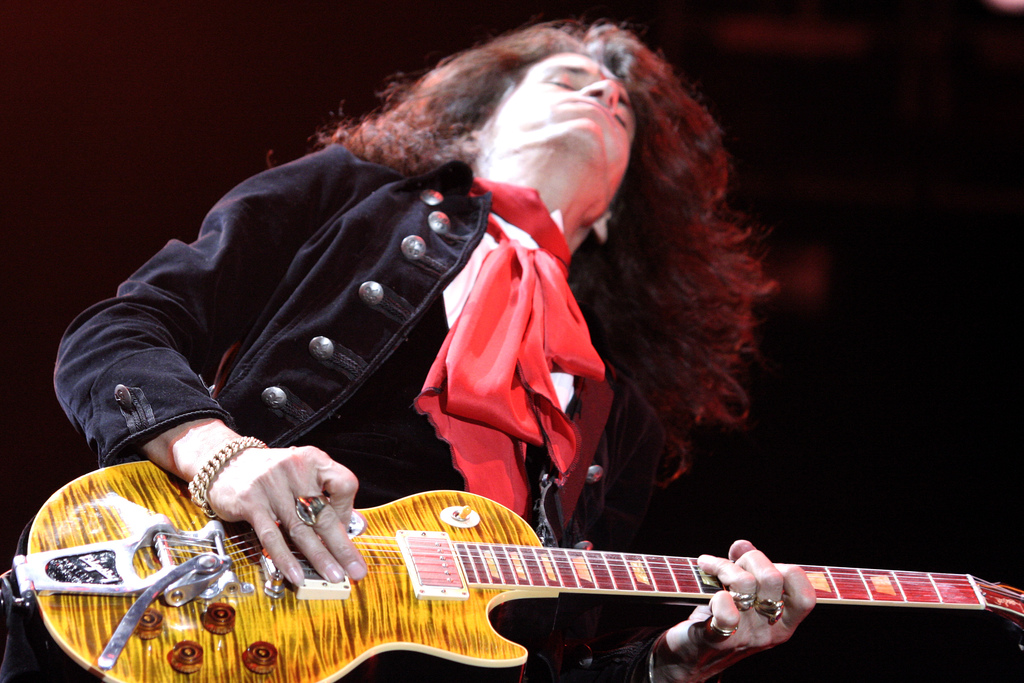
Happy Birthday, Joe Perry: The Riff Machine Who Gave Aerosmith Its Swagger
Joe Perry turns 76 today. From the swampy grind of “Sweet Emotion” to the reunion that saved a band, this is the career of the guitarist who taught American hard rock how to strut.
History of the Riff: How Joe Satriani Made “Flying in a Blue Dream” Feel Weightless
An acoustic guitar in an unusual tuning, a stray broadcast and a melody that seems to hang in the air: inside the construction of Satriani’s 1989 masterpiece.
Tony Iommi Opens Up About His Final Conversation With Ozzy Osbourne: “I Still Can't Get It in My Head”
The Black Sabbath guitarist says Ozzy was exhausted after the band's emotional farewell — but determined to give fans one final show.