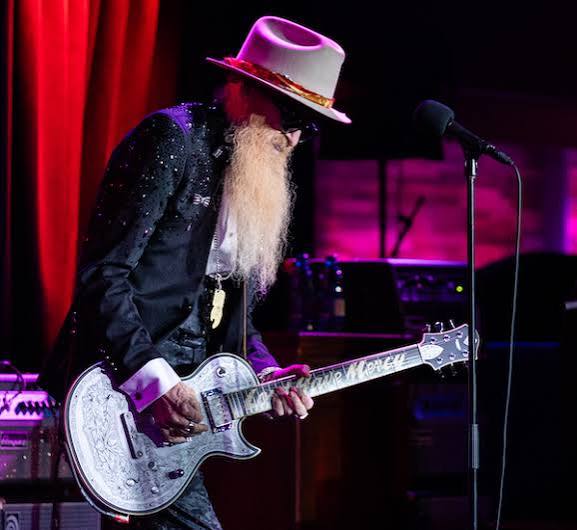
Billy Gibbons: The Secrets Behind the Coolest Guitar Sound in Texas
How a 1959 Les Paul, impossibly light strings, vicious right-hand technique and an almost supernatural understanding of space turned three chords into one of the most recognizable sounds in rock.
There are guitarists who impress you immediately.
Then there are guitarists who confuse you.
Billy Gibbons belongs to the second category.
Listen casually to ZZ Top and much of what he plays can seem almost suspiciously simple. There are blues boxes. Boogie rhythms. Dominant chords. Pentatonic phrases. Repeated riffs. Sometimes there are entire stretches where Gibbons appears to be doing less than practically every guitarist who came after him.
Then pick up a guitar and try to make it sound the same.
That is where the trouble begins.
Play the notes to “La Grange.” They are not particularly difficult.
Now make them swagger.
Play the riff to “Tush.” Easy enough.
Now make two bars of guitar sound enormous.
Try the opening of “Gimme All Your Lovin’.” Try the solo from “Sharp Dressed Man.” Try getting a pinch harmonic to jump out with the same casual violence Gibbons can summon seemingly whenever he wants.
Suddenly, Billy Gibbons doesn't seem simple at all.
He seems almost impossible.
Because the real Billy Gibbons technique isn't found on a tablature page.
It exists somewhere between the notes.
It is the microscopic delay before a phrase. The violent little harmonic hiding inside a picked note. The way a bend arrives slightly dirty and resolves perfectly. The decision to stop playing when another guitarist would add four more notes.
And behind all of it is one of the great guitar tones in recorded music: warm but vicious, compressed but alive, fuzzy around the edges yet strangely articulate.
Gibbons built that vocabulary with ZZ Top over more than half a century.
And the deeper you look into it, the more interesting it becomes. ## Before the Beards, There Was the Blues Long before MTV turned ZZ Top into unlikely international celebrities, Billy Gibbons was already absorbing the vocabulary that would define his playing.
Houston mattered.
Texas mattered.
And the blues mattered most.
The Texas guitar tradition was never simply a cleaner version of Chicago blues. It could be aggressive, strange, loud and rhythmically loose. Players could swing hard without sounding polite about it.
Gibbons absorbed that world while also listening beyond it.
His early band, the Moving Sidewalks, existed in the psychedelic explosion of the late 1960s. They even opened shows for Jimi Hendrix.
That combination is important.
Gibbons didn't develop as a blues purist who later discovered rock.
Psychedelia, distortion, volume, experimentation and blues were all present in his musical vocabulary early.
When ZZ Top formed around the end of the 1960s, that mixture became increasingly concentrated.
Billy Gibbons on guitar.
Dusty Hill on bass.
Frank Beard on drums.
Three musicians.
Very little wasted motion.
What eventually emerged wasn't merely blues-rock.
It was compression of an entire musical tradition into riffs. ## The Guitar That Changed Everything Every great guitar story eventually becomes mythology.
Billy Gibbons has one of the best.
Pearly Gates
At the center of the ZZ Top sound sits a 1959 Gibson Les Paul Standard nicknamed Pearly Gates.
Gibbons acquired the guitar in 1968 from a Texas rancher for $250, and it became his reference point for guitar tone. He has said Pearly has remained close at hand through recording projects and has repeatedly described the guitar as essentially impossible to duplicate.
That distinction matters.
Gibbons owns—and has played—an extraordinary number of guitars.
Yet Pearly Gates became something closer to a measuring instrument.
Does the new guitar sound right? Compare it with Pearly.
Does the track need something? Try Pearly.
The recipe itself looks almost boring:
1959 Les Paul.
PAF-style humbuckers.
A loud amplifier.
Hands.
Except guitar tone doesn't work like a recipe.
Two Les Pauls built in the same year can respond differently. Pickups age. Pots drift. Wood resonates differently. Players strike strings differently.
And Gibbons developed such an intimate relationship with Pearly Gates that the guitar became part of his musical language.
He once summarized the foundation of much of ZZ Top's recorded guitar sound as Pearly Gates through either an old Fender or a Marshall.
Simple.
Deadly.
And extraordinarily difficult to fake. TGP Gear Desk — Build the Foundation If you're chasing the Gibbons sound, start with the fundamental recipe rather than the mythology.
A Gibson Les Paul Standard}) is the obvious starting point for the Pearly Gates side of the equation. The mahogany body, maple top and humbuckers deliver the warm, mid-forward character that defines the ZZ Top tone.
The Seymour Duncan Pearly Gates Humbucker Set}) was designed around the hot, harmonically rich PAF territory associated with Gibbons' legendary Les Paul.
A Marshall-style tube amplifier) gives you the strong midrange, dynamic breakup and enough headroom to keep the attack intact.
But buying those pieces will not automatically give you Billy Gibbons' tone.
Because we haven't gotten to the weird part yet. ## Why Billy Gibbons' Guitar Sounds So Big The first great misconception about Gibbons is that his tone is simply “lots of distortion.”
It isn't.
In fact, burying your signal in modern high-gain distortion is one of the fastest ways to move away from classic ZZ Top.
Listen closely to the early records.
There is gain.
There is saturation.
There is occasionally an almost fuzzy texture.
But underneath it you can still hear the attack of the string.
That's essential.
Gibbons' sound has teeth.
A note doesn't simply emerge from distortion. You hear the transient first—the tiny explosion created when pick meets string—and then the amplifier blooms behind it.
That gives riffs like “Tush” their physical quality.
The amp feels like it is being pushed rather than merely switched into a high-gain mode.
And that leads to one of the fundamental rules of Billy Gibbons tone:
The distortion should amplify your personality, not replace it.
If your guitar sounds huge when you barely touch the strings, you may actually have too much gain.
Gibbons' sound becomes huge when he attacks it.
That's different. ## The Right Hand Is the Real Amplifier Watch Billy Gibbons closely and one thing becomes obvious.
His picking hand is doing an enormous amount of work.
That is why copying his amplifier settings rarely gets players all the way there.
Gibbons manipulates the string at the source.
He can move from a relatively normal picked note into a screaming harmonic without making the technique sound like a special effect.
For many players, the pinch harmonic is punctuation.
For Gibbons, it is part of the language.
The technique involves allowing a small portion of the picking-hand thumb to contact the string almost immediately after the pick attacks it, suppressing the fundamental and exciting one of the string's harmonic nodes.
But describing it mechanically misses the point.
Gibbons doesn't simply “do pinch harmonics.”
He controls which harmonic appears.
Move your picking hand toward or away from the bridge while playing the same fretted note and different overtones emerge.
That's where the famous ZZ Top squeal lives.
Not in a pedal.
Not in a pickup.
In the relationship between the fretted note, picking position, attack and harmonic node. Try This Set your bridge pickup.
Use moderate gain.
Fret a note around the 5th–9th fret.
Repeatedly play the same note while slowly moving your picking hand from the bridge toward the neck.
You'll hear the harmonic character change.
Once you find the aggressive upper harmonic, add wide vibrato.
Now you're entering Gibbons territory. ## The Secret Weapon Nobody Believes: Extremely Light Strings Billy Gibbons' string gauges have become nearly as famous as Pearly Gates.
Gibbons has long been associated with Dunlop Rev. Willy's Mexican Lottery strings, including an astonishingly light .007–.038 set.
Yes.
Seven.
For a guitarist whose tone sounds like it could push a truck down the highway, that's almost comically light.
And that's precisely why the lesson matters.
Heavy tone does not necessarily require heavy strings.
Gibbons' sound comes partly from what those light strings allow him to do.
Bends become effortless.
Micro-bends become instinctive.
Vibrato can be exaggerated.
The player can physically manipulate pitch with minimal resistance.
That contributes to the slippery quality of his phrasing.
There is a vocal element to Gibbons' lead playing because notes rarely feel completely static.
They're being squeezed, bent, shaken and bullied into position. [CALLOUT:TGP Affiliate Pick]Dunlop Rev. Willy's Mexican Lottery Electric Guitar Strings Want to experience just how different Gibbons' ultra-light approach feels under the fingers? Check current price on Amazon}).
Be warned: moving from .010s or .011s to .007s can feel bizarre initially. Your guitar may also require setup adjustments.
But spend an hour with them and something interesting happens.
You begin playing differently.
And that is the point.[/CALLOUT] ## “La Grange”: A Masterclass in Making Almost Nothing Sound Dangerous If you wanted to explain Billy Gibbons to someone using one recording, “La Grange” might be enough.
The song appeared on Tres Hombres in 1973.
The underlying musical ingredients are ancient.
Boogie rhythm.
Blues vocabulary.
Repetition.
Dynamics.
That's essentially it.
But listen to what Gibbons does with them.
The opening isn't powerful because it contains lots of notes.
It is powerful because the guitar establishes a pocket.
Then the intensity grows.
Get Billy Gibbons’ “La Grange” Tone
Tell ToneMD what guitar and gear you own and we’ll show you how to get as close as possible using the equipment you already have — full signal chain, real numbered settings, no guesswork.
Included with The Guitar Plugged Premium
And grows.
And grows.
Gibbons has revealed an especially fascinating detail about the recording: the intro was played on a 1955 hardtail Fender Stratocaster, while the heavier overdriven riff used Pearly Gates. Both went through a 100-watt 1968 Marshall Super Lead.
Think about that.
One of the most famous “Les Paul” guitarists in history created one of his signature recordings by combining a Stratocaster and Les Paul.
That should tell you something about chasing famous tones.
The answer is rarely one piece of equipment. [TONE] ## “Tush”: The Art of the Perfect Riff “Tush” is almost insulting in its efficiency.
The song was built around a straightforward 12-bar blues framework, and Gibbons has recalled that the basic idea came together within minutes.
Yet guitarists have been playing it for decades.
Why?
Because simplicity only becomes boring when the feel is boring.
ZZ Top understood something many technically advanced bands never learn:
A riff does not need to be complicated.
It needs to be inevitable.
When “Tush” begins, it feels like the riff has always existed.
That's the highest compliment you can give a rock riff.
Nothing sounds added.
Nothing sounds missing.
There is simply the correct amount of guitar. ## Billy Gibbons' Most Important Technique Is Restraint This is where the real lesson begins.
Gibbons understands that guitar playing is not merely the act of producing notes.
It is the act of controlling attention.
A guitarist who plays constantly eventually teaches the listener not to pay attention.
Gibbons does the opposite.
He creates anticipation.
A riff.
Space.
Vocal.
Fill.
Space.
Riff.
Then, when the guitar steps forward, your ear follows it.
That is why his short phrases can carry more personality than another player's 20-note run.
He makes you wait. [CALLOUT:The Premium Deep Dive: Why You Still Don't Sound Like Billy]You can buy the Les Paul.
You can buy the pickups.
You can buy the Marshall.
You can put .007s on the guitar.
You can copy every knob position in this article.
And you can still sound nothing like Billy Gibbons.
Because the final 20 percent isn't gear.
It's the part guitarists almost never measure.
1. Gibbons Plays Behind the Center of the Beat Not dramatically. We're talking milliseconds. But blues phrasing frequently becomes more convincing when the lead guitar doesn't mechanically land on the grid. A phrase can lean backward. That creates swagger. Record yourself playing a Gibbons phrase against a metronome. First play every note precisely on the beat. Then deliberately let certain bends and resolutions arrive fractionally late. Listen back. The notes haven't changed. The attitude has.
2. He Doesn't Bend To Notes—He Travels Through Them A beginner thinks: Start note → bend → target pitch. Gibbons treats the space between those pitches as music. Listen to how often the bend itself carries emotional information. Sometimes the destination is almost less important than the journey. That requires control. With extremely light strings, tiny finger movements create significant pitch changes. Which means Gibbons isn't using light strings because they're easier. He's using a setup that gives his hands greater expressive range.
3. Vibrato Comes After the Bend Here's a subtle difference. Many players bend a note while simultaneously shaking it. Try separating the motions. Bend. Reach pitch. Hold it for a fraction. Then vibrato. That tiny moment of stability makes the vibrato feel intentional rather than nervous.
4. Don't Max the Gain Modern players often recreate vintage tones with too much saturation. Try this experiment. Reduce your gain by 25 percent. Increase your picking attack. Suddenly you'll hear more string. More transient. More dynamics. And strangely… the guitar may sound bigger. That's because definition creates perceived size.
5. The Rest Is Part of the Riff Take a ZZ Top phrase and examine where Billy doesn't play. Those rests aren't empty. They are part of the composition. If a phrase is DAH — da-da — DAH — the silence between those attacks contributes to the groove. Remove the silence and you've changed the riff even if every fretted note remains identical. This is one of the deepest lessons in Gibbons' playing. Rhythm isn't only where the notes happen. Rhythm is also where they don't.[/CALLOUT] ## The Eliminator Revolution Then ZZ Top did something extraordinarily dangerous.
They changed.
By the beginning of the 1980s, the band could easily have continued producing variations on the formula that had already made them successful.
Instead, technology entered the room.
Sequencers.
Synthesizers.
Drum machines.
Precision.
The transition could already be heard developing around El Loco, but 1983's Eliminator was the transformation completed.
Gibbons has described the period as one in which new musical technology seemed to be appearing constantly. At Ardent Studios, the band had access to unfamiliar equipment and often approached it experimentally—essentially turning knobs until something inspired them.
The crucial realization wasn't that electronics could replace ZZ Top.
It was that electronics could make the guitar sound even more powerful.
Put a tightly sequenced rhythmic foundation underneath Gibbons' loose, human guitar phrasing and you create tension.
Machine underneath.
Texas on top.
That collision produced Eliminator. ## “Gimme All Your Lovin'”: When the Blues Met the Machine Listen to the opening.
Everything is locked.
The pulse feels mechanical.
Then Gibbons arrives.
His guitar doesn't fight the precision.
It rides it.
That's what separates Eliminator from countless failed attempts by classic-rock artists to modernize during the 1980s.
ZZ Top didn't paste synthesizers onto their old sound.
They redesigned the environment around the guitar.
Gibbons explained that the band's growing attention to click tracks, drum machines and sequencers tightened their playing dramatically.
But the guitar still sounded dangerous.
That's the magic. [TONE] ## Wait—Was Eliminator Even Pearly Gates? Here is where the Billy Gibbons story becomes especially interesting.
The popular version of ZZ Top history tends to place Pearly Gates at the center of everything.
Reality is messier.
Dean Guitars founder Dean Zelinsky has recalled Gibbons using a Dean ML during the Eliminator period and saying the instrument sounded incredible.
Other accounts of the sessions describe Dean guitars fitted with DiMarzio Super Distortion pickups and a Legend hybrid amplifier playing a major role.
This is exactly why famous-tone mythology can become misleading.
The sound of Billy Gibbons is not permanently attached to one serial number.
Pearly Gates established the reference.
But Gibbons learned how to carry that sonic identity into other equipment.
That is a far more valuable lesson.
Don't ask:
“What guitar did Billy use?”
Ask:
“What characteristics was Billy trying to preserve?”
Midrange.
“Billy Gibbons doesn't make simple guitar playing sound complicated. He makes simple guitar playing sound important.”
Harmonic complexity.
Attack.
Sustain.
Controlled saturation.
Responsiveness.
Once you understand those characteristics, the equipment becomes interchangeable to a degree.
That's the philosophy behind ToneMD.
The goal isn't merely to tell you what an artist owned.
It's to identify why the recorded tone behaves the way it does and translate that behavior onto the equipment you actually have. ## The Pinch Harmonic Problem Of all Gibbons' techniques, this may be the one guitarists imitate most badly.
The mistake is treating the pinch harmonic as an on/off technique.
It isn't.
Think of the string as containing a hidden map of harmonics.
Your fretting hand determines the basic pitch.
Your picking position determines which overtones become available.
Your thumb contact determines how aggressively the fundamental is suppressed.
Your vibrato determines how the harmonic moves afterward.
That's four variables.
Gibbons manipulates all four. [CALLOUT:The TGP Billy Gibbons Harmonic Drill]Play the seventh fret on the G string.
Use the bridge pickup.
Set moderate gain.
Play the note normally four times.
Then introduce slight thumb contact.
Move your picking hand approximately half an inch.
Repeat.
Keep moving.
At certain locations the note will suddenly jump into a much stronger harmonic.
Memorize where your hand is.
Then add a quarter-step bend.
Then a half-step.
Then wide vibrato.
Do this across all six strings.
After ten minutes you'll discover something important:
Your guitar has harmonic locations you probably never use.
Billy Gibbons built an entire vocabulary out of them.[/CALLOUT] ## “Sharp Dressed Man”: The Solo Is Smaller Than You Remember Think about the “Sharp Dressed Man” solo.
In your memory, it may feel enormous.
Now analyze the vocabulary.
Pentatonic language.
Bends.
Repetition.
Harmonics.
Rhythmic placement.
There isn't a giant cascade of technically complicated material.
Yet it sounds instantly identifiable.
That is musical efficiency.
Gibbons doesn't need 50 notes to establish authority.
Sometimes one bent note with the correct harmonic content does the job.
This is what advanced guitar playing eventually becomes.
Not:
How much can I play?
But:
How little can I play while still sounding unmistakably like myself?
Gibbons solved that equation decades ago. [CALLOUT:The Billy Gibbons Guitarist Index]Billy Gibbons
Genre: Texas Blues / Blues-Rock / Hard Rock Primary Band: ZZ Top Signature Guitar: 1959 Gibson Les Paul Standard “Pearly Gates” Signature Techniques: Pinch harmonics, wide vibrato, micro-bends, hybrid blues phrasing, rhythmic displacement Tone DNA: Mid-forward tube saturation + aggressive attack + controlled harmonics Essential Albums: Tres Hombres, Fandango!, Degüello, Eliminator, Rhythmeen
TGP Ratings
Tone: 99/100 Riff Writing: 99/100 Phrasing: 98/100 Technique: 91/100 Originality: 97/100 Influence: 96/100 Feel: 100/100 Songwriting: 96/100
TGP Overall Guitarist Score: 97/100
Guitarist Index Verdict: Billy Gibbons is one of rock guitar's greatest examples of maximum identity with minimum excess. His genius isn't based on technical density. It is based on touch, timing, tone and the ability to make a handful of notes completely unmistakable.
→ Explore Billy Gibbons in the TGP Guitarist Index[/CALLOUT] ## The $250 Les Paul That Became Priceless There's something wonderfully appropriate about Pearly Gates entering the story for $250.
Today, original 1959 Les Paul Standards occupy the upper atmosphere of vintage-guitar collecting.
But Gibbons didn't make Pearly legendary by locking it away.
He played it.
Sweated on it.
Recorded it.
Toured with it.
Used it as a benchmark against other guitars.
The instrument became valuable culturally because of what happened after Gibbons picked it up.
And perhaps that's the healthiest lesson guitarists can take from vintage gear.
A great instrument matters.
But the purpose of the instrument is to make music. ## Can You Get Billy Gibbons Tone Without a Vintage Les Paul? Absolutely.
In fact, this may be easier than many famous tones because the underlying principles translate well.
Start with a humbucker guitar.
You want a bridge pickup with enough output to push the front of the amplifier but enough clarity to retain the attack.
Next:
Choose a Marshall/Plexi-inspired amp or model.
Keep the gain lower than instinct tells you.
Increase mids.
Keep the bass controlled.
Add only enough treble and presence to reveal the pick attack.
Then use your guitar's controls.
This is important.
Don't leave everything permanently on 10.
Experiment with rolling the guitar volume down slightly while keeping the amplifier working hard.
That can preserve the compressed feel of an overdriven amp while cleaning up the transient. [CALLOUT:Budget Gibbons Rig]Epiphone Les Paul Standard — Shop on Amazon}) Seymour Duncan Pearly Gates bridge pickup — Shop on Amazon}) Marshall-style amp/modeler — Shop on Amazon}) Light-gauge electric strings — Shop on Amazon}) Optional transparent overdrive — Shop on Amazon})
You do not need Pearly Gates.
You need to understand what Pearly Gates is doing.[/CALLOUT] ## The Forgotten Side of Billy Gibbons: Clean Tone Because Gibbons is so strongly associated with saturated Texas grind, players sometimes overlook his cleaner sounds.
But cleaner Gibbons tones reveal the machinery underneath his technique.
Strip away distortion and you still hear:
Attack.
Timing.
Dynamics.
Vibrato.
Articulation.
That's an excellent test.
If your Billy Gibbons impression disappears when you turn off the distortion, you haven't learned the style yet.
Try playing “La Grange” nearly clean.
Don't worry about matching the record.
Concentrate entirely on pocket.
Make your foot move.
Then add gain back slowly.
The tone should enhance the groove you've already created.
It should not create the groove for you. ## The Groove Is Bigger Than the Guitar Billy Gibbons couldn't exist in isolation.
Dusty Hill and Frank Beard were essential to the equation.
That might sound obvious, but guitarists often analyze famous guitar parts without examining the rhythmic environment around them.
ZZ Top's rhythm section created enormous room for Gibbons.
Dusty Hill could lock into the guitar rather than compete with it.
Frank Beard could swing without making the groove feel unstable.
That meant Gibbons didn't have to fill every frequency.
The trio format actually encouraged restraint.
Three musicians can create an enormous sound precisely because every instrument has a clearly defined role.
That's part of the reason ZZ Top's best records feel spacious even when the guitar tone is huge. ## Then They Became Pop Stars Perhaps the strangest part of the ZZ Top story is that three deeply blues-rooted Texas musicians became perfect MTV stars.
The beards.
The Eliminator coupe.
The spinning guitars.
The videos.
The choreography.
The sunglasses.
Suddenly ZZ Top wasn't merely a successful rock band.
They were iconography.
And somehow the absurdity worked because it never seemed to undermine the music.
The image was exaggerated.
The guitar playing wasn't.
Underneath the videos and synthesizers was still Billy Gibbons bending blues notes.
That's why Eliminator didn't erase the old ZZ Top.
It magnified it. ## Why Gibbons Never Became a Shredder Consider the era.
By the middle and end of the 1980s, rock guitar was becoming increasingly athletic.
Van Halen had changed the vocabulary.
Yngwie Malmsteen pushed technique in another direction.
Vai.
Satriani.
Hair metal.
Rack systems.
Hot-rodded amps.
Superstrats.
Billy Gibbons could have responded by adding notes.
He didn't.
That's fascinating.
Instead of chasing the technical trends around him, he made Billy Gibbons more Billy Gibbons.
His identity survived changing production technology because the vocabulary underneath it remained intact.
That's a much harder achievement than learning the fashionable technique of the decade. ## ToneMD: Build Your Own Billy Gibbons Prescription If you're chasing Gibbons tone, don't begin by searching for a magic preset.
Start with your actual rig.
In ToneMD, choose:
Artist: Billy Gibbons / ZZ Top Era: Early Texas Blues / Tres Hombres / Eliminator / Modern Gibbons Guitar: Your actual guitar Pickup: Your actual pickup configuration Platform: Your actual amp or modeler
ToneMD can then translate the target into a starting prescription for your equipment.
That distinction matters.
A Helix owner doesn't need Marshall knob settings from 1973.
A Katana owner doesn't need a list of vintage microphones.
A ToneX user doesn't need to be told to buy a $100,000 guitar.
You need to know:
What should I do with the equipment sitting in front of me?
That's the problem ToneMD is designed to solve.
→ Build the Billy Gibbons tone on your rig with ToneMD ## Five Billy Gibbons Rules Every Guitarist Should Steal If you forget every gear specification in this article, remember these.
1. Play fewer notes—but mean them. Don't fill every opening. Make the listener wait.
2. Use less gain than you think. Let your hands create aggression.
3. Learn where the harmonics live. Don't randomly pinch the string. Map the picking positions.
4. Make bends part of the phrase. The journey between pitches is music.
5. Groove before you solo. If the riff doesn't make your head move, another lick won't save it. ## The Ultimate Billy Gibbons Practice Test Here's the challenge.
Plug directly into your amp.
No delay.
No giant pedalboard.
Moderate overdrive.
Bridge pickup.
Now play one note.
Make that note sound interesting for five seconds.
Bend it.
Release it.
Change the vibrato.
Move your picking position.
Create a harmonic.
Change your attack.
Mute it.
Let it breathe.
If you can make one note compelling, you're beginning to understand Billy Gibbons.
Because that may be his greatest lesson.
Guitarists spend years learning how to add things.
More scales.
More pedals.
More gain.
More guitars.
More notes.
Billy Gibbons demonstrates the opposite path.
Strip everything down until the smallest gesture matters. ## The Sound of Identity Plenty of guitarists have played Les Pauls through Marshalls.
Plenty have played pentatonic scales.
Plenty have used pinch harmonics.
Plenty have played three-chord blues.
None of them sound exactly like Billy Gibbons.
That is the point.
Gear matters.
Technique matters.
Theory matters.
But eventually every great guitarist reaches a place beyond all three.
Identity.
You hear approximately two seconds of Gibbons and you know who it is.
The greasy harmonic.
The lazy bend.
The enormous riff.
The little rhythmic hesitation.
That strange mixture of refinement and dirt.
Billy Gibbons spent decades turning basic ingredients into a musical fingerprint.
And maybe that's why guitarists are still chasing the sound.
They're looking for the pedal.
The pickup.
The amp.
The string gauge.
The Pearly Gates magic.
All of those things contribute.
But the biggest secret was hiding in plain sight the entire time.
Billy Gibbons doesn't make simple guitar playing sound complicated.
He makes simple guitar playing sound important.
And that might be considerably harder.
Hear it. Chase it. Build it.
Enter the tone you want, tell ToneMD the gear and pickups you actually own, and get a recipe built for your rig — full signal chain, real numbered settings and step-by-step instructions for your exact amp or modeler.
Open ToneMDFree lookups every month · Unlimited with The Guitar Plugged Premium
Frequently Asked Questions
- What guitar is Billy Gibbons most famous for?
- A 1959 Gibson Les Paul Standard nicknamed Pearly Gates, which Gibbons acquired in 1968 for $250. It became his reference point for tone.
- What strings does Billy Gibbons use?
- Gibbons is famous for using extremely light strings, including Dunlop Rev. Willy's Mexican Lottery sets as light as .007–.038.
- Did Billy Gibbons use Pearly Gates on every ZZ Top recording?
- No. While Pearly Gates is the reference, Gibbons has used other guitars including Fender Stratocasters and Dean MLs on specific recordings like La Grange and Eliminator.
- How does Billy Gibbons get his pinch harmonics to sound so controlled?
- He varies picking position relative to the bridge, thumb contact timing, and vibrato after the harmonic—treating harmonics as part of his melodic vocabulary rather than effects.
- Can you get close to Billy Gibbons tone without vintage gear?
- Yes. The key is a humbucker guitar, a Marshall/Plexi-style amp or modeler, moderate gain, strong mids, controlled bass, and—most importantly—aggressive pick attack and restraint.
A note on this tone breakdown: The settings and gear recommendations here are an informed interpretation based on widely reported studio history, live footage, and interviews. Every amp and guitar responds differently. Use your ears, adjust for your room, and remember that the player is always more important than the rig.
- Seymour Duncan Pearly Gates Humbucker Set$189·Check on Amazon →
- Marshall Origin 20C Tube Combo$649·Check on Amazon →
- Dunlop Rev. Willy's Mexican Lottery Strings (.007–.038)$8·Check on Amazon →
- Epiphone Les Paul Standard '50s$899·Check on Amazon →
- Ibanez TS9 Tube Screamer$119·Check on Amazon →
Some links are affiliate links — we may earn a small commission at no cost to you.
Build a Gibbons-Inspired Rig
Some links may be affiliate links. We may earn a small commission at no cost to you.
Experience-driven coverage, not algorithm bait.
- 20+ years of guitar playing experience
- Real-world retail experience at Guitar Center
- Thousands of hours testing guitars, amps, and pedals
- A community of 50,000+ guitar enthusiasts across platforms
- Partnerships with Fender, DistroKid, TrueFire, Card Chords, and Enya
- Editorial standards published openly — see how we test gear
The Modern Guitar Magazine. Delivered to your inbox.
No spam. No gimmicks. Just great guitar content — stories, tones, iconic solos, and honest gear takes. Every week.
Ask GP
3 free questionsQuestions about Billy Gibbons?
Get a straight answer from The Guitar Plugged's knowledge engine.
Discussion (0)
Sign in to join the discussion.
Sign in to commentLoading comments…
Discover another guitar story
Swipe through our latest features, breaking news and iconic solos — one story at a time.
Open Swipe →More in Tone Decoded
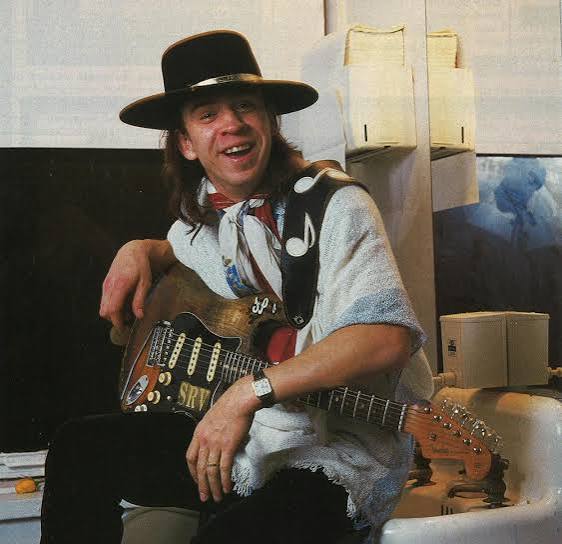
The Infamous Stevie Ray Vaughan Soundcheck
No crowd. No spectacle. Just Stevie Ray Vaughan checking levels at the Syria Mosque in 1986 — and sounding absolutely monstrous. What the footage reveals about tone, touch and the myth of the rig.
The Last 10%: Why You Can Copy a Famous Guitarist’s Entire Rig and Still Miss the Tone
You bought the guitar, the amp, and the pedals — so why doesn’t it sound right? The last 10 percent of guitar tone is the most important part, and it’s almost never about the gear list.
Why John Frusciante's Tone Is Harder to Copy Than You Think
Everyone chases the Strat, the Tube Screamer, the CE-1 chorus. But the real Frusciante sound lives in his hands, his dynamics, and the way he treats pedals like colors — not crutches.