
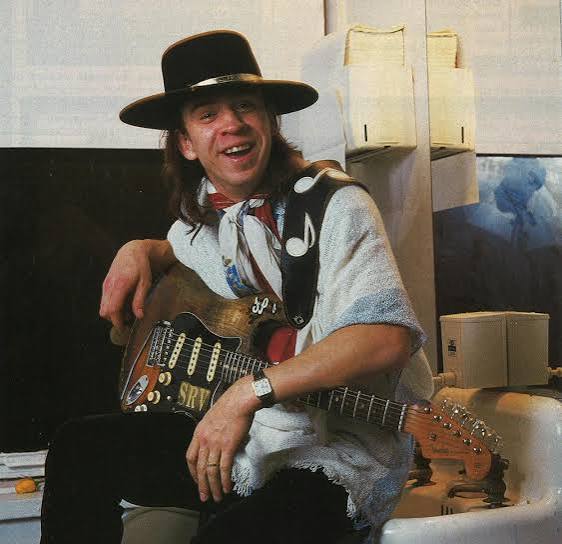
No crowd. No spectacle. Just Stevie Ray Vaughan checking levels at the Syria Mosque in 1986 — and sounding absolutely monstrous. What the footage reveals about tone, touch and the myth of the rig.
There is no roaring crowd. No dramatic introduction. No television production. No reason for Stevie Ray Vaughan to prove anything to anybody.
It is January 24, 1986. The location is the Syria Mosque in Pittsburgh, Pennsylvania, a legendary concert hall that would eventually disappear from the city's landscape.
Stevie Ray Vaughan and Double Trouble have a show to play that night. But this isn't the show. The seats are largely empty. The house lights are up. Crew members are working. The band is checking levels. And somebody has a camera running.
Then Stevie Ray Vaughan starts playing.
What happens over the next several minutes has become one of the great pieces of unofficial guitar footage from Vaughan's career: the 1986 Pittsburgh soundcheck.
For guitarists, it's mesmerizing. Because when almost everything associated with a Stevie Ray Vaughan concert is removed — the audience, adrenaline, spectacle and expectation — the thing that remains is perhaps the most important part. Stevie. And he sounds absolutely monstrous.
January 24, 1986 — Syria Mosque, Pittsburgh
The venue itself deserves some context. Pittsburgh's Syria Mosque was one of the city's historic performance spaces, hosting generations of major artists before its demolition in 1991.
On January 24, 1986, the bill included Stevie Ray Vaughan and Double Trouble alongside the Fabulous Thunderbirds, the band fronted by Stevie's older brother, Jimmie Vaughan.
The date isn't merely internet folklore. Archival records at Texas State University's Wittliff Collections preserve a Stevie Ray Vaughan and Double Trouble concert poster specifically dated January 24, 1986, Syria Mosque.
But the artifact guitarists continue passing around isn't the poster. It's the soundcheck. Photographer Greg Savage reportedly captured approximately 18 minutes of Vaughan preparing for the performance.
Three performances from the footage have circulated particularly widely: “Scuttle Buttin',” “Say What!” and “Ain't Gone 'n' Give Up on Love.” Three songs. Three different windows into Stevie Ray Vaughan's playing. And virtually none of the normal machinery of a concert. That's exactly what makes it special.
This Isn't Stevie Performing
At least, it isn't supposed to be. Most musicians understand what a soundcheck is. You're checking levels. Making sure monitors work. Listening for problems. Making adjustments. You're conserving some energy for later. Nobody bought a ticket to watch this part.
Stevie apparently didn't get that memo. When he launches into the material, the distinction between soundcheck Stevie and concert Stevie becomes remarkably difficult to locate.
The attack is there. The swagger is there. The dynamics are there. The vibrato is there. The rhythmic violence is there. Even the physical commitment is there.
At moments, Vaughan plays as though thousands of people are watching. They aren't. And that's precisely why the footage tells us something his biggest concerts can't. This wasn't an act.
“Scuttle Buttin'” — The Right Hand From Hell
If you wanted to choose one SRV song capable of exposing whether somebody is truly warmed up, “Scuttle Buttin'” would be a cruel choice. Its opening figure can appear manageable when slowed down and almost supernatural when played correctly at speed.
But speed alone isn't the problem. It's the articulation. The accents. The swing. The muting. The synchronization. And most importantly, the right hand.
During the Pittsburgh soundcheck, Stevie tears through it — and there's nothing surrounding the performance to distract from the mechanics. Listen to the pick attack. It's enormous. Vaughan isn't delicately extracting individual notes from the guitar. He's attacking an area of the strings and controlling which parts are allowed to speak.
Players attempting to imitate Stevie often concentrate almost entirely on the fretting hand. Learn the lick. Learn the bend. Learn the scale. But a huge percentage of the SRV vocabulary is happening in the other hand. The picking hand isn't merely producing notes. It's producing attitude.
Why Stevie's Playing Sounds So Big
There is an interesting contradiction in Vaughan's playing. It can sound almost uncontrolled. Yet it is extraordinarily controlled.
A less developed guitarist using similar physical movements would produce a mess of sympathetic noise and unwanted strings. Stevie doesn't. That requires muting. Lots of it. Unused fretting-hand fingers touch strings that shouldn't ring. The picking hand suppresses noise. The thumb becomes part of the equation.
The result is one of the signatures of SRV's sound: a single note can feel bigger than a single note. You're hearing the note, but you're also hearing the physical event surrounding it — pick noise, muted strings, amplifier response, string movement, percussion.
That is why copying an SRV lick perfectly on paper can still sound completely wrong. You copied the notes. You didn't copy the event.
Get Stevie Ray Vaughan’s “Pittsburgh Soundcheck (1986)” Tone
Tell ToneMD what guitar and gear you own and we’ll show you how to get as close as possible using the equipment you already have — full signal chain, real numbered settings, no guesswork.
Included with The Guitar Plugged Premium
“Say What!” — Stevie Without Words
The title couldn't be more appropriate. It's essentially Stevie communicating without a singer.
Jimi Hendrix understood that an electric guitar could function as something beyond a conventional melodic instrument. Feedback could become vocabulary. Noise could become punctuation. A wah pedal could become articulation. Dynamics could substitute for syllables.
Vaughan absorbed that philosophy but filtered it through Texas blues. The guitar talks. It shouts. It backs away. It answers itself. It becomes rhythmic and then melodic and then something closer to pure sound.
This is Vaughan testing equipment — but he's also testing response. What happens if I hit the guitar this way? What happens when I back off? What happens when I push the amp? What happens when I leave space? That's the real meaning of tone. It isn't a screenshot of amplifier settings. It's a relationship between the musician and everything after his hands.
“Ain't Gone 'n' Give Up on Love” — The Other Side of SRV
If “Scuttle Buttin'” demonstrates Vaughan's ferocity and “Say What!” demonstrates his command of texture, “Ain't Gone 'n' Give Up on Love” exposes another critical part of the equation. Space.
One of the easiest mistakes to make when studying Stevie Ray Vaughan is assuming his greatness came from playing more. More notes. More volume. More attack. More gain. But Vaughan's phrasing worked because he understood when not to play.
Listen to the spaces between phrases. Listen to how a bend is allowed to develop. Listen to the difference between attacking a note and allowing one to breathe. The silence isn't empty. It's tension. And Stevie understood that tension extraordinarily well.
The Gear Question
Naturally, guitarists watching old SRV footage eventually ask: what exactly are we hearing? His battered Stratocasters. Number One. The Tube Screamers. Fender Vibroverbs. Super Reverbs. Dumble amplifiers. Marshall components appearing at different points. Heavy strings. Eb tuning. The enormous amplifier setups.
Players have spent decades reverse-engineering the equipment because the logic seems obvious: if we can recreate Stevie's rig, perhaps we can recreate Stevie's sound.
The Pittsburgh footage creates a problem with that theory. You could identify every component on that stage — every tube, every speaker, every cable, every knob position — and you'd still be missing the most important component. Stevie Ray Vaughan.
The Myth of SRV's Heavy Strings
Few pieces of Vaughan mythology have inspired more unnecessary hand pain than his string gauges. Stevie became famous for using extraordinarily heavy strings by conventional electric-guitar standards, although his exact gauges varied. So generations of guitarists have installed telephone cables on their Stratocasters hoping the tone would suddenly appear. Usually something else appears first: pain.
The important part isn't simply that Vaughan used heavy strings. It's why that setup worked for him. Stevie possessed enormous physical authority over the instrument. The resistance of heavier strings gave him something to push against. His bends remained controlled. His vibrato remained expressive.
For another guitarist, the same setup may produce the opposite result. Your bends become flat. Your vibrato gets worse. Your hands tense. Your timing suffers. And suddenly you've copied Stevie's equipment while moving further away from Stevie's music.
Stevie's Right Hand Was Part of the Amplifier
“You copied the notes. You didn't copy the event.”
A great tube amplifier is dynamic. Hit it gently and one thing happens. Hit it harder and something else happens. Push the front end and the response changes again. Vaughan exploited that relationship constantly. His picking hand effectively functioned like another control on the amplifier.
This is why adding more distortion to an SRV preset can actually make it less convincing. Too much gain compresses the signal. The difference between soft and aggressive playing shrinks. Everything becomes smoother — and smooth isn't necessarily what we want. A convincing Stevie tone should fight back a little.
The Tube Screamer Wasn't the Secret
Plug a Stratocaster into a Tube Screamer and somebody will inevitably play an SRV lick. But Stevie didn't become Stevie because he discovered a green pedal.
The Tube Screamer works brilliantly in this context because it can push an amplifier while shaping the midrange and controlling some low-end information. Used correctly, it can help a Strat sound thicker without erasing what makes a Strat sound like a Strat.
But the pedal is a tool. It cannot create Vaughan's timing. It cannot create his muting. It cannot create his vibrato. It cannot decide how hard to strike the string. It cannot make a phrase breathe. The pedal helps create the environment. Stevie creates the music.
Why January 1986 Matters
Stevie Ray Vaughan was 31 years old. Soul to Soul had been released only months earlier. Double Trouble had expanded with keyboardist Reese Wynans. The band was touring heavily. And Vaughan was approaching one of the darkest periods of his personal life.
Later in 1986, years of substance abuse would culminate in a physical collapse while touring Europe. He would eventually enter treatment and emerge sober.
That gives the Pittsburgh footage a complicated historical position. We're watching a musician operating at an astonishing level while, away from the guitar, his life was becoming increasingly unsustainable. You don't necessarily hear that when he starts playing. The musical machine still sounds invincible. The human being wasn't.
The Fabulous Thunderbirds Connection
The night's billing adds another layer. Stevie's older brother Jimmie Vaughan was part of the evening. The Vaughan brothers grew from much of the same musical soil, yet became radically different guitarists.
Stevie could be explosive, muscular and volcanic. Jimmie's brilliance frequently comes from restraint — economy, placement and leaving enormous amounts of space. Both are unmistakably Texas. Neither sounds interchangeable. Influence doesn't have to produce imitation.
Soundcheck Versus Performance
What changes when nobody is watching? For many musicians, quite a lot. Performance brings adrenaline. The audience creates feedback. Mistakes suddenly matter. Soundcheck is different. You're working. You're listening. You're solving problems.
The fact that Vaughan's musical identity remains so intense in that environment suggests something profound: the intensity wasn't primarily for the audience. It was how he played. The concert shows us the finished product. The soundcheck shows us the machinery running with the cover removed.
ToneMD: Building the Pittsburgh '86 Foundation
Don't begin by searching for maximum gain. Start with the philosophy of the rig.
- Guitar: Strat-style guitar
- Tuning: Eb
- Pickup: Neck and bridge positions depending on the passage
- Amp character: Loud, dynamic American-style clean/edge-of-breakup foundation
- Overdrive: Tube Screamer-style boost/drive, moderate gain
- Mids: Prominent without becoming boxy; bass controlled
- Treble/presence: Enough attack to preserve the Strat's bite
- Reverb: Moderate to restrained; compression: don't kill the dynamics
Then tell ToneMD what you're actually using — Helix, Fractal, Headrush, Kemper, ToneX, Neural DSP, AmpliTube, Boss Katana or another supported platform — and build the closest practical version around your equipment.
But before changing another parameter, do something else. Play one blues phrase quietly. Play it again harder. Then play it as aggressively as possible while keeping every unwanted string under control. If all three versions sound essentially identical, your rig may have too much compression or gain.
Try the Soundcheck Test Yourself
Set up your guitar. Turn on your amp. Forget you're recording. Forget about getting the perfect take. Forget about playing an entire song.
For ten minutes, simply check your sound. Play fragments. Bends. Chords. Rhythmic ideas. Licks. Play quietly. Play violently. Listen to what the guitar gives you. Change something. Listen again.
The objective isn't to imitate Stevie Ray Vaughan. The objective is to discover whether you have a recognizable musical identity when nobody is watching. That's a much harder question.
The Most Important SRV Setting Isn't on an Amplifier
Forty years after the Pittsburgh soundcheck, we can model amplifiers Stevie could only access physically. Capture cabinets. Profile rigs. Download presets. Match EQ curves. Save thousands of dollars' worth of equipment inside a box that fits in a backpack.
And yet the central lesson of this grainy 1986 footage hasn't changed. Tone doesn't begin at the amplifier. It doesn't begin at the Tube Screamer. It doesn't even begin at the pickup. It begins when the guitarist touches the string.
Why This Footage Still Hits So Hard
There are greater Stevie Ray Vaughan performances. El Mocambo is practically required viewing for electric guitarists. Austin City Limits captured him at different stages. Montreux became part of his legend.
But Pittsburgh offers something different. A mostly empty venue. A working band. A soundcheck. A camera that happened to be there. And a guitarist apparently incapable of treating the instrument casually.
They're not important because Stevie Ray Vaughan played perfectly. They're important because they expose what remained when the show itself was removed.
The Guitar Plugged Verdict
The January 24, 1986 Syria Mosque soundcheck shouldn't merely be watched as another vintage SRV clip. Study it. Watch the right hand. Watch the muting. Listen to the dynamics. Listen to the spaces. Listen to how much information Vaughan creates before the signal ever reaches an amplifier.
This wasn't the encore. This wasn't Austin City Limits. This wasn't El Mocambo. They were checking the sound. And Stevie Ray Vaughan played like Stevie Ray Vaughan anyway.
It answers one of the most interesting questions we can ask about any great musician: what do they sound like when nobody is watching? In Stevie Ray Vaughan's case, the answer is almost ridiculous. Exactly like the legend.
For more on the rig behind the myth, read Tone Decoded: Stevie Ray Vaughan.
Experience-driven coverage, not algorithm bait.
- 20+ years of guitar playing experience
- Real-world retail experience at Guitar Center
- Thousands of hours testing guitars, amps, and pedals
- A community of 50,000+ guitar enthusiasts across platforms
- Partnerships with Fender, DistroKid, TrueFire, Card Chords, and Enya
- Editorial standards published openly — see how we test gear
The Modern Guitar Magazine. Delivered to your inbox.
No spam. No gimmicks. Just great guitar content — stories, tones, iconic solos, and honest gear takes. Every week.
Discussion (0)
Sign in to join the discussion.
Sign in to commentLoading comments…
Discover another guitar story
Swipe through our latest features, breaking news and iconic solos — one story at a time.
Open Swipe →More in Tone Decoded

The Last 10%: Why You Can Copy a Famous Guitarist’s Entire Rig and Still Miss the Tone
You bought the guitar, the amp, and the pedals — so why doesn’t it sound right? The last 10 percent of guitar tone is the most important part, and it’s almost never about the gear list.
Why John Frusciante's Tone Is Harder to Copy Than You Think
Everyone chases the Strat, the Tube Screamer, the CE-1 chorus. But the real Frusciante sound lives in his hands, his dynamics, and the way he treats pedals like colors — not crutches.

Joe Perry's Guitar Tone Decoded: The Secret Sauce Behind Aerosmith's Legendary Sound
Inside Joe Perry's iconic tone — the vintage Les Pauls, cranked Marshalls, key pedals, and playing techniques that define Aerosmith's sound.