
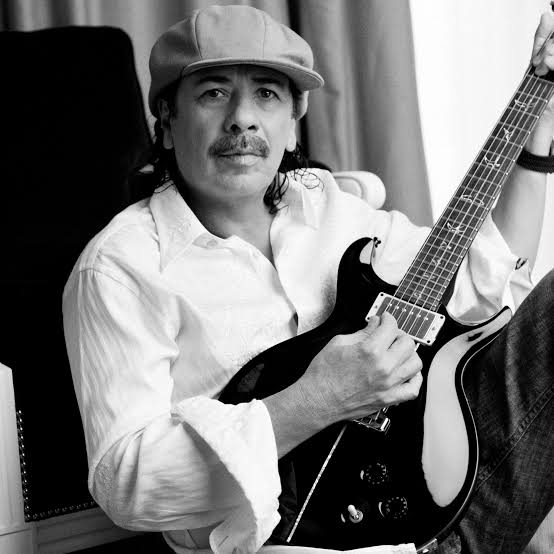
Happy Birthday, Carlos Santana: Celebrating the Guitarist Who Made Six Strings Sing
From the fire of Woodstock to the worldwide phenomenon of Supernatural, we celebrate the extraordinary career, unmistakable sound and lasting influence of Carlos Santana on his 79th birthday.
From the fire of Woodstock to the worldwide phenomenon of Supernatural, Carlos Santana built a career around something that can't be measured by speed, technique, or complexity: the ability to make a single guitar note feel alive.
Today, on his 79th birthday, we celebrate the extraordinary career, unmistakable sound, and lasting influence of one of guitar music's true originals.
There are guitarists you recognize after a few bars.
Then there are guitarists you recognize after one note.
Carlos Santana belongs firmly in the second category.
Born July 20, 1947, in Jalisco, Mexico, Santana would eventually create one of the most instantly identifiable guitar voices in popular music — a soaring combination of blues phrasing, singing sustain, controlled feedback, Latin rhythm, jazz harmony, and an almost vocal sense of melody.
Today, Carlos Santana turns 79 years old.
And more than half a century after the world watched a young Santana explode onto the stage at Woodstock, his guitar still carries that same unmistakable quality.
You don't simply hear Carlos Santana play.
You hear Carlos Santana.
Few guitarists have ever achieved that level of identity.
• Guitar: PRS Santana signature (earlier era: Gibson SG)
• Amp: Mesa/Boogie Mark-series high-gain tube heads
• Boost: Tube Screamer-style overdrive into an already-cooking amp
• Signature move: Vocal vibrato, patient bends, endless sustain
• Secret ingredient: Silence — knowing when not to play
Before the World Knew His Name
Long before the Grammys, platinum records, sold-out arenas, and signature PRS guitars, Santana's musical journey began in Mexico.
He was introduced to music at an early age and initially learned violin before gravitating toward the instrument that would ultimately define his life: the guitar.
After moving to the United States and becoming immersed in the San Francisco music scene, Santana began developing a sound that didn't fit neatly into any existing category.
There was blues in it. There was rock. There was jazz. There were Latin and Afro-Latin rhythms. There was improvisation. And above everything else, there was melody.
While much of the late-'60s guitar world was pushing toward heavier amplification and increasingly aggressive blues-rock, Santana found another path. His guitar could scream when necessary, but it could also cry, whisper, and seemingly hold a note forever.
The Santana Blues Band — eventually shortened simply to Santana — began attracting attention around San Francisco.
Then came 1969. Then came Woodstock. And everything changed.
Woodstock: The Performance That Introduced Santana to the World
Imagine being a relatively unknown band walking onto one of the biggest stages in music history.
Now imagine walking off as one of the festival's most talked-about discoveries.
That was Santana at Woodstock.
The band's performance of "Soul Sacrifice" became one of the defining musical moments associated with the legendary 1969 festival. The percussion was relentless. The rhythm section seemed to be moving at full speed. And cutting through everything was Santana's guitar.
His Gibson SG delivered a rawer, more aggressive version of the tone many fans would later associate with him, but the essential ingredients were already there: sustain, melody, emotion, and an ability to build tension through phrasing rather than simply filling every available space with notes.
Santana's Woodstock appearance arrived before the band's debut album had even been released. For millions of listeners, the introduction was immediate.
This was something different. Rock guitar had collided with Latin percussion, blues improvisation, and jazz-inspired musical freedom. And Carlos Santana was standing at the center of it.
Get Carlos Santana’s “Europa” Tone
Tell ToneMD what guitar and gear you own and we’ll show you how to get as close as possible using the equipment you already have — full signal chain, real numbered settings, no guesswork.
Included with The Guitar Plugged Premium
Abraxas and the Arrival of a Guitar Classic
If Woodstock introduced Santana to the world, 1970's Abraxas proved the band was no festival accident.
The album reached No. 1 on the Billboard 200 and produced recordings that remain essential pieces of Santana's legacy, including "Black Magic Woman" and "Oye Como Va."
For guitarists, "Black Magic Woman" became particularly important. Santana didn't write the song — it originated with Peter Green and Fleetwood Mac — but Santana's interpretation became the version recognized by generations of listeners.
And the guitar playing explains why. Listen closely to the opening. There is no rush. No attempt to overwhelm the listener. Santana allows notes to hang in the air. The vibrato is deliberate. The sustain feels endless. Every bend seems to have a destination.
It's a lesson guitarists can spend an entire lifetime trying to learn: playing fewer notes doesn't mean saying less. Sometimes one perfectly placed note can carry more emotional weight than an entire scale played at full speed.
Santana understood that early. And it became one of the foundations of his style.
The Tone That Guitarists Have Chased for Decades
Ask guitar players to describe the "Santana tone," and one word inevitably appears: sustain.
But sustain alone doesn't explain it. Santana's sound is the product of the entire chain — from the guitar and amplifier to gain, feedback, volume, and, most importantly, his hands.
His longtime association with Paul Reed Smith guitars has become one of the most recognizable artist-and-guitar-maker relationships in modern guitar history. Santana was also famously connected with Mesa/Boogie, helping establish the high-gain, singing lead tone that became a defining part of his sound.
But buying the equipment doesn't automatically produce the voice. The secret has always been in the phrasing.
Santana's vibrato is vocal. His bends are patient. His melodies often feel composed even when they're improvised. And perhaps most importantly, he has never sounded afraid of silence.

X Concepts Strings • Made in USA
Never Run Out of Strings Again.
Join the X Concepts String Club and get fresh USA-made strings delivered every month—plus Premium membership options for the full Guitar Plugged experience.
Santana lets notes breathe. That's why his solos often feel less like guitar exercises and more like conversations. For more on the specific gear and technique that shape his voice, see our full Tone Decoded: Carlos Santana breakdown.
"Europa": When the Guitar Became the Singer
If you wanted to explain Santana's greatness to someone using one instrumental, "Europa (Earth's Cry Heaven's Smile)" would be a strong place to start.
The guitar essentially becomes the lead vocalist. The melody rises gradually, Santana resisting the temptation to reveal everything immediately. The notes stretch. The dynamics increase. The sustain grows. And eventually the guitar seems to break free.
"Europa" demonstrates something Santana has understood throughout his career: technical ability matters most when it serves emotion. You don't need lyrics to understand what the song is saying. The guitar says enough.
“You don't simply hear Carlos Santana play. You hear Carlos Santana.”
Refusing to Stand Still
Santana could have spent his entire career recreating the formula that made the early records successful. He didn't.
Albums such as Caravanserai pushed the music deeper into jazz fusion and more adventurous territory, while his collaboration with John McLaughlin on Love Devotion Surrender demonstrated Santana's willingness to explore spirituality and improvisation far beyond conventional rock boundaries.
That curiosity became an important part of his longevity. Santana wasn't interested in simply being frozen in 1969. His career continued evolving.
Decades passed. Musical trends changed. Guitar heroes came and went. And then, at a time when many artists from Santana's generation had settled comfortably into legacy status, something extraordinary happened.
Carlos Santana became one of the biggest artists in the world. Again.
Supernatural: One of Rock's Greatest Comebacks
In 1999, Santana released Supernatural. The result was enormous.
The album introduced Santana to an entirely new generation through collaborations with contemporary artists while keeping his guitar unmistakably at the center.
Then came "Smooth." Featuring Rob Thomas on vocals, the song became a massive hit and transformed Santana from legendary guitarist into a contemporary chart force.
But the remarkable part wasn't simply the commercial success. It was that Santana still sounded like Santana. The production had changed. The decade had changed. Popular music had changed. The guitar hadn't lost its identity.
According to the Recording Academy, Carlos Santana has earned 10 Grammy Awards. Supernatural won Album of the Year, while "Smooth" earned Record of the Year, helping turn the period into one of the most remarkable late-career resurgences in rock history.
A guitarist who had stunned Woodstock in 1969 was dominating popular music three decades later. Think about how rare that is.
The Songs That Define a Legendary Career
Trying to reduce Santana's career to a handful of recordings is nearly impossible, but several tracks provide an incredible journey through his musical evolution.
"Soul Sacrifice" captures the explosive energy of the early Santana band.
"Black Magic Woman/Gypsy Queen" showcases the hypnotic phrasing and atmosphere that helped define his classic sound.
"Oye Como Va" demonstrates the rhythmic fusion that separated Santana from nearly every other rock band of the era.
"Samba Pa Ti" reveals his gift for instrumental melody.
"Europa" shows the emotional power of sustained lead guitar.
"She's Not There" highlights another memorable Santana interpretation.
"Smooth" represents an extraordinary second commercial peak.
"Maria Maria" demonstrates how comfortably Santana's guitar could exist inside modern production.
Across all of them, one thing remains constant. You always know who's playing.
A Career Measured in More Than Records
The numbers surrounding Santana's career are staggering. His official biography credits Santana with more than 100 million records sold, while his career includes 10 Grammy Awards and decades of performances around the world.
Santana was inducted into the Rock & Roll Hall of Fame with the classic Santana lineup in 1998.
But statistics still don't explain his influence. His greatest contribution may be the musical door he opened.
Santana proved that rock guitar didn't have to exist within one cultural or rhythmic vocabulary. A guitar could sit alongside congas and timbales. Blues phrasing could coexist with Latin rhythms. Rock could meet jazz. Spirituality could exist alongside distortion. A guitarist could be technically brilliant without making technique the entire point.
That philosophy helped create a musical identity that remains almost impossible to imitate.
Why Carlos Santana Still Matters to Guitar Players
There will always be another faster guitarist. There will always be someone who knows more scales. There will always be a player capable of executing something technically astonishing.
Carlos Santana's career offers a different lesson. Find your voice.
Because technique can be copied. Equipment can be purchased. Scales can be learned. But identity? That's much harder.
Santana developed a musical voice so distinctive that generations of listeners can recognize him almost immediately. That's the goal many guitarists spend their entire lives chasing. Not simply to play well. But to sound like themselves.
Happy Birthday, Carlos
Carlos Santana's career stretches across generations, genres, and eras of popular music.
From Mexico to San Francisco. From Woodstock to Abraxas. From "Black Magic Woman" to "Europa." From the experimental years to the phenomenal rebirth of Supernatural.
Through it all, the sound of his guitar remained unmistakable. Warm. Singing. Sustaining. Human.
Carlos Santana reminds us that the greatest guitar playing isn't always about how many notes you can play. Sometimes it's about finding the one note that makes someone feel something.
Happy 79th birthday to Carlos Santana — a guitarist who didn't simply master the instrument. He gave it a voice.
Happy Birthday, Carlos.
— The Guitar Plugged
What to Remember
- ▸Born July 20, 1947 in Jalisco, Mexico, Carlos Santana turns 79 today — with a guitar voice you can identify in a single note.
- ▸Santana's 1969 Woodstock performance of "Soul Sacrifice" introduced Latin rhythms, blues phrasing and jazz freedom to rock guitar in one unforgettable set.
- ▸*Abraxas* (1970) established the classic Santana sound: patient vibrato, endless sustain, and the confidence to let single notes carry entire passages.
- ▸His long relationships with PRS guitars and Mesa/Boogie amplifiers built one of the most chased lead tones in modern guitar — but the real secret is in his hands.
- ▸*Supernatural* (1999) delivered one of rock's greatest late-career comebacks, winning Album of the Year at the Grammys while Santana's guitar voice remained completely intact.
Keep Exploring
- Ibanez TS9 Tube Screamer Overdrive$99·Check on Amazon →
- Santana — Abraxas (Vinyl / CD)$18·Check on Amazon →
- Santana — Supernatural$14·Check on Amazon →
Some links are affiliate links — we may earn a small commission at no cost to you.
Shop Santana-Inspired Gear
Some links may be affiliate links. We may earn a small commission at no cost to you.
Experience-driven coverage, not algorithm bait.
- 20+ years of guitar playing experience
- Real-world retail experience at Guitar Center
- Thousands of hours testing guitars, amps, and pedals
- A community of 50,000+ guitar enthusiasts across platforms
- Partnerships with Fender, DistroKid, TrueFire, Card Chords, and Enya
- Editorial standards published openly — see how we test gear
The Modern Guitar Magazine. Delivered to your inbox.
No spam. No gimmicks. Just great guitar content — stories, tones, iconic solos, and honest gear takes. Every week.
Ask GP
3 free questions a dayStill curious? Ask GP about this story.
Your personal classic-rock and guitar guide — ask anything about Happy Birthday, Carlos Santana.
Discussion (0)
Sign in to join the discussion.
Sign in to commentLoading comments…
Discover another guitar story
Swipe through our latest features, breaking news and iconic solos — one story at a time.
Open Swipe →More in Guitar Talk
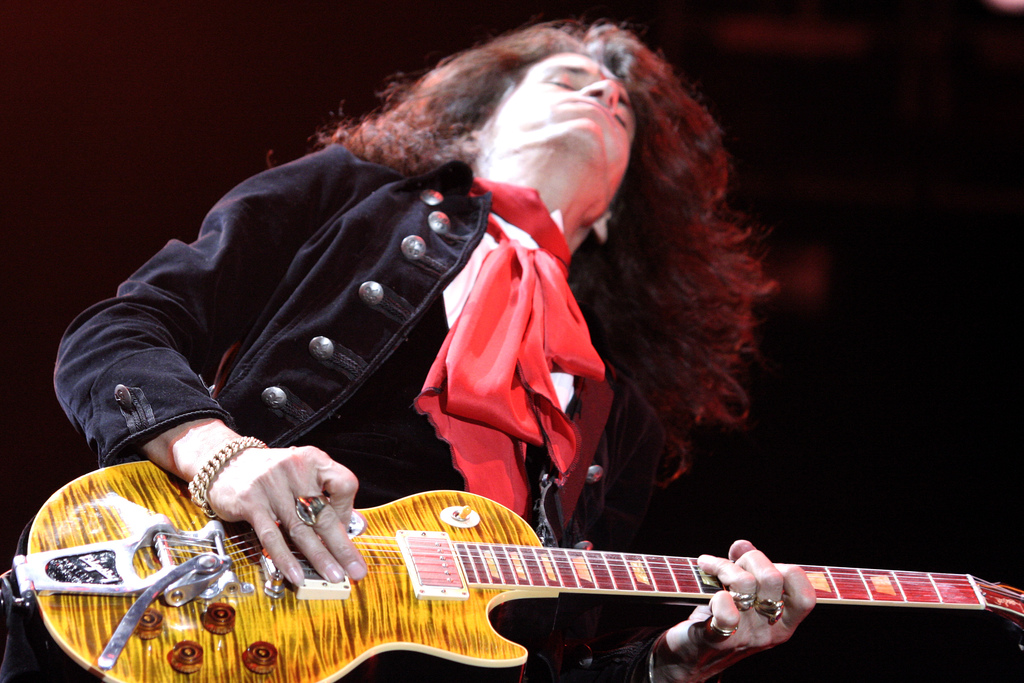
Happy Birthday, Joe Perry: The Riff Machine Who Gave Aerosmith Its Swagger
Joe Perry turns 76 today. From the swampy grind of “Sweet Emotion” to the reunion that saved a band, this is the career of the guitarist who taught American hard rock how to strut.
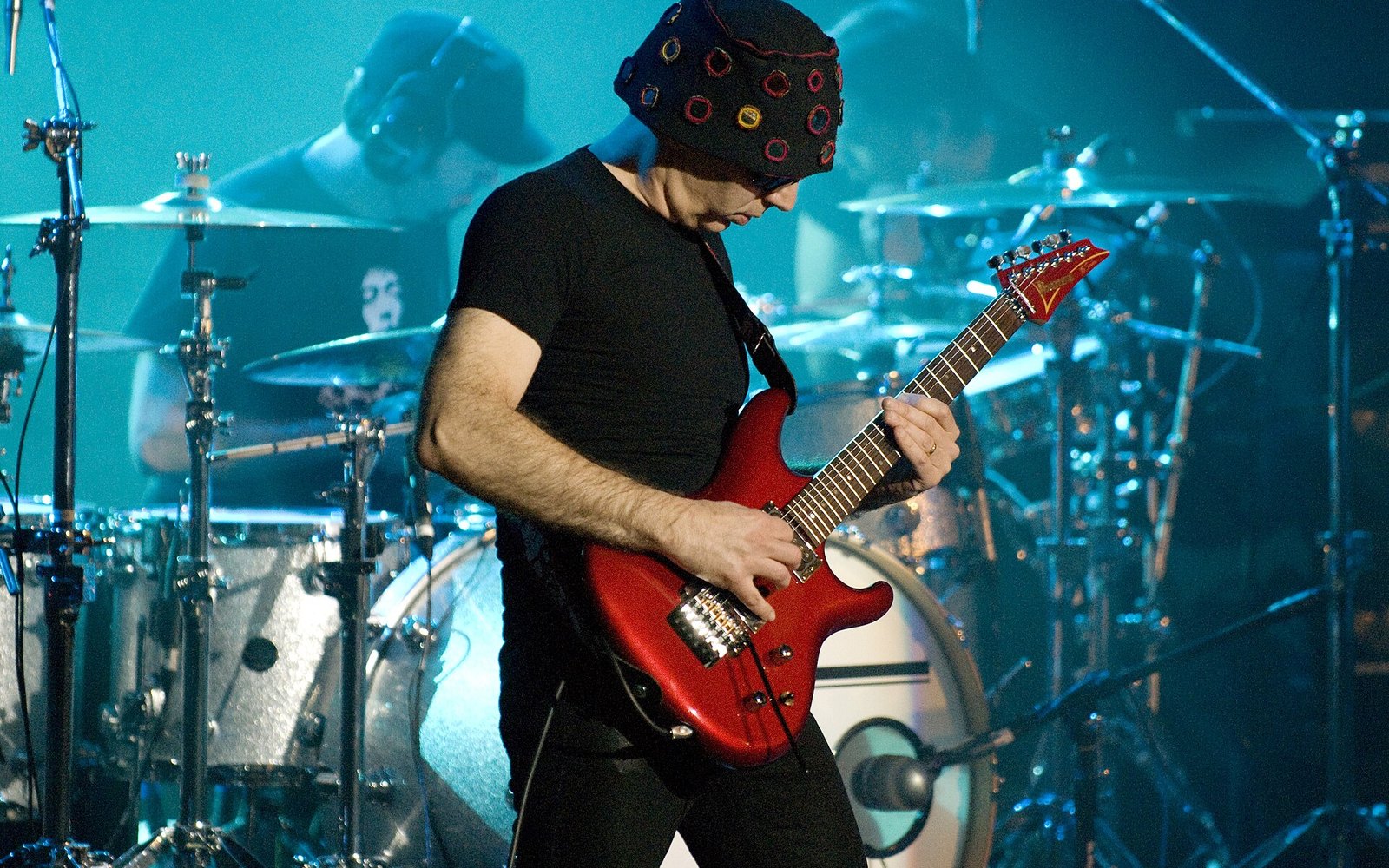
History of the Riff: How Joe Satriani Made “Flying in a Blue Dream” Feel Weightless
An acoustic guitar in an unusual tuning, a stray broadcast and a melody that seems to hang in the air: inside the construction of Satriani’s 1989 masterpiece.
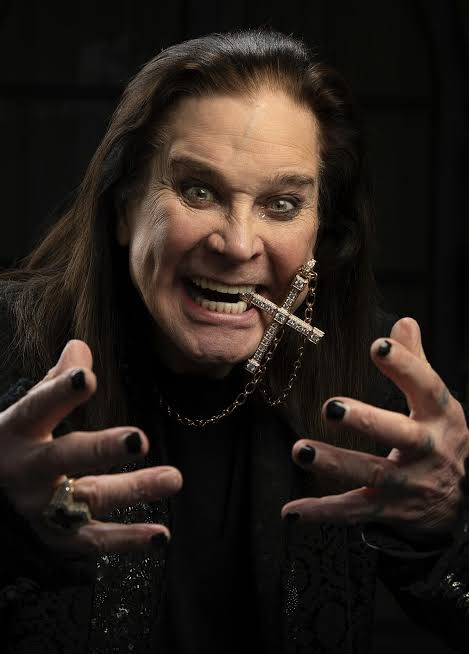
Tony Iommi Opens Up About His Final Conversation With Ozzy Osbourne: “I Still Can't Get It in My Head”
The Black Sabbath guitarist says Ozzy was exhausted after the band's emotional farewell — but determined to give fans one final show.