
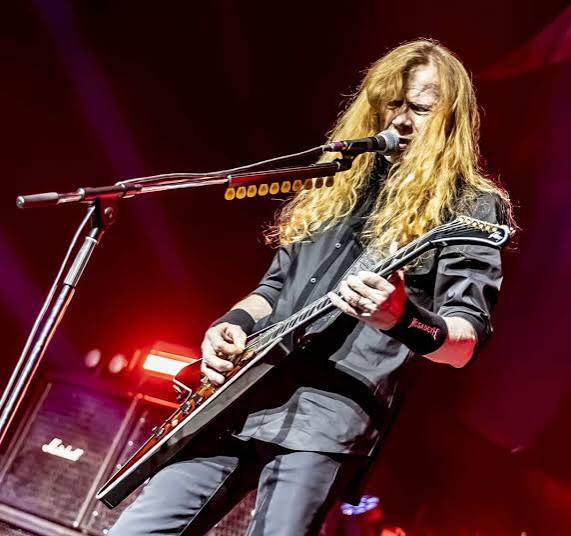
History of the Riff: Megadeth's "Tornado of Souls" — The Perfect Storm That Changed Metal Guitar
How Dave Mustaine built one of thrash metal's most relentless riffs — and how Marty Friedman walked into Megadeth and turned the song into guitar history.
There are guitar riffs that announce themselves immediately.
Tony Iommi's three-note apocalypse at the beginning of "Iron Man." Eddie Van Halen detonating "Unchained." Angus Young carving out the opening of "Back in Black." James Hetfield's galloping descent into "Master of Puppets."
And then there is "Tornado of Souls."
It doesn't lumber into the room. It arrives already moving.
The guitar seems to be chasing itself, built from a combination of palm-muted aggression, open-string propulsion and melodic movement that feels simultaneously controlled and slightly dangerous. Before Dave Mustaine even begins singing, Megadeth has already established the atmosphere: something is coming, and you probably shouldn't be standing in its way.
More than three decades after its release, "Tornado of Souls" occupies an unusual place in guitar history. For casual listeners, it is one of the definitive Megadeth songs. For metal fans, it is one of the brightest moments on one of thrash metal's defining albums. For guitar players, however, it has become something else entirely.
It is almost a rite of passage. The riff tests your picking hand. The rhythm parts test your ability to remain precise under pressure. The transitions punish sloppy timing. And then, just when you think you have survived the song, Marty Friedman arrives with a lead break that has become one of the most studied, debated and admired guitar solos in heavy metal.
But the legend of "Tornado of Souls" did not begin with that solo. It began with a band rebuilding itself — and a riff that was already waiting for the right lineup to arrive.
Megadeth Before the Storm
By the end of the 1980s, Megadeth was already one of the most technically intimidating bands in metal. Dave Mustaine had spent the decade developing a rhythm guitar language that sounded distinctly different from practically everyone around him.
Where many metal riffs could be reduced to blocks of power chords and pedal tones, Mustaine frequently seemed to write guitar parts as though the rhythm instrument were simultaneously responsible for rhythm, melody and percussion. Notes moved inside chords. Open strings collided with fretted notes. Riffs changed direction unexpectedly. Accents appeared in uncomfortable places. And somehow Mustaine sang over them.
That approach had already powered records like Peace Sells... But Who's Buying? and So Far, So Good... So What!, but the lineup surrounding Mustaine and bassist David Ellefson had become unstable. Guitarist Jeff Young and drummer Chuck Behler were gone. Nick Menza would eventually take over behind the drums. The second guitar position remained open.
And while the lineup was changing, the music that would eventually become Rust in Peace was already taking shape. Ellefson has recalled that he and Mustaine continued composing and making demos of songs including "Holy Wars," "Tornado of Souls" and "Polaris" before Marty Friedman became Megadeth's guitarist.
That distinction matters. Because "Tornado of Souls" is so strongly associated with Friedman that it is easy to mentally rewrite history and imagine the song emerging from the famous Mustaine-Friedman guitar partnership. It didn't. The storm was already forming. Friedman would eventually step inside it.
The Riff
Strip away the mythology surrounding the solo and listen again to the opening guitar part. The genius of "Tornado of Souls" is that it feels more complicated than it initially sounds.
The riff does not rely on overwhelming speed for its identity. Instead, it creates momentum through movement. The palm-muted low-string attack acts almost like a motor underneath the phrase, while the fretted notes provide enough melodic information to keep the riff from becoming a conventional thrash-metal chug.
That balance is crucial. Too much open-string pedaling and the riff becomes static. Too much melodic movement and it loses its physical weight. Mustaine found the center. The low strings provide aggression. The higher notes provide direction. The spaces provide tension. And the picking hand ties everything together.
It is one of the recurring characteristics of Mustaine's best rhythm work: the riff feels less like a repeated guitar pattern and more like a mechanism. Every component appears connected to the next. One note pulls another note forward. A chord becomes a transition. A transition becomes another riff. The guitar never seems completely at rest.
That is one reason "Tornado of Souls" remains deceptively difficult to play convincingly. Plenty of guitarists can learn the notes. Far fewer can make the riff move.
The Most Important Part Isn't the Speed
Thrash metal has always had a complicated relationship with speed. Speed is exciting. Speed is measurable. Speed is immediately impressive. But great thrash rhythm guitar is rarely about simply playing fast. It is about playing aggressively without allowing the rhythm to collapse.
On "Tornado of Souls," the picking has to remain extraordinarily controlled. Palm muting cannot choke the notes. Open notes cannot ring into places where they don't belong. The attack has to remain consistent. And the guitarist has to resist the temptation to rush.
That last part may be the hardest. When inexperienced players attempt riffs like this, adrenaline usually wins. The hands speed up. The drummer disappears. The subdivisions blur. The riff technically survives, but the groove disappears.
Megadeth's version has something different. It swings forward without falling forward. Mustaine's rhythm playing has always contained an almost percussive understanding of guitar. His pick attack does not merely articulate pitches; it establishes where the beat lives.
Listen closely and the guitar begins functioning like an additional piece of the drum kit. The muted attacks behave almost like kick-drum hits. The sharper chords behave like cymbal accents. The open spaces matter almost as much as the notes themselves. That is why simply memorizing tablature will never fully explain the riff. You have to understand its architecture.
The Classic Megadeth Lineup Arrives
While Mustaine and Ellefson were developing the songs, Megadeth still needed another guitarist. The search eventually brought them to Marty Friedman.
Friedman was not an unknown shredder wandering into an audition. He had already developed a formidable reputation through Cacophony, his partnership with Jason Becker and his solo work. His playing was unusual even by the extreme standards of late-'80s virtuoso guitar.
He possessed speed, certainly. But speed was not what made him distinctive. His phrasing sounded different. His bends arrived from strange angles. His melodies often contained sounds associated with music far outside conventional American metal vocabulary. He could play a technically outrageous phrase and somehow make it sound emotional rather than academic.
Megadeth's official timeline places Friedman's hiring in February 1990, making Rust in Peace the first Megadeth studio album to feature both Friedman and drummer Nick Menza.
For Mustaine, it was an extraordinary combination. Mustaine brought angular aggression. Friedman brought fluid melodic unpredictability. Mustaine often sounded like machinery threatening to break apart. Friedman sounded like someone singing over the machinery. "Tornado of Souls" would become perhaps the purest demonstration of that contrast.
Why Marty Friedman Was the Perfect Guitarist for This Song
Imagine a conventional metal shredder playing over "Tornado of Souls." The result probably still works. There are obvious options. Fast alternate-picked scales. Sweep-picked arpeggios. Pentatonic sequences. Tapping. A dramatic bend. Another fast run. Technically impressive. Musically forgettable.
Friedman approached guitar solos differently. His lines frequently avoid the predictable geometric shapes that guitarists naturally fall into on the fretboard. Many guitarists learn patterns. Friedman seems to hear destinations.
He bends into notes that other players would simply fret. He moves between strings in ways that can feel physically awkward because the phrase appears to be dictated by melody rather than convenience.
That is particularly important here. The solo is filled with technical fireworks, but very little of it sounds like an exercise. It tells a story. There is escalation. Release. Tension. Vulnerability. Violence. Melody. And that towering bend that seems to suspend the entire track in midair.
Guitar Player has described Friedman's approach as a combination of acrobatic arpeggios, distinctive bending and exotic scale colors, while singling out "Tornado of Souls" as one of the most inspired solos of his career.
Get Megadeth’s “Tornado of Souls” Tone
Tell ToneMD what guitar and gear you own and we’ll show you how to get as close as possible using the equipment you already have — full signal chain, real numbered settings, no guesswork.
Included with The Guitar Plugged Premium
That vocabulary gave the song something Mustaine's riff alone could not provide. The riff is the tornado. Friedman becomes the soul.
The Handshake
There is a remarkable story Friedman has told about completing the solo. After Friedman recorded his lead for "Tornado of Souls," Dave Mustaine came into the studio and listened to it. Once.
According to Friedman, Mustaine then turned around without saying anything and shook his hand. Friedman later remembered that moment as the instant he truly felt like Megadeth's guitarist.
For anyone familiar with Mustaine's reputation for demanding musicianship, the story says plenty without requiring another word. There was nothing to fix. Nothing to explain. No speech required. The solo had said enough.
Decades later, musicians continue dissecting those few seconds of guitar almost note by note. Yet Friedman himself has often resisted treating it like some carefully engineered mathematical achievement. Asked years later about his process for solos such as "Tornado of Souls," he described an intuitive approach much closer to responding to the music in the moment than constructing a technical showcase.
That is perhaps the great irony of the solo. Thousands of guitarists have painstakingly analyzed something whose creator approached it primarily as music.
A Guitar Solo Becomes a Benchmark
Some solos become famous because the song becomes famous. Others develop independent lives. "Tornado of Souls" belongs to the second category.
You can find guitarists who may not know every lyric to the song but can tell you exactly when the Friedman solo begins. You can find players spending months trying to reproduce the bends. You can find slow-motion lessons devoted to individual phrases. You can find debates over fingerings, picking patterns and vibrato.
Former Megadeth guitarist Kiko Loureiro even described "Tornado of Souls" as something guitarists use as a benchmark, recalling that he once sent Friedman a video of himself playing it.
That might be the clearest explanation of the solo's modern status. It is no longer merely a piece of music. It is an exam. Can you play "Tornado"? For a certain generation of metal guitarist, the question carries roughly the same weight that "Can you play 'Eruption'?" once did. Playing all the notes, however, is only the first level. Playing them like Friedman is another problem entirely.
The Bend That Separates Guitarists
Fast passages naturally attract attention because difficulty is visible. A listener watches fingers moving rapidly and understands immediately that something technically demanding is happening.
Bending is different. One finger moves. Maybe two. Yet a single bend can reveal more about a player than thirty perfectly executed notes.
Friedman's solo is a masterclass in that distinction. His bends are not decorative punctuation between fast sections. They are structural elements of the melody. The pitch has to arrive correctly. The vibrato has to feel intentional. The note has to bloom.
Attack too aggressively and it becomes harsh. Arrive flat and the emotional effect collapses. Rush the vibrato and the phrase becomes nervous. Hold it too cleanly and you lose the human tension.
That is where the "Tornado" solo humiliates otherwise excellent guitarists. The speed can be practiced mechanically. The bend demands judgment. And judgment is much harder to practice.
Dave Mustaine's Rhythm Guitar Is Still the Foundation
The popularity of Friedman's solo occasionally obscures another fact: there is no legendary "Tornado of Souls" solo without the rhythm guitar underneath it. Mustaine's rhythm part creates the emotional environment Friedman responds to.
That relationship demonstrates why the classic Megadeth lineup worked so well. The two players did not need to sound alike. In fact, the music benefited because they didn't. Mustaine is sharp-edged. Friedman is elastic. Mustaine attacks. Friedman bends. Mustaine organizes chaos into riffs. Friedman floats melody across the chaos.
During the Rust in Peace era, Megadeth did not sound like a band with a rhythm guitarist and a lead guitarist. It sounded like a band with two completely different philosophies of electric guitar occupying the same song. "Tornado of Souls" may be the greatest example.
The Rust in Peace Machine
Rust in Peace arrived on September 24, 1990 through Capitol Records. It was Megadeth's fourth studio album and the first to feature the Mustaine-Friedman-Ellefson-Menza lineup that would become one of the most celebrated incarnations of the band.
The album is filled with songs that could individually anchor a guitarist's reputation. "Holy Wars... The Punishment Due." "Hangar 18." "Take No Prisoners." "Five Magics." "Lucretia." "Rust in Peace... Polaris." And "Tornado of Souls."
The sheer density of guitar ideas is staggering. Many metal albums contain one or two riffs players spend decades discussing. Rust in Peace practically weaponizes them.
“The riff is the tornado. Friedman becomes the soul.”
"Tornado," however, occupies a slightly different emotional space. There is aggression, certainly. But there is melody everywhere. Even the brutality feels strangely elegant. That distinction helped the song transcend the immediate context of thrash metal. You do not have to care about genre boundaries to understand why the guitar work matters.
The Gear Behind the Era
The mythology surrounding famous guitar recordings often turns gear into a kind of sacred archaeology. Which guitar? Which pickup? Which amplifier? Which cabinet? Which microphone? Which pedal? Guitarists naturally want to believe that somewhere inside that equipment chain lies the secret.
Friedman was strongly associated during this era with his Jackson Kelly, including a black 1985 U.S.-built example that later became one of the most historically significant instruments connected to his Megadeth years. Friedman has said that the guitar originally carried a tiger-stripe finish and two humbuckers before it was refinished black and simplified to a single-humbucker, single-volume configuration after he joined Megadeth. The instrument was used extensively during the Rust in Peace era and subsequent Megadeth touring.
But obsessing over the exact equipment can distract from what actually makes the record sound like Megadeth. The tone is relatively direct. There is gain, but articulation survives. The pick attack remains audible. Low notes are tight enough to preserve Mustaine's intricate rhythm work. The guitars feel aggressive without dissolving into a wall of saturated compression.
That last element is important. Modern players often use too much gain when chasing classic metal tones. More distortion can feel heavier while playing alone. Inside a dense arrangement, however, excess gain removes definition. And "Tornado of Souls" lives on definition. Every rhythmic movement needs edges.
ToneMD: Build the "Tornado of Souls" Tone
This is exactly the kind of guitar sound ToneMD was built to tackle. Rather than blindly copying amp knobs from a random forum post, ToneMD can build a starting prescription around the gear you actually own. Choose your platform. Tell ToneMD whether you are using humbuckers or single coils. Enter: Megadeth — Tornado of Souls — Rust in Peace.
• Tight low end — palm-muted passages need impact without becoming loose or boomy
• Controlled gain — enough saturation to sustain leads while preserving pick attack
• Strong upper-mid presence — the guitar must cut without becoming painfully bright
• Restrained ambience — rhythm parts should remain immediate and aggressive
• Lead sustain without mud — add dimension carefully rather than maxing the gain knob
• Humbucker response — a bridge humbucker is the natural starting point
Most importantly, ToneMD allows you to approach the sound through your Helix, HeadRush, Neural DSP rig, Kemper, TONEX, POD Go, Tone Master setup or other supported platform rather than chasing an equipment list you may never own. Premium members can open ToneMD and generate a personalized "Tornado of Souls" tone prescription based on their own rig.
Because the goal isn't to own Marty Friedman's guitar. It's to understand what the recording is doing — and translate that into the equipment sitting in front of you.
The Mistake Most Players Make When Chasing the Tone
There is a reason many bedroom versions of "Tornado of Souls" sound enormous alone and disappear the second drums and bass arrive. Too much bass. Too much distortion. Not enough mids.
Classic thrash guitar often sounds leaner in isolation than guitarists expect. The heaviness comes from the interaction between guitars, bass and drums.
Take that same recording philosophy and apply it to a modern modeler. Start with less gain than instinct tells you to use. Tighten the low end before adding more distortion. Let the midrange exist. Keep noise under control. Then adjust while playing along with the record.
The correct setting is not necessarily the one that sounds most exciting when you stop the backing track. It is the one that locks into the song. That philosophy applies particularly well to Mustaine-style rhythm playing. Clarity is aggression.
Why the Riff Still Feels Dangerous
A curious thing happens to influential riffs. Eventually, everyone copies them. Their innovations become vocabulary. Vocabulary becomes convention. Convention becomes cliché. Then listeners encounter the original decades later and wonder why it was revolutionary.
"Tornado of Souls" has resisted that aging process remarkably well. The riff still sounds restless. Part of the reason is Mustaine's instinct for avoiding symmetry.
Many rock riffs satisfy the listener quickly. They establish a pattern. Repeat it. Resolve it. Mustaine often seems determined to make the resolution slightly uncomfortable. The phrase might extend. An accent moves. A transition appears before your ear expects one. A conventional chord is replaced by single-note motion. The guitar keeps searching.
That creates psychological momentum. You want to hear what the next bar does because the previous bar never entirely relaxes. The riff is constantly creating tiny questions. The next riff answers them. Then asks another.
Could Anyone Else Have Written It?
Probably not exactly like this. There are pieces of Megadeth's musical DNA inside the riff that are difficult to separate from Mustaine himself. His rhythm vocabulary grew from an unusual combination of punk aggression, heavy metal precision, NWOBHM influence and an almost obsessive attraction to guitar parts that demand independence from the vocalist playing them.
Plenty of guitarists can play Megadeth riffs. Writing one that actually sounds convincing is much harder. Imitations frequently capture the obvious characteristics — chromatic movement, palm-muted E strings, rapid picking — while missing the internal logic.
Mustaine's greatest riffs usually contain a recognizable musical destination. Complexity serves momentum. "Tornado of Souls" is technical. But it is memorable. That is the difference.
The Ultimate Test: Sing While Playing It
There is another element of "Tornado of Souls" that deserves more attention. Dave Mustaine has to sing while playing Megadeth rhythm guitar.
For guitarists who have never attempted this, the problem can be difficult to appreciate. You can practice a riff until it becomes automatic. You can sing a vocal line until it becomes automatic. Combine them and suddenly both fall apart.
Why? Because the vocal rhythm and guitar rhythm may emphasize completely different subdivisions. Your hands want one pulse. Your voice wants another. Your brain has to maintain both.
Mustaine built an entire career around doing this over guitar parts that many players struggle to perform without singing anything at all. This isn't rhythm guitar functioning as accompaniment beneath a singer. The rhythm guitar is practically its own lead instrument. Mustaine just happens to be singing while operating it.
Friedman's Solo Isn't Really About Shredding
Call the "Tornado of Souls" solo a shred solo and you are technically correct. But you are describing its least interesting feature.
Yes, Friedman plays fast. A lot of guitarists play fast. Far fewer make the listener remember individual emotional moments inside the speed. That is Friedman's achievement. His fastest lines often exist to connect larger melodic landmarks.
The ear doesn't simply hear fast notes followed by more fast notes. It hears direction. A phrase climbs. Another phrase answers. A bend creates suspension. A descending run releases pressure. Then the solo accelerates again.
This is what separates musical virtuosity from athletic virtuosity. Technique isn't the destination. Technique allows Friedman to reach destinations less capable players cannot. That is why slowing the solo down does not destroy it. Remove the speed and the phrases still contain melodic identity. That is usually the sign of a great solo.
Why Guitarists Keep Learning It
There are easier ways to impress people on guitar. There are shorter solos. Cleaner exercises. More symmetrical sequences. Songs that look spectacular on camera but require less interpretive control. Yet guitarists keep returning to "Tornado."
Part of it is prestige. Every generation develops pieces that become unofficial certifications. "Eruption." "Cliffs of Dover." "Technical Difficulties." "Glasgow Kiss." "Playing God." And for metal guitarists: "Tornado of Souls."
But there is another reason. Learning the solo teaches things that exercises don't. You confront uncomfortable fingerings. You learn to connect techniques. You discover how difficult accurate bending actually is. You learn that vibrato cannot be treated as an afterthought. You begin hearing the difference between playing a correct pitch and making that pitch communicate something.
And if you learn the entire song rather than skipping straight to the solo, you receive another education altogether. Picking endurance. Muting. Rhythmic accuracy. Transitions. Synchronization. Groove. Suddenly the song isn't just something you can play. It becomes a curriculum.
When Friedman Returned
For years, the classic Mustaine-Friedman partnership existed primarily in recordings and memories. Friedman eventually left Megadeth around the turn of the millennium and built an extraordinary second career in Japan.
But in 2023, something happened that once seemed unlikely. Marty Friedman joined Megadeth onstage again in Tokyo. Among the songs performed together? Of course: "Tornado of Souls."
Friedman later described the emotional reaction around that reunion — fans crying, screaming and smiling as one of metal guitar's most beloved partnerships briefly existed again in real time.
That reaction reveals the larger significance of the song. People were not simply excited to watch someone play a difficult solo. They were watching the person who had created a piece of their musical history step back into the song. Decades had passed. The notes still mattered.
A Riff and a Solo Become Inseparable
Most songs have a hierarchy. There is the riff. Then the verse. Then the chorus. Then the solo. "Tornado of Souls" feels different because two pieces of guitar history inhabit the same track.
Mustaine's riff could have carried the song into the Megadeth canon by itself. Friedman's solo could probably have become legendary over a completely different rhythm track. Together they create something greater.
The rhythm establishes danger. The lead introduces drama. One sounds mechanical. The other sounds painfully human. That combination is why the title feels strangely appropriate even when separated from the lyrics. A tornado is violent movement. A soul is intangible emotion. Mustaine provides one. Friedman provides the other.
The Legacy of "Tornado of Souls"
More than thirty years after Rust in Peace, heavy metal has become significantly more technical. Modern players perform feats that would have seemed almost impossible in 1990. Seven-string and eight-string guitars are mainstream within heavy music. Digital modeling allows musicians to build studio-quality rigs inside laptops. Players upload flawless multi-camera performances from bedrooms.
Technique has advanced. Equipment has advanced. Recording has advanced. But none of those developments have diminished "Tornado of Souls." Because technology cannot replace composition. Speed cannot replace phrasing. Precision cannot replace identity. And complexity cannot replace a riff that makes someone stop what they're doing the moment they hear it.
The best guitar music survives technological progress because its value was never technological. It was human. Someone had to hear the riff. Someone had to decide where the notes belonged. Someone had to make the picking pattern feel right. Someone had to play the bend. Someone had to know when the solo was finished.
In the case of "Tornado of Souls," those people happened to be standing inside one of the greatest guitar lineups heavy metal has ever produced.
The Moment That Says Everything
Return to that studio. Marty Friedman has just finished recording the solo. He is the new guitarist in an established band led by one of metal's most demanding guitar players.
Dave Mustaine walks in. He listens. Once. No long critique. No list of revisions. No argument about phrasing. Mustaine turns around. He extends his hand. Friedman shakes it. That was it.
For Friedman, it was the moment he felt like he truly belonged in Megadeth. Thirty-six years later, guitarists are still trying to play what he had just recorded. That might be the best review the solo ever received.
And underneath every attempt, every cover, every lesson and every slowed-down practice video, Dave Mustaine's riff continues to churn. Relentless. Precise. Immediately recognizable. Still dangerous. Still difficult. Still one of metal guitar's defining statements.
That is the history of the riff.
Keep Reading
Experience-driven coverage, not algorithm bait.
- 20+ years of guitar playing experience
- Real-world retail experience at Guitar Center
- Thousands of hours testing guitars, amps, and pedals
- A community of 50,000+ guitar enthusiasts across platforms
- Partnerships with Fender, DistroKid, TrueFire, Card Chords, and Enya
- Editorial standards published openly — see how we test gear
The Modern Guitar Magazine. Delivered to your inbox.
No spam. No gimmicks. Just great guitar content — stories, tones, iconic solos, and honest gear takes. Every week.
Discussion (0)
Sign in to join the discussion.
Sign in to commentLoading comments…
Discover another guitar story
Swipe through our latest features, breaking news and iconic solos — one story at a time.
Open Swipe →More in Guitar Talk
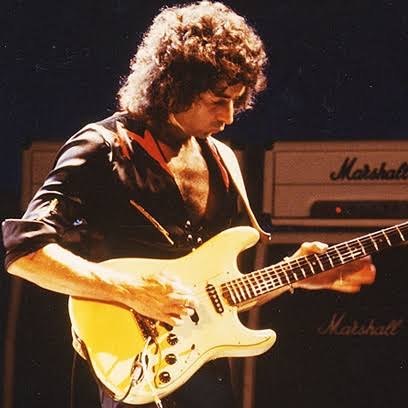
Ritchie Blackmore Plans to Rejoin Deep Purple Onstage Tonight — 33 Years After Walking Away
Thirty-three years after his final departure, Ritchie Blackmore says he plans to step onto a Deep Purple stage again — for one song, one night, and perhaps one final glimpse of a guitar chemistry that helped invent hard rock.
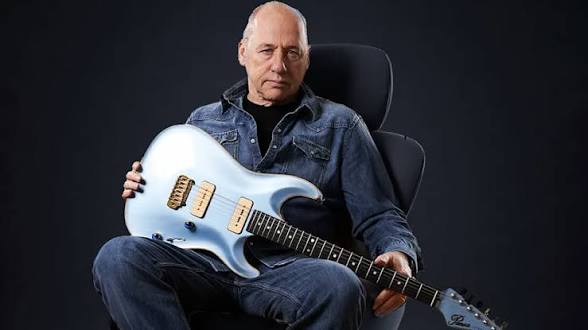
Mark Knopfler at 77: Why Playing the Right Notes Still Won't Make You Sound Like Him
Mark Knopfler turns 77 today, and his playing remains one of the hardest things in rock to imitate. Not because the notes are difficult — because almost none of what makes it sound like him is written down.
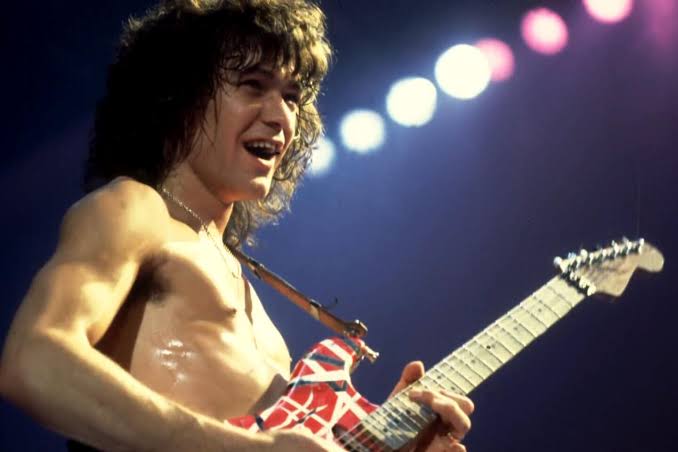
Eddie Van Halen: The Man Who Took the Electric Guitar Apart — and Rebuilt What It Could Be
From an immigrant kid learning piano by ear in Pasadena to the homemade guitar that changed an industry, the impossible sound of "Eruption," 5150, the Brown Sound and a legacy that still defines electric guitar: this is the complete story of Edward Van Halen.