
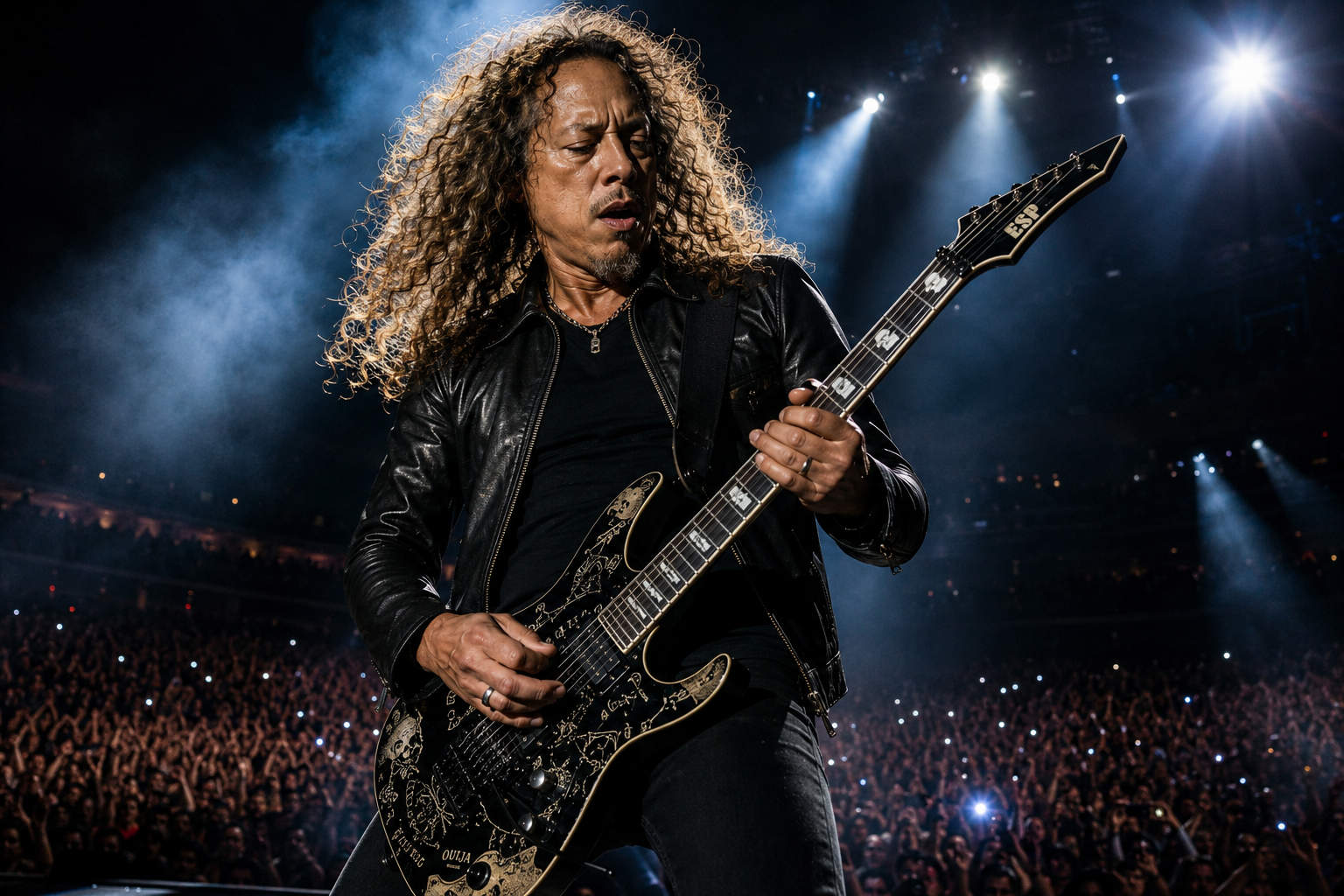
Kirk Hammett's "Fade to Black" solos turned thrash into something emotional. Here's why the outro is still the most quoted lead in Metallica's catalog.
There is a version of Metallica history where the band never writes this song.
In 1984, thrash was a race. Faster riffs, faster picking, faster tempos. Ballads were what the bands on the radio did, and Metallica had built an audience specifically by not being those bands.
Then Ride the Lightning arrived with an acoustic arpeggio, a slow build, and nearly two minutes of lead guitar at the end that had almost nothing to do with speed.
"Fade to Black" is still the moment metal learned it was allowed to be sad.
Why the Clean Intro Matters More Than the Solo
The song opens with an arpeggiated clean figure in B minor, and it is deliberately unhurried. Nothing about it sounds like a band trying to prove anything.
That restraint is the whole reason the ending lands. By the time the distortion arrives, the song has already established a mood, and every lead phrase that follows is being measured against the quiet that came before it.
Guitarists who jump straight to the outro tab are skipping the setup. The solo is not the song — it is the payoff.
The Middle Solo: Melody Before Fireworks
The first proper lead break is the one players tend to underrate. It sits over the song's mid-tempo section and it is built almost entirely from melody: long notes, wide vibrato, phrases that resolve rather than run.
Kirk Hammett plays it like a singer would. The lines breathe. There are gaps. He lets the rhythm guitars carry weight while the lead stays deliberately simple.
For a band whose reputation was built on downpicking endurance, that choice was genuinely risky — and it is the reason the song crossed over to listeners who had never owned a metal record.
The Outro: One of the Great Repeating Climbs
Get Kirk Hammett’s “Fade to Black” Tone
Tell ToneMD what guitar and gear you own and we’ll show you how to get as close as possible using the equipment you already have — full signal chain, real numbered settings, no guesswork.
Included with The Guitar Plugged Premium
Then the last section starts, and the song stops being a ballad.
The outro solo rides a driving progression while the lead climbs in waves. Hammett uses sequences — repeated melodic shapes moved up the neck — so that each pass feels higher and more urgent than the last, even when the underlying notes stay inside minor-scale territory.
It is the same architectural trick that makes "Free Bird" work, applied to a minor key and a metal rhythm section. Momentum does the heavy lifting.
Two details make it stick:
- The harmonies. Layered lead lines give the section a choral quality that a single guitar could never produce.
- The bends. Hammett leans on long, held bends with heavy vibrato instead of resolving quickly, which is what makes the phrases sound like they are straining upward.
By the final repetitions, the solo is not really developing anymore. It is insisting.
X Concepts Strings • Made in USA
Never Run Out of Strings Again.
Join the X Concepts String Club and get fresh USA-made strings delivered every month—plus Premium membership options for the full Guitar Plugged experience.
What Makes It Hard to Play Convincingly
The notes in "Fade to Black" are approachable. Most intermediate players can get through the outro at tempo within a few weeks.
“Speed made Metallica famous. "Fade to Black" made them permanent.”
Sounding like the record is a different problem.
The difficulty is in the vibrato width and speed, in the bend intonation on those held notes, and in the pacing — knowing exactly how long to sit on a note before moving. Play the same notes with narrow vibrato and early releases and the solo turns generic immediately.
This is the standard test of a great lead: the tab is not the performance.
The Tone
The clean sections are bright and dry, with just enough room around the notes to hear the arpeggios ring. The lead tone is mid-forward and saturated but not scooped — you can still hear pick attack and the front edge of each bend.
That combination is the part modern players get wrong most often. Scooping the mids and stacking gain makes the outro sound smaller, not bigger.
• Bridge humbucker, neck pickup for the warmer sustained phrases
• Mid-gain saturation — enough for sustain, not so much that bends smear
• Mids up, not scooped; keep some presence for attack
• A short delay for depth, reverb kept modest
• Wide, slow vibrato and fully-committed bends do more than any pedal
Why It Still Matters
Every emotional metal lead recorded since 1984 is downstream of this song. The slow-build structure, the clean-to-heavy arc, the melodic outro that outgrows the verse — all of it became a template, used by bands who had no interest in thrash at all.
It also changed what Metallica were allowed to be. Without "Fade to Black," there is no "One," no "Sanitarium," no "Nothing Else Matters." The band gave themselves permission here.
Speed made Metallica famous. This is the song that made them permanent.
The Guitar Plugged Verdict
"Fade to Black" is not Kirk Hammett's most technical solo, and it is not Metallica's heaviest moment. It is the most important lead break the band ever recorded, because it widened the definition of what a metal guitar solo could be about.
Learn the notes in a week. Spend a year on the vibrato.
Which Metallica solo do you rate highest — "Fade to Black," "One," "Master of Puppets" or "Welcome Home (Sanitarium)"?
Which Metallica solo is Kirk Hammett's best?
Tap your pick. One vote per reader.
Keep Exploring Iconic Solos
What to Remember
- ▸"Fade to Black" proved thrash metal could carry genuine emotion without losing its edge.
- ▸The clean B-minor intro is what makes the distorted outro land — the setup is part of the solo.
- ▸The middle solo is melodic and spacious; the outro builds through repeated climbing sequences.
- ▸Layered harmony lines and long, heavily-vibratoed bends give the outro its choral, straining quality.
- ▸The notes are accessible; the vibrato, bend intonation and pacing are what make it hard to play convincingly.
Experience-driven coverage, not algorithm bait.
- 20+ years of guitar playing experience
- Real-world retail experience at Guitar Center
- Thousands of hours testing guitars, amps, and pedals
- A community of 50,000+ guitar enthusiasts across platforms
- Partnerships with Fender, DistroKid, TrueFire, Card Chords, and Enya
- Editorial standards published openly — see how we test gear
The Modern Guitar Magazine. Delivered to your inbox.
No spam. No gimmicks. Just great guitar content — stories, tones, iconic solos, and honest gear takes. Every week.
Ask GP
3 free questions a dayStill curious? Ask GP about this story.
Your personal classic-rock and guitar guide — ask anything about Iconic Solos.
Discussion (0)
Sign in to join the discussion.
Sign in to commentLoading comments…
Discover another guitar story
Swipe through our latest features, breaking news and iconic solos — one story at a time.
Open Swipe →More in Iconic Solos
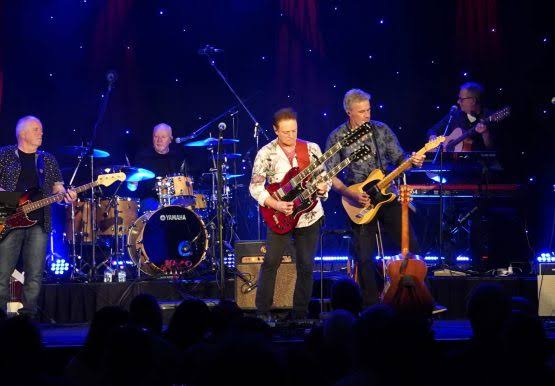
The Story Behind the "Hotel California" Guitar Solo: How Don Felder and Joe Walsh Created Rock's Greatest Guitar Duel
Nearly five decades on, the final minutes of the Eagles' "Hotel California" still stop guitarists in their tracks. Inside the composition, tone, and interplay of Don Felder and Joe Walsh's legendary dual-guitar finale.

10 Underrated Guitar Solos Every Player Should Learn
Ten overlooked guitar solos — from Larry Carlton to Derek Trucks — that will make you a better player through phrasing, feel, and note choice.
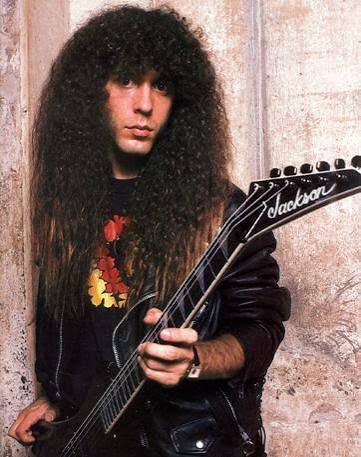
Iconic Solos: Marty Friedman's "Tornado of Souls" — The Crown Jewel of Thrash Guitar
More than 35 years later, Marty Friedman's solo on Megadeth's Tornado of Souls is still the gold standard for melodic shred — exotic phrasing, vocal-like bends, and an ending run that breaks brains.