The Ultimate Guide to Kirk Hammett: Gear, Solos, Tone & Metallica Legacy
Explore the ultimate guide to Kirk Hammett, covering his history with Metallica, signature gear, iconic solos, playing style, influences, and the techniques that made him one of heavy metal's most recognizable guitarists.
There are technically faster guitarists.
There are more experimental guitarists.
There are jazz virtuosos who know more theory.
But there are very few players whose solos are instantly recognizable after just a few notes.
Kirk Hammett isn't just the lead guitarist for Metallica—he's one of the defining voices of heavy metal itself. His phrasing, screaming bends, wah-drenched leads, and unforgettable melodic instincts helped shape some of the biggest songs ever recorded.
For millions of guitar players, the first solo they ever attempted wasn't from a fusion record or a shred album.
It was 'Nothing Else Matters.'
Or 'Fade to Black.'
Or 'One.'
And once you went down that rabbit hole, there was no going back.
Early Life
Kirk Lee Hammett was born on November 18, 1962, in San Francisco, California.
His fascination with horror movies would become legendary, but his first obsession was music.
Inspired by bands like Black Sabbath, UFO, Jimi Hendrix, Led Zeppelin, Thin Lizzy and Deep Purple, Hammett became consumed with learning guitar.
Like countless players of the era, Eddie Van Halen's explosion onto the scene changed everything.
But unlike many players trying to become the next Eddie, Kirk developed something uniquely his own: melodic heavy metal solos that served the song first.
Exodus: Before Metallica
Before joining Metallica, Kirk founded thrash pioneers Exodus.
Even then, his speed and aggression stood out.
The Bay Area thrash scene was exploding, and Exodus quickly became one of its defining acts.
But destiny had something much bigger planned.
In 1983, Metallica dismissed Dave Mustaine.
The phone rang.
Kirk Hammett got the job.
The rest is rock history.
Learning From Joe Satriani
One of the coolest facts about Kirk?
He studied under Joe Satriani.
Yes...that Joe Satriani.
Get Kirk Hammett’s “Master of Puppets” Tone
Tell ToneMD what guitar and gear you own and we’ll show you how to get as close as possible using the equipment you already have — full signal chain, real numbered settings, no guesswork.
Included with The Guitar Plugged Premium
Satriani helped refine Kirk's technique, alternate picking, scales, and musical understanding.
But what makes this story interesting is that Kirk never became a Satriani clone.
Instead, he used that technical foundation to create memorable melodies rather than endless displays of speed.
That's one reason his solos remain so singable decades later.
The Albums That Changed Everything
Kill 'Em All (1983)
Raw. Fast. Violent. The blueprint for thrash metal.
Songs like 'Seek & Destroy,' 'The Four Horsemen,' and 'Whiplash' announced that metal had entered a new era.
Ride the Lightning (1984)
Many fans consider this the moment Metallica became something bigger.
Highlights include 'Fade to Black,' 'Creeping Death,' 'Ride the Lightning,' and 'For Whom the Bell Tolls.' Kirk's melodic writing became increasingly sophisticated.
Master of Puppets (1986)
One of the greatest metal albums ever created. The solos throughout are emotional, aggressive, and technically demanding without feeling excessive.
Tracks like 'Battery,' 'Disposable Heroes,' 'Master of Puppets,' and 'Welcome Home (Sanitarium)' remain required listening for every guitarist.
...And Justice for All (1988)
X Concepts Strings • Made in USA
Never Run Out of Strings Again.
Join the X Concepts String Club and get fresh USA-made strings delivered every month—plus Premium membership options for the full Guitar Plugged experience.
Complex. Dark. Progressive. The harmony work and solo writing became even more ambitious.
Then came perhaps his most famous recorded solo... 'One.'
The Black Album (1991)
Metallica became the biggest band on Earth.
Songs like 'Enter Sandman,' 'Nothing Else Matters,' 'Sad But True,' 'Wherever I May Roam,' and 'The Unforgiven' made Kirk's playing familiar to audiences far beyond heavy metal.
“For generations of guitarists, Kirk Hammett wasn't just the lead player in Metallica. He was the reason they picked up a guitar in the first place.”
His solos became less about speed and more about unforgettable hooks.
Kirk Hammett's Playing Style
1. Melody First
Kirk often builds solos people can literally sing. Rather than endless scalar exercises, he creates memorable phrases with emotional direction. That's one reason his leads remain accessible to listeners who don't even play guitar.
2. The Wah Pedal
If one effect defines Kirk Hammett... it's the wah pedal.
His use of wah isn't subtle. It's vocal. Aggressive. Expressive. On songs like 'Enter Sandman,' 'The Memory Remains,' and 'Fuel' the wah almost becomes another instrument. Love it or hate it, it's unmistakably Kirk.
3. Pentatonic Foundation
Despite his technical ability, much of Kirk's vocabulary comes from minor pentatonic, blues scale, natural minor, and harmonic minor — combined with fast runs, bends, slides, vibrato and chromatic ideas. His phrasing often sounds more 'human' than robotic.
4. Vibrato
Kirk's vibrato is one of his signatures. Wide. Aggressive. Almost vocal. A single held note often says more than twenty picked notes.
5. Fast Alternate Picking
Influenced by both Satriani and thrash itself, Kirk developed exceptional picking speed while maintaining strong articulation. This became especially important during Metallica's relentless rhythm sections.
The Gear
Guitars
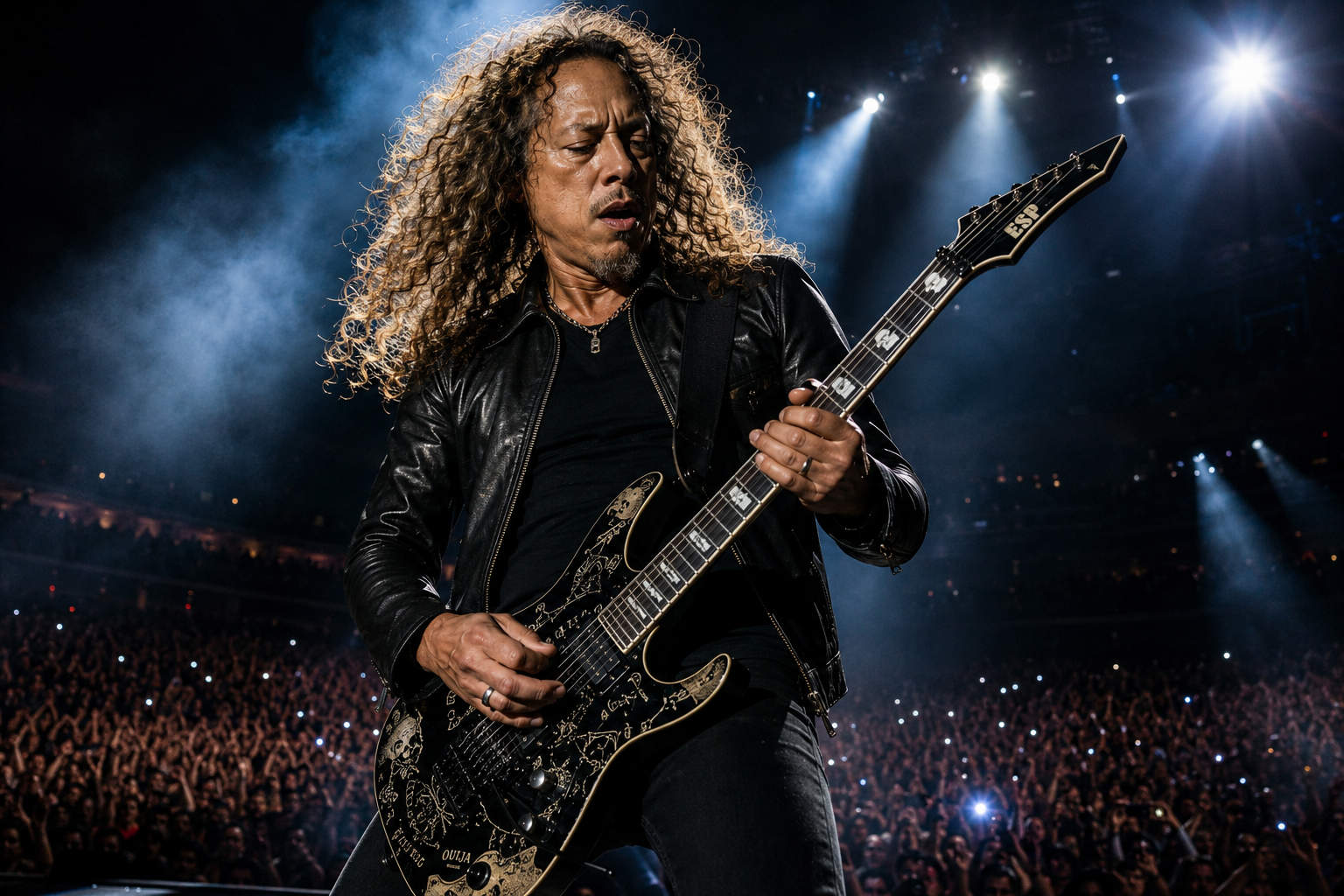
Over the years Kirk has used ESP KH Series, ESP M-II, ESP KH-2, ESP Ouija guitars, Gibson Flying V, Gibson Les Paul, Jackson Randy Rhoads models, and Fernandes Strat-style guitars in the early years. His signature ESP line has become one of the most recognizable artist series in heavy music.
Pickups
Historically associated with EMG 81 and EMG 60. Modern rigs have also included his Fishman Fluence signature pickups. Both deliver tight attack and high-output clarity perfect for heavy rhythm and soaring leads.
Amplifiers
Throughout different eras: Mesa/Boogie Mark Series, Randall, Diezel, Marshall, and Axe-Fx / modern digital systems for touring integration. Mesa's aggressive midrange became a defining ingredient in many classic Metallica sounds.
Effects
His board has included the Dunlop Cry Baby Wah, Ibanez Tube Screamer, Eventide processors, MXR pedals, rack effects, and digital switching systems. But if you only bought one pedal to sound more like Kirk... it would unquestionably be a Cry Baby.
Five Essential Kirk Hammett Solos
Fade to Black
Perhaps his greatest combination of melody and emotion. Beautiful construction with escalating intensity.
One
Technically brilliant. Emotionally devastating. Still one of metal's defining solos.
The Unforgiven
Proof that restraint can be more powerful than speed. Every phrase feels intentional.
Master of Puppets
Aggressive, melodic, and unforgettable. An all-time masterclass in serving the song.
Ride the Lightning
Classic early Kirk with blazing speed and unmistakable personality.
His Influence on Guitar
Entire generations of players grew up trying to copy his bends, master his vibrato, buy a wah pedal, play 'Enter Sandman,' and survive the solo from 'One.'
Whether critics praise or criticize his style, his influence is impossible to deny. His playing helped push heavy metal into stadiums around the world. Thousands of modern metal guitarists owe at least part of their vocabulary to Kirk Hammett.
Fun Facts
He replaced Dave Mustaine in Metallica in 1983.
He studied under Joe Satriani.
He's an obsessive collector of classic horror memorabilia.
His ESP Ouija guitars have become iconic collector pieces.
He's one of the most commercially successful guitarists in history.
He helped define the sound of thrash metal while simultaneously making it mainstream.
The Guitar Plugged Verdict
Some players impress you. Some players inspire you. Kirk Hammett does both.
His solos aren't remembered because they're the fastest—they're remembered because they make people feel something. In an era where technical perfection is easier than ever to find, Kirk's greatest strength has always been his personality. The bends, the wah, the vibrato, the melodic hooks... you know it's him within seconds.
For generations of guitarists, he wasn't just the lead player in Metallica. He was the reason they picked up a guitar in the first place.
- ESP LTD KH-202 Kirk Hammett Signature Electric Guitar$699·Check on Amazon →
- Dunlop KH95 Kirk Hammett Signature Cry Baby Wah$169·Check on Amazon →
- Fishman Fluence Kirk Hammett Signature Pickup Set$299·Check on Amazon →
Some links are affiliate links — we may earn a small commission at no cost to you.
Experience-driven coverage, not algorithm bait.
- 20+ years of guitar playing experience
- Real-world retail experience at Guitar Center
- Thousands of hours testing guitars, amps, and pedals
- A community of 50,000+ guitar enthusiasts across platforms
- Partnerships with Fender, DistroKid, TrueFire, Card Chords, and Enya
- Editorial standards published openly — see how we test gear
The Modern Guitar Magazine. Delivered to your inbox.
No spam. No gimmicks. Just great guitar content — stories, tones, iconic solos, and honest gear takes. Every week.
Ask GP
3 free questions a dayStill curious? Ask GP about this story.
Your personal classic-rock and guitar guide — ask anything about The Ultimate Guide to Kirk.
Discussion (0)
Sign in to join the discussion.
Sign in to commentLoading comments…
Discover another guitar story
Swipe through our latest features, breaking news and iconic solos — one story at a time.
Open Swipe →More in Guitar Talk
Happy Birthday, Joe Perry: The Riff Machine Who Gave Aerosmith Its Swagger
Joe Perry turns 76 today. From the swampy grind of “Sweet Emotion” to the reunion that saved a band, this is the career of the guitarist who taught American hard rock how to strut.
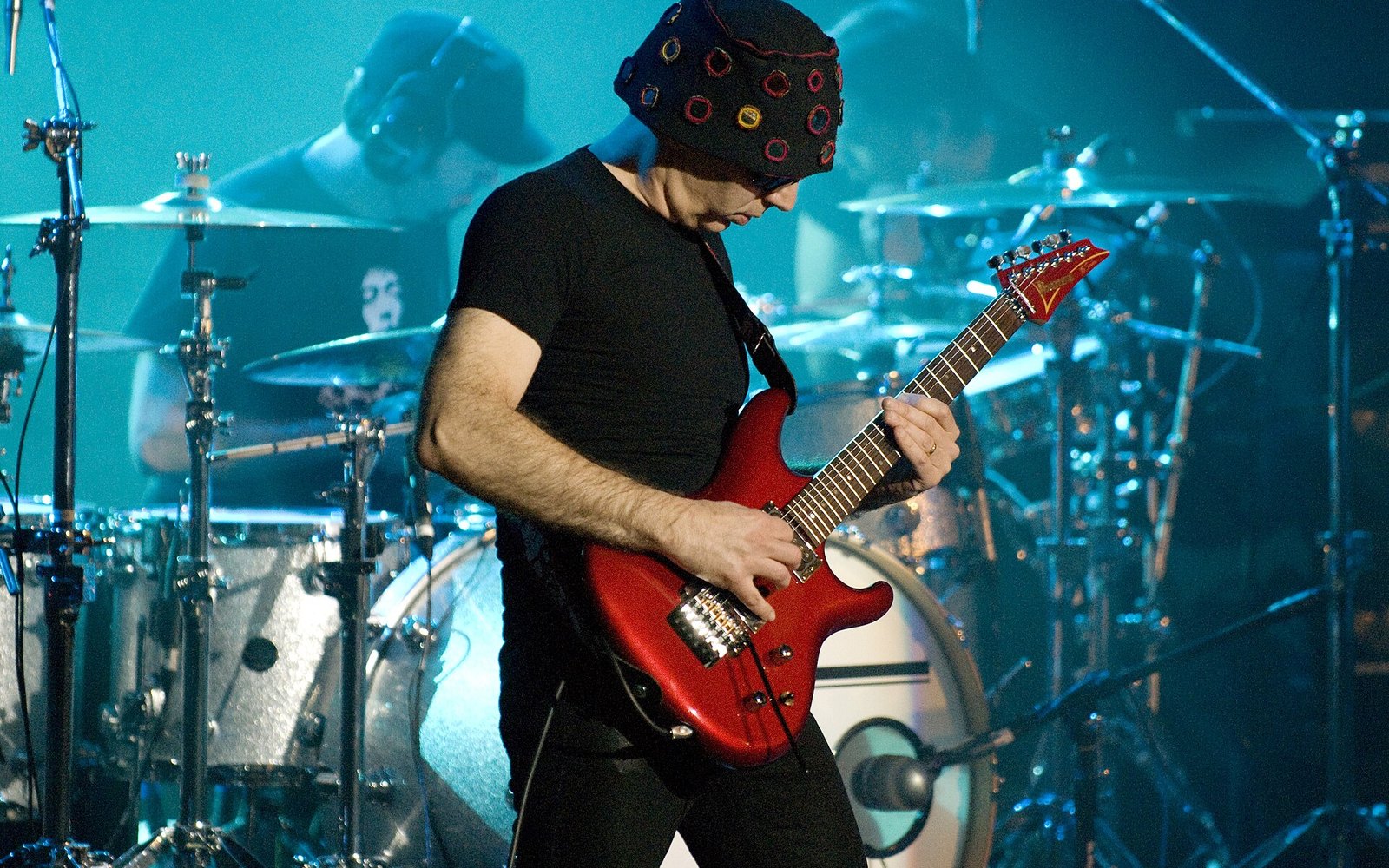
History of the Riff: How Joe Satriani Made “Flying in a Blue Dream” Feel Weightless
An acoustic guitar in an unusual tuning, a stray broadcast and a melody that seems to hang in the air: inside the construction of Satriani’s 1989 masterpiece.
Tony Iommi Opens Up About His Final Conversation With Ozzy Osbourne: “I Still Can't Get It in My Head”
The Black Sabbath guitarist says Ozzy was exhausted after the band's emotional farewell — but determined to give fans one final show.