
Jake Kiszka and the Great Greta Van Fleet Debate: Rip-Offs—or the Band Bringing Classic Rock Back?
Greta Van Fleet have spent nearly their entire career hearing the same accusation: they sound like Led Zeppelin. But dismissing Jake Kiszka and company as imitators misses the far more interesting story.
There might not be another successful young rock band of the past decade that inspires arguments quite like Greta Van Fleet.
Say the name in a room full of guitar players and you can almost predict what happens next. One person will tell you they're one of the most exciting things to happen to rock music in years. Someone else will roll their eyes. And eventually, somebody will say it.
"They're just a Led Zeppelin rip-off."
It's an accusation that has followed Greta Van Fleet almost from the moment "Highway Tune" began pouring out of radios and streaming playlists in 2017.
The comparison wasn't exactly difficult to understand. Josh Kiszka possessed a soaring upper-register voice that immediately reminded listeners of Robert Plant. The rhythm section favored the kind of enormous, physical grooves associated with the golden age of British hard rock. The songs were filled with blues-derived riffs, psychedelic textures and the kind of swagger that seemed transported directly from another era.
And standing in the middle of it all was guitarist Jake Kiszka, wielding a Gibson SG and playing through roaring amplifiers while much of the rest of contemporary music seemed determined to make the electric guitar smaller, cleaner or disappear altogether.
For some critics, the verdict was immediate. Led Zeppelin 2.0. Case closed.
But we think that interpretation sells Greta Van Fleet — and Jake Kiszka in particular — far too short. Because maybe the most interesting thing about Greta Van Fleet isn't that they remind people of Led Zeppelin. Maybe it's that a band could remind people of Led Zeppelin in the 21st century and still become huge.
And perhaps instead of asking why Greta Van Fleet sound like classic rock, we should ask a different question: why did it take a band like Greta Van Fleet to remind the mainstream how exciting classic rock could sound in the first place?
The Guitar Hero Who Arrived After the Guitar Hero Era
Jake Kiszka was born in 1996. Think about that for a moment.
By the time Jake was old enough to seriously begin developing his musical identity, the traditional guitar hero was already becoming an endangered species in mainstream music. Jimmy Page's defining recordings were decades old. Jimi Hendrix had become mythology. Eddie Van Halen had already revolutionized guitar playing. Stevie Ray Vaughan's career had come and tragically gone. Slash had already recorded Appetite for Destruction.
The age in which a young guitarist could seemingly change popular music by plugging a Gibson into an amplifier had largely passed. Then Jake Kiszka showed up. And instead of chasing contemporary guitar trends, he seemed to move backward. Not backward creatively. Backward historically.
Kiszka dug into the vocabulary that had originally made electric guitar exciting: blues, early rock and roll, folk music, British blues-rock, psychedelia and the expressive playing of musicians who treated the guitar less like a precision instrument and more like a living object.
He has specifically discussed formative influences ranging from Eric Clapton and Jimi Hendrix to bluesmen including Robert Johnson, Charley Patton, Howlin' Wolf, Muddy Waters, Albert King, John Lee Hooker and Son House. He has also described his family's musical world as extending well beyond rock into folk, bluegrass, classical and other traditions.
That matters. Because the popular narrative goes something like this: Jake listened to Jimmy Page. Josh listened to Robert Plant. They started a band. Greta Van Fleet happened.
The actual musical lineage is considerably messier — and considerably more interesting. Led Zeppelin themselves didn't invent the blues vocabulary that helped define their sound. Neither did Cream. Neither did the Rolling Stones. Rock music has always been a chain of musicians discovering older music, absorbing it, transforming it and introducing it to another audience. Jake Kiszka belongs to that chain.
Yes, They Sound Like Led Zeppelin
We don't need to pretend otherwise. There are absolutely moments in Greta Van Fleet's early catalog where the Zeppelin resemblance is enormous.
"Highway Tune" made the comparison practically unavoidable. Josh Kiszka's vocal approach was perhaps the most immediately recognizable similarity, but underneath it sat another connection: a blues-derived guitar vocabulary built around bends, pentatonic movement, open space and muscular riffs.
"Safari Song" only strengthened the perception. The band sounded loose. Dangerous. Loud. Organic. Old.
And that last word is important. They sounded old in an era obsessed with sounding new.
But here's where the conversation gets complicated. Sounding like Led Zeppelin isn't the same thing as copying Led Zeppelin. There's a difference between imitation and musical lineage.
Jake himself has acknowledged the comparison rather than pretending nobody could possibly hear it. Early in Greta Van Fleet's rise, he described being compared with Zeppelin as an honor while emphasizing that nobody could actually be Led Zeppelin and that the band drew from a much broader collection of influences. Later, he explained that the group's musical upbringing included roots music, folk, blues and classical — and said Led Zeppelin wasn't even the primary childhood soundtrack many people assume it was.
That doesn't erase the similarities. It puts them in context. Because if Jake Kiszka sounds like Jimmy Page sometimes, part of the reason may be that both guitarists were drinking from some of the same musical wells.
The Great Rock and Roll Recycling Machine
Here's the uncomfortable question critics sometimes avoid: where exactly are musicians supposed to get their influences from?
Jimmy Page didn't invent the pentatonic scale. Eric Clapton didn't invent blues phrasing. Stevie Ray Vaughan didn't invent the Texas shuffle. Eddie Van Halen didn't invent tapping. Slash didn't invent the Les Paul-through-Marshall combination.
The history of guitar is essentially one enormous conversation between generations. A player hears something. It changes them. They internalize it. Eventually, it comes back out differently. Sometimes the connection is subtle. Sometimes it isn't.
Get Jake Kiszka’s “Highway Tune” Tone
Tell ToneMD what guitar and gear you own and we’ll show you how to get as close as possible using the equipment you already have — full signal chain, real numbered settings, no guesswork.
Included with The Guitar Plugged Premium
Greta Van Fleet's connections were not subtle. But perhaps that's exactly why they mattered.
What Happened to Rock?
To understand Greta Van Fleet's importance, you have to remember the environment in which they arrived. By the late 2010s, guitar music hadn't disappeared. Far from it. Metal remained healthy. Alternative rock continued. Indie guitar music flourished. The internet created entire ecosystems of virtuoso players.
But culturally, something had changed. The guitar was no longer automatically positioned at the center of youth culture. For decades, aspiring musicians wanted to become guitar heroes. Then increasingly they wanted laptops, controllers, DAWs, beats and plugins. There is absolutely nothing wrong with that evolution. Music changes. It should.
But something was missing. The enormous rock riff. The guitar slung low. The amplifier pushed until the sound seemed physically unstable. The extended solo played without irony. The idea that four people could walk onto a stage with drums, bass, guitars and microphones and attempt to sound absolutely gigantic.
Then Greta Van Fleet appeared, and suddenly teenagers were seeing Jake Kiszka standing in front of massive audiences with a Gibson SG. That matters more than critics sometimes realize.
Jake Kiszka's SG
If Josh's voice created the initial Zeppelin comparison, Jake's guitar became one of Greta Van Fleet's defining visual signatures. And interestingly, Jake didn't simply copy Jimmy Page's famous Les Paul aesthetic. His instrument became the Gibson SG — more specifically, one of his most important guitars has been an original 1961 Gibson Les Paul, the model we now recognize as the SG body shape.
Kiszka has spoken extensively about his attachment to early-'60s SG-style instruments, including the physical resonance and microphonic qualities that make them respond almost like an extension of the player's body.
That's a revealing detail. Because Jake's playing isn't primarily about mechanical perfection. It's physical. Listen to the vibrato. Listen to the bends. Listen to how chords are attacked. Listen to the spaces between phrases. The guitar sounds like something being wrestled.
That philosophy is almost the opposite of the ultra-controlled approach found in some modern guitar production. Kiszka has even talked about avoiding excessive gain because too much overdrive can obscure the articulation and sensitivity he works to put into individual notes and chords.
That single idea tells you an enormous amount about his sound. Jake Kiszka doesn't necessarily want more distortion. He wants more response.
The Secret Is Less Gain Than You Think
This is where many guitarists trying to reproduce Greta Van Fleet tones go wrong. They hear huge guitars and assume huge gain. But classic rock guitar tone frequently works the opposite way.
The amplifier is loud. The signal is saturated. The speakers are moving. But the fundamental note remains intact. Hit the guitar softly and the sound retreats. Dig in and it explodes. Roll back the guitar volume and it cleans up.
That dynamic interaction between player, guitar and amplifier is central to Jake Kiszka's style. It also explains why his guitar parts can sound enormous without becoming an indistinct wall of distortion. The aggression comes from his hands as much as his equipment.
Gain doesn't create authority. Attack does. Timing does. Vibrato does. Dynamics do.
Jake Kiszka Isn't a Shredder — and That's the Point
Modern guitar culture can sometimes turn playing into an athletic competition. More notes. More strings. More gain. More complicated subdivisions.
Jake Kiszka went another direction. He has openly said that shred guitar never particularly interested him because he was drawn more strongly to the soul and dynamics of earlier guitar playing. Hendrix, in particular, helped define that direction for him.
“Jake Kiszka doesn't necessarily want more distortion. He wants more response.”
That's an important distinction. Jake can play. But virtuosity isn't the central objective. His solos are supposed to sound dangerous rather than mathematically perfect. There's air between the notes. Sometimes the bends feel like they're barely under control. Sometimes the guitar screams. Sometimes it whispers. Sometimes one sustained note matters more than 30 perfectly executed ones.
That is an old-school philosophy. And perhaps that's exactly why it feels fresh.
"Highway Tune": The Song That Started the Argument
"Highway Tune" remains the obvious starting point when discussing Jake Kiszka. The riff is deceptively simple, relying on one of rock guitar's oldest foundations: pentatonic blues vocabulary transformed through amplification and attitude.
But simplicity is part of its effectiveness. There isn't a wall of production hiding it. The riff has to carry the song. That's a concept rock music once understood instinctively — think about "Whole Lotta Love," "Sunshine of Your Love," "Smoke on the Water," "Back in Black," "Walk This Way" or "Mississippi Queen."
Great rock riffs aren't necessarily complicated. They're identifiable. A listener should know the song after a handful of notes. "Highway Tune" understood that.
But Greta Van Fleet Didn't Stay There
This is where the "Zeppelin clone" argument becomes increasingly difficult to sustain. Greta Van Fleet evolved. Anthem of the Peaceful Army expanded their ambitions. Then came The Battle at Garden's Gate: the arrangements became larger, the production more cinematic, the palette wider. Jake's guitar playing became less about proving the band could deliver a classic-rock riff and more about serving increasingly elaborate compositions. Then Starcatcher pushed the band into another phase.
Even Kiszka's approach to amplification kept changing. For Starcatcher, he moved away from the massive head-and-4x12 approach associated with some previous work and used combo amplifiers extensively, explaining that the larger rigs could feel unnecessary in the studio.
That's not the behavior of someone interested only in recreating 1971. That's a guitarist continuing to search.
The Jimmy Page Question
Of course, we eventually have to talk specifically about Jimmy Page. Both players are heavily informed by blues. Both prioritize feel. Both understand that guitar parts can function architecturally within a song. Both use dynamics. Both embrace controlled imperfection. And both recognize the power of leaving space.
But their identities aren't identical. Page could be extraordinarily orchestral; his studio work with Zeppelin involved layers, alternate tunings, acoustic instruments and inventive production. Jake's guitar personality often feels more immediate and physical. There's a muscularity to his SG attack, and he's frequently pushing against the rhythm section rather than floating above it.
You can hear Page. Absolutely. But listen longer. There's Clapton. There's Hendrix. There's blues. There's folk. There's garage rock. There's psychedelic rock. There's even the influence of guitarists like Jack White and Neil Young in certain tonal choices; Kiszka specifically cited both alongside Page when discussing an octave-treated riff from The Battle at Garden's Gate.
The picture gets much larger once you stop looking exclusively for Zeppelin.
ToneMD Prescription: Building a Jake Kiszka-Style Tone
If you wanted to create a Jake Kiszka-inspired Greta Van Fleet tone, the temptation might be to start by piling on distortion. Don't. Start with the guitar.
Guitar. An SG-style guitar with humbuckers is the obvious choice, but you don't need a vintage Gibson. The important characteristics are medium-output humbuckers, good volume-knob response, strong upper-mid presence, and a guitar that remains articulate when the amplifier starts breaking up.
Amp. Think vintage British voice. A Marshall-inspired amplifier is an excellent starting point, but the important ingredient is not simply "Marshall" — it's edge-of-breakup dynamics. Try approximately: Gain 4-5, Bass 4-5, Mid 6-7, Treble 5-6, Presence 5-6, Master as high as your setup reasonably allows.
The exact settings will vary enormously between amplifiers and modelers. The philosophy matters more. Don't drown the guitar in preamp gain. Let the amp breathe.
Guitar controls. Try backing the guitar's volume control down slightly for rhythm parts — around 7-8 can work beautifully with the right amplifier — then push toward 10 when you want the sound to open up. Your guitar's volume knob isn't simply an on/off switch. It's part of the gain structure.
Effects. Keep things relatively restrained. A little reverb. Possibly some delay for lead passages. An octave effect where appropriate. Maybe a boost to push the front of the amplifier. But the fundamental tone should remain: guitar into responsive amp into hands.
ToneMD users can take that philosophy and translate it to Helix, Fractal, HeadRush, Kemper, TONEX, Boss Katana, Fender Tone Master, Neural DSP, AmpliTube and other supported platforms. Enter a target such as "Jake Kiszka — Greta Van Fleet — Highway Tune" and use the resulting Tone Prescription as a platform-specific starting point rather than trying to blindly translate a vintage analog rig into equipment you don't own.
Tone Is in the Hands — and Jake Proves It
You could hand two guitarists the exact same SG. Plug them into the exact same amplifier. Use identical settings, the same cable, the same room, the same microphone. They still wouldn't sound identical.
Jake attacks chords differently. His vibrato has a personality. His bends have a personality. The way he lets notes decay has a personality. His interaction with feedback has a personality. That is tone. Gear shapes it. The player creates it.
Why the Zeppelin Criticism May Have Helped
Maybe the endless Led Zeppelin criticism ultimately made Greta Van Fleet better. Because once the band became famous, they had two choices: keep recreating the formula that initially worked, or evolve. They chose evolution. The records became more ambitious. The arrangements expanded. Jake's guitar vocabulary widened. The very criticism intended to reduce Greta Van Fleet to a nostalgia act may have pressured them to prove they were capable of more. And they did.
The Bigger Question: Who Else Was Doing It?
Let's accept the critics' argument for a moment. Fine. Greta Van Fleet sounded heavily influenced by Led Zeppelin. Now what? What exactly is the crime?
Because while critics were debating whether Greta Van Fleet were sufficiently original, something else was happening. Young people were buying guitars. They were learning riffs. They were discovering old bands. They were watching Jake Kiszka play extended guitar solos in arenas. They were hearing blues-based rock music on contemporary playlists. They were seeing a band dressed like rock stars playing actual instruments and treating the entire thing with complete sincerity.
For guitar culture, that's a win. A huge one.
Greta Van Fleet Didn't Kill Classic Rock. They Reintroduced It.
There's a strange contradiction in rock culture. Fans spend years complaining that rock is dead. Then when a young band arrives sounding unmistakably like rock, those same people complain that it sounds too much like old rock.
We want young musicians to respect Hendrix — but not sound influenced by Hendrix. We want them to worship Page — but never play anything reminiscent of Page. We want them to keep blues-rock alive — but somehow invent an entirely new vocabulary unrelated to the blues. That's impossible.
Genres survive because generations reinterpret them. Blues survived that way. Jazz survived that way. Country survived that way. Metal survived that way. Punk survived that way. Rock is no different.
Greta Van Fleet didn't arrive to replace Led Zeppelin. They couldn't. Nobody can. They arrived to continue a conversation Led Zeppelin helped define.
Every Generation Needs a Gateway Band
Nobody is born knowing the entire history of rock. Someone has to open the door. Maybe you heard Guns N' Roses and discovered Aerosmith. Maybe you heard Metallica and discovered Black Sabbath. Maybe Stevie Ray Vaughan led you to Albert King. Maybe Slash led you to Jimmy Page.
For thousands of younger listeners, Greta Van Fleet may be that gateway. A teenager hears "Highway Tune." They search for Jake Kiszka. Then they discover Jimmy Page. Then Cream. Then Hendrix. Then Howlin' Wolf. Then Muddy Waters. Then Robert Johnson. Suddenly a century of guitar music opens up.
Tell us again why that's a bad thing.
Our Verdict
Were the early Led Zeppelin comparisons fair? Yes. Absolutely. Pretending otherwise requires ignoring what millions of listeners immediately heard. Did Greta Van Fleet borrow heavily from the language of '60s and '70s blues-based hard rock? Of course.
But are they simply a Led Zeppelin rip-off? We don't think so. That description has become increasingly inadequate as the band's catalog has grown, and it ignores what Greta Van Fleet actually accomplished.
At a moment when the electric guitar's cultural dominance seemed to be fading, four young musicians from Michigan walked onto enormous stages and acted like rock and roll had never gone anywhere. Jake Kiszka didn't apologize for the guitar solo. He extended it. He didn't hide the SG. He made it part of the band's identity. He didn't bury his playing underneath endless processing. He turned the amplifier up and trusted his hands.
Maybe they looked backward. Good. Sometimes that's where the good stuff is. Because the future of guitar doesn't require us to erase the past. It requires musicians willing to learn from it and then carry it somewhere else.
And as long as Jake Kiszka is standing in front of an arena with an SG screaming through an overdriven amplifier, the reports of the guitar's death remain greatly exaggerated.
Experience-driven coverage, not algorithm bait.
- 20+ years of guitar playing experience
- Real-world retail experience at Guitar Center
- Thousands of hours testing guitars, amps, and pedals
- A community of 50,000+ guitar enthusiasts across platforms
- Partnerships with Fender, DistroKid, TrueFire, Card Chords, and Enya
- Editorial standards published openly — see how we test gear
The Modern Guitar Magazine. Delivered to your inbox.
No spam. No gimmicks. Just great guitar content — stories, tones, iconic solos, and honest gear takes. Every week.
Discussion (0)
Sign in to join the discussion.
Sign in to commentLoading comments…
Discover another guitar story
Swipe through our latest features, breaking news and iconic solos — one story at a time.
Open Swipe →More in Guitar Talk
The Devil Went Down to the Crossroads: Inside Steve Vai's Legendary Guitar Duel
There are guitar scenes in movies. And then there is Crossroads. Forty years on, the final duel remains part movie sequence, part guitar lesson, part urban legend — and the truth behind it is stranger than the film ever let on.
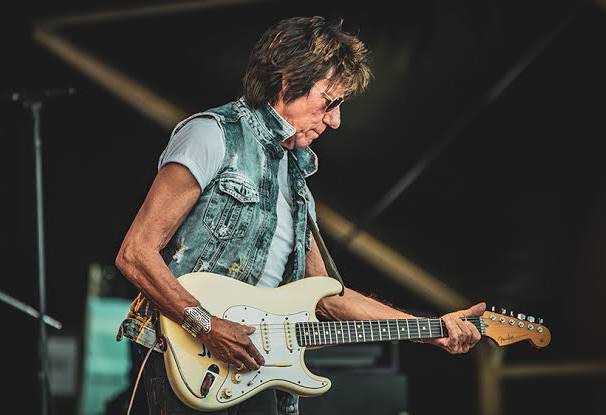
Jeff Beck: The Guitarist Who Never Stopped Reinventing the Electric Guitar
There are guitarists who become famous for a sound. There are guitarists who become famous for a song. And then there are the rare players who seem to spend their entire careers trying to discover sounds the electric guitar wasn't supposed to make. Jeff Beck belonged to that last category.

The 10 Best Live Rock Performances of All Time
From Queen owning Wembley in 20 minutes to Jimi Hendrix redefining the electric guitar at Woodstock, these are the performances that showed what rock music can become when the stage, the songs and the moment collide.