
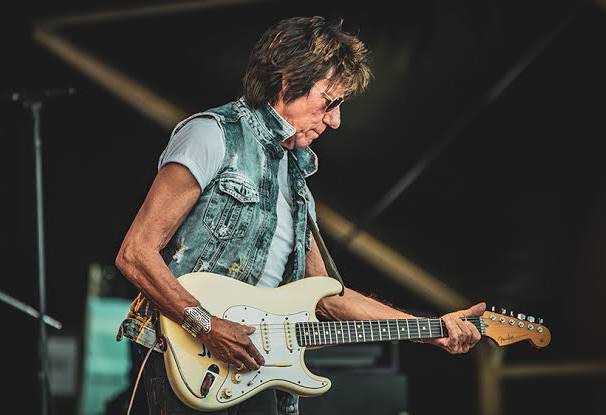
There are guitarists who become famous for a sound. There are guitarists who become famous for a song. And then there are the rare players who seem to spend their entire careers trying to discover sounds the electric guitar wasn't supposed to make. Jeff Beck belonged to that last category.
There are guitarists who become famous for a sound.
There are guitarists who become famous for a song.
And then there are the rare players who seem to spend their entire careers trying to discover sounds the electric guitar wasn't supposed to make.
Jeff Beck belonged to that last category.
For more than half a century, Beck occupied a strange and almost untouchable position in guitar history. He was famous enough to stand alongside Eric Clapton, Jimmy Page, Jimi Hendrix, Eddie Van Halen, Stevie Ray Vaughan and David Gilmour in practically any discussion of the instrument's greatest players, yet his career never followed the conventional trajectory of a rock guitar superstar.
He didn't build his legacy around one enormous band.
He didn't spend decades recreating the same signature riffs.
He didn't turn himself into a nostalgia act.
Instead, Jeff Beck kept moving.
Blues-rock gave way to hard rock. Hard rock gave way to jazz fusion. Fusion gave way to instrumental experimentation. Technology changed, amplifiers changed, guitars changed, production changed—and Beck continued searching for something new inside six strings, a few pickups, an amplifier and, eventually, one of the most expressive picking hands in the history of the instrument.
The irony is that the further Beck traveled technologically and musically, the more primitive his physical relationship with the guitar became.
Eventually, he barely needed a pick at all.
A Stratocaster, his fingers, the volume knob and the vibrato bar became enough.
That is why understanding Jeff Beck requires more than learning a few licks.
You have to understand his relationship with sound itself.
Before Jeff Beck Became Jeff Beck
Geoffrey Arnold Beck was born on June 24, 1944, in Wallington, England.
Like many British guitarists of his generation, Beck's musical education was shaped by American records arriving from across the Atlantic. Rock and roll, blues, early electric guitar instrumentals and the radical sounds produced by players such as Les Paul all contributed to the idea that the guitar could be more than accompaniment.
For young British musicians growing up in the 1950s and early 1960s, those records could feel almost mysterious.
How were those sounds being made?
What equipment created them?
How could a guitar suddenly sound enormous, distorted, vocal or otherworldly?
Those questions would follow Beck for the rest of his life.
He was not merely interested in playing guitar correctly. He was fascinated by what happened when the instrument was pushed outside its expected boundaries.
That distinction became crucial.
Because while countless guitarists learned to imitate their heroes, Beck gradually developed a style built around manipulation.
Pitch.
Dynamics.
Feedback.
Sustain.
Harmonics.
Attack.
Volume.
Vibrato.
Silence.
All eventually became parts of his vocabulary.
But before that vocabulary could fully emerge, Beck entered one of the most important guitar bands of the British Invasion.
The Yardbirds
Any serious examination of Jeff Beck has to begin with The Yardbirds.
The group's guitar lineage is almost absurd in retrospect.
Eric Clapton.
Jeff Beck.
Jimmy Page.
Three guitarists who would help define multiple branches of rock guitar history passed through the same band.
When Beck replaced Clapton in 1965, he inherited a group already rooted in blues but increasingly willing to experiment.
Beck was an ideal catalyst.
Where Clapton had represented a powerful extension of blues vocabulary, Beck seemed interested in seeing how far the guitar could be distorted, manipulated and transformed before it stopped sounding like a traditional electric guitar altogether.
Listen to Beck-era Yardbirds recordings and you can hear ideas that would become commonplace years later.
Aggressive fuzz.
Controlled feedback.
Unusual sustain.
Eastern-influenced melodic ideas.
Strange textures.
Abrupt tonal changes.
The guitar wasn't simply playing riffs anymore.
It was becoming a sound-design instrument.
"Heart Full of Soul"
"Heart Full of Soul" remains one of the clearest early examples.
The riff has an almost sitar-like quality, but Beck achieved the exotic character with an electric guitar.
Today, when guitarists have modeling processors, pitch effects, synthesizers, plug-ins and virtually unlimited signal chains, creating an unusual texture is relatively straightforward.
In 1965, it required imagination.
That distinction matters.
Jeff Beck's importance wasn't merely that he had access to strange sounds.
It was that he imagined them before the technology made them easy.
"Shapes of Things"
Then there is "Shapes of Things."
Beck's guitar work pushes beyond conventional blues-rock vocabulary and toward psychedelic abstraction. The solo feels less like a neatly constructed blues statement and more like someone testing the physical boundaries of an amplifier and electric guitar.
That attitude would become central to psychedelic rock.
And later hard rock.
And later fusion.
And eventually experimental guitar music.
Jeff Beck was already pointing toward several of those destinations.
Jeff Beck and Jimmy Page
The Yardbirds briefly contained both Jeff Beck and Jimmy Page, creating one of rock history's most remarkable guitar pairings.
The two musicians had known one another before their Yardbirds overlap, and their careers would remain intertwined in the broader story of British guitar.
Yet their artistic paths ultimately became dramatically different.
Page became the architect of Led Zeppelin, constructing one of the largest and most influential catalogs in rock history.
Beck took a less predictable route.
There was no Jeff Beck equivalent of Led Zeppelin—a single enormous institution that would define him for decades.
That may have limited Beck's mainstream commercial identity.
Artistically, however, it liberated him.
Jeff Beck could change.
Again.
And again.
And again.
The Jeff Beck Group and the Birth of Heavy Rock
After leaving The Yardbirds, Beck assembled what became the Jeff Beck Group, featuring a young Rod Stewart on vocals and Ronnie Wood on bass.
The group's 1968 album Truth is essential listening for anyone interested in the development of hard rock.
Released before Led Zeppelin's debut, Truth contained a combination that would soon become one of rock's dominant formulas:
Heavy electric guitar.
Blues foundations.
Powerful drums.
Large amplifiers.
A charismatic vocalist.
Reworked blues material.
Dynamic arrangements.
And an overall sense that the blues could be made heavier, louder and more dangerous.
It is difficult to listen to Truth today without hearing the emerging blueprint of heavy rock.
Songs such as "Beck's Bolero" also demonstrated Beck's increasingly cinematic approach to the guitar.
"Beck's Bolero" is especially fascinating because of the personnel associated with the recording, including Jimmy Page, John Paul Jones and Keith Moon.
Even before the great hard-rock bands of the 1970s had fully taken shape, many of the musicians who would define the era were already colliding with one another.
Jeff Beck stood directly in the middle of that collision.
Why Jeff Beck Never Became a Conventional Rock Star
This is one of the most interesting parts of Beck's story.
He possessed nearly everything required to become the centerpiece of an enormous rock band.
Extraordinary technique.
Distinctive tone.
Stage presence.
Industry connections.
Critical respect.
Famous collaborators.
And timing.
Yet Beck repeatedly moved away from situations that could have transformed him into a more conventional superstar.
That decision—or series of decisions—ultimately became part of his identity.
Jeff Beck seemed more interested in musical evolution than brand consistency.
For many musicians, reinvention is dangerous.
Audiences generally reward familiarity.
Find a sound.
Build an audience around it.
Repeat.
Beck largely refused that model.
By the middle of the 1970s, he would make one of the boldest transitions of his career.
He stopped needing a singer.
Blow by Blow: When the Guitar Became the Voice
Released in 1975, Blow by Blow remains one of the defining albums of Jeff Beck's career.
Produced by George Martin, the legendary producer most closely associated with The Beatles, the album placed Beck inside a sophisticated instrumental environment combining rock, funk and jazz fusion.
This was not simply rock music without vocals.
The guitar itself became the lead voice.
That difference is enormous.
Instrumental guitar can easily become an exercise in technique: solos stacked on solos, with virtuosity functioning as the primary attraction.
Beck's playing on Blow by Blow rarely feels like that.
Instead, melodies breathe.
Notes are allowed to sustain.
Phrases answer one another.
Dynamics matter.
Space matters.
And Beck's guitar frequently behaves less like a guitar than a human voice.
"Cause We've Ended as Lovers" remains perhaps the ultimate example.
Written by Stevie Wonder, the composition gave Beck an ideal canvas for expressive phrasing.
The remarkable thing is not how many notes Beck plays.
It's how much information he extracts from each one.
A note can swell.
Bend.
Shake.
Cry.
Fade.
Hover.
Almost collapse.
Then suddenly return.
This is one of the great lessons of Jeff Beck's playing:
Technique isn't only about producing more notes. Technique can mean gaining more control over a single note.
Wired and the Fusion Years
If Blow by Blow established Beck as a major instrumental artist, Wired pushed further into fusion.
Released in 1976, the album found Beck interacting with musicians including Jan Hammer and Narada Michael Walden.
The vocabulary was changing.
Rock guitar was colliding with jazz harmony, synthesizers, funk rhythms and increasingly sophisticated production.
For some traditional rock players, fusion represented an entirely different musical universe.
Get Jeff Beck’s “Cause We've Ended as Lovers” Tone
Tell ToneMD what guitar and gear you own and we’ll show you how to get as close as possible using the equipment you already have — full signal chain, real numbered settings, no guesswork.
Included with The Guitar Plugged Premium
Beck embraced it.
This ability to move into another genre without sounding like a tourist is one of the strongest arguments for his greatness.
He didn't simply play blues-rock licks over jazzier chords.
He adjusted.
His phrasing became more fluid.
His rhythmic approach changed.
His tone changed.
His interaction with keyboards changed.
Yet the personality remained unmistakably Beck.
That is one of the hardest achievements in music.
Evolution without erasing identity.
Jeff Beck's Greatest Instrument May Have Been the Fender Stratocaster
Jeff Beck played numerous guitars throughout his career, but the instrument most closely associated with his mature style is the Fender Stratocaster.
And few guitarists have demonstrated why the Stratocaster is such an expressive instrument as convincingly as Beck.
The Strat gave him several tools that became central to his language:
Responsive single-coil tones.
A volume control positioned close to the picking hand.
A highly interactive vibrato system.
Exceptional dynamic sensitivity.
Clear response to fingerstyle attack.
In another guitarist's hands, those are simply features.
In Beck's hands, they became an interface.
He could manipulate the vibrato bar while simultaneously controlling volume and plucking the strings.
Instead of separating those techniques into individual actions, Beck combined them into a single physical language.
That is where things became extraordinary.
Why Jeff Beck Stopped Using a Pick
One of the most important developments in Beck's later playing was his move toward playing predominantly with his fingers.
This fundamentally changed his relationship with the guitar.
A pick produces a relatively consistent attack.
Fingers provide multiple attack surfaces and allow a guitarist to simultaneously interact with other controls.
Beck's picking hand became a control center.
A finger could strike the string.
Another part of the hand could manipulate the vibrato bar.
The volume knob could be adjusted during the note.
Harmonics could be introduced.
The attack could range from gentle to explosive.
All within a fraction of a second.
This is why simply learning Jeff Beck's notes doesn't necessarily make something sound like Jeff Beck.
The notes are only the skeleton.
The articulation is the body.
The Volume Knob Was Part of His Technique
Many guitarists treat their volume control almost like an on/off switch.
Ten when playing.
Zero when finished.
Jeff Beck treated it like an expressive device.
By striking a note with the volume rolled down and then raising the volume after the initial attack, Beck could remove the sharp transient that normally identifies the sound as a plucked guitar string.
The result could resemble a bowed instrument, a synthesizer or even a human voice.
Combine that with vibrato-bar manipulation and suddenly the Stratocaster becomes something different.
This is one reason Beck could produce incredibly sophisticated textures with comparatively simple rigs.
The complexity wasn't always happening on the floor.
It was happening in his hands.
Jeff Beck's Whammy-Bar Technique
Plenty of guitarists use a vibrato bar.
Very few truly play one.
Jeff Beck did.
In the hands of many players, the vibrato bar creates an effect.
Dive bomb.
Flutter.
Pitch drop.
Pitch rise.
Beck incorporated it into his phrasing so naturally that it often stopped sounding like an effect.
It became intonation.
A vocalist doesn't necessarily land perfectly on a pitch and remain mechanically fixed there.
The voice approaches notes.
Slides between them.
Falls away.
Adds vibrato.
Changes intensity.
Beck could reproduce those characteristics by constantly adjusting pitch with the bar.
This is why his playing could sound almost impossibly vocal.
He wasn't simply bending strings.
He was sculpting pitch continuously.
Harmonics, Feedback and Controlled Chaos
Another essential element of Beck's vocabulary was his ability to make unpredictable sounds feel intentional.
Harmonics could scream from nowhere.
Feedback could become musical.
A note could suddenly leap into another register.
An amplifier on the edge of instability could become part of the performance.
This was a skill Beck had been developing since the Yardbirds.
The difference was that decades of experience eventually gave him astonishing control over the chaos.
Great guitar tone often lives near instability.
Too clean, and the instrument can become sterile.
Too distorted, and articulation disappears.
Too much feedback becomes noise.
Too little interaction becomes lifeless.
Jeff Beck lived near that boundary.
"Where Were You"
For guitarists trying to understand just how far Beck pushed the instrument, "Where Were You" is essential listening.
The performance showcases his extraordinary control of harmonics and pitch.
At moments, the guitar seems almost detached from the mechanics of frets and strings.
Notes float.
Pitch moves in ways that feel vocal rather than fretted.
Harmonics emerge like artificial overtones from a synthesizer.
It is the kind of performance that makes guitarists ask the most important question Jeff Beck could inspire:
How is he doing that?
And often, the answer is surprisingly physical.
Hands.
Bar.
Volume.
Harmonics.
Touch.
Amplifier.
Control.
Guitar Shop and the Late-'80s Reinvention
Jeff Beck's career contained another major creative statement with Jeff Beck's Guitar Shop, released in 1989.
“Technique isn't only about producing more notes. Technique can mean gaining more control over a single note.”
Featuring drummer Terry Bozzio and keyboardist Tony Hymas, the record presented a muscular, modern version of instrumental guitar.
By then, guitar culture had changed dramatically.
The 1980s had produced an explosion of virtuosity.
Eddie Van Halen had rewritten expectations.
Players such as Steve Vai, Joe Satriani, Yngwie Malmsteen and countless others had pushed technique into increasingly spectacular territory.
Jeff Beck could have attempted to compete by playing faster.
He didn't need to.
His advantage was individuality.
You could hear a handful of notes and know it was Beck.
That is arguably a higher level of achievement than speed itself.
Jeff Beck vs. the Shred Generation
One reason Beck remained relevant is that he never seemed particularly interested in competing with younger guitarists on their terms.
He didn't need to out-shred the shredders.
Instead, he doubled down on the things nobody else could quite reproduce.
Touch.
Dynamics.
Pitch manipulation.
Sound.
Personality.
That made Beck extraordinarily difficult to imitate.
A fast alternate-picked sequence can be slowed down, transcribed and practiced.
A Jeff Beck phrase might contain relatively few notes and still be incredibly difficult to reproduce convincingly.
Why?
Because the information exists between the notes.
How hard was the string struck?
Where was the volume knob?
How far did the bar move?
Did the pitch begin below the target?
Was the note fretted or harmonic?
How much gain was present?
Was the amplifier feeding back?
How quickly did the vibrato begin?
These micro-decisions define the performance.
The Fingerprints of Jeff Beck's Tone
There is no single Jeff Beck tone.
That's important.
Trying to reduce his career to one amplifier setting misses the entire point.
But several characteristics recur throughout his mature playing.
Dynamic response.
Beck needed a rig that responded dramatically to touch.
Controlled gain.
Enough saturation to create sustain and harmonic complexity, but enough clarity to preserve dynamics.
Strong midrange presence.
His guitar needed to remain vocal and forward.
Responsive volume control.
The instrument had to clean up and swell naturally.
Vibrato stability.
His aggressive use of the Stratocaster's tremolo system required exceptional setup stability.
Amplifier interaction.
Beck's sound frequently depended on the relationship between guitar, amplifier, volume and physical position.
This is why copying a list of gear only gets you part of the way.
Jeff Beck's tone was a system.
And the most important component was Jeff Beck.
ToneMD: Building a Jeff Beck-Inspired Tone
This is exactly the type of guitarist who demonstrates why recreating famous guitar tones involves more than finding an amp model and setting gain to six.
With ToneMD from The Guitar Plugged, players can build a rig-specific tone prescription around the equipment they actually own.
Instead of asking:
"What amp did Jeff Beck use?"
the more useful question becomes:
"How can I get closer to a Jeff Beck-style tone using my Strat, modeler, amp or plugin?"
That distinction is important because most guitarists don't own the exact historical signal chain behind their favorite recordings.
ToneMD is designed around translating the character of a tone across modern platforms.
A Beck-inspired prescription might prioritize a touch-sensitive British-style amplifier, moderate gain, carefully controlled compression, restrained ambience and an EQ curve that preserves the guitar's midrange voice.
But ToneMD can only solve part of the equation.
For Jeff Beck, the player's hands remain essential.
Try rolling the guitar volume back.
Play with your fingers.
Experiment with volume swells.
Use the vibrato bar for subtle pitch movement rather than dramatic dive bombs.
Allow notes to breathe.
Try producing a phrase with five expressive notes instead of twenty-five ordinary ones.
That is where the Jeff Beck lesson begins.
ToneMD can help build the rig. Your hands still have to create the conversation.
"Nadia" and the Guitar as a Human Voice
Beck's interpretation of "Nadia" is another extraordinary example of his mature approach.
The melody demonstrates his ability to make the electric guitar behave almost like a vocal instrument.
This wasn't simply a metaphor anymore.
Beck had spent decades developing techniques that removed many of the mechanical clues normally associated with guitar.
Pick attack could disappear.
Pitch could glide continuously.
Notes could swell after they began.
Vibrato could be created with the bar.
Harmonics could extend the instrument's range.
Sustain could blur the separation between one phrase and the next.
The result was something halfway between guitar, voice and synthesizer.
Yet it remained unmistakably human.
Emotion Without Lyrics
One of the great challenges of instrumental music is communicating without words.
A vocalist has language.
A guitarist has pitch, rhythm, dynamics and tone.
Jeff Beck understood how much emotional information those elements could carry.
He could make a single sustained note feel unresolved.
A descending phrase could sound mournful.
A sudden harmonic could feel violent.
A soft volume swell could feel intimate.
This is where Beck separated himself from guitarists who viewed instrumental music primarily as a showcase for chops.
His technique served expression.
Jeff Beck's Interpretation of "A Day in the Life"
Beck's performances of The Beatles' "A Day in the Life" became one of the defining showcases of his later career.
The song is particularly revealing because listeners already know the melody.
There is nowhere to hide behind unfamiliar material.
Beck has to make the guitar sing a line originally associated with human voices and an iconic studio production.
He does.
Instead of simply playing the melody correctly, Beck shapes it.
Notes rise and fall.
Vibrato changes.
Dynamics shift.
The guitar seems to inhale and exhale.
It becomes a masterclass in interpretation.
This is another major Jeff Beck lesson:
Playing the correct melody is only the beginning.
The Les Paul Connection
One of Beck's most emotionally powerful performances was his interpretation of "Somewhere Over the Rainbow," but another revealing aspect of his musical personality was his deep connection to the history of the electric guitar itself.
Beck admired Les Paul enormously.
That admiration makes sense.
Les Paul wasn't simply a guitarist.
He was an inventor.
A tinkerer.
A sound obsessive.
Someone fascinated by recording technology and the possibilities of the electric guitar.
In that sense, Beck belonged to the same philosophical lineage.
Both musicians viewed technology not as something separate from musicianship but as another creative tool.
Jeff Beck's fascination with cars and mechanical engineering also fits this personality.
He liked machines.
He liked understanding how things worked.
And he liked manipulating them.
A guitar rig was another machine capable of being pushed beyond its intended use.
Jeff Beck and the Art of Not Overplaying
This may be the most valuable lesson Beck left guitarists.
You don't have to fill every space.
Modern guitar culture can reward measurable technique.
How fast can you play?
How complicated is the lick?
How many notes?
How difficult is the passage?
Beck demonstrated another kind of virtuosity.
The confidence to wait.
The discipline to leave silence.
The ability to make one note matter.
This is much harder than it sounds.
Silence exposes you.
When a guitarist plays continuously, mistakes can disappear inside momentum.
When you play one note and allow it to hang in the air, everything about that note matters.
Pitch.
Vibrato.
Tone.
Timing.
Attack.
Decay.
Jeff Beck was comfortable living there.
What Guitarists Can Learn From Jeff Beck
You don't have to become a Jeff Beck impersonator to learn from him.
In fact, copying Beck too literally would almost contradict his philosophy.
The bigger lesson is to develop control over your own sound.
1. Learn to play dynamically. Try playing a phrase as quietly as possible. Then play the same phrase aggressively. Don't change your amplifier. Change your hands.
2. Use your guitar's controls. Your volume and tone knobs aren't decorations. Experiment with them while playing.
3. Practice without a pick. Even if you normally use one, fingerstyle playing reveals different attacks and dynamic possibilities.
4. Treat the vibrato bar as a musical tool. Don't only use it for effects. Try approaching pitches from below. Add subtle vibrato. Imitate the movement of a vocalist.
5. Leave space. Play fewer notes. Make them better.
6. Listen beyond guitar music. Beck absorbed jazz, funk, electronic textures, rock, blues and vocal phrasing. Your vocabulary expands when your listening expands.
7. Stop chasing equipment as the entire answer. Gear matters. But the greatest players remind us that equipment is an amplifier of musical identity—not a replacement for it.
Why Jeff Beck Was So Respected by Other Guitarists
There are famous guitarists.
And there are guitarists whom famous guitarists talk about differently.
Jeff Beck belonged to the second group.
His reputation among musicians was extraordinary because other guitarists understood the difficulty hidden inside his apparent simplicity.
They understood how hard it was to control pitch the way he did.
They understood how difficult fingerstyle electric playing could be at that level.
They understood the relationship between his hands and his equipment.
Most importantly, they understood that Beck had created something genuinely personal.
The ultimate achievement for a guitarist isn't necessarily playing the hardest music.
It is becoming identifiable without anyone seeing you.
Jeff Beck achieved that.
A few seconds could be enough.
Why There Will Never Be Another Jeff Beck
Every generation produces technically extraordinary guitarists.
Future players will almost certainly become faster.
More precise.
More theoretically sophisticated.
Technology will continue advancing.
Modelers will become more accurate.
Artificial intelligence will help musicians recreate increasingly specific sounds.
Plugins will reproduce rooms, microphones, amplifiers and signal chains with astonishing detail.
But Jeff Beck's legacy demonstrates why technology does not eliminate individuality.
Because the most important element isn't simply the sound coming out of the speaker.
It's the decisions that create it.
When to bend.
When to stop.
When to attack.
When to whisper.
When to let feedback grow.
When to pull the bar.
When to touch the volume control.
When to leave the guitar completely silent.
Those decisions cannot be reduced to an amplifier preset.
They constitute a musical personality.
Jeff Beck's Death and the End of an Era
Jeff Beck died on January 10, 2023, at the age of 78 after contracting bacterial meningitis.
The reaction across the music world demonstrated just how far his influence reached.
For guitarists, his death represented more than the loss of another legendary player.
It felt like the disappearance of one of the remaining direct connections to the period when the vocabulary of electric guitar was still being invented in real time.
Beck had been there when British blues exploded.
He had been there as fuzz and feedback became musical tools.
He helped push blues-rock toward heaviness.
He embraced jazz fusion.
He survived punk.
He survived the shred era.
He survived grunge.
He survived the transition from analog studios to digital production.
He survived the rise of modeling technology.
And through all of it, he still sounded like Jeff Beck.
The Jeff Beck Listening Guide
For guitarists discovering Beck for the first time, don't approach his catalog solely as a chronological homework assignment.
Listen for evolution.
Start with The Yardbirds to hear the young experimenter trying to push rock guitar beyond its boundaries.
Move into the Jeff Beck Group and Truth to hear the weight and aggression that helped foreshadow hard rock.
Listen to Blow by Blow for the transformation into a fully realized instrumental voice.
Move into Wired for fusion.
Study Jeff Beck's Guitar Shop to hear how Beck responded to a completely different guitar era.
Then explore later performances of pieces such as "Nadia," "Where Were You" and "A Day in the Life."
Listen specifically for the things that cannot be represented in tablature.
Attack.
Dynamics.
Pitch movement.
Volume.
Silence.
That's where Jeff Beck lives.
The Most Important Thing Jeff Beck Taught Guitarists
Jeff Beck's greatest contribution may not be any particular riff, album, technique or piece of equipment.
It may be the idea that the electric guitar is unfinished.
It doesn't have to sound one way.
It doesn't have to be played one way.
The instrument can become whatever the player is capable of imagining.
That philosophy connects the young guitarist experimenting with fuzz in The Yardbirds to the older master standing onstage with a Stratocaster, manipulating harmonics, volume and pitch with almost microscopic control.
Technology changed enormously between those two versions of Jeff Beck.
His curiosity did not.
And perhaps that is the real reason he remained relevant for so long.
He never decided he had figured the guitar out.
Final Thoughts: The Sound Between the Notes
Jeff Beck belongs in the highest tier of electric guitar history.
Not because he sold the most records.
Not because he played the fastest.
Not because he wrote the most famous riffs.
But because he spent a lifetime demonstrating just how expressive an electric guitar could become.
The Yardbirds showed his appetite for experimentation.
The Jeff Beck Group demonstrated his role in the development of heavy rock.
Blow by Blow and Wired established him as an instrumental visionary.
His later work transformed the Stratocaster into something approaching a human voice.
And through every era, Beck resisted the easiest thing a successful musician can do: repeat himself.
For guitarists chasing his sound today, tools like ToneMD can help translate the equipment side of the equation into a modern rig and provide a starting point for understanding the gain structure, EQ, effects and signal chain behind Beck-inspired tones.
But Jeff Beck provides the necessary warning to every generation obsessed with gear.
The preset isn't the performance.
The amplifier isn't the phrasing.
The guitar isn't the touch.
The effects aren't the dynamics.
You can recreate every component of a legendary rig and still miss the thing that made the guitarist legendary.
Jeff Beck spent more than half a century searching for that thing.
Somewhere between the string and the speaker—between the finger, vibrato bar, volume knob and amplifier—he found a language that belonged almost entirely to him.
And that may be the highest achievement available to any guitarist:
Not merely mastering the instrument.
But making the instrument speak in a voice nobody had heard before.
Experience-driven coverage, not algorithm bait.
- 20+ years of guitar playing experience
- Real-world retail experience at Guitar Center
- Thousands of hours testing guitars, amps, and pedals
- A community of 50,000+ guitar enthusiasts across platforms
- Partnerships with Fender, DistroKid, TrueFire, Card Chords, and Enya
- Editorial standards published openly — see how we test gear
The Modern Guitar Magazine. Delivered to your inbox.
No spam. No gimmicks. Just great guitar content — stories, tones, iconic solos, and honest gear takes. Every week.
Discussion (0)
Sign in to join the discussion.
Sign in to commentLoading comments…
Discover another guitar story
Swipe through our latest features, breaking news and iconic solos — one story at a time.
Open Swipe →More in Guitar Talk

The 10 Best Live Rock Performances of All Time
From Queen owning Wembley in 20 minutes to Jimi Hendrix redefining the electric guitar at Woodstock, these are the performances that showed what rock music can become when the stage, the songs and the moment collide.
History of the Riff: How Alex Lifeson Made “The Spirit of Radio” Sound Like Electricity
Rush's 1980 masterpiece opens with rock guitar's most recognizable burst of controlled chaos — a modified Strat, a flanged Marshall and a riff built to sound like radio waves.
History of the Riff: Megadeth's "Tornado of Souls" — The Perfect Storm That Changed Metal Guitar
How Dave Mustaine built one of thrash metal's most relentless riffs — and how Marty Friedman walked into Megadeth and turned the song into guitar history.