
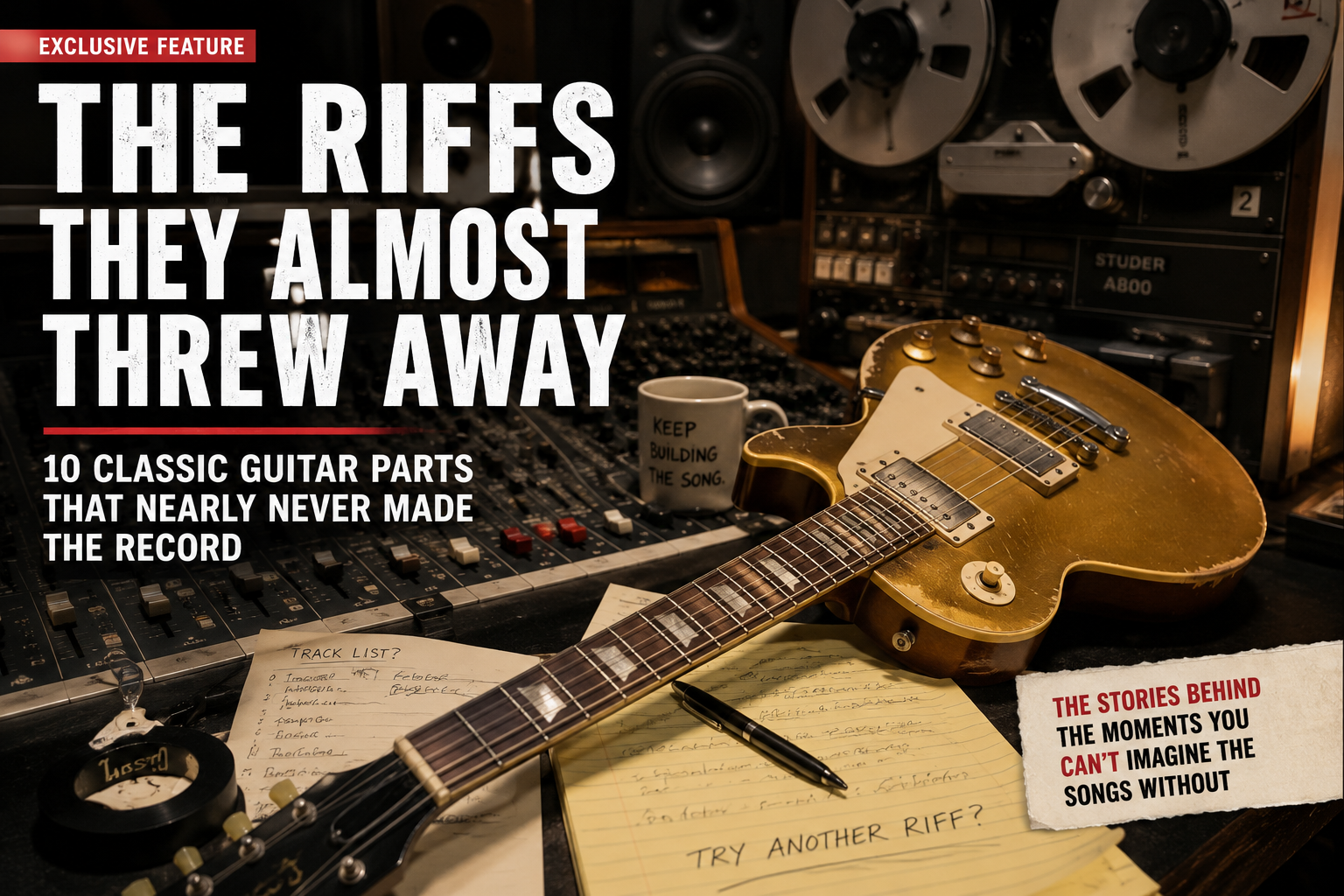
The Riffs They Almost Threw Away: 10 Classic Guitar Parts That Nearly Never Made the Record
A placeholder for a horn section. A warm-up exercise treated as a joke. A microphone left in the wrong place. Ten of the most recognisable guitar parts in rock arrived by accident, argument or last-minute panic.
Great riffs arrive in the ear sounding permanent. Play four notes of "Satisfaction" or the opening bar of "Sweet Child O' Mine" in a crowded room and heads turn before anyone consciously identifies the song. That instant recognition creates an illusion of inevitability: the sense that these parts were composed as complete masterpieces, carried into a studio fully formed, and captured by engineers who understood immediately what they were dealing with.
The documented record tells a messier story. Trace the origins of rock's most quoted guitar moments through interviews, memoirs and engineering accounts and a pattern emerges. Several were placeholders. Several were accidents that survived because nobody could reproduce them. Several were dismissed by the guitarist who played them, argued over by the band, or added at the last minute because the song still had a hole in it.
None of this diminishes the playing. If anything it reframes what studio craft actually is: not the flawless execution of a plan, but the ability to recognise the good idea in the room and refuse to lose it. What follows are ten guitar parts with strong documentation behind them — first-hand interviews, autobiographies and engineer testimony — where the version we know came very close to being something else entirely, or nothing at all.
"(I Can't Get No) Satisfaction" — The Rolling Stones
Guitarist: Keith Richards · Album / Year: Out of Our Heads, 1965
The best-documented origin story in this feature is also the most casually told. Richards has repeated the account in interviews for decades and set it down in his 2010 autobiography Life: the riff arrived in a Florida motel room while he was half asleep, was recorded onto a cassette machine, and was followed on the tape by roughly forty minutes of snoring. He woke with no memory of having played it.
What matters for our purposes is what happened next. Richards did not hear the fuzz-toned guitar figure as the finished hook. In his telling, the three-note phrase was a sketch for a horn line — a Stax-style brass riff that the guitar was only standing in for until real horns could be arranged. The Gibson Maestro FZ-1 Fuzz-Tone he used at RCA Studios in Hollywood was a novelty box he had picked up largely to approximate that brass punch. It was scaffolding, not architecture.
Richards has consistently said he did not want the track released as a single in that form. He was outvoted. Andrew Loog Oldham and the rest of the band backed the recording as it stood, and the fuzz guitar — a texture that was still fairly exotic on pop radio in 1965 — went out to the world as the definitive version. The horn arrangement Richards was imagining never happened, though it is audible in spirit in Otis Redding's 1966 cover, which restores the brass and, in doing so, proves how much of the record's menace came from the fuzz pedal Richards regarded as temporary.
The wider consequence is hard to overstate. A guitar sound that had been a studio curiosity became a commercial argument overnight, and fuzz pedals moved from novelty to necessity across the second half of the decade.
The riff never sits alone. Underneath the fuzz, Richards's rhythm guitar keeps a dry, clean chordal pulse, and the two parts are panned and balanced so the fuzz reads as a horn section sitting on top of a rhythm section. Listen to how short the fuzz notes are — they are clipped rather than sustained, which is exactly how a brass player would phrase them.
"Sweet Child O' Mine" — Guns N' Roses
Guitarist: Slash · Album / Year: Appetite for Destruction, 1987
Slash's account, given consistently in interviews and in his 2007 autobiography with Anthony Bozza, is that the intro began life as a technical exercise he was messing about with at the band's rehearsal space — a string-skipping pattern he considered a warm-up, and by his own description something of a joke. He has repeatedly said he disliked the figure at first and had no intention of building a song around it.
Izzy Stradlin heard it differently and started playing chords behind it. Duff McKagan added a bass line, Axl Rose was upstairs and came down with a lyric idea, and by the end of the session there was a song. Slash's own framing of this in interviews is important: the part survived not because he championed it, but because the other four people in the room refused to let it go.
The other near-miss in this song is the solo section. The track's long instrumental passage and its key change were arrangement decisions made after the fact, and Slash has spoken about the difficulty of finding a solo that suited a song he still had reservations about. The version on the record — the descending, almost vocal-line phrasing over the E minor section — is the product of a player working out how to serve a piece of music he had not chosen to write.
There is a competing narrative worth acknowledging: producer Mike Clink and various band members have given slightly different timelines for how quickly the song came together in that rehearsal. The core of the story — an exercise Slash dismissed, preserved by the rest of the band — is consistent across every telling.
The intro is string-skipping, not a scale run: the pattern jumps across strings rather than moving stepwise, which is why it sits so cleanly under the fingers and why it sounds like a keyboard arpeggio rather than a guitar lick. Note also that the figure is played with a fairly light pick attack and heavy compression from the amp, which keeps every note at the same volume — a detail most cover versions miss.
"Paranoid" — Black Sabbath
Guitarist: Tony Iommi · Album / Year: Paranoid, 1970
Iommi, Geezer Butler and Bill Ward have all described the same scenario: the album was essentially finished, the running time was short, and the band needed one more piece of music to fill the record. Iommi produced the riff on the spot during a break at Regent Sound and Island Studios. Accounts differ over exactly how long the whole thing took — estimates range from twenty minutes to a couple of hours for the writing and tracking — but every version agrees the track was filler in the literal sense.
It became the band's only UK top-five single and the song most people can name if they can name one Black Sabbath song. Iommi has spoken about the irony often, and the band's ambivalence went further than usual modesty: Paranoid the album was originally to be titled War Pigs, and the late addition ended up giving the record its name.
There is a technical detail here that explains why the riff sounds the way it does. Iommi tuned down and used extremely light strings because of the industrial accident that severed the tips of two fingers on his fretting hand; the thimbles he wore reduced his sensitivity, and slack strings made barre-free single-note riffing viable. The urgency of "Paranoid" — its speed, its economy, the fact that it lives almost entirely on two strings — is partly a product of a writing method built around physical constraint.
Iommi double-tracked the main riff, and the two takes are not perfectly aligned. The slight timing spread between them is what gives the part its width and its faint chorus-like shimmer without any modulation effect. Listen in headphones and you can hear the left and right guitars separate on the fast pull-offs.
"Eruption" — Van Halen
Guitarist: Eddie Van Halen · Album / Year: Van Halen, 1978
Want This Tone?
Tell ToneMD what gear you own and get a full signal chain with real numbered settings for this tone.
Included with Premium
"Eruption" was not on the album's track list. Eddie's account, repeated in interviews across his career, is that he was running through his live warm-up solo in the studio when producer Ted Templeman happened to hear it and asked what it was. Templeman has confirmed the substance of this from his side: he had no idea the piece existed, and immediately wanted it recorded.
They captured it quickly — Eddie generally described it as one or two passes — and he remained openly dissatisfied with the take that was released. He said in multiple interviews that he heard a mistake in it and would have played it better with more attempts. The most widely quoted version of his complaint is that he could have done it again, and that the released performance was not his best pass at the piece.
This is the purest example of the category. A guitarist's private warm-up, not considered material, became the recording that reorganised electric guitar technique for a decade — and it exists only because a producer walked past a door at the right moment.
The famous tapping section is not the interesting engineering. Listen instead to the tape delay: Eddie ran the solo through an Echoplex, and the repeats are timed so tightly that the fast runs appear to double themselves. The final tapped triplets ride on those repeats, which is why the piece sounds bigger than one guitar in one room.
"Whole Lotta Love" — Led Zeppelin
Guitarist: Jimmy Page · Album / Year: Led Zeppelin II, 1969
The riff itself was never in doubt. What nearly did not survive was one of the record's most distinctive moments, and it was a mistake.
Engineer Eddie Kramer has described in several interviews how, in the section leading out of the middle breakdown, Robert Plant's vocal from an earlier take bled through onto the tape and could not be removed. Rather than re-record the passage, Page and Kramer treated the bleed deliberately: they added echo ahead of the sound so the leakage arrives as a pre-echo, and the accident became the eerie build that leads back into the main riff. Kramer's summary — that they turned a problem into a feature because there was no other option — is one of the better-documented examples of studio salvage in rock.
Page's approach to the guitar sound on the album belongs to the same philosophy. His distance-miking method, placing a second microphone well back from the cabinet to capture room ambience, was unfashionable at the time and disliked by some engineers who preferred a close mic pressed to the grille. Page has spoken repeatedly about having to argue for it. The size of the Led Zeppelin II guitar sound is largely a product of that argument being won.
In the passage after the theremin section, listen for Plant's voice appearing faintly before the intended entry. That is the ghost vocal — the un-erasable bleed, dressed up with reverse-sounding echo. Once you have heard it you cannot unhear it, and it is the reason the return of the riff lands as hard as it does.
"Smoke on the Water" — Deep Purple
“I never thought that riff was going to be on the record. To me, it was just a sketch — the fuzz was supposed to be horns.”
Guitarist: Ritchie Blackmore · Album / Year: Machine Head, 1972
Deep Purple's own estimation of the song was low. Roger Glover and Ian Gillan have both described "Smoke on the Water" as a track the band did not initially rate — a piece built around a simple riff, with lyrics that documented the Montreux casino fire almost as reportage. It was not intended as a single, and it was not the song the band expected the album to be remembered for.
Blackmore's own commentary on the riff has been consistently deflationary. He has described it in interviews as a deliberately simple inversion of a Beethoven-derived idea and has occasionally seemed faintly embarrassed by how much of his reputation rests on four bars of parallel fourths. The band's plan was for other Machine Head tracks — "Highway Star" and "Space Truckin'" among them — to carry the record.
American radio decided otherwise. An edited version released as a single in the United States in 1973 turned the track into the band's signature and, over time, into the first riff most guitarists learn. The gap between how the band valued it and how the world did remains one of rock's larger miscalculations.
The riff is not power chords. Blackmore plays it as fourths, and on the record he picks them with the fingers rather than a plectrum, which is why the attack is rounder and less percussive than every version you have heard in a guitar shop. Listen to the top note ringing slightly longer than the lower one — that imbalance is the sound of fingers, not a pick.
"Money for Nothing" — Dire Straits
Guitarist: Mark Knopfler · Album / Year: Brothers in Arms, 1985
The most imitated guitar tone of the mid-1980s was an accident, and the engineer has said so plainly. Neil Dorfsman, who engineered Brothers in Arms at AIR Studios Montserrat, has described in interviews — including a detailed account in Sound on Sound — how a microphone in front of Knopfler's Marshall was left in a position he had not intended. When the sound came up in the control room it was nothing like the tone they had been chasing, but it was unmistakably right for the track.
Accounts differ slightly over the exact mechanics: Dorfsman has described the mic being knocked or left off-axis, and Knopfler's use of a wah pedal parked in a fixed position adds another variable that has been reported inconsistently over the years. What is not in dispute is that the tone was not designed. It was found, and it was kept because nobody in the room could improve on it — and Dorfsman has admitted he was never able to recreate it precisely afterwards.
The playing is the other half of the story. Knopfler plays with his fingers rather than a pick, and the combination of fingerstyle attack, a Les Paul, and that misaligned microphone produced the swampy, honking texture that a generation of amp modellers has since tried to reproduce as a preset.
The pick attack that isn't there. Every note of the main riff starts soft and blooms, because Knopfler is plucking with the flesh of his fingers. Compare the entrance of the riff with any pick-played cover and the difference is immediate: the record has almost no initial transient click, which is why the tone reads as vocal rather than aggressive.
"Taxman" — The Beatles
Guitarist: Paul McCartney (lead), George Harrison (song) · Album / Year: Revolver, 1966
The most quoted guitar solo George Harrison ever wrote a song around was played by somebody else. Geoff Emerick's memoir Here, There and Everywhere and subsequent interviews describe the session in some detail: Harrison had been working on the lead line, the takes were not landing, and McCartney — with the clock running and George Martin's patience thinning — took over and cut the solo.
Emerick's account notes the awkwardness of the moment. Harrison had brought in the song, one of the few of his to open a Beatles album, and watched the most memorable instrumental part on it go to the band's bass player. The solo McCartney played is not a conventional rock lead at all; it is angular, Indian-inflected in its bends and repeated phrase shapes, and closer to the sound Harrison was pursuing in his own listening at the time.
The part had one further afterlife. The same solo was flown back into the album on "Tomorrow Never Knows" as a backwards tape insert, which means one hurried performance appears twice on Revolver, once forwards and once reversed. Harrison's version of events over the years was more diplomatic than Emerick's, and the two accounts do not perfectly align on how the handover was proposed — but neither disputes who played it.
The solo repeats a single phrase shape rather than developing a line, and every bend lands slightly under pitch before settling. That microtonal approach is a direct import from Indian classical phrasing, and it is why the solo still sounds unlike anything else on a 1966 pop record. Then play "Tomorrow Never Knows" and listen for the same lick running backwards.
"Comfortably Numb" — Pink Floyd
Guitarist: David Gilmour · Album / Year: The Wall, 1979
The song reached its final form through open disagreement. Roger Waters and Gilmour have both discussed, repeatedly and at length, the argument over which backing track to use: Waters favoured a harder, more orchestral version, Gilmour preferred an earlier, more spacious take. The released recording is a compromise assembled from both, with Bob Ezrin brokering.
The closing solo — routinely voted the greatest in rock — was not a single inspired performance. Gilmour has described the method in interviews on multiple occasions: he recorded five or six full passes, then sat with the engineer marking the best bars from each and comping them into one master, a bar here and a phrase there. His own description of the process is unglamorous and technical, and it is worth taking seriously, because the solo's reputation as a moment of pure spontaneous feeling is not how it was built.
That is the near-miss. The solo we know does not exist on any single take. It is an edit, and had the band been working faster, or had one complete pass been declared good enough, the most famous guitar moment of the late 1970s would sound materially different.
Listen for the edit points. The clearest are in the second half of the outro, where the phrasing character shifts slightly between sections — the vibrato speed changes, and the note density steps up in a way that suggests two different performances stitched together. Also notice the bends: Gilmour's tuning-in on long bends is unusually slow, arriving at pitch late and deliberately.
"The Chain" — Fleetwood Mac
Guitarist: Lindsey Buckingham · Album / Year: Rumours, 1977
"The Chain" is the only song on Rumours credited to all five members, and the reason is that it was assembled from discarded pieces. The band and engineers Ken Caillat and Richard Dashut have described the construction in interviews and in Caillat's book Making Rumours: an unfinished Christine McVie song supplied one section, a Stevie Nicks lyric supplied another, and the celebrated instrumental coda came from a separate offcut built on John McVie's bass line.
The physical process is unusually well documented. Sections of tape were literally cut and spliced together, and the seams are audible if you know where to listen. Buckingham's contribution — the acoustic and slide-flavoured figures in the verses, and the driving electric part that answers the bass in the outro — was written to bind parts that had never been intended to sit in the same song.
Had the band been less willing to raid its own bin, none of it would exist. This is the opposite of the Eddie Van Halen story: not a finished piece nearly overlooked, but a famous track constructed entirely from material already rejected.
The tape splice going into the outro. The ambience changes at the transition — the room around the drums opens up slightly, because the two sections were recorded separately. Then follow Buckingham's electric answer phrases against John McVie's bass: they are deliberately behind the beat, which is what gives the coda its slow-building tension.
What the pattern actually tells us
Read these ten accounts alongside one another and a couple of practical lessons surface, both of them useful to anyone who records their own playing.
The first is that the guitarist is frequently the worst judge of their own best idea. Richards heard a horn placeholder. Slash heard a warm-up joke. Iommi heard filler. Eddie Van Halen heard a flawed take. In four of these cases the part survived because somebody else in the room — a bandmate, a manager, a producer — insisted on it. Bands that function well are, among other things, editing committees.
The second is that accidents only become classics when somebody chooses to keep them. The vocal bleed on "Whole Lotta Love" and the misplaced microphone on "Money for Nothing" were both mistakes that a conscientious engineer would normally fix. In each case the people in the control room recognised that the error sounded better than the plan and built around it instead. That instinct is a skill, and it is the least discussed part of record-making.
The third, slightly less comfortable, is that the myth of the perfect single take does not survive contact with the documentation. "Comfortably Numb" is comped. "Taxman" was handed to another player under time pressure. "The Chain" is a splice. The finished record is an artefact of decisions, and the decisions are usually where the story is.
If you want a follow-up, our feature on the anatomy of a perfect guitar solo looks at the same question from the compositional side, and the History of the Riff series breaks down individual parts in more depth.
Sources & further reading
- 1.Keith Richards with James Fox, 'Life' (Little, Brown, 2010) — the origin of the 'Satisfaction' riff and Richards's objection to releasing it.
- 2.Slash with Anthony Bozza, 'Slash' (It Books, 2007) — the 'Sweet Child O' Mine' intro as a string-skipping exercise.
- 3.Geoff Emerick with Howard Massey, 'Here, There and Everywhere: My Life Recording the Music of The Beatles' (Gotham, 2006) — the 'Taxman' solo session.
- 4.Ken Caillat with Steven Stiefel, 'Making Rumours' (Wiley, 2012) — the assembly and tape edits behind 'The Chain'.
- 5.Neil Dorfsman, engineering interviews on 'Brothers in Arms', including Sound on Sound's Classic Tracks coverage of 'Money for Nothing'.
- 6.Eddie Kramer, archival interviews on engineering 'Led Zeppelin II' and the vocal bleed in 'Whole Lotta Love'.
- 7.Ted Templeman with Greg Renoff, 'Ted Templeman: A Platinum Producer's Life in Music' (ECW Press, 2020) — the recording of 'Eruption'.
- 8.David Gilmour, interviews on the compiling of the 'Comfortably Numb' solo, including Guitar World and Guitarist long-form features.
- 9.Tony Iommi, 'Iron Man: My Journey Through Heaven and Hell with Black Sabbath' (Da Capo, 2011) — the writing of 'Paranoid' as an album filler.
- 10.Roger Glover and Ian Gillan, archival interviews on the making of 'Machine Head' and the band's low expectations for 'Smoke on the Water'.
Experience-driven coverage, not algorithm bait.
- 20+ years of guitar playing experience
- Real-world retail experience at Guitar Center
- Thousands of hours testing guitars, amps, and pedals
- A community of 50,000+ guitar enthusiasts across platforms
- Partnerships with Fender, DistroKid, TrueFire, Card Chords, and Enya
- Editorial standards published openly — see how we test gear
The Modern Guitar Magazine. Delivered to your inbox.
No spam. No gimmicks. Just great guitar content — stories, tones, iconic solos, and honest gear takes. Every week.
Ask GP
3 free questions a dayStill curious? Ask GP about this story.
Your personal classic-rock and guitar guide — ask anything about The Riffs They Almost Threw.
Discussion (0)
Sign in to join the discussion.
Sign in to commentLoading comments…
Discover another guitar story
Swipe through our latest features, breaking news and iconic solos — one story at a time.
Open Swipe →More in Guitar Talk
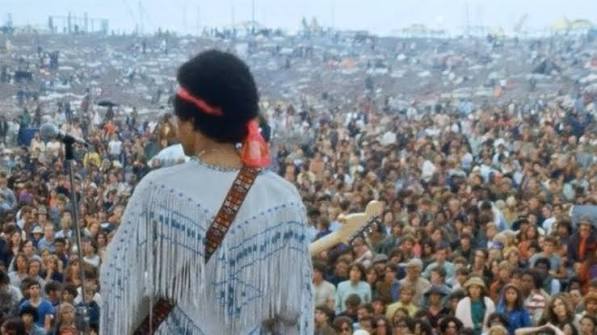
The 10 Greatest Guitar Renditions of “The Star-Spangled Banner”
From Jimi Hendrix's controlled chaos at Woodstock to modern performances by H.E.R., Gary Clark Jr. and Jack White, these guitarists turned America's national anthem into something deeply personal.
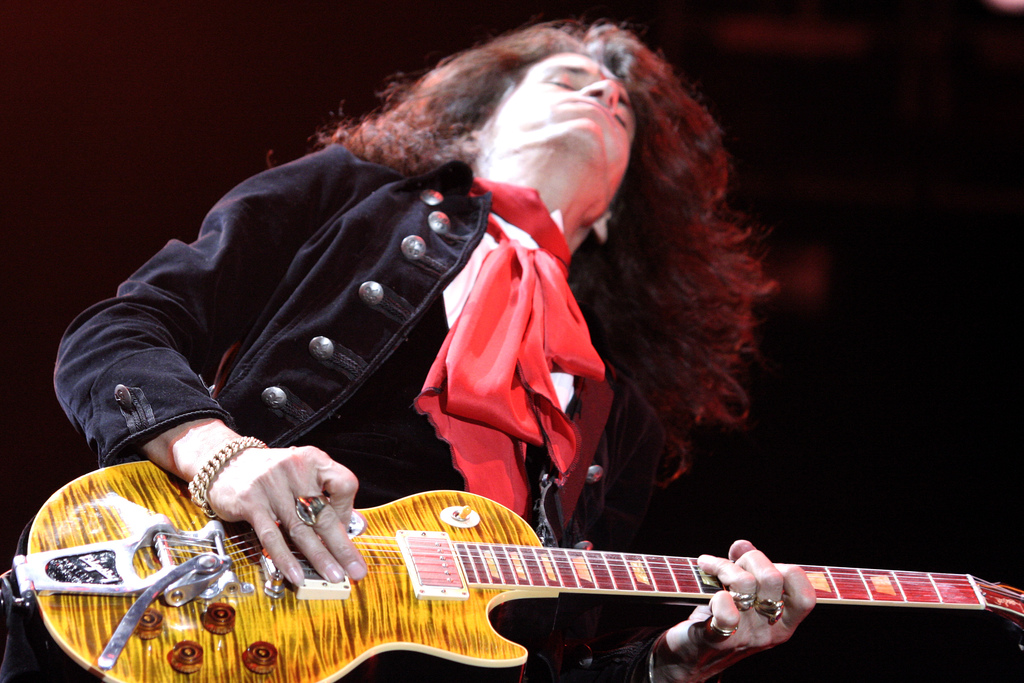
Happy Birthday, Joe Perry: The Riff Machine Who Gave Aerosmith Its Swagger
Joe Perry turns 76 today. From the swampy grind of “Sweet Emotion” to the reunion that saved a band, this is the career of the guitarist who taught American hard rock how to strut.
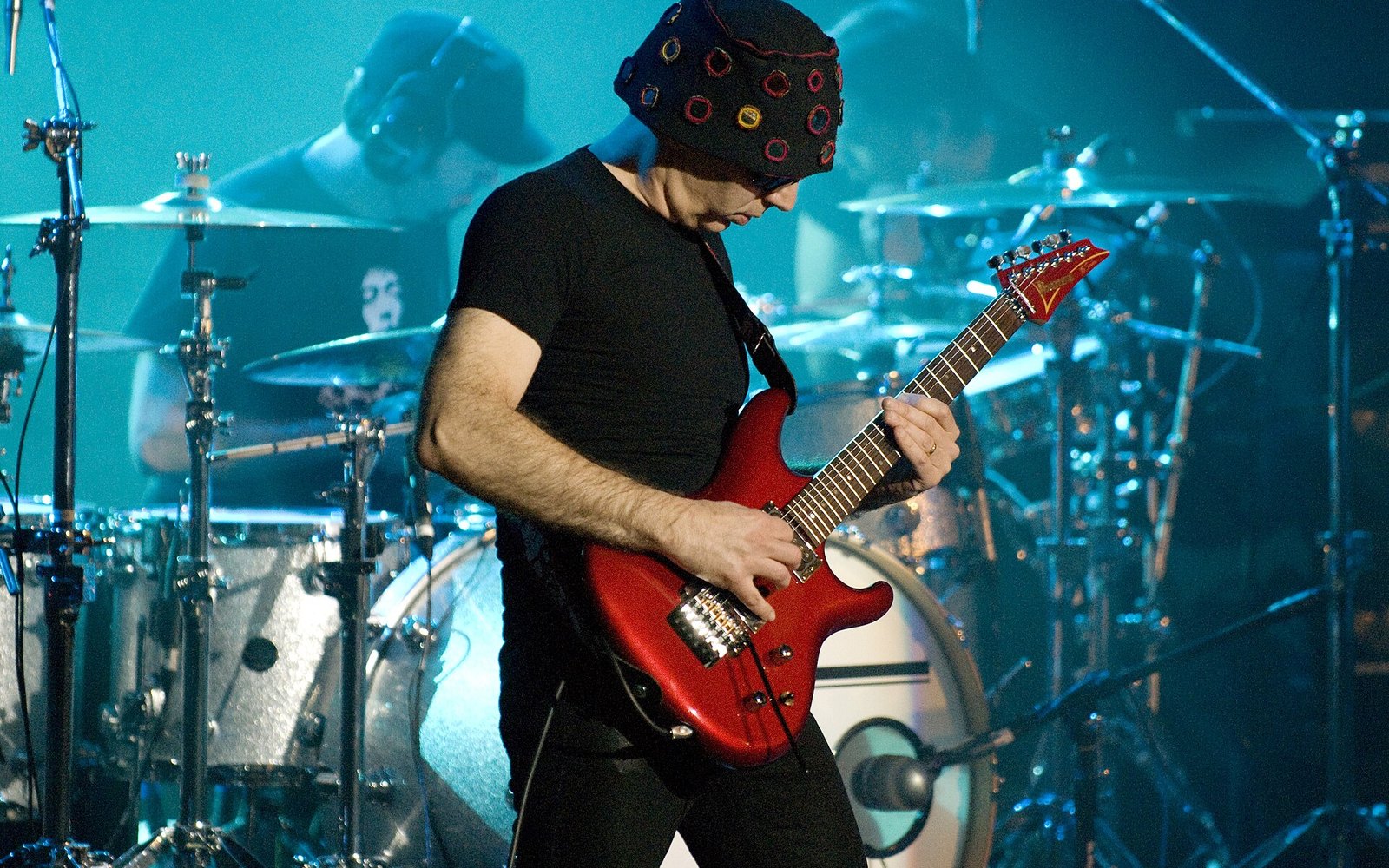
History of the Riff: How Joe Satriani Made “Flying in a Blue Dream” Feel Weightless
An acoustic guitar in an unusual tuning, a stray broadcast and a melody that seems to hang in the air: inside the construction of Satriani’s 1989 masterpiece.