
Valeton GP-200 Review: Is This the Budget Helix We’ve Been Waiting For?
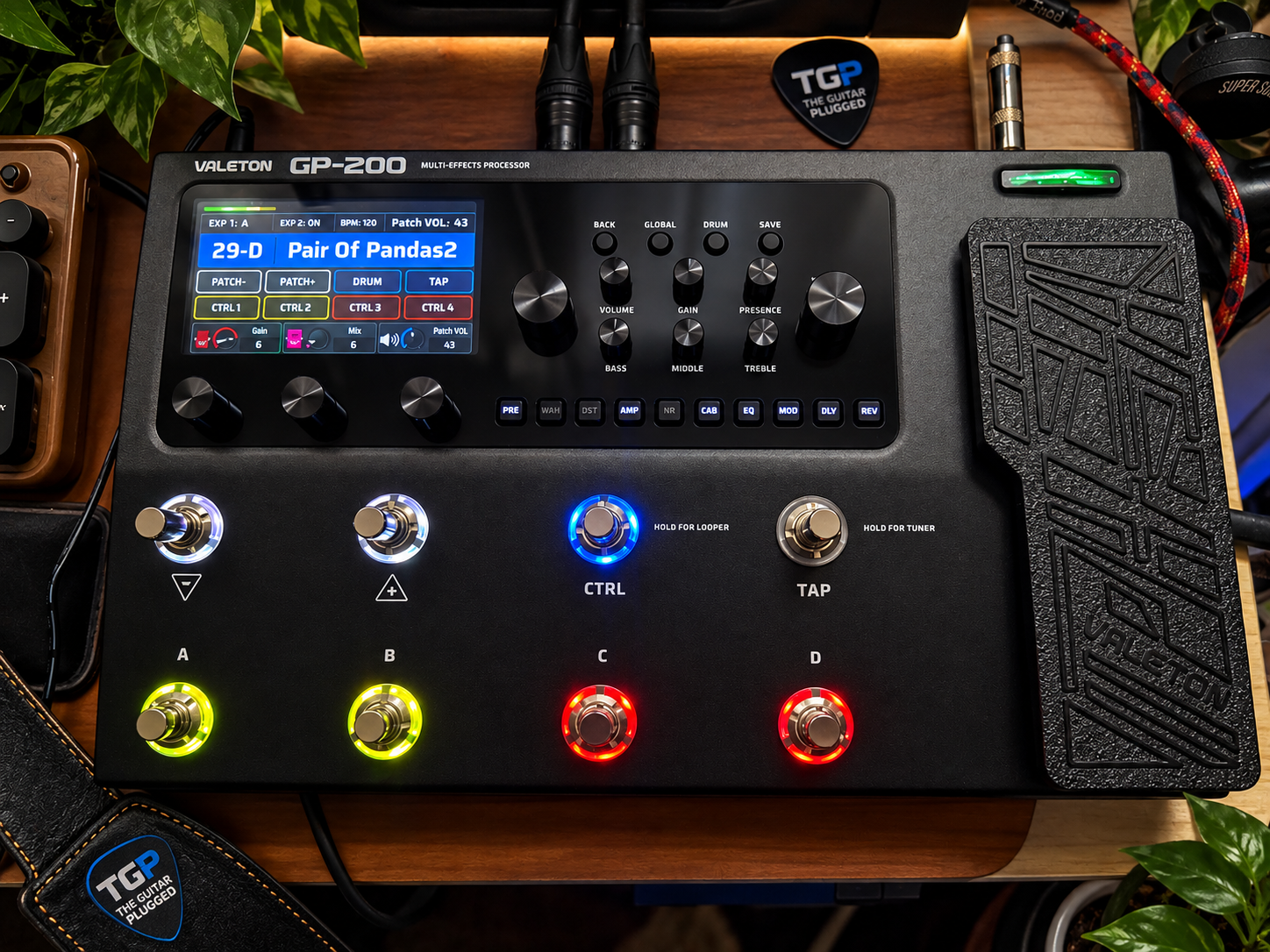
Valeton GP-200 photographed for The Guitar Plugged.
Eight footswitches. Expression pedal. XLR outputs. MIDI. Effects loop. IR loading. More than 240 effects and 140-plus amp and cabinet models. The Valeton GP-200 looks suspiciously like the kind of rig that used to require considerably more money.
There is a point during almost every conversation about guitar modelers when somebody eventually says it:
“Why does this stuff have to cost so much?”
It's a fair question.
The Line 6 Helix changed expectations for what a floor processor could be. Units from Line 6, HeadRush, Fractal, Neural DSP and others have since turned the floor modeler into a legitimate replacement for traditional guitar rigs.
But flagship modeling isn't cheap.
That's where the Valeton GP-200 gets interesting.
At $349.99, the GP-200 lives in a completely different financial universe from a flagship Helix.
Spend a little time looking at what Valeton actually packed into this metal floorboard, however, and the price starts becoming difficult to reconcile with the feature list.
This isn't a tiny practice pedal with a few amp simulations.
It's a legitimate floor processor.
And after digging into what it offers, we're comfortable saying something we don't say lightly:
The GP-200 might be one of the closest things currently available to a budget-minded Helix experience.
Not a Helix replacement in every respect.
Not Helix processing power for one-third the money.
But the experience?
That's where Valeton gets remarkably close.
[TOC]
What to Remember
- ▸$349.99 buys a cast-metal floor modeler with eight LED footswitches and a built-in expression pedal.
- ▸More than 240 effects, including 140-plus amp, cab, bass and acoustic models, with up to 11 movable modules per patch.
- ▸20 user IR slots mean you aren't stuck with the factory cabinets.
- ▸Balanced XLR outs, effects loop, MIDI In/Out/Thru and 6-in/4-out USB-C audio with reamping.
- ▸180-second looper and a 100-pattern drum machine make it a standalone practice station.
- ▸TGP rating: 9/10 — not a Helix, but the flagship floor-modeler experience at a fraction of the price.
First Impressions: This Doesn't Feel Cheap
Budget multi-effects units used to announce themselves immediately.
Plastic enclosure.
Tiny display.
A couple of footswitches.
Menus buried inside menus.
The GP-200 doesn't make that first impression.
Its cast-metal chassis feels like equipment designed to go onto a pedalboard or stage floor rather than live permanently beside a computer.
Across the front are eight customizable LED footswitches, accompanied by a built-in expression pedal.
Above them sits a 4.3-inch TFT color display.
There are physical controls around the screen instead of forcing every adjustment through a touchscreen or endless menu diving.
That matters.
The best modeler interface isn't necessarily the prettiest one.
It's the one that lets you change something quickly when your drummer is already counting off the next song.
The GP-200 feels designed with that reality in mind.
The Big Number: More Than 240 Effects
Valeton gives the GP-200 more than 240 effects in total.
Inside that collection are more than 140 amp, cabinet and acoustic/bass models, alongside over 100 drive, dynamics, modulation, pitch/frequency, delay and reverb effects.
Numbers alone don't make a modeler good.
We've played plenty of processors containing hundreds of sounds while only wanting to use about six of them.
What matters is whether you can build a usable signal chain.
Here the GP-200 becomes much more interesting.
Up to 11 modules can operate simultaneously, and the modules can be repositioned within the signal chain.
That means you're actually building a rig.
Compressor. Drive. Amp. Cab. EQ. Modulation. Delay. Reverb.
Whatever the patch requires.
This is the fundamental concept that made higher-end modelers so compelling in the first place: stop thinking about presets and start thinking about virtual pedalboards and rigs.
The GP-200 understands that.
Amp Modeling: Where the Fight Is Won or Lost
Every modeler eventually has to answer the same question.
Does it actually feel like an amplifier?
Valeton describes the GP-200 as using its HD modeling technology, and there is an impressive range of familiar amplifier archetypes represented.
Clean American platforms. British crunch. Vintage stacks. Modern high gain. Bass amps. Acoustic processing.
The GP-200 isn't trying to specialize in one genre.
It's trying to replace a room full of equipment.
And for the money, the results are impressive.
The clean and edge-of-breakup territory is particularly useful because those sounds reveal problems quickly.
Over-compressed clean models can feel lifeless.
Poorly modeled breakup can produce that unmistakable fizzy digital edge that plagued inexpensive processors for years.
The GP-200 is far beyond that generation of gear.
Does it have the same depth and microscopic responsiveness as the best current flagship modeling platforms?
No.
That's an unreasonable expectation at $349.
But here's the more relevant question:
Could we walk into a club with a GP-200, connect the XLR outputs to the PA and play the gig?
Absolutely.
And that's the threshold that matters.
High Gain Is Better Than the Price Suggests
Building a GP-200 patch? Start with a tone prescription.
Tell ToneMD what guitar and gear you own and we’ll show you how to get as close as possible using the equipment you already have — full signal chain, real numbered settings, no guesswork.
Included with The Guitar Plugged Premium
Budget modelers have historically done high gain in one of two ways.
Too fizzy or too compressed.
The GP-200 gives you enough control over the complete signal chain to avoid much of that.
Choose the right amp. Control the gain. Use the right cabinet or IR. Apply EQ intelligently.
Suddenly you're dealing with a genuinely convincing direct guitar tone.
And that brings us to one of the GP-200's most important features.
Load Your Own IRs
The GP-200 supports 20 user impulse responses.
For experienced modeler users, that line in the specification sheet might matter more than another hundred effects ever could.
Cabinet simulation dramatically influences the final character of a modeled guitar tone.
A mediocre cabinet pairing can make an excellent amp model sound terrible.
A carefully chosen IR can transform a patch.
Being able to import your preferred cabinet IRs means the GP-200 isn't permanently tied to Valeton's factory cabinet selection.
It also gives tone obsessives another rabbit hole to disappear into.
We mean that affectionately.
This Is Where the Helix Comparison Starts
Let's be very clear.
A Valeton GP-200 is not a Line 6 Helix Floor with a different logo.
Helix is a mature professional ecosystem with deeper routing possibilities, an enormous user community, extensive control functionality and years of development behind it.
But put the two units on the floor and consider what the average guitarist actually wants to accomplish.
Build complete rigs? Yes. Run multiple effects? Yes. Switch sounds from footswitches? Yes. Control parameters with an expression pedal? Yes. Load IRs? Yes. Run direct to a PA? Yes. Record over USB? Yes. Use MIDI? Yes. Integrate external pedals? Yes. Edit patches from a computer? Yes.
Suddenly the gap in workflow becomes considerably smaller than the gap in price.
That's why “budget Helix” makes sense as shorthand for what the GP-200 represents.
You're getting the philosophy of a modern professional floor modeler without paying flagship-modeler money.
GP-200 vs. POD Go
The more obvious Line 6 comparison is actually the POD Go.
POD Go occupies the space beneath the full Helix family and gives players access to Line 6's modeling ecosystem in a simplified floorboard.
The Line 6 advantage is significant.
Its modeling lineage is mature, the ecosystem is huge, and the Helix-derived sound library has been tested on countless stages and records.
But the GP-200 counters aggressively with hardware and connectivity.
Eight customizable LED footswitches give it a substantial stage-control surface.
X Concepts Strings • Made in USA
Never Run Out of Strings Again.
Join the X Concepts String Club and get fresh USA-made strings delivered every month—plus Premium membership options for the full Guitar Plugged experience.
There are balanced XLR outputs. MIDI is onboard. There's an effects loop. There's USB recording. There's an expression pedal. There are user IR slots.
The GP-200 feels less like Valeton asked, “What's the minimum we need?”
It feels like they asked, “How much can we possibly fit in here and still hit the price?”
For players who prioritize the Line 6 ecosystem and modeling catalog, POD Go remains extremely compelling.
For players who prioritize maximum hardware-per-dollar, the GP-200 becomes a serious problem for it.
GP-200 vs. Helix
Helix wins.
Let's get that out of the way.
If price is irrelevant and you want the deeper professional platform, we'd still take the flagship Line 6 unit.
But price is rarely irrelevant.
That's why the GP-200 is fascinating.
“There aren't many pieces of guitar equipment that make you repeatedly look back at the price to make sure you read it correctly.”
The relevant comparison isn't: is the GP-200 better than Helix? It isn't.
The relevant comparison is: do you need everything Helix provides badly enough to justify spending substantially more?
That's a much harder question.
A guitarist playing local shows, recording at home, rehearsing every week and occasionally running direct to a PA might discover that the GP-200 already covers nearly everything they actually do.
That's value.
GP-200 vs. HeadRush
HeadRush built much of its reputation around immediacy.
Its touchscreen-based workflow makes building signal chains intuitive, particularly for players who hate traditional modeler menus.
Valeton takes a somewhat more conventional approach.
But again, the GP-200's advantage is price-to-functionality.
If touchscreen operation is critical to you, HeadRush has an obvious attraction.
If what you really want is a rugged floorboard with enough switching, routing and connectivity to function as the center of a complete guitar rig, the Valeton deserves consideration.
And once again, the price refuses to leave the conversation.
Eight Footswitches Matter More Than You Think
Specifications often undersell usability.
Eight customizable LED footswitches might sound like another bullet point.
Onstage, it's a major feature.
Modelers become frustrating when you have enormous processing capability but can't reach anything quickly.
The GP-200 gives your feet room to work.
Depending on how you configure it, those switches can make the unit behave more like a traditional pedalboard rather than a preset machine.
That's how we prefer to use sophisticated modelers.
Instead of Preset 1, Preset 2, Preset 3, think: drive, boost, modulation, delay, special effect.
Now the modeler disappears and you're simply playing through a pedalboard again.
That's the goal.
The Expression Pedal
The integrated expression pedal is another major quality-of-life feature.
It can control as many as three effect parameters.
Obviously, wah and volume are the immediate applications.
But expression control becomes much more interesting when assigned creatively.
Delay feedback. Pitch. Modulation depth. Effect mix. Gain.
Building patches where one pedal gradually morphs several parameters can turn a relatively simple preset into something much more expressive.
Again, that's functionality associated with serious stage processors.
It's built in here.
Connectivity Is Excellent
Turn the GP-200 around and the value proposition gets even stronger.
• 1/4-inch outputs
• Balanced XLR outputs
• Headphone output
• Auxiliary input
• Effects send and return
• MIDI In/Out/Thru
• USB-C
That's enough connectivity for the GP-200 to function in several completely different rigs.
At home, connect headphones. In the studio, use USB. At rehearsal, run into powered speakers. At a gig, send XLR directly to front of house.
Want to integrate an external pedal? Use the effects loop.
Want MIDI control? It's there.
This is exactly what a floor modeler should be.
It Can Be Your Audio Interface
The USB-C connection isn't just there for firmware updates.
The GP-200 operates as a 6-in/4-out USB audio interface and supports loopback and reamping workflows.
That's enormous for home players.
A guitarist starting from scratch could theoretically buy a GP-200, a guitar, headphones and a computer — and have the foundation of an entire recording setup.
No amplifier required. No microphone required. No separate interface required.
That's one reason products like this are changing what “beginner guitar gear” even means.
Twenty years ago, a beginner might buy a cheap practice amplifier.
Today, for a few hundred dollars, they can own something capable of recording complete guitar tracks silently at 2 a.m.
That's progress.
[RIG]
The 180-Second Looper
There's also a 180-second looper.
Three minutes is enough to create substantial practice loops, rhythm parts and song sections.
Combine that with the onboard drum machine — which includes 100 patterns — and the GP-200 becomes a legitimate standalone practice station.
No computer. No YouTube backing track. No phone required.
Pick a drum groove. Build a tone. Record a progression. Solo over it.
That's the kind of feature that sounds insignificant until you realize you're using it every night.
The Screen and Editor
The 4.3-inch TFT display is large enough to make the GP-200 usable without constantly reaching for a computer.
That's important.
We don't want our guitar rig to feel like accounting software.
When we want to play guitar, we want to play guitar.
Valeton also provides editing software for Windows and Mac when deeper patch management makes more sense on a larger display.
That combination is ideal.
Quick adjustments on the hardware. Detailed editing on the computer.
Where the GP-200 Doesn't Beat the Expensive Stuff
We don't believe in pretending inexpensive gear has no compromises.
It does.
The GP-200's ecosystem isn't Helix. Its community isn't Helix. Its modeling platform doesn't have the same long history or breadth of third-party support.
And players who spend hours analyzing amplifier response through studio monitors may prefer more expensive platforms.
There is also a difference between having hundreds of models and having hundreds of models you personally love.
That's true of every processor.
Ultimately, tone remains subjective.
But none of those criticisms change the central argument.
The GP-200 isn't competing by being the absolute best modeler on Earth.
It's competing by being shockingly complete for $349.99.
That's a different contest.
And it's one Valeton has a very good chance of winning.
Who Should Buy It?
The obvious first candidate is the guitarist who wants to enter the modeling world without dropping flagship money.
It's also excellent for gigging musicians who want a compact direct rig.
Cover-band players should pay attention.
So should home-recording guitarists.
And there's another group: players who already own expensive amplifiers.
The GP-200 makes an excellent secondary rig.
Leave the big amp at home for rehearsal. Take the Valeton to fly dates. Use it for silent practice. Keep it as an emergency backup.
A $350 device capable of replacing your entire rig when something fails onstage is not a bad insurance policy.
The Most Important Test
Forget the number of effects. Forget the screen. Forget the specifications.
Here's the test we ultimately use with modelers:
Does the gear make us want to keep playing?
Because the fastest processor in the world doesn't matter if you spend the entire night editing instead of making music.
The GP-200 succeeds because it reaches a point where the technology begins disappearing.
Build a good patch. Assign the switches. Plug in. Play.
That's exactly what we want.
The Guitar Plugged Verdict
Calling anything a “budget Helix” is dangerous.
The phrase creates expectations that a $350 processor probably shouldn't have to meet.
So let's define exactly what we mean.
The Valeton GP-200 doesn't give you a Helix for $349.99.
What it gives you is something arguably more important: a genuinely convincing version of the modern flagship-floor-modeler experience at a price ordinary guitarists can justify.
You get a rugged metal chassis. Eight customizable footswitches. An expression pedal. A large color display. More than 240 effects. More than 140 amp, cabinet, bass and acoustic models. User IR loading. Eleven simultaneous movable processing modules. Balanced XLR outputs. An effects loop. MIDI. USB recording and reamping. A 180-second looper. A drum machine. Computer editing. And enough connectivity to serve as the center of a home, studio or stage rig.
There are better modelers. There are more powerful modelers. There are modelers with larger ecosystems.
But there aren't many pieces of guitar equipment that make you repeatedly look back at the price to make sure you read it correctly.
The GP-200 is one of them.
• Best for: players who want a serious all-in-one floor modeler without flagship pricing
• We love: connectivity, eight-switch layout, expression pedal, IR support, metal construction, flexible signal chain and an extraordinary feature-to-price ratio
• Consider: players heavily invested in the Helix ecosystem or requiring the deepest possible routing and processing may still prefer Line 6's flagship hardware
• Bottom line: if you've wanted a Helix-style floor rig but couldn't justify the price, the Valeton GP-200 deserves to be very high on your shortlist
Where to Look
Some links may be affiliate links. We may earn a small commission at no cost to you.
Sources & further reading
Experience-driven coverage, not algorithm bait.
- 20+ years of guitar playing experience
- Real-world retail experience at Guitar Center
- Thousands of hours testing guitars, amps, and pedals
- A community of 50,000+ guitar enthusiasts across platforms
- Partnerships with Fender, DistroKid, TrueFire, Card Chords, and Enya
- Editorial standards published openly — see how we test gear
The Modern Guitar Magazine. Delivered to your inbox.
No spam. No gimmicks. Just great guitar content — stories, tones, iconic solos, and honest gear takes. Every week.
Ask GP
3 free questions a dayStill curious? Ask GP about this story.
Your personal classic-rock and guitar guide — ask anything about Valeton GP-200 Review.
Discussion (0)
Sign in to join the discussion.
Sign in to commentLoading comments…
Discover another guitar story
Swipe through our latest features, breaking news and iconic solos — one story at a time.
Open Swipe →More Guitar News
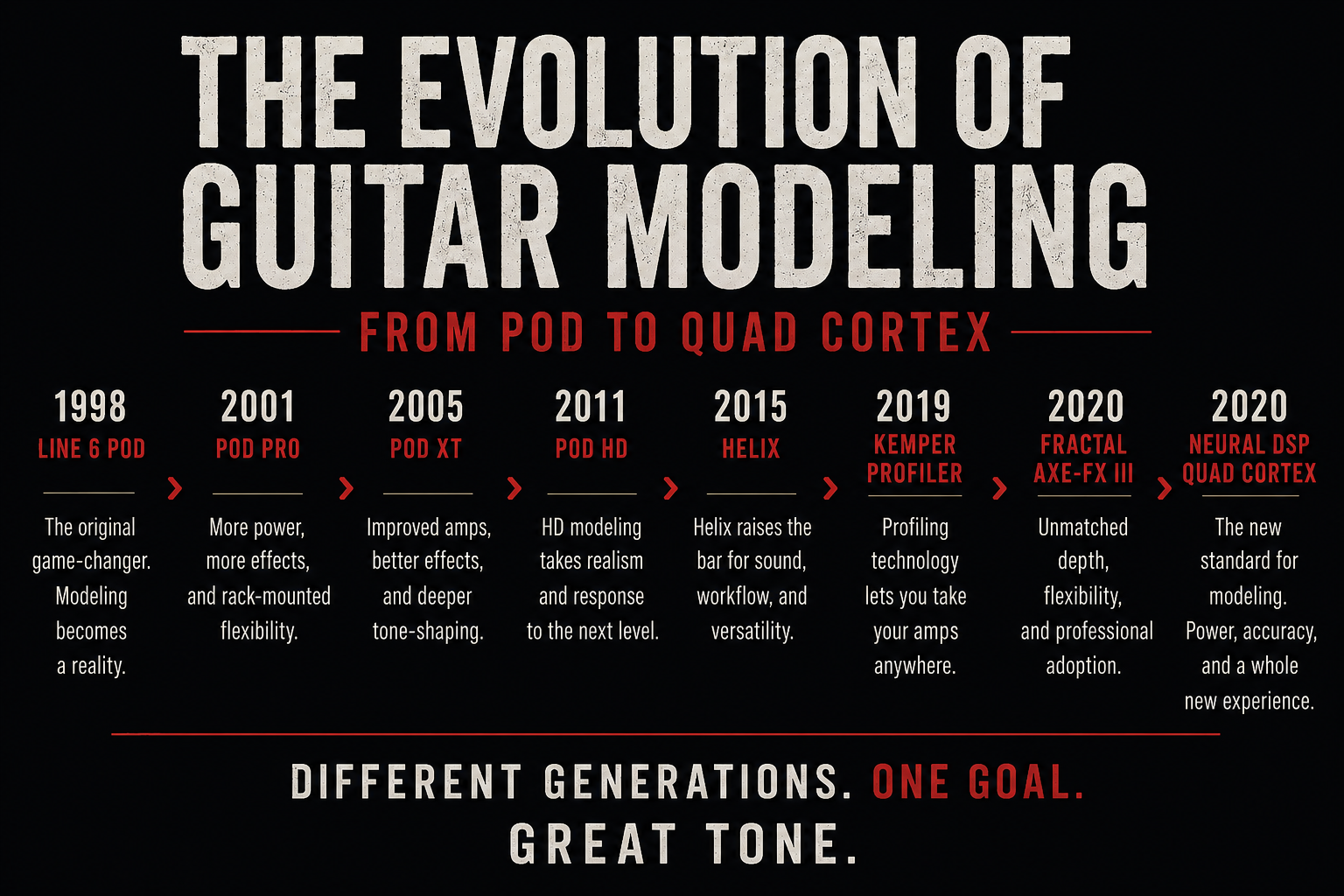
The Evolution of Guitar Modeling: From POD to Quad Cortex
How digital rigs went from bedroom practice tools to the centerpiece of the modern guitar world — from the original Line 6 POD to today's Neural DSP Quad Cortex.
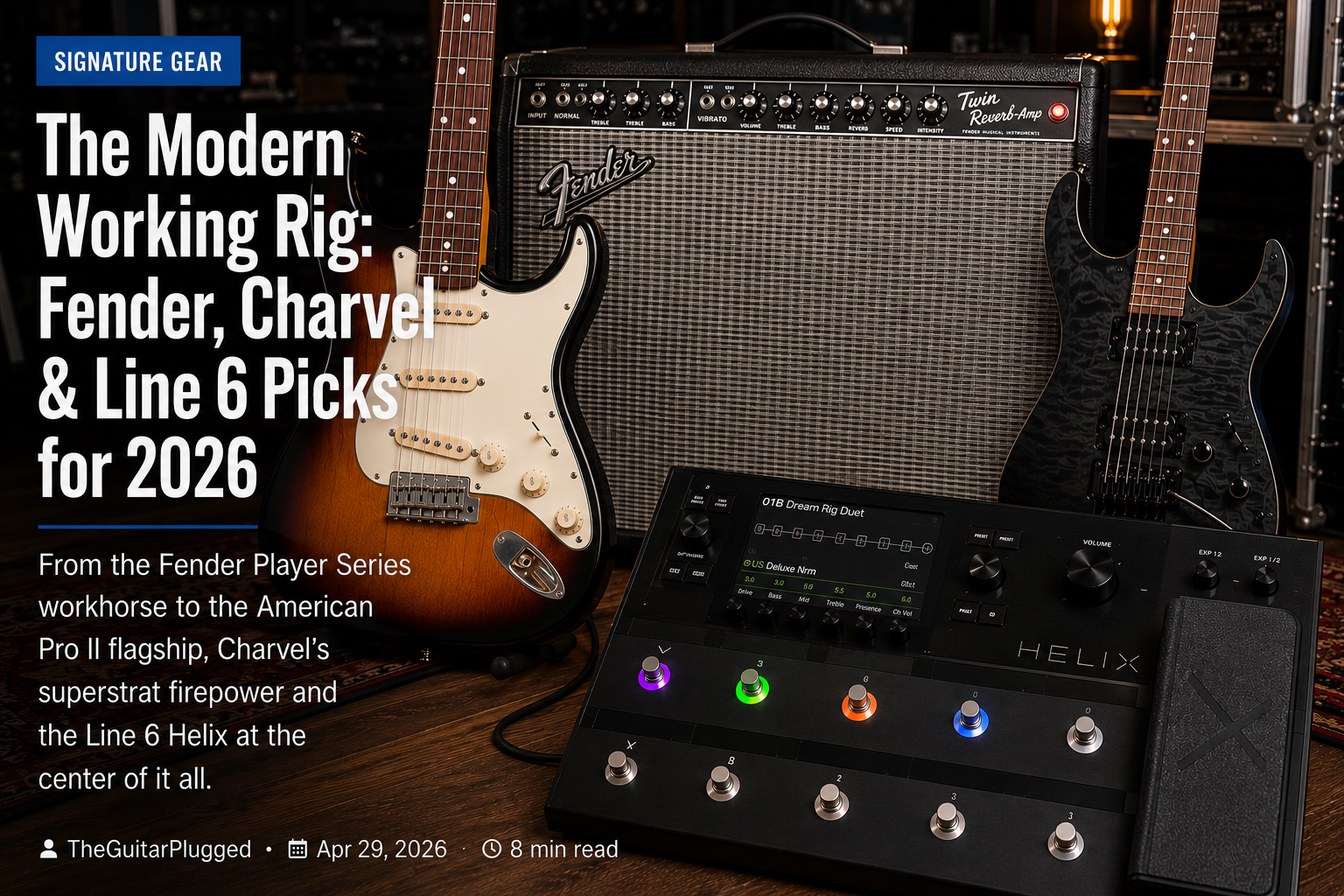
The 5 Best Budget Modeling Amps in 2026 (That Actually Sound Incredible)
Big tone, small budget, zero excuses. We tested today's best affordable modeling amps — from the Boss Katana to the Spark 2 — and ranked the five that genuinely sound incredible without breaking the bank.

The Disappearing Guitar Rig: Are We Witnessing the Death of the Guitar Amp?
Guitar tone has never been more powerful, portable or convincing. So why do so many players still refuse to let the amplifier die?