

History of the Riff: "Can't You Hear Me Knocking" — Keith Richards Finds the Groove and Never Lets Go
Open G, five strings and zero warning. How Keith Richards kicked the door off Sticky Fingers — and how an accidental jam turned the track into one of the Stones' great guitar showcases.
*The Rolling Stones | Sticky Fingers | 1971*
There are guitar riffs that introduce a song, and then there are guitar riffs that seem to kick the door off its hinges.
Keith Richards' opening to "Can't You Hear Me Knocking" belongs firmly in the second category.
There's no count-in. No atmospheric buildup. No warning. Richards simply hits the guitar and suddenly Sticky Fingers is moving at full speed.
Released in 1971, "Can't You Hear Me Knocking" would eventually stretch beyond seven minutes and become one of the Rolling Stones' great guitar showcases. But before Mick Taylor's soaring improvisation, before the saxophone, and before the song unexpectedly transforms into a loose studio jam, everything begins with Richards and one beautifully economical riff.
It's loose, aggressive and unmistakably Keith. And like many of his greatest guitar parts, it sounds much simpler than it actually feels.
The Open-G Revolution
By the beginning of the 1970s, Richards had discovered the guitar tuning that would become almost inseparable from his playing style: open G.
Instead of approaching the guitar exclusively through standard tuning, Richards began exploiting open-G chord shapes that allowed him to move compact voicings around the neck while leaving ringing strings underneath them. Eventually, his famous approach involved removing the lowest string entirely, effectively turning the guitar into a five-string instrument.
It became the foundation for some of the most recognizable rhythm guitar playing in rock history. "Brown Sugar." "Start Me Up." "Honky Tonk Women." And, perhaps in its rawest form, "Can't You Hear Me Knocking."
Richards later recalled that the song essentially appeared while he was exploring the tuning. His fingers fell into a position that revealed something new about open G, and once Charlie Watts caught the groove, the band immediately recognized that they had something.
That spontaneity remains audible on the record. The riff doesn't sound constructed. It sounds discovered.
• Open G tuning (G-D-G-B-D), low string removed
• Compact chord shapes moved against ringing open strings
• Rhythm and lead blurred into a single part
• Space left deliberately empty for the drums
• Bite and breakup, not high gain
Why the Riff Works
On paper, the opening isn't an exercise in technical difficulty. That misses the point.
Richards' genius has rarely been about squeezing the maximum number of notes into a measure. His playing is about placing exactly the right amount of guitar into a groove.
Listen closely and notice the space. The chords stab. They stop. Notes ring just long enough. Then another phrase answers.
Instead of separating "lead" and "rhythm" guitar into two clearly defined jobs, Richards blurs the line between them. He decorates chord shapes with little movements and accents, making the rhythm part itself become the hook. That is one of the secrets behind the classic Keith Richards sound. The riff breathes.
A guitarist can learn the basic fingering relatively quickly. Making it swing like Richards is another matter entirely. Play it too cleanly and it loses its danger. Play it too aggressively and it loses its pocket. The magic exists somewhere between precision and recklessness.
Then Charlie Watts Enters
The guitar gets your attention. Charlie Watts makes the riff move.
Get Keith Richards’ “Can't You Hear Me Knocking” Tone
Tell ToneMD what gear you own and get a full signal chain with real numbered settings for this tone.
Included with Premium
That relationship between Richards and Watts was one of the great rhythmic partnerships in rock music, and "Can't You Hear Me Knocking" is an almost perfect demonstration of why.
Richards doesn't need to fill every opening because Watts provides the pulse underneath him. Bill Wyman's bass adds another layer while Mick Taylor works around Richards rather than simply duplicating him.
The result is a Stones groove in which every instrument seems to occupy its own little pocket. Nobody sounds rushed. Nobody sounds like they're showing off. Yet the entire recording feels dangerous.
That combination became increasingly difficult for other bands to imitate. Plenty could copy the chords. Far fewer could reproduce the feel.
Two Great Guitarists, Two Completely Different Jobs
One of the reasons "Can't You Hear Me Knocking" deserves special attention from guitar players is that it captures two radically different approaches to the instrument on the same recording.
Keith Richards is the architect of the groove. Mick Taylor becomes the explorer.
Richards' playing is economical, rhythmic and percussive. Taylor's playing is fluid, melodic and increasingly adventurous. Rather than competing, the two styles complement one another.
And then something unexpected happens. The song is supposed to be over. But the musicians keep playing.
“The riff doesn't sound constructed. It sounds discovered.”
The Accidental Jam
At roughly the point where a conventional rock song might have ended, "Can't You Hear Me Knocking" begins its second life.
The musicians believed the performance had essentially finished and continued playing while the tape kept rolling. What followed was not originally conceived as an elaborate second half of the composition. It was a jam. And it was too good to throw away.
The groove shifts. Congas and saxophone help pull the recording away from straight blues-rock and toward something looser and more Latin-influenced. Bobby Keys' saxophone becomes a major voice in the arrangement.
Then Mick Taylor begins stretching out. Taylor's guitar work is almost the opposite of Richards' opening statement. Where Keith punches holes into the rhythm, Taylor glides across it. His phrases become longer. The sustain increases. The guitar starts singing over the groove instead of driving it.
By the end, you can almost forget that you're listening to the same track that began with that nasty, chopping Richards riff. That's part of what makes the recording extraordinary. It contains two different versions of what great guitar playing can be.
Keith Richards vs. Mick Taylor — Without the Competition
Guitar fans love debates. Who played the better part? Who was technically better? Who carried the Stones?
"Can't You Hear Me Knocking" makes those questions feel almost irrelevant. Taylor could play things Richards probably wouldn't choose to play. Richards could create rhythmic identities that few technically accomplished guitarists could duplicate convincingly.
Put them together and you get something far more interesting. Keith gives the song its identity. Taylor gives it somewhere to go.
It is one of the finest snapshots of the Mick Taylor-era Rolling Stones because neither guitarist needs to become the other.
The Tone
The opening guitar sound is equally important. There isn't a mountain of gain covering the notes. The guitar remains articulate enough that you can hear the attack of Richards' right hand and the separation between the chord fragments.
That matters. Modern players sometimes hear an aggressive classic-rock recording and instinctively add distortion. But excessive gain can actually make this kind of riff harder to reproduce.
The aggression comes largely from the player. The pick attack. The muting. The timing. The chord voicings. The amp needs some bite and breakup, but the riff needs room to breathe.
If you're chasing the "Can't You Hear Me Knocking" feel, less gain and more attitude is usually the better starting point.
Why Guitarists Still Love It
More than half a century later, the opening seconds still teach an important lesson. A great riff doesn't have to be complicated. It has to have an identity. You should be able to hear a few seconds and know exactly what song has started.
Richards understood that perhaps better than almost anyone. "Can't You Hear Me Knocking" doesn't require a long introduction before revealing itself. The identity of the entire song is sitting there in the first guitar phrase. That's songwriting through the instrument.
And then, almost as a bonus, the track gives us several minutes of Mick Taylor demonstrating another side of guitar greatness entirely.
The Legacy of the Riff
The Rolling Stones have no shortage of legendary openings. "(I Can't Get No) Satisfaction." "Jumpin' Jack Flash." "Brown Sugar." "Start Me Up."
But "Can't You Hear Me Knocking" may capture Keith Richards' guitar philosophy better than almost any of them. Take a strange tuning. Find a chord shape. Leave some space. Lock into the drummer. And don't polish away the danger.
The story gets even better because the recording refused to stop when the song did. What began as a vicious Richards riff eventually opened into one of the most memorable jams the Stones ever committed to tape.
Keith Richards found the door. Mick Taylor walked through it. And more than 50 years later, guitarists are still trying to figure out exactly how Keith made that first knock sound so damn good.
That is the history of the riff.
Keep Reading
Experience-driven coverage, not algorithm bait.
- 20+ years of guitar playing experience
- Real-world retail experience at Guitar Center
- Thousands of hours testing guitars, amps, and pedals
- A community of 50,000+ guitar enthusiasts across platforms
- Partnerships with Fender, DistroKid, TrueFire, Card Chords, and Enya
- Editorial standards published openly — see how we test gear
The Modern Guitar Magazine. Delivered to your inbox.
No spam. No gimmicks. Just great guitar content — stories, tones, iconic solos, and honest gear takes. Every week.
Ask GP
3 free questions a dayStill curious? Ask GP about this story.
Your personal classic-rock and guitar guide — ask anything about "Can't You Hear Me Knocking".
Discussion (0)
Sign in to join the discussion.
Sign in to commentLoading comments…
Discover another guitar story
Swipe through our latest features, breaking news and iconic solos — one story at a time.
Open Swipe →More in Guitar Talk
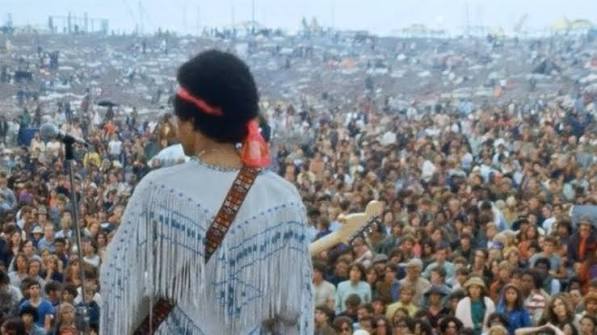
The 10 Greatest Guitar Renditions of “The Star-Spangled Banner”
From Jimi Hendrix's controlled chaos at Woodstock to modern performances by H.E.R., Gary Clark Jr. and Jack White, these guitarists turned America's national anthem into something deeply personal.
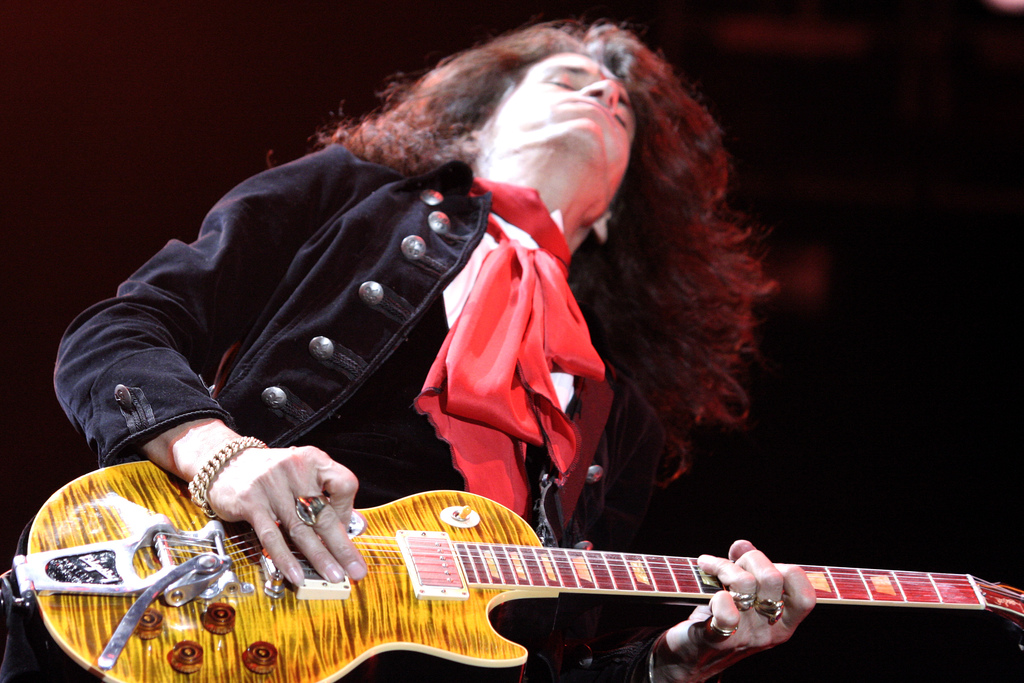
Happy Birthday, Joe Perry: The Riff Machine Who Gave Aerosmith Its Swagger
Joe Perry turns 76 today. From the swampy grind of “Sweet Emotion” to the reunion that saved a band, this is the career of the guitarist who taught American hard rock how to strut.

History of the Riff: How Joe Satriani Made “Flying in a Blue Dream” Feel Weightless
An acoustic guitar in an unusual tuning, a stray broadcast and a melody that seems to hang in the air: inside the construction of Satriani’s 1989 masterpiece.