I Put RipToneZ’s Valeton GP-200 Tone Packs Through Their Paces — Here’s What Stood Out
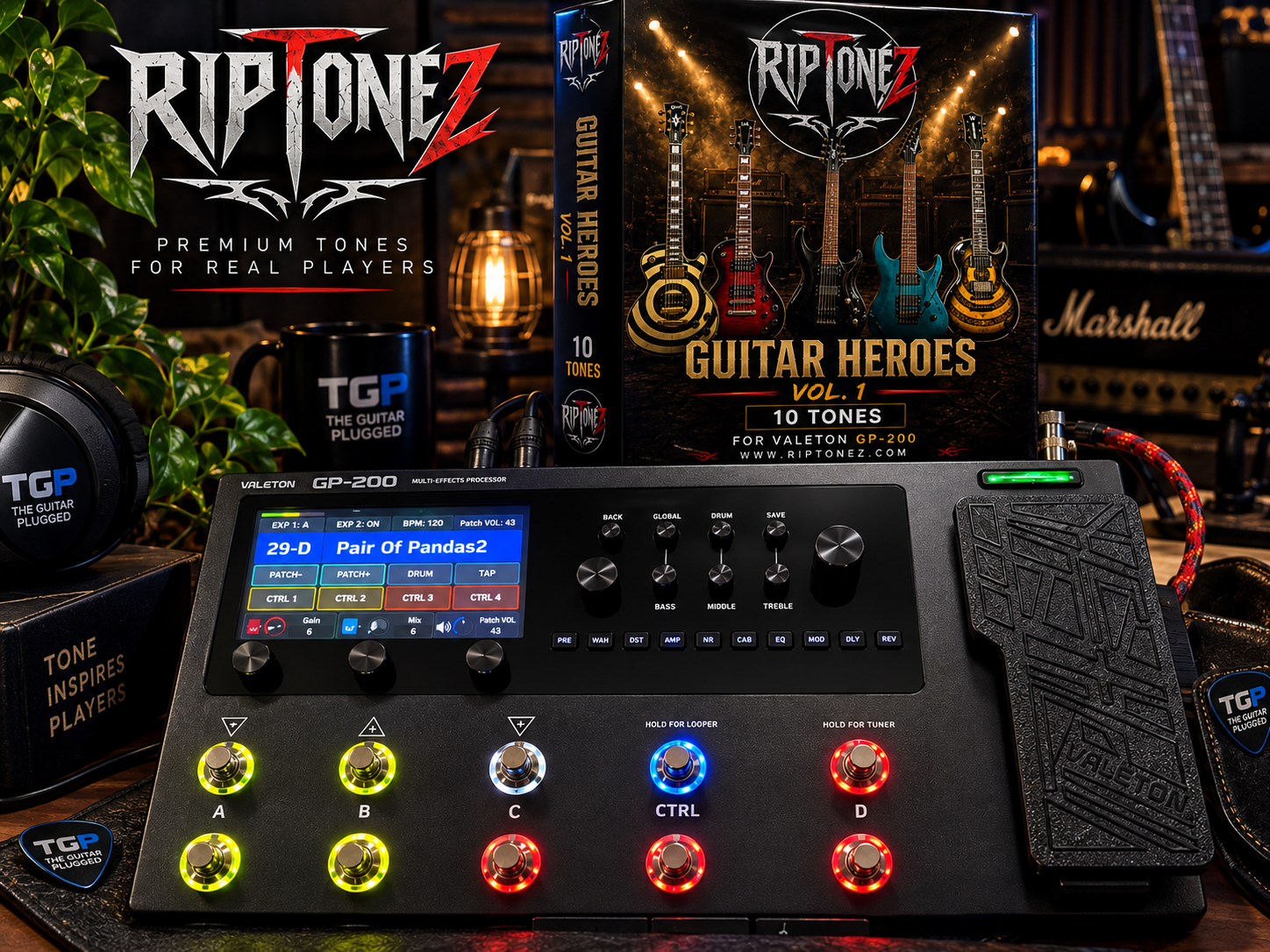
RipToneZ Guitar Heroes Vol. 1 tone pack alongside a Valeton GP-200. Photo courtesy of RipToneZ / The Guitar Plugged.
Five collections. 53 presets. Everything from Plexi crunch and Texas blues to ambient cleans, 5150-style aggression and an entire 15-preset Adam Jones-inspired collection. RipToneZ is betting that the GP-200 can sound considerably bigger than its price suggests.
I've spent enough time with modelers over the years to know that the number of amp models inside the box is rarely the problem.
Getting a good sound out of them is.
That's an important distinction.
We live in an era where even relatively affordable processors give guitarists a ridiculous amount of control. Amps, cabinets, microphones, overdrives, compressors, EQ, modulation, delay, reverb, routing—the possibilities aren't remotely comparable to what most guitarists had access to twenty years ago.
But unlimited options create their own problem.
You can spend more time building a guitar rig than actually playing through it.
That was what interested me about RipToneZ.
Rather than building another piece of hardware, RipToneZ is approaching the problem from the opposite direction. The company develops ready-to-load preset collections for the Valeton GP-200, taking the processor that's already sitting on your floor and attempting to turn it into a collection of purpose-built guitar rigs.
I received five of the company's GP-200 collections to dig into:
| Collection | Tones |
|---|---|
| Guitar Heroes Vol. 1 | 10 |
| Classic Rock & Hard Rock | 10 |
| Modern Metal & High-Gain | 10 |
| Ambient & Atmospheric | 8 |
| Adam Jones Inspired | 15 |
That's 53 presets in total.
And these aren't simply 53 variations on the same high-gain sound.
Going through the actual preset library reveals something considerably more ambitious.
There are Plexi-inspired crunch sounds. Arena cleans. Vintage fuzz. Modern Rectifier-style sounds. 5150-inspired high gain. Texas-style tones. Liquid leads. Atmospheric cleans. Huge ambient patches. And then there's an entire collection built around the dark, layered guitar vocabulary associated with Adam Jones.
That's a lot of territory for one processor.
So instead of treating this like another preset-pack overview, I wanted to look at the bigger question:
How much can a professionally built library change the experience of owning a Valeton GP-200?
And after going through what RipToneZ has actually built, I think that's the more interesting story.
The GP-200 is the foundation
Before getting into RipToneZ, the Valeton GP-200 deserves some context.
The GP-200 has become one of those processors that's easy to underestimate because of where it sits in the market.
It isn't priced like the flagship systems from Fractal, Neural DSP or Line 6, but Valeton packed a serious amount of functionality into it.
You have a large color display, eight LED-ring footswitches, an expression pedal and a routing architecture that allows up to 11 effect modules to operate simultaneously.
There are more than 140 amp, cabinet and acoustic models and more than 100 effects, along with 20 user IR slots and 256 preset locations.
It also has the connectivity necessary to function as much more than a bedroom practice unit: XLR outputs, quarter-inch outputs, effects loop, MIDI, USB audio, headphones and auxiliary input.
That's a serious amount of guitar rig in one box.
But specifications only tell half the story.
The GP-200 gives you the ingredients.
Someone still has to cook.
And that's essentially the role RipToneZ is trying to fill.
What you actually get from RipToneZ
This is where having the real downloadable packs in front of me makes a difference.
These aren't generic files labeled “Clean 1,” “Rock 2” and “Lead 3.”
The libraries are organized around specific musical applications.

Take the Classic Rock & Hard Rock 10 Tone Pack. Inside are Plexi Crunch, Brown Rock, Sunset Lead, Brit Stack, Drive South, Blues Rock, Glam Stack, Arena Clean, Vintage Fuzz and Classic Lead.
Just reading those names gives you an idea of what RipToneZ is trying to accomplish.
It's basically a compact rock-guitar toolbox.
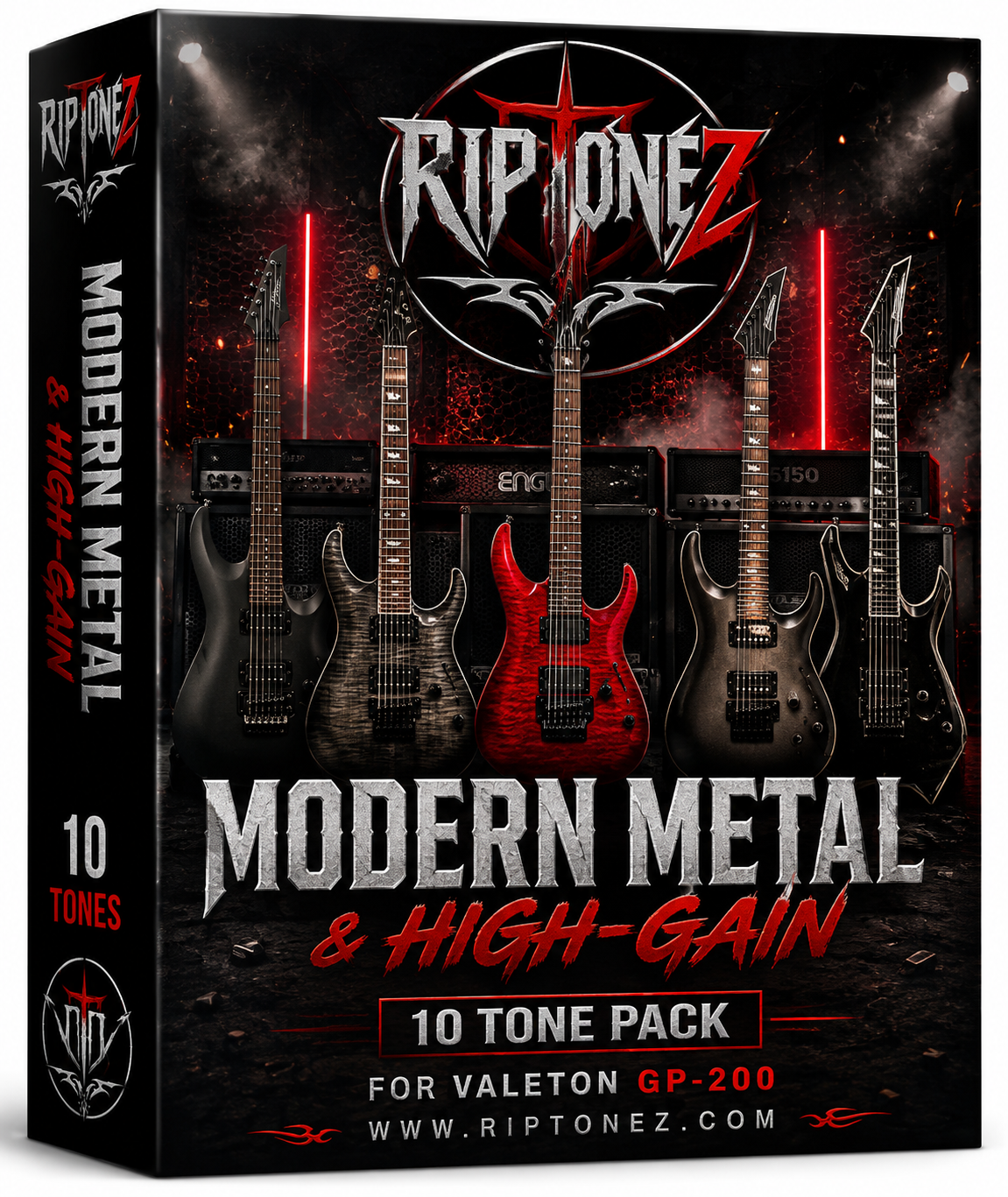
Then open Modern Metal & High-Gain, and the philosophy changes: 90s Heavy, 80s Thrash, Industrial, NuMetal 7, Modern Recto, 5150 CHUG, German Heavy, Liquid Lead, Metal Clean and DJENT 7.
That's not simply “more distortion.”
They're attempting to cover different generations and styles of heavy guitar.
And then you open Ambient & Atmospheric and suddenly you're in an entirely different universe: Ether Clean, Dark Ambient, Crystal Sky, Dream Chorus, Space Echo, Ambient Swell, Haunt Clean and Epic Lead.
That's the point where I realized RipToneZ wasn't just building a collection for metal players.
They're building a GP-200 tone ecosystem.
Three presets I kept coming back to
With 53 presets available, covering every one individually would turn this into a book.
Instead, I narrowed the main listening portion of this review to three patches that represent completely different sides of what RipToneZ is doing.
I wanted one clean. One rock tone. And one lead.
Not three variations of the same sound.
If a preset company is genuinely getting the most out of a processor, you should be able to move between those three worlds without feeling like everything was built from the same basic template.
These were the three that caught my attention.
Clean: RTZ Ether Clean
Pack: Ambient & Atmospheric
If you're trying to determine whether a modeler actually sounds good, clean tones are one of the best places to start.
Distortion hides things.
A clean sound doesn't.
And Ether Clean is an interesting choice because RipToneZ clearly wasn't aiming for a completely dry, utilitarian clean patch.
The Ambient & Atmospheric pack is designed around space. That's apparent throughout the collection. Alongside Ether Clean are Dark Ambient, Crystal Sky, Dream Chorus, Space Echo, Ambient Swell and Haunt Clean.
This is less about recreating the clean channel of an amplifier sitting in a room and more about making the GP-200 itself part of the instrument.
That's exactly where a processor like this can be fun.
After actually spending time playing through Ether Clean on the GP-200, this was one of the patches that immediately caught my attention. It's an exceptionally polished clean sound, but what really makes it work for me is the way the effects interact with the core tone.
The repeating delay is the standout. It's prominent enough to give individual notes a sense of movement and depth without taking over the original guitar signal. Let a note hang and the repeats continue underneath it, creating a wide, atmospheric space that makes the patch especially good for melodic playing, arpeggios and slower lead lines.
There's also a real balance to the overall sound. It doesn't feel like a dry clean tone with a stack of effects sitting on top of it. Everything feels integrated, and the ambience almost becomes part of the instrument.
To my ears there's a slight Gilmour-esque quality to the way the delay trails behind certain phrases, particularly when you slow down and give the notes some room. It's reminiscent of that spacious Pink Floyd territory without turning the patch into an obvious imitation.
More importantly, Ether Clean is simply a very usable ambient clean. It's one of those presets where you can lose a surprising amount of time playing a few notes, listening to the repeats develop and finding the next phrase.
Instead of thinking: which amplifier does this sound like? I found myself thinking: what would I write with this?
That's a much better question.
A great ambient clean should make a single note interesting. It should make you slow down. It should make you leave space between phrases just to hear what happens after the note.
That's the appeal of this category of sound.
And it demonstrates something important about RipToneZ. They're not limiting the GP-200 to traditional amp replacement. They're using the entire effects architecture.
For players creating intros, cinematic passages, post-rock textures, worship sounds, atmospheric layers or simply something completely different from their usual rock rig, the Ambient & Atmospheric collection may actually be one of the more interesting packs in the entire library.
Rock: RTZ Plexi Crunch
Pack: Classic Rock & Hard Rock
Now we're in my world.
Give me a good British-style crunch tone and I'll know pretty quickly whether I want to keep playing.
Plexi Crunch is exactly the kind of preset name that gets my attention because it's also exactly the type of sound guitarists routinely overcook on modelers.
A Plexi-style tone isn't supposed to be a modern high-gain sound. That's the entire point.
The classic British rock vocabulary is about the relationship between pick attack, power-stage-style aggression, midrange and relatively restrained saturation.
You want a chord to sound angry. But you still want to hear the chord.
There's a difference.
Looking under the hood, RipToneZ builds the patch around the GP-200's UK SLP amp model paired with the UK GRN 2 cab, a vintage Marshall-style 4x12 loaded with Greenback-style speakers. It makes sense as soon as you play it: the British amp and Greenback combination gives the patch that familiar mid-forward crunch and classic-rock character you expect from a good Plexi-style sound.
And that's something the broader Classic Rock & Hard Rock collection seems to understand. Plexi Crunch. Brown Rock. Brit Stack. Drive South. Blues Rock. Glam Stack. Vintage Fuzz.
Those aren't simply different gain levels. They're different branches of the rock-guitar family tree.
That's what makes this pack particularly useful. If your musical world runs from late-'60s and '70s rock through the heavier guitar sounds of the '80s, there's a surprising amount to explore here.
Plexi Crunch is the kind of patch I'd use as the center of a traditional rock rig. You don't need an enormous amount happening around it. You need the guitar to remain a guitar.
And that's something I wish more preset designers understood.
Sometimes restraint is the effect.
Lead: RTZ Eric J's
Pack: Guitar Heroes Vol. 1
This was the fun one.

The Guitar Heroes pack contains perhaps the most immediately recognizable collection of references in the entire RipToneZ library. The ten presets are Go Brown, Texas Flame, Arena King, Eric J's, Gilly More, Satch Squat, Liquid Fire, Velvet Drive, Berserker and Texas Razor.
RipToneZ is obviously having some fun with the naming here.
You don't need a decoder ring to understand the general guitar vocabulary being referenced by names like Go Brown, Texas Flame, Gilly More and Eric J's.
Of the lead patches I spent time with, Eric J's might be the most immediately recognizable in terms of what it is trying to accomplish.
This is clearly an Eric Johnson-inspired lead sound, and RipToneZ gets remarkably close to one of the characteristics that makes that style of tone so addictive to play: the smooth, almost violin-like quality where the attack of the guitar seems to melt into the sustain.
There's plenty of gain here, but it doesn't feel harsh or overly saturated. The notes stay articulate while still having that thick, rounded character that lets a single note hang in the air. Move up the neck, add some vibrato and let a note sustain and you immediately understand what this patch is going for.
For me, though, the delay is what completes it.
The timing, level and repeats feel dialed in extremely well. Instead of hearing an obviously separate delayed guitar behind the original note, the delay seems to extend the lead sound and give it dimension. It creates that spacious, singing quality I associate with Eric Johnson's lead tones without washing out the actual guitar.
Everything feels well balanced. The gain, ambience and delay aren't fighting one another. They're working together to create one cohesive lead voice.
This is also a good example of why presets like these can be more useful than simply downloading somebody else's settings. Getting this type of lead sound right is about more than choosing an amp model and adding delay. The relationship between the gain, EQ, ambience, delay and the way the notes respond under your fingers matters.
With Eric J's, everything feels dialed in. It has the smooth sustain, the almost violin-like character and, most importantly to me, a delay sound that nails the feel the patch is chasing.
It's the kind of preset that makes you instinctively head toward the upper frets, grab a note, add some wide vibrato and let it sing.
A great singing lead sound needs compression and sustain without becoming flat. It needs enough midrange to make the guitar step forward. It needs enough gain to make legato feel fluid. It needs ambience. But the delay and reverb can't become so large that fast passages disappear behind them.
“RipToneZ isn’t adding another amp model to the GP-200. It’s doing something arguably more useful. It’s giving you reasons to use the ones already there.”
When a sound makes you hold a bend longer than you normally would, use wider vibrato or suddenly start playing those ridiculous three-note-per-string runs you haven't attempted in six months, the preset is doing something right.
That's the purpose of an artist-inspired sound. It's not about magically turning your hands into somebody else's. It's about putting you into that musical headspace. These are tonal comparisons and personal impressions, not official artist presets or endorsed signature tones.
And Guitar Heroes Vol. 1 might be RipToneZ's most immediately entertaining collection because every few presets you're being pushed toward a completely different style of player.
Then there's the Adam Jones pack
This deserves its own section.
Because this isn't simply another ten-preset genre collection. RipToneZ built 15 presets around the sonic world associated with Adam Jones.
And the actual files reveal how deep they went: Jambi Clean, Jambi Rhythm, Jambi Lead, Pot Intro Clean, Pot Rhythm, Pot Lead, Sober Rhythm, Sober Lead, Sober Verse, Later Clean, Later Crunch, Later Rhythm, Later Lead, AJ Clean Delay and AJ Chorus Delay.
That's significantly more interesting than simply releasing something called “Adam Jones Tone.”
Because Jones' sound isn't one sound. That's part of what makes his playing so interesting.
There is the crushing rhythm guitar most people immediately associate with Tool, but there are also cleaner textures, layered parts, ambience and lead sounds.
RipToneZ treating those as separate tools makes considerably more sense.
The progression from Later Clean → Later Crunch → Later Rhythm → Later Lead, for example, essentially gives the player a family of related sounds rather than one snapshot.
That's useful.
And the Jambi and Pot groups follow the same idea. Instead of selling you one artist-inspired preset, RipToneZ is effectively giving you pieces of a rig.
That's a direction I'd like to see them pursue even further.
Modern metal isn't just “more gain”
The Modern Metal & High-Gain pack deserves credit for recognizing something that non-metal guitarists sometimes miss.
“Metal tone” isn't a single category anymore.
An '80s thrash sound isn't a '90s heavy tone. Neither sounds like modern Rectifier-based metal. A seven-string djent patch requires something different again.
RipToneZ splits the collection accordingly. There's 80s Thrash and 90s Heavy. Then Modern Recto and 5150 CHUG. Then German Heavy. Then seven-string-specific NuMetal 7 and DJENT 7 patches. There's also Industrial, Liquid Lead and—importantly—Metal Clean.
That last one is smart.
If you're actually building a usable metal rig, you need a clean sound.
A ten-pack consisting of ten increasingly ridiculous levels of distortion might be entertaining, but it isn't necessarily useful. A collection that lets you build an entire performance is much more interesting.
Guitar Heroes Vol. 1 might be the gateway drug
If somebody asked me which collection communicates the RipToneZ concept most quickly, I'd probably point them toward Guitar Heroes Vol. 1.
Because guitarists understand references.
You see Texas Flame and immediately have an idea of the neighborhood. You see Go Brown and your right hand is already considering tapping something.
Gilly More? I'm reaching for a bend.
Eric J's? Wide vibrato and a long, singing note.
Texas Razor? Time to see what happens when you dig into the strings.
That immediacy matters.
Preset packs should be inspiring. They shouldn't feel like spreadsheets.
And Guitar Heroes succeeds at making you want to jump around the library just to see what the next sound does.
Ambient & Atmospheric was the surprise
This may be the collection I underestimated most.
I'm primarily a rock guitarist. If you put “Classic Rock & Hard Rock” next to “Ambient & Atmospheric,” I know which box I'm opening first.
But the ambient pack highlights what digital processors can do that traditional rigs often can't do without a pretty substantial pedalboard.
Ether Clean. Dark Ambient. Crystal Sky. Dream Chorus. Space Echo. Ambient Swell. Haunt Clean. Epic Lead.
That's practically a songwriting toolkit.
And that's where these presets become more than tone recreations. You could build an entire piece of music around one of these sounds.
That's a very different proposition from: “here's our version of a famous amp.”
I like that.
The part I think RipToneZ gets right
The best thing about these packs isn't that there are 53 presets.
Honestly, modeler owners don't need more presets. Most of us already have hundreds.
What we need are better reasons to use them.
That's the fundamental difference.
A factory preset exists partly to demonstrate what the hardware can do. A well-designed third-party preset should exist because somebody might actually use it.
That distinction sounds small. It isn't.
When I'm evaluating guitar gear, the question I eventually come back to is always: would I actually use this?
Not: “isn't this impressive?” Not: “look how many effects are running.”
Would I use it?
That's where a preset earns its place.
The other thing I appreciate: RipToneZ tells you to adjust them
There's something in the documentation supplied with these packs that I think is worth mentioning.
RipToneZ explicitly acknowledges that your gear changes the result.
Your guitar. Pickups. Strings. Tuning. Interface. Amp. Cabinet. FRFR. Studio monitors. Headphones. Playing technique. Even the GP-200's global EQ.
That may sound obvious, but it's an important disclaimer in the preset world.
There is no universal guitar tone.
If I create the greatest lead preset I've ever heard using one guitar and one monitoring setup, you can load it with a completely different guitar and speaker system and get a different result.
That's physics.
RipToneZ recommends making small adjustments to parameters such as gain, bass, mids, treble, presence, EQ, noise gate, cabinet settings and output level when necessary.
That's exactly how I'd approach these. Don't completely rebuild them. Personalize them.
If your bridge humbucker is hotter, pull the gain down. If your monitoring system is dark, adjust accordingly. If the clean tone is too bright with your Strat, compensate.
The preset is the foundation. Your guitar is the final variable.
Installation is simple
The packs arrive as ZIP downloads containing standard .prst files for the Valeton GP-200.
Extract the ZIP. Connect the GP-200 to your computer via USB. Open Valeton's GP-200 editing software. Choose where you want the preset stored. Import the .prst file. Save or sync it to the GP-200.
That's basically it.
RipToneZ also makes a recommendation I strongly agree with: back up your existing GP-200 presets first.
Always.
I don't care what modeler you're using. Back up your rig before you start importing things. Future you will be grateful.
What I'd like RipToneZ to do next
This is where things could get interesting.
The foundation is here. There are already genre collections, artist-inspired tones, ambient sounds and hero-inspired patches.
The logical next step is to start thinking in terms of complete rigs.
Give me an '80s arena-rock performance pack where clean, crunch, rhythm and lead patches are specifically level-matched. Give me a blues-rock rig. Give me a '90s alternative rig. Give me a British rock timeline. Give me single-coil and humbucker versions.
Take the philosophy behind that 15-tone Adam Jones collection and apply it to other distinct guitar worlds.
Because once you stop thinking about these as individual presets and start thinking about them as virtual guitar rigs, the concept gets considerably more powerful.
The Guitar Plugged verdict
RipToneZ surprised me.
I went into this expecting another collection of GP-200 presets. What I found was the beginning of something more interesting.
Across the five packs I received, there are 53 individual tones covering an enormous amount of ground. Classic rock. Hard rock. Blues. Instrumental guitar. Artist-inspired sounds. Modern metal. Seven-string tones. Ambient textures. Cleans. Crunch. Leads. Fuzz.
And what makes the library interesting isn't simply the quantity. It's the organization.
The packs feel like they were built around the way guitarists actually think.
“I want a Plexi sound.” “Give me an arena clean.” “I want that Texas thing.” “I need a huge lead.” “Give me a 5150-style chug.” “I want something atmospheric.”
That's much more intuitive than scrolling through hundreds of anonymous factory presets.
And ultimately, that's the value proposition.
The Valeton GP-200 already contains an enormous amount of capability. RipToneZ isn't adding another amp model to it. It's doing something arguably more useful. It's giving you reasons to use the ones already there.
For me, the standout individual sounds represent three completely different sides of the library: Ether Clean for atmosphere, Plexi Crunch for straight-ahead rock and Eric J's for the kind of smooth, sustaining lead playing that makes you forget you were supposed to be reviewing something.
But the bigger takeaway is the breadth of the complete collection.
If you're a GP-200 owner who loves spending hours constructing signal chains, you may prefer building everything yourself. I get it. That's part of the fun.
But if you'd rather start much closer to the finished product, RipToneZ makes a compelling argument.
Sometimes you don't want another evening of tweaking. Sometimes you want to plug in, select a sound and play.
And that's exactly the problem RipToneZ is trying to solve.
The Guitar Plugged Rating: 9.2/10
Recommended for: Valeton GP-200 players who want ready-made genre, artist-inspired, lead, clean, rock, metal and atmospheric sounds without building every patch from scratch.
Where to find the hardware
Disclosure: The Guitar Plugged may earn a commission from qualifying purchases made through affiliate links. This does not affect the price you pay.
Disclosure: RipToneZ provided The Guitar Plugged with its Valeton GP-200 tone packs for editorial evaluation. RipToneZ and The Guitar Plugged are promotional partners. The opinions expressed in this article are our own. Artist and equipment references describe tonal inspiration and do not imply endorsement or affiliation.
What to Remember
- ▸Five RipToneZ collections for the Valeton GP-200 add up to 53 ready-to-load presets.
- ▸The packs are Guitar Heroes Vol. 1 (10), Classic Rock & Hard Rock (10), Modern Metal & High-Gain (10), Ambient & Atmospheric (8) and Adam Jones Inspired (15).
- ▸Standouts across three different worlds: Ether Clean, Plexi Crunch and Eric J's.
- ▸The Adam Jones pack treats clean, crunch, rhythm and lead as separate tools rather than one artist sound.
- ▸Presets install as .prst files through Valeton's GP-200 editor — back up your existing rig first.
Do you build your own modeler presets or load someone else's?
Tap your pick. One vote per reader.
Frequently Asked Questions
- What are RipToneZ tone packs?
- They are downloadable preset collections built for the Valeton GP-200. Each pack arrives as a ZIP of standard .prst files organized around a genre, style or artist-inspired sound.
- How many presets are in the five packs reviewed here?
- 53 in total: 10 in Guitar Heroes Vol. 1, 10 in Classic Rock & Hard Rock, 10 in Modern Metal & High-Gain, 8 in Ambient & Atmospheric and 15 in the Adam Jones Inspired collection.
- How do you install them on a Valeton GP-200?
- Extract the ZIP, connect the GP-200 to a computer by USB, open Valeton's GP-200 editor, choose a preset slot, import the .prst file and sync it to the unit. Back up your existing presets first.
- Will the presets sound the same on my rig?
- Not exactly. Your guitar, pickups, strings, monitoring and the GP-200's global EQ all change the result. RipToneZ recommends small adjustments to gain, EQ, presence, noise gate, cabinet and output level.
Sources & further reading
Experience-driven coverage, not algorithm bait.
- 20+ years of guitar playing experience
- Real-world retail experience at Guitar Center
- Thousands of hours testing guitars, amps, and pedals
- A community of 50,000+ guitar enthusiasts across platforms
- Partnerships with Fender, DistroKid, TrueFire, Card Chords, and Enya
- Editorial standards published openly — see how we test gear
The Modern Guitar Magazine. Delivered to your inbox.
No spam. No gimmicks. Just great guitar content — stories, tones, iconic solos, and honest gear takes. Every week.
Ask GP
3 free questions a dayStill curious? Ask GP about this story.
Your personal classic-rock and guitar guide — ask anything about I Put RipToneZ’s Valeton GP-200.
Discussion (0)
Sign in to join the discussion.
Sign in to commentLoading comments…
Discover another guitar story
Swipe through our latest features, breaking news and iconic solos — one story at a time.
Open Swipe →More Guitar News
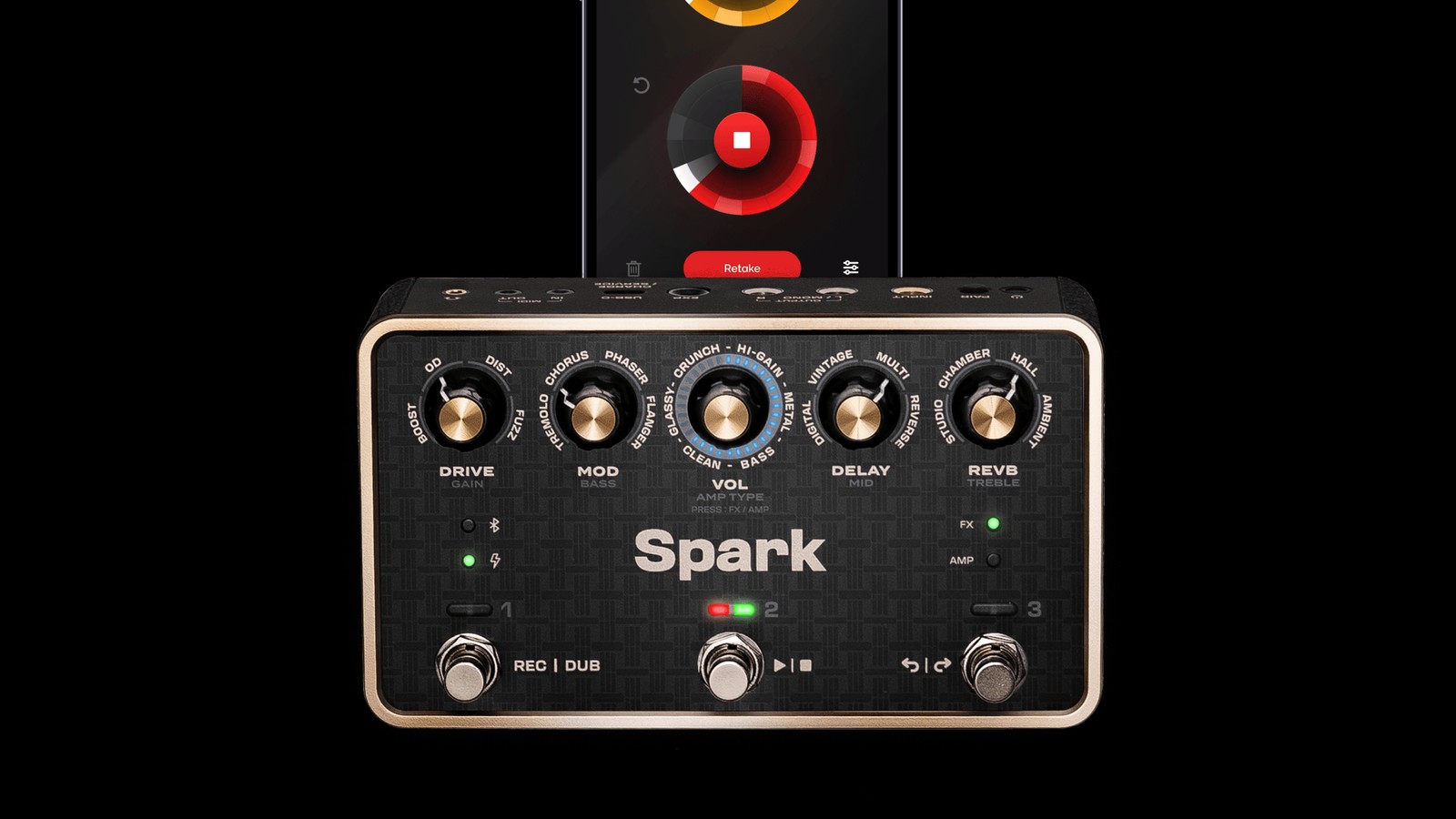
Positive Grid Spark PEDAL Puts a Full Guitar Rig at Your Feet for $199
Positive Grid has taken the Spark idea off the desk and put it on the floor: 33 amps, 43 effects, a 60-second looper, direct outs, USB-C recording and a seven-hour battery in a pedal that costs $199.
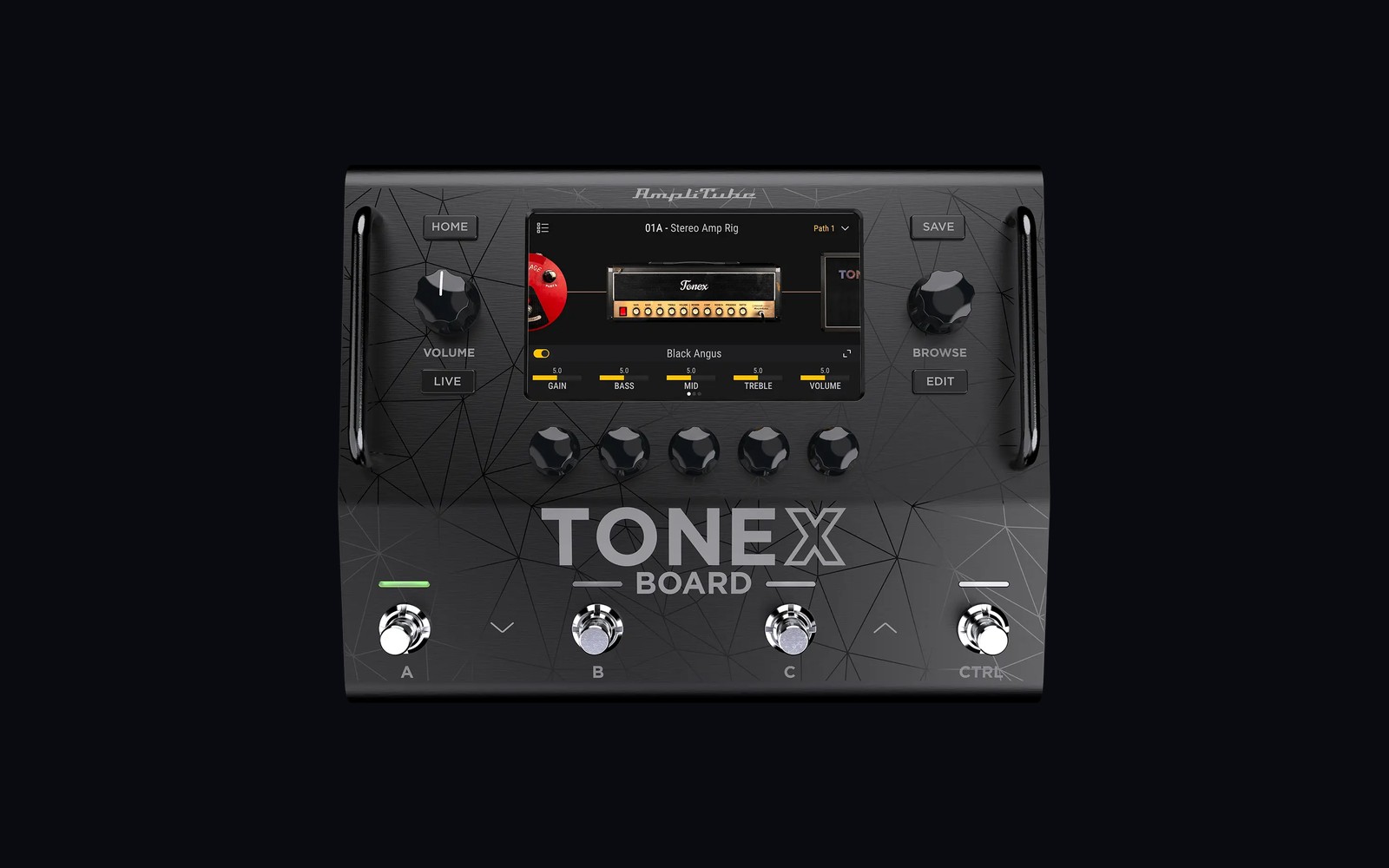
The New TONEX Board Puts a Complete Rig at Your Feet for $999.99
IK Multimedia brings touchscreen control, AmpliTube effects, and dual-amp routing to its newest floorboard. For guitarists, the real question is how much simpler it makes getting through a gig.
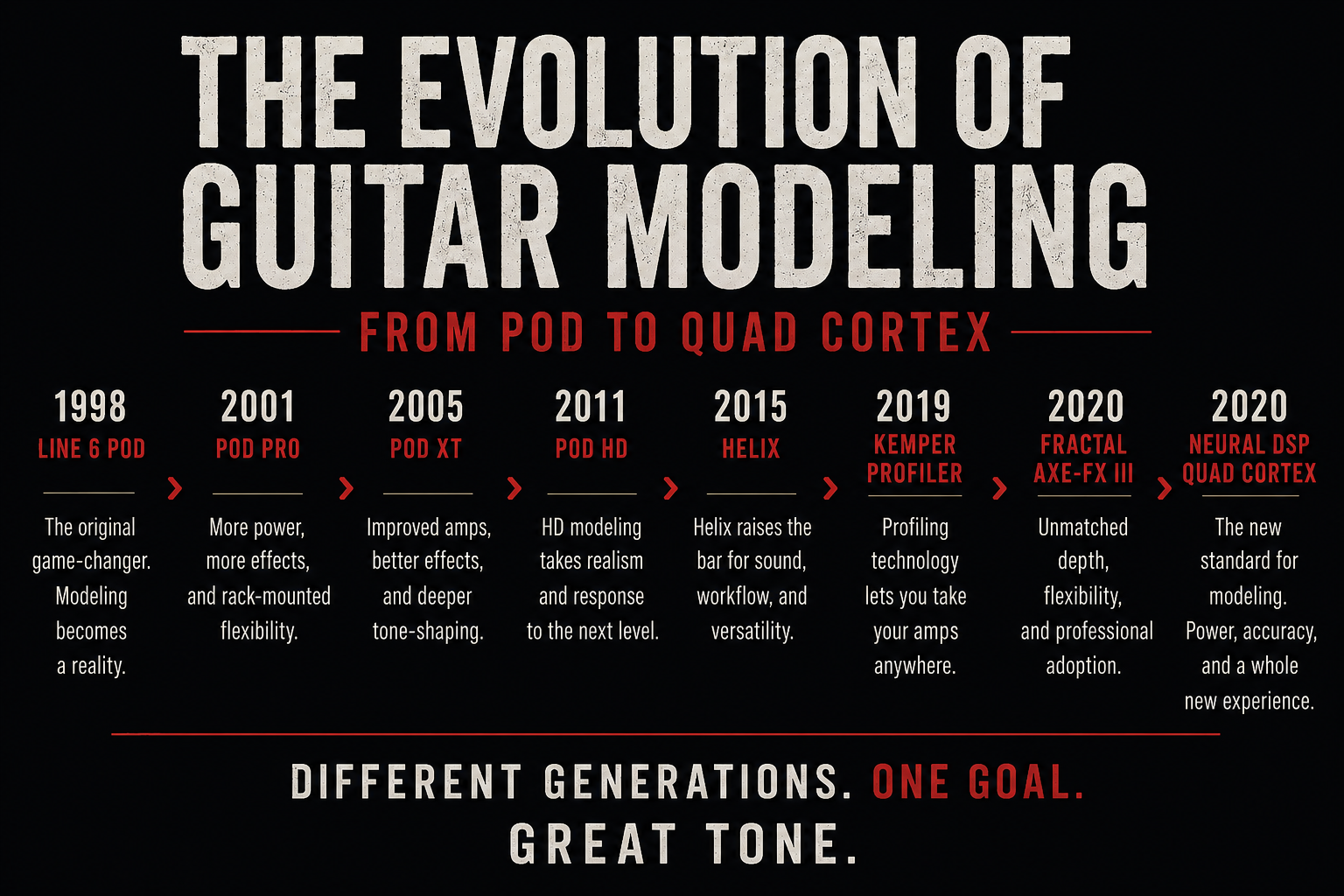
The Evolution of Guitar Modeling: From POD to Quad Cortex
How digital rigs went from bedroom practice tools to the centerpiece of the modern guitar world — from the original Line 6 POD to today's Neural DSP Quad Cortex.